Day 1 of a 3-day Summer Tour in Norfolk. It was a bright and sunny day, reaching a peak of 27C but with a fresh breeze off the sea in the afternoon helping to stop it feeling too hot. We spent the day on the North Norfolk coast.
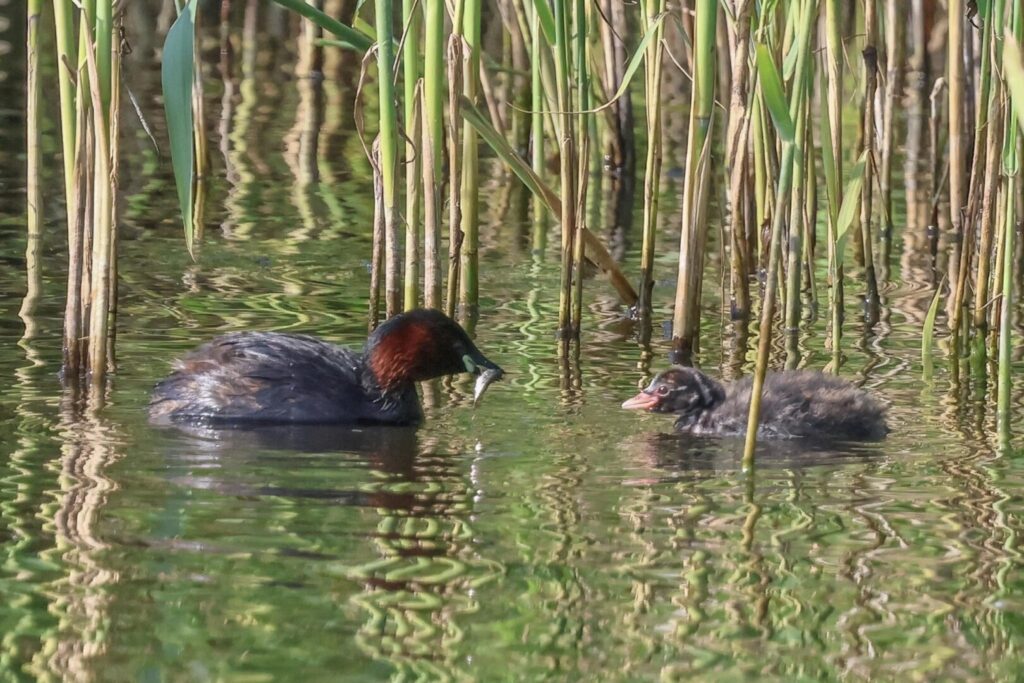
Our first destination was Cley. There had been a Marsh Warbler singing here for nearly a week and there was early news this morning that it was still present. We parked in front of Walsey Hills and a Grey Heron was out on the grazing marsh opposite as we got out of the minibus. As we walked past Snipe’s Marsh, a pair of Little Grebes were feeding a well-grown juvenile on the edge of the reeds, although it didn’t seem to like any of the fish it was given. Presumably it wasn’t that hungry.
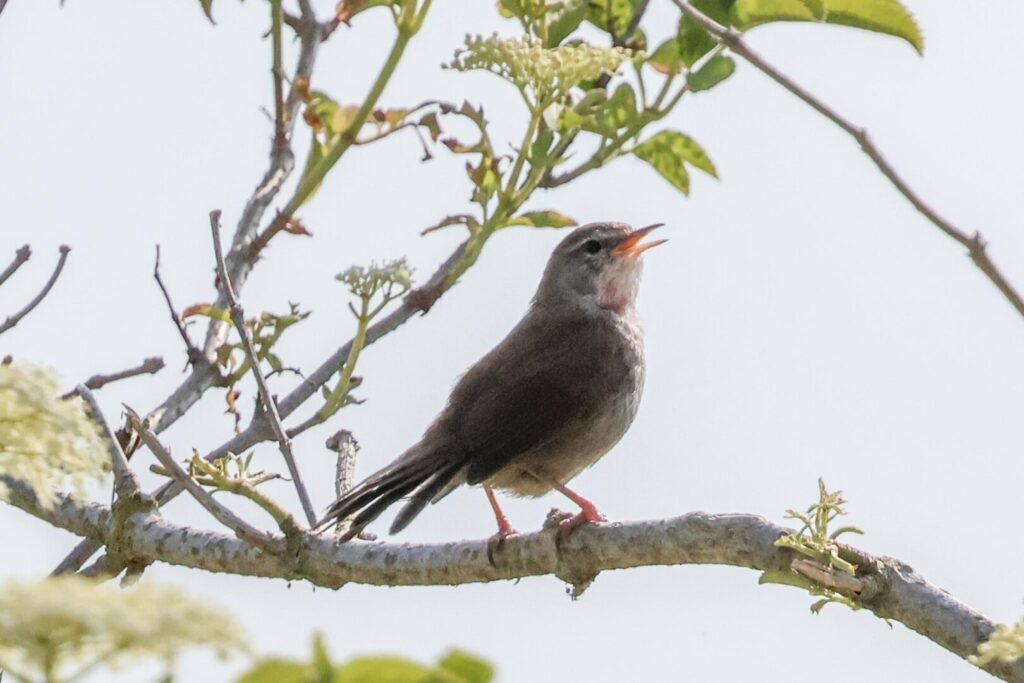
From up on the start of the East Bank, we heard a Cetti’s Warbler shouting and could see it unusually perched out in the open on the top of an elder bush. By the time we walked past along The Skirts path, normal service was resumed and it was back to skulking deep in the vegetation.
We could hear the Marsh Warbler singing as we approached. It was very vocal today, in full song. Once again, we were treated to a fabulous exhibition of mimicry, as it copied a long list of birds it had heard on its travels. It did an excellent impression of Blackbird, Chiffchaff, Cetti’s Warbler, Bearded Tit, Blue Tit, House Sparrow, Goldfinch and European Bee-eater amongst others. Those we could recognise, but there were also various species from its African wintering grounds too. Amazing!
With light winds, the Marsh Warbler was perching up nicely too. It was only about 3-4 metres from us but not always easy to see, looking through the reeds and just beyond a slight ridge in the vegetation. With patience, though, we all got some very decent views. Now just a very sporadic breeding bird in the UK, Marsh Warblers are regular overshoots from the continent in small numbers in the spring.
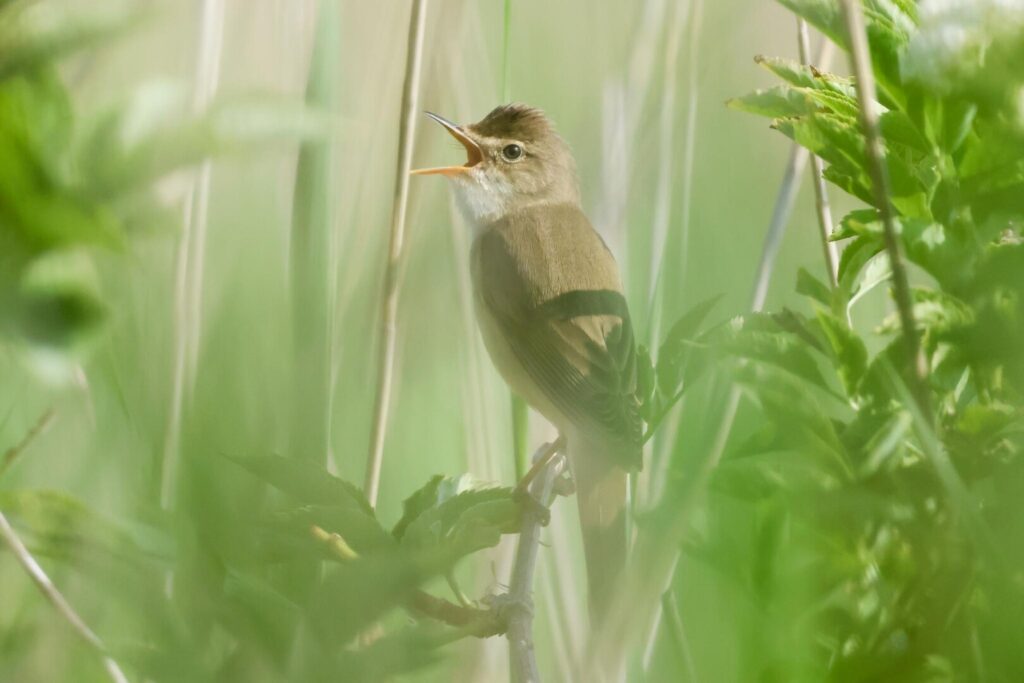
We eventually had to tear ourselves away from the Marsh Warbler show and walked back to the East Bank. The Cetti’s Warbler appeared in the top of its elder bush again and sang a couple of times. We had a great view of it now, even if we were looking into the sun. It really hadn’t read the book, it shouldn’t be showing as well as this!
From up on the start of the East Bank, we had a good view over the reedbed and surroundings. There were lots of dragonflies hawking up and down over the catchwater drain, (Blue) Emperors, Four-spotted Chasers and a Norfolk Hawker. A second Norfolk Hawker was hawking up and down over the vegetation on the side of the bank. Once restricted to the Norfolk Broads, Norfolk Hawker has spread rapidly in the last couple of years and it now well established here on the coast.
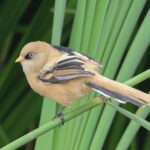
We could hear Bearded Tits calling and had a brief view of a tawny juvenile as it zipped across over the top of the reeds, before it dived back in. There were lots of Reed Warblers flying in and out, which didn’t help our efforts to catch it again. The Bearded Tits were surprisingly quiet today – perhaps the adults are down on eggs again, but there don’t seem to be as many first brood juveniles about at the moment. Hopefully, now the weather has improved, they will do better on subsequent attempts.
Walking on, there were lots of Greylag Geese out on the grazing marsh. A small group of Sand Martins flew in and over the path ahead of us. We could see a couple of Marsh Harriers out over the reedbed, but they were a bit more distant today.
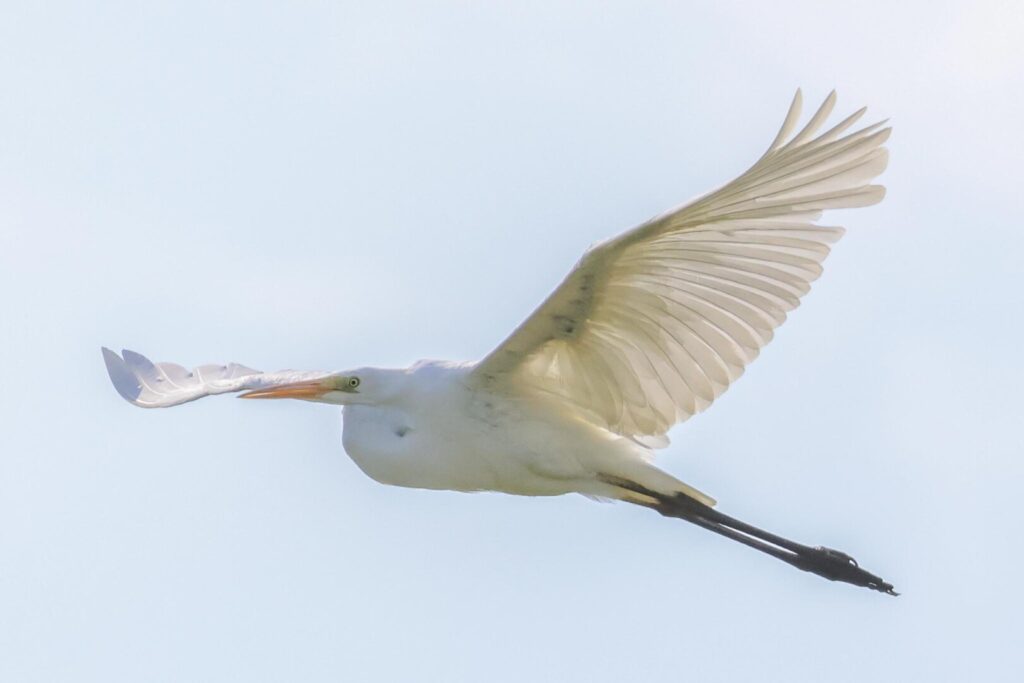
A Great White Egret flew up out of Snipes’ Marsh, circled over the grazing marsh along side us and then flew across and out over the reedbed. We saw the back end of a Cattle Egret too, as it flew away from us over the reeds. Several Little Egrets were in and out as well and a juvenile was perched rather precariously in the top of the trees in North Foreland.
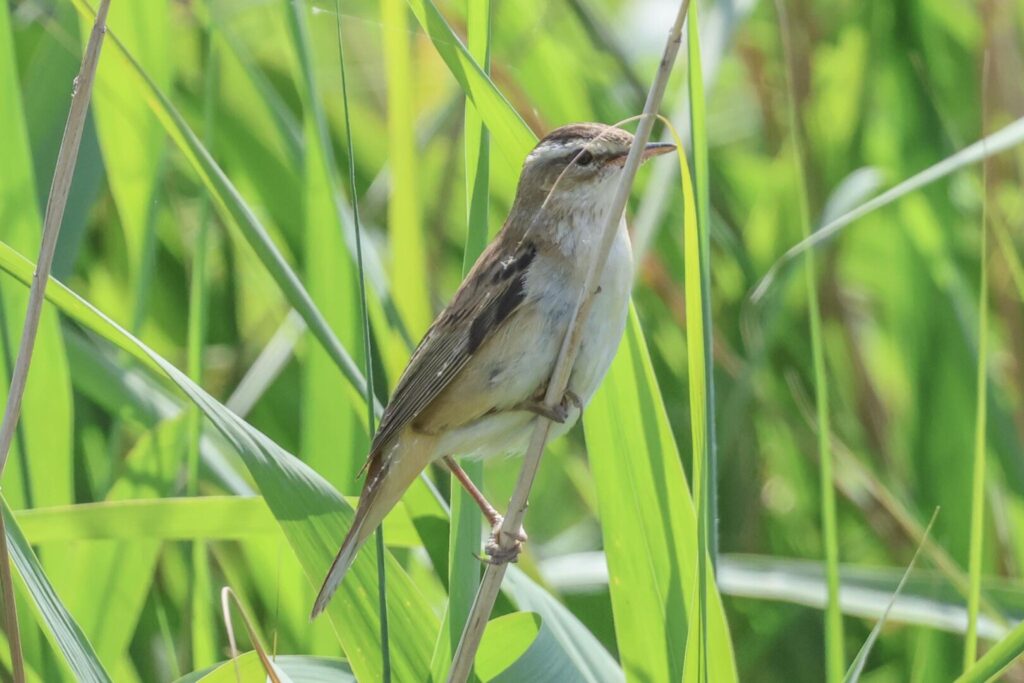
There were Sedge Warblers and Reed Warblers singing all the way up, the rhythmic Reed song contrasting with the mad, unstructured Sedges. A couple of the Sedge Warblers perched up nicely, in the reeds and one was songflighting from a small dead tree in the near edge of the reedbed. There were Reed Buntings singing too not much of a song, but they were doing their best!
There were lots of ducks out on the grazing marsh and round the back of the Serpentine. The Mallard and Gadwall are all moulting into dull eclipse plumage, loafing in the grass. We may think summer is just starting, but for them the breeding season is already over. Even worse, there were around ten Teal on the Serpentine, which have probably already migrated here from further north. Autumn migration has started! A single drake Wigeon in the grass had probably spent the summer here, along with a pair of Shoveler on the water.
There were a few Avocets, Redshanks and Lapwings around the Serpentine. A couple of the Redshanks were still displaying and one of the Lapwings is on the nest, so at least for them there may still be a chance to breed. A couple of Spoonbills dropped in out on Pope’s Pool beyond, one an adult with its nuchal crest blowing in the wind and the other an immature.
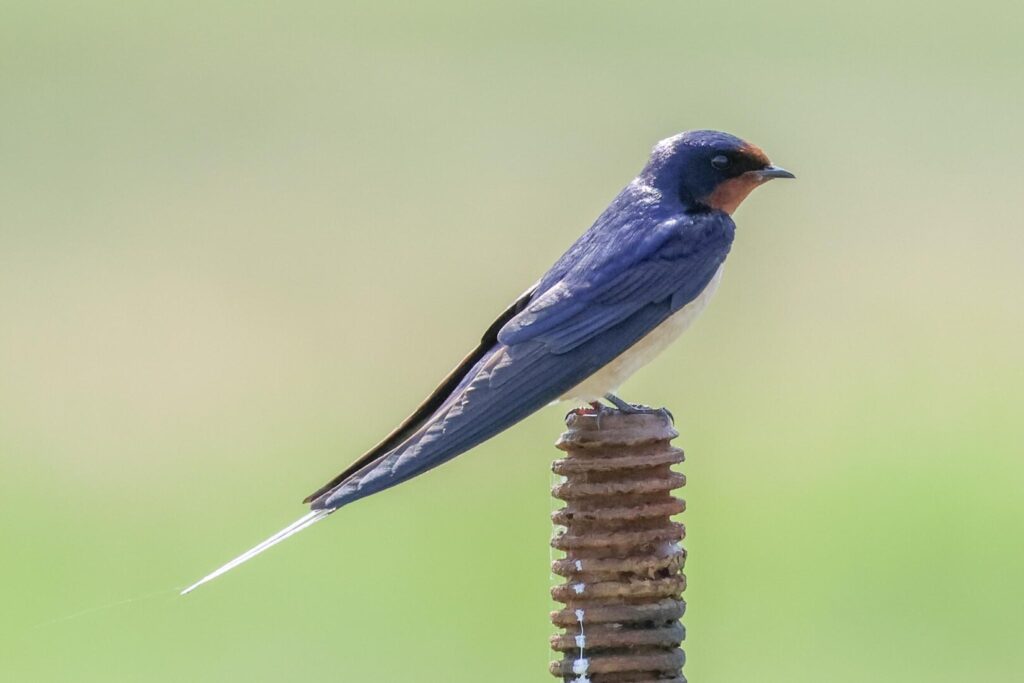
Continuing on, a Reed Bunting was singing from the top of the solar panel by the sluice. A male Swallow was flying round and singing from the metal post on top of the sluice gate.
It was warming up, so for once we were pleased to get into the shade of the Richardson shelter. There weren’t many birds on Arnold’s Marsh today, apart from the usual Redshanks and Shelducks. We managed to find a single Ringed Plover on one of the shingle islands, but it promptly hunkered down with its back to us.
As we walked on to the beach, we stopped to admire the Yellow-horned Poppies blooming on the shingle on the south side of the ridge. Lots of Sandwich Terns were fishing offshore, flying up and down and occasionally plunging down into the sea. They had a pretty good success rate, regular coming up with small fish which they gulped down before they had even got properly airborne again. A pair of Little Terns flew past too and we picked up a single lone Gannet flying east in the distance.
A Mediterranean Gull called behind us and we turned to see it flying away over the Brackish Pool. We walked back to the minibus and drove back to the Visitor Centre to use the facilities and see if there was anything else out on the reserve today. There didn’t appear to be anything else out on the scrapes and we couldn’t see much on Pat’s Pool from the terrace, so we decided to move on. We made our way west along the coast to Titchwell.
When we arrived at Titchwell, it was time for lunch. The tables in the picnic area were occupied, and those at the Visitor Centre were full too. Some of the people in the picnic area looked like they might be finishing up and by the time we walked back, both tables were available now. It was a good job we did go back.
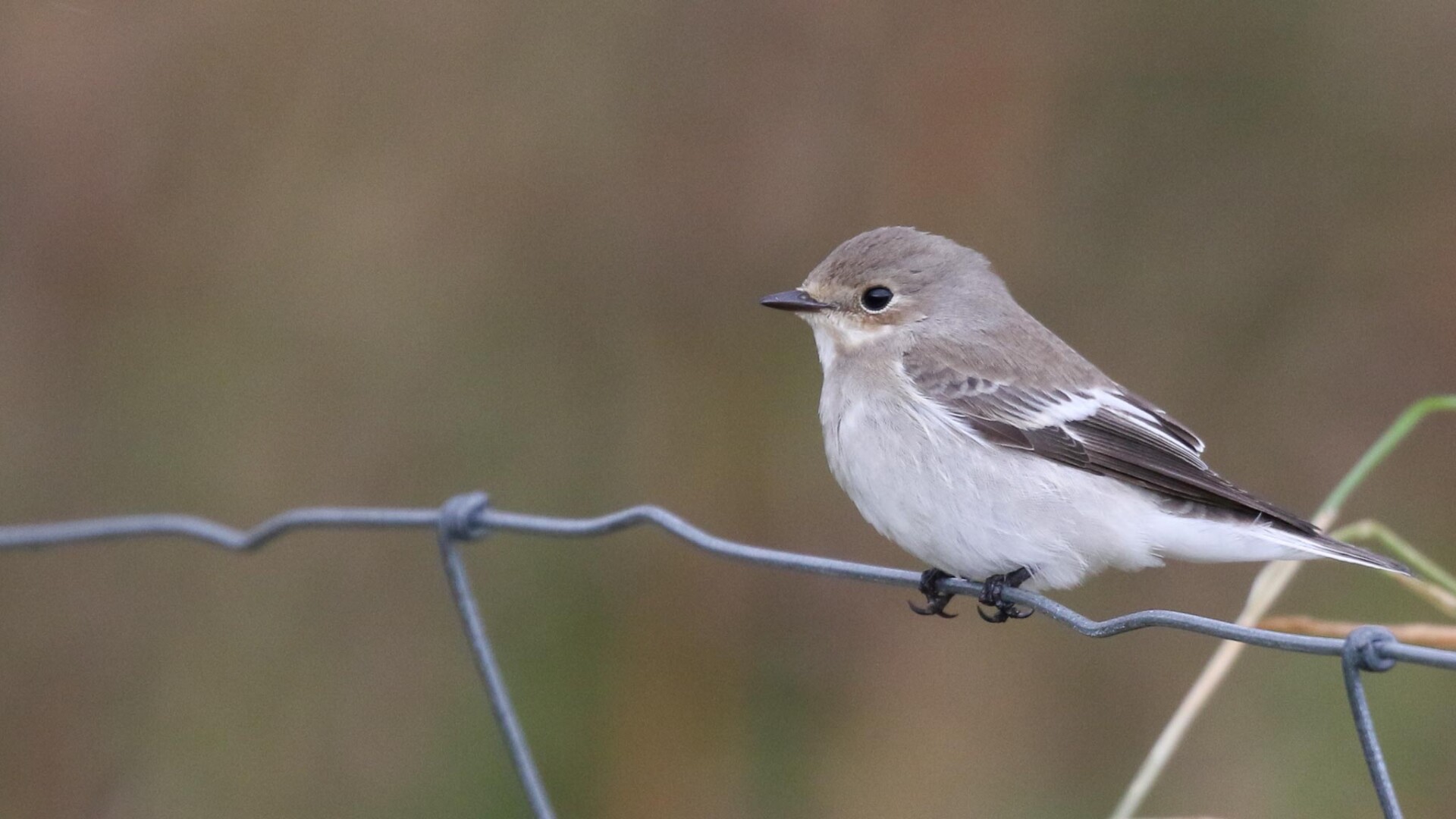
First we noticed a Spotted Flycatcher in the tall trees between us and the road. It didn’t hang around there though, and not everyone got to see it. Then a Spotted Flycatcher flew in right past us and in to an ivy-covered tree very close to where we were standing. We could see it had moss in its bill and watched it go in to the nest it was building in the ivy.
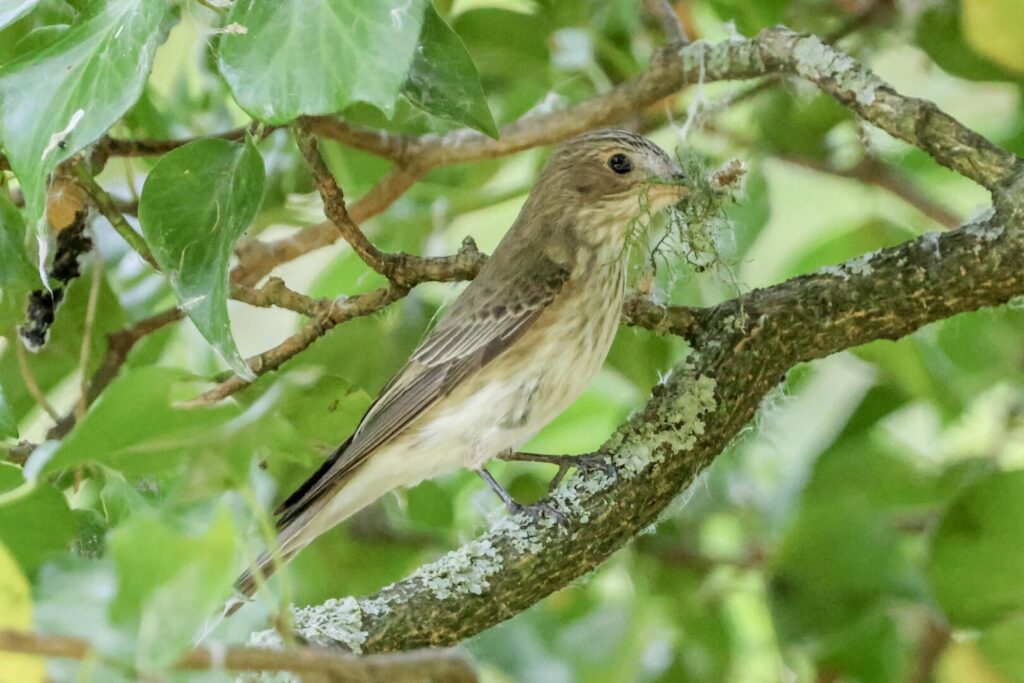
While we were eating, we were treated to a fantastic display as both Spotted Flycatchers came in repeatedly to the nest site. There are a couple of pairs of Spotted Flycatchers here this year but unfortunately both had their first breeding attempts predated. Hopefully, this time they might fare better.
After lunch, we walked back round past the Visitor Centre. At the start of Fen Trail, we stopped to try to see some Long-tailed Tits which we could hear in the sallows and were surprised to hear a Nuthatch calling too. A scarce visitor to Titchwell, with perhaps only a couple of records per year, this was probably a bird dispersing post breeding. Interestingly, another Nuthatch was seen at Cley a couple of days later. The staff from the Visitor Centre came hurrying out to try to see it.
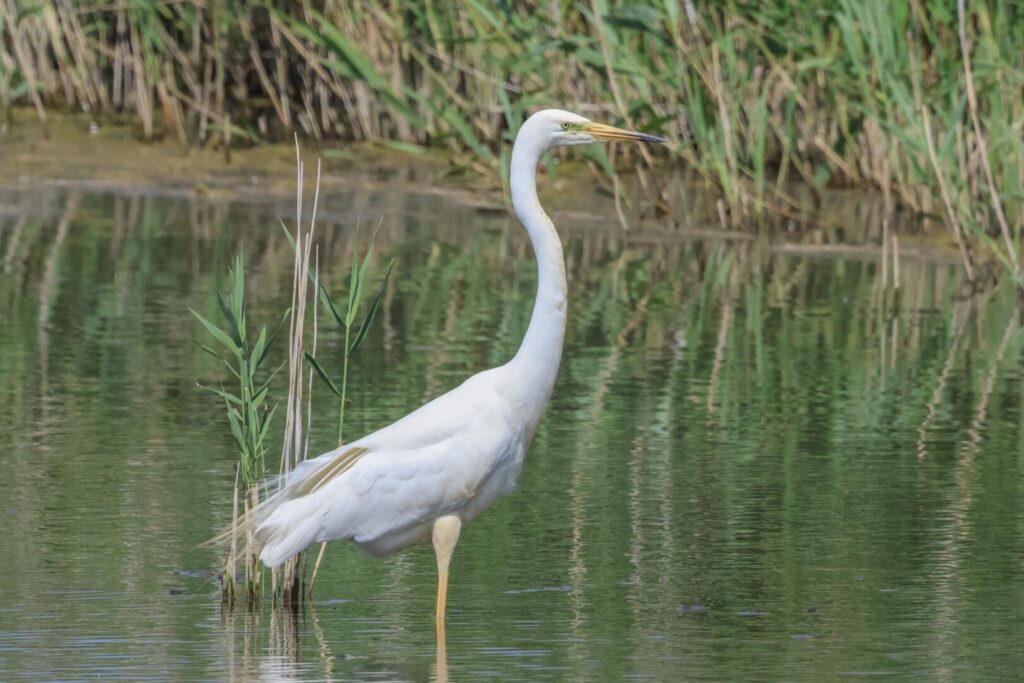
As we passed Fen Hide, the door was open and we could see a Great White Egret out on the water right in front. We stopped for a quick look. A Coot was feeding young in front of the hide too.
There has been a Red-crested Pochard on Patsy’s Reedbed recently, but it has been elusive at times. This was one of those times! When we arrived at the screen, there were lots of Coot, Gadwall and Mallard out on the water. A female Tufted Duck was close in front with three juveniles. But there was no sign of the Red-crested Pochard. When something spooked all the Common Pochard, which were hidden down behind the reeds on the front edge, and they swam out into the open, we thought our luck would be in. But there was still no sign of the Red-crested Pochard.
We figured we could try again on our way back, so walked back on Fen Trail. A Chiffchaff was singing in a bare tree above our heads. We cut round via Meadow Trail and out onto the main path. Walking past the reedbed, a Reed Bunting was singing from the top of a small elder bush and we could hear several Reed Warblers.

It wasn’t too windy and we were hoping there might be a bit more Bearded Tit activity here, but it all seemed very quiet on that front. We stopped at the Reedbed Pool to listen. A couple of Spoonbills were sleeping (what else!) on the cut reeds towards the back. There was a Little Grebe out in the middle of the water and more ducks around the edges.
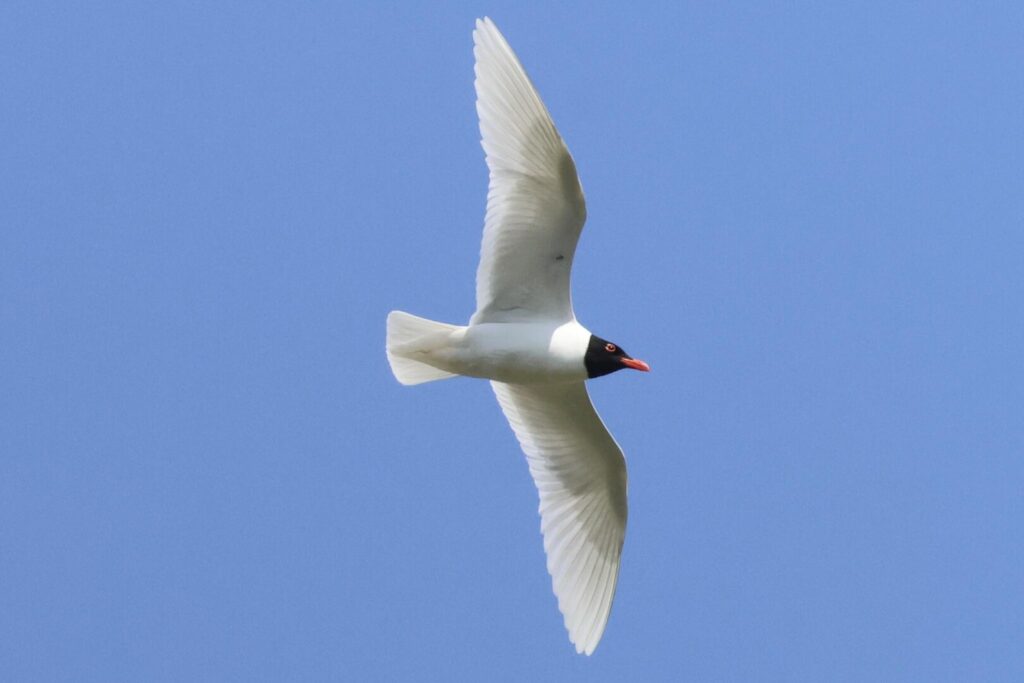
Lots of Black-headed Gulls are nesting on the islands and a couple of Mediterranean Gulls flew over calling. One circled round in front of us so we could see the translucent white tips to its wings. A Sparrowhawk circled over high up.
As we did this morning, we went into Island Hide as much as anything to get out of the sun and cool down. There were lots of Avocets around the islands, several with young of various sizes. A single Little Ringed Plover was on the edge of the nearest island. Several moulting Shoveler and a couple of Teal were scattered along the far edge. A group of noisy Canada Geese were on the water in the middle.
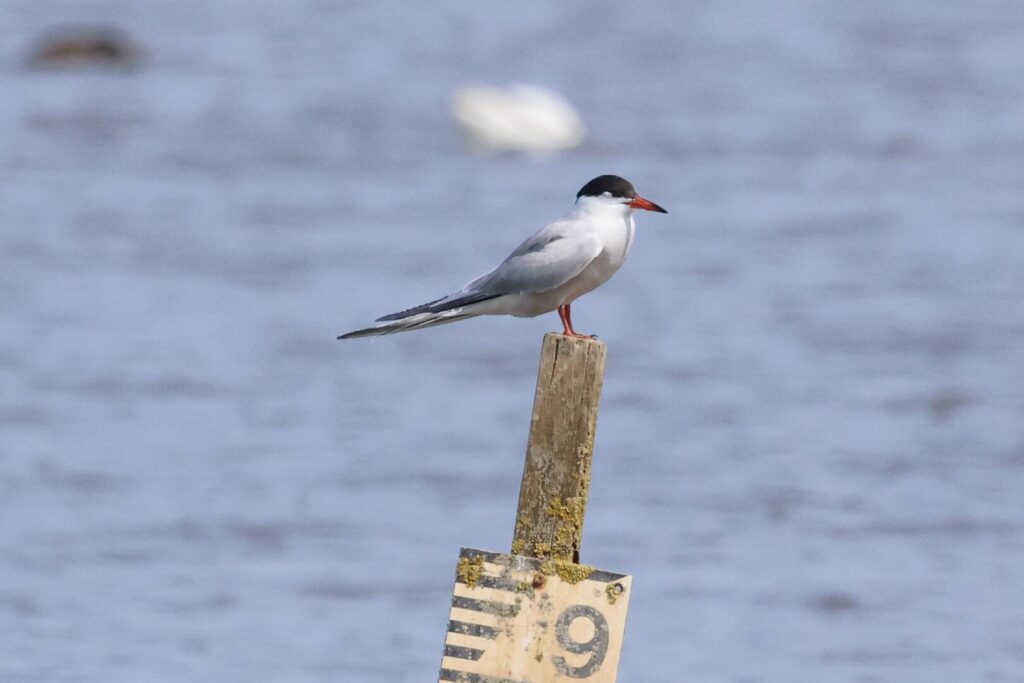
There are lots of Black-headed Gulls here, many nesting and some with juveniles too, and a smart summer adult Mediterranean Gull was hanging out with those on the nearest island. Further back, there was a group of loafing Herring Gulls and several Lesser Black-backed Gulls with them. A Common Tern was perched on top of the measuring post, checking on the water levels no doubt! More were nesting on the islands.
A couple of juvenile Bearded Tits were feeding on the mud on the edge of the reeds, tawny-brown with black masks and backs. Nice to finally see some properly after brief flight views earlier, we got them in the scope.
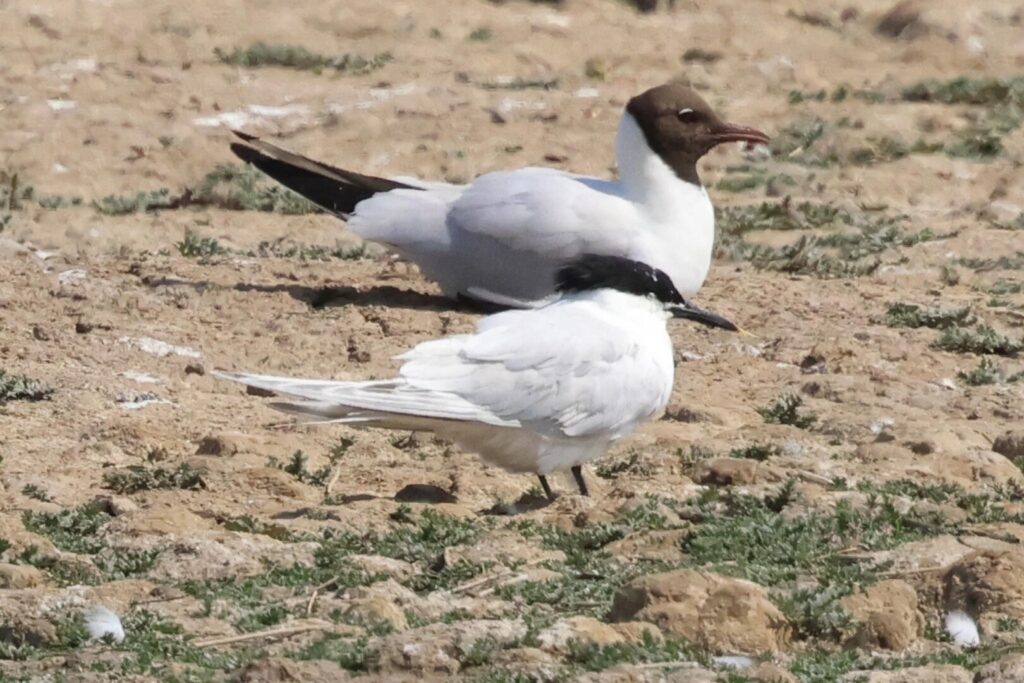
We walked round to Parrinder Hide to check the eastern compartment of the Freshmarsh. There were lots more gulls on here too, they seem to have taken over somewhat! A group of Mediterranean Gulls was over towards the back and two adults flew in and joined the Black-headed Gulls loafing by the bricks at the front. A single Sandwich Tern was with them too.
Otherwise, we couldn’t find anything of particular note on here. Looking through the Greylags on Avocet Island, we found a pair of Egyptian Geese with two almost full-grown juveniles.
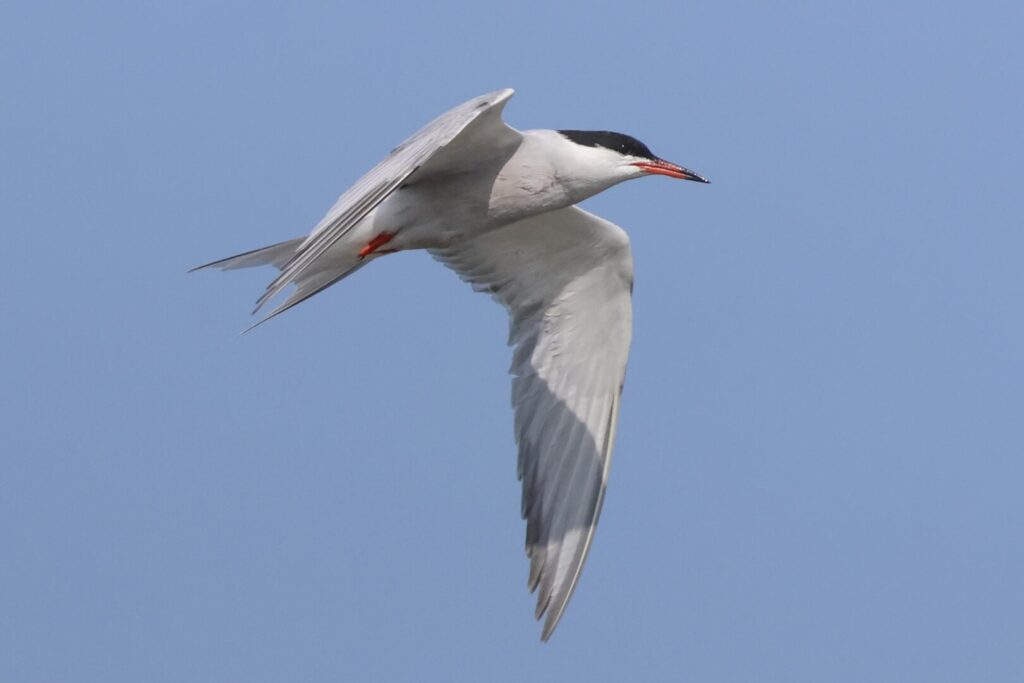
We decided to walk out to the beach, to make sure the sea was still there. There were not many birds on Volunteer Marsh – it was well after high tide now and there were just some gulls along the channel. Several more pairs of Avocets are nesting on the Tidal Pool and a Common Tern was fishing in front of us as we passed.
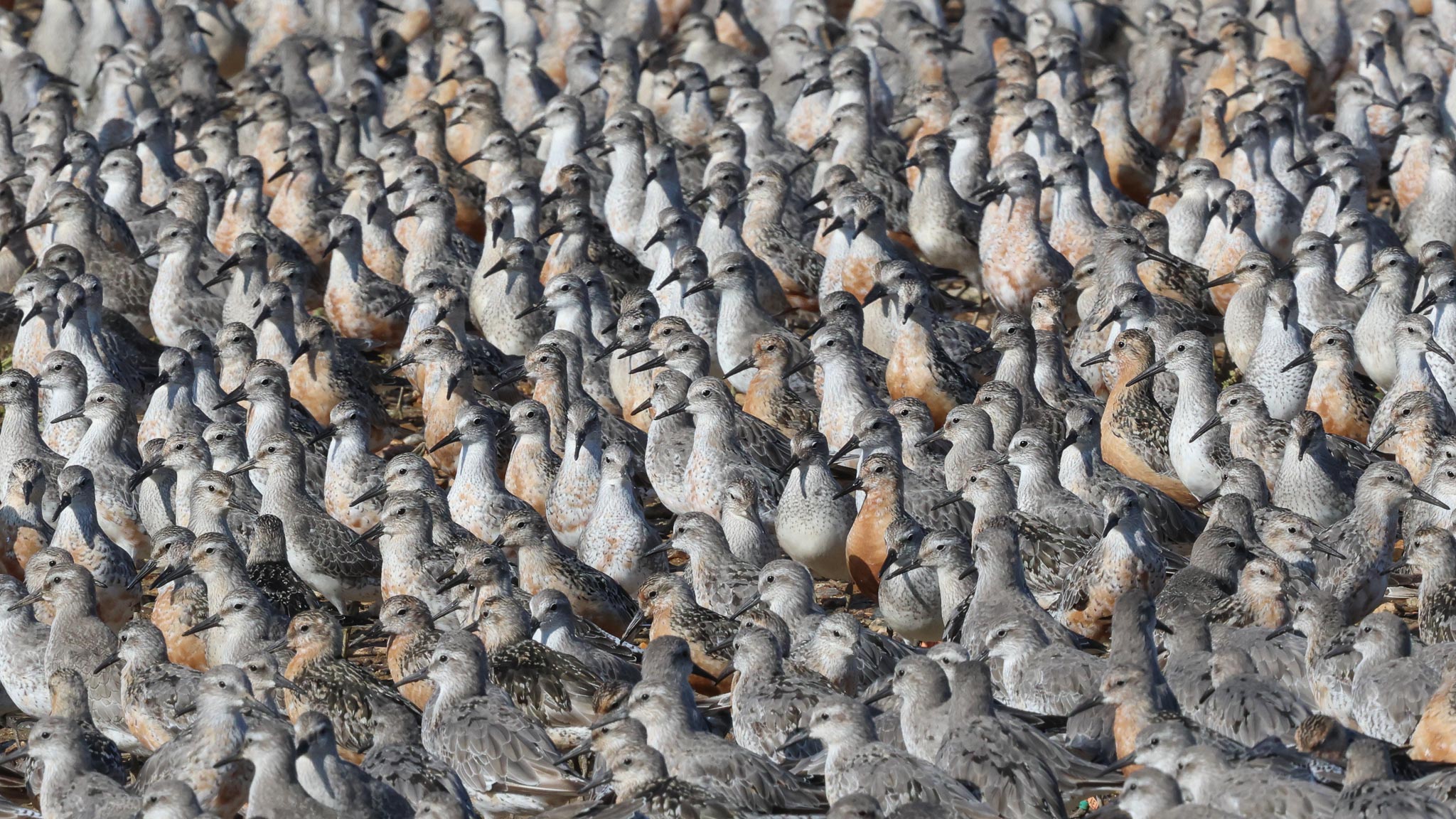
The tide was still out at the beach. We couldn’t see anything of interest on the mussel beds but we could just make out lots of small waders on the sand away to the west. In the heat haze, it was impossible to see what they were. Someone was walking along the shoreline and flushed them all. They flew back our way out over the water and we could see they were at least 100 Sanderling. A few Sandwich Terns flew back and forth offshore.
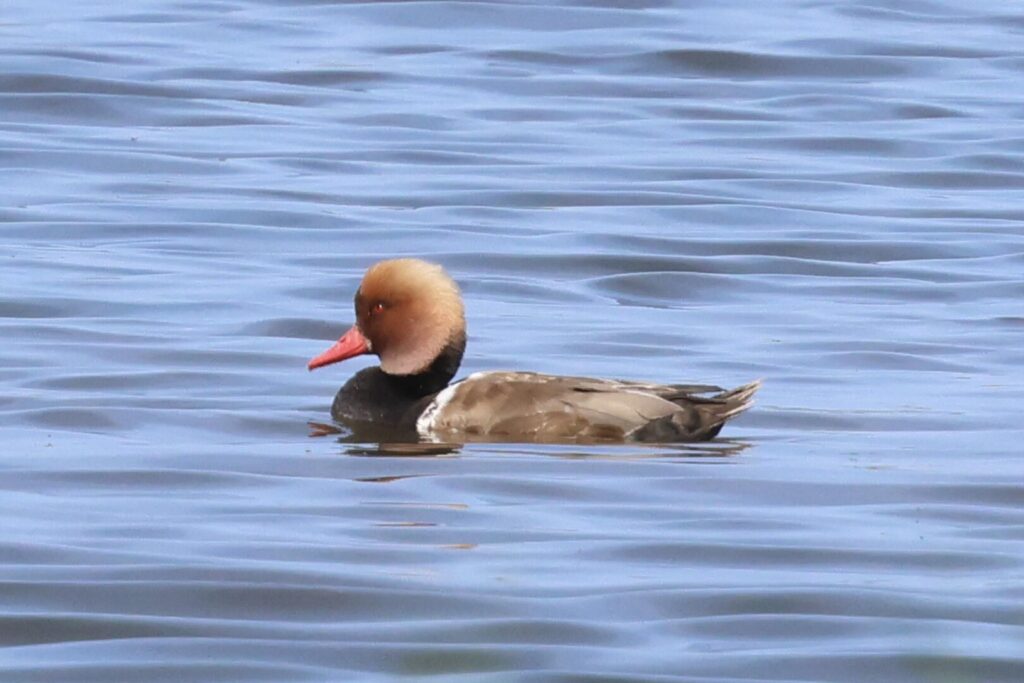
We bumped into someone we know out on the beach, who told us that the Red-crested Pochard had reappeared on Patsy’s. If we headed straight back we would be able to walk round that way again. When we got there it was indeed now out in the middle with the other ducks. A drake, it is just starting to moult into eclipse but still looking pretty smart.
A couple of Marsh Harriers flew back and forth low over the reedbed just beyond the water. We were just about to leave when a Cuckoo called from Willow Wood. A nice way to finish our first day of the Summer Tour, we had to head back for tea and cake now. More birds tomorrow.