A single day group Late Spring/Early Summer tour today. A windy morning, gusting up to 34mph, before dropping gradually during the day. It felt more like autumn or winter than early summer! After a cloudy start, it brightened up for a bit late morning before a band of brisk showers passed through early afternoon. Thankfully we managed to mostly dodge the rain. We spent the day on the North Norfolk coast.
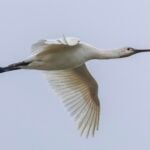
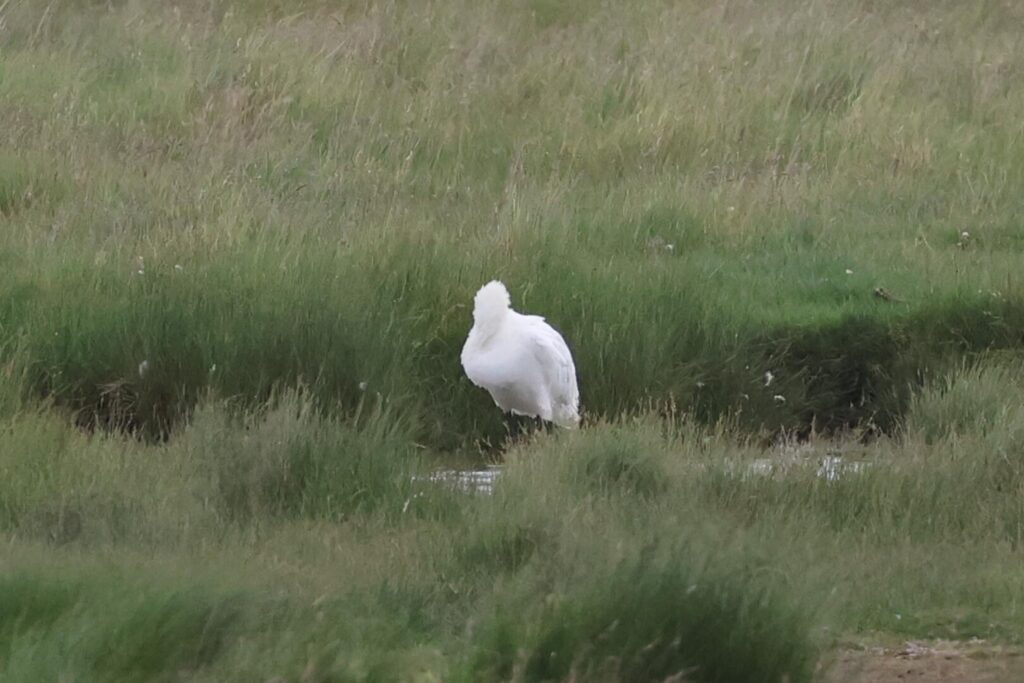
After meeting in Wells, we made our way east to Cley. We parked in front of Walsey Hills and walked back towards the East Bank, dodging the mass of toadlets on the path next to the road. Crossing over, a Cetti’s Warbler shouted at us from the edge of the catchwater drain, keeping well down out of the wind. A Spoonbill was typically asleep distantly out on the grazing marsh and a Marsh Harrier was quartering out over the reedbed.
There had been a Marsh Warbler yesterday along the Skirts path and it was reported still present and “very vocal” this morning. By the time we got there though, it seemed to have gone quiet. We stood and listened for a while but the wind was lashing the reeds. Four single Cattle Egrets flew past out over the reedbed beyond the drain. A slow but steady stream of Common Swifts flew past too.
Patience eventually paid off when the Marsh Warbler started singing. A bit half-hearted and a relatively short burst, but we could still appreciate the amazing nature of its song, full of mimicry of different birds it has met on its travels. There was no chance of seeing it though, as it was deep in dense reeds and nettles and over a high point in the vegetation.
We decided to go for a walk and come back this way later for another go, so walked back along the Skirts path to the East Bank. A Sedge Warbler was singing in the vegetation a little further along.
It was very windy up on the East Bank. There were lots of Greylag Geese on Pope’s grazing marsh, many of them with well grown goslings. The Spoonbill was still standing where we had seen it earlier and a little further up, we stopped and got it in the scope. We could see its shaggy nuchal crest blowing in the wind. There were still Swifts skimming low overhead and lots of Sand Martins swarming low over the Serpentine, all trying to find flying insects in the wind.
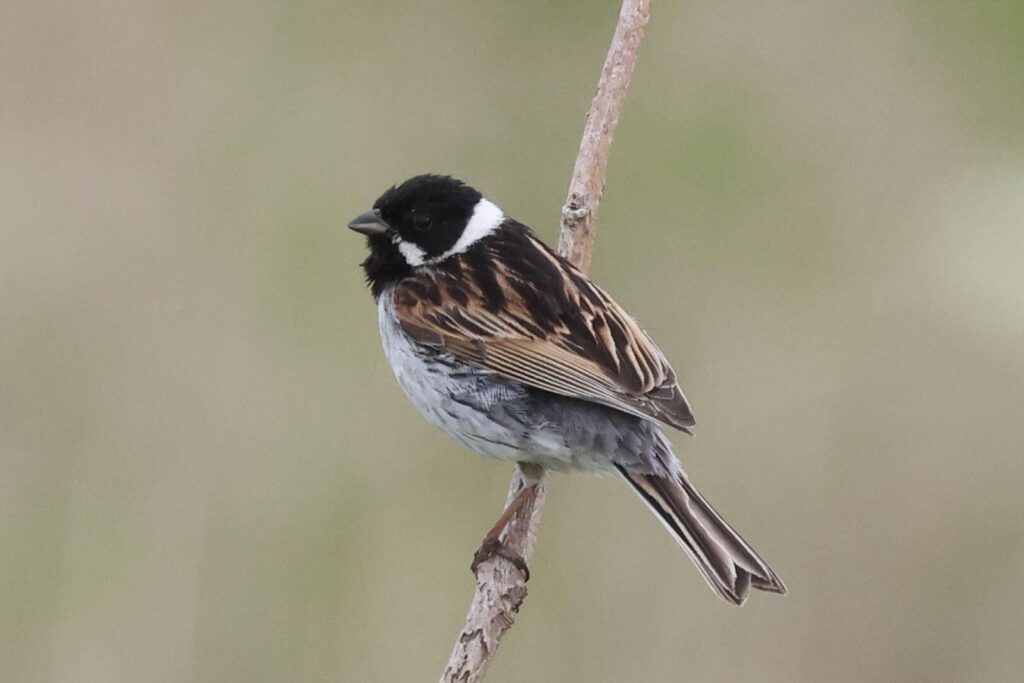
We could hear the rhythmic song of Reed Warblers in the reeds now and one or two shot in and out of the ditch. A Sedge Warbler perched up singing on a dead tree in the reeds briefly, before it thought better of it and went down into the shelter below. A Reed Bunting posed nicely in the top of an elder by the bank, despite the wind.
There were lots of ducks loafing in the grass at the back of the Serpentine. They are starting to moult already, the males looking quite patchy now as they increasingly lose their bright breeding plumage and moult into dull eclipse. As well as the usual Mallard and Gadwall, there were several Shoveler and a couple of lingering Wigeon. A single young Great Black-backed Gull was loafing in amongst the Cormorants on the usual island on Pope’s Pool.
A couple of Redshanks were still displaying and a Lapwing appeared to be on a nest, suggesting that they haven’t abandoned all hopes of breeding yet. There were a few Avocets too. We picked up a small flock of Knot flying away from us over the reedbed. They looked like they might land on North Scrape, but then continued on and out towards the sea. Probably non-breeding first year birds, they all looked grey rather than red.
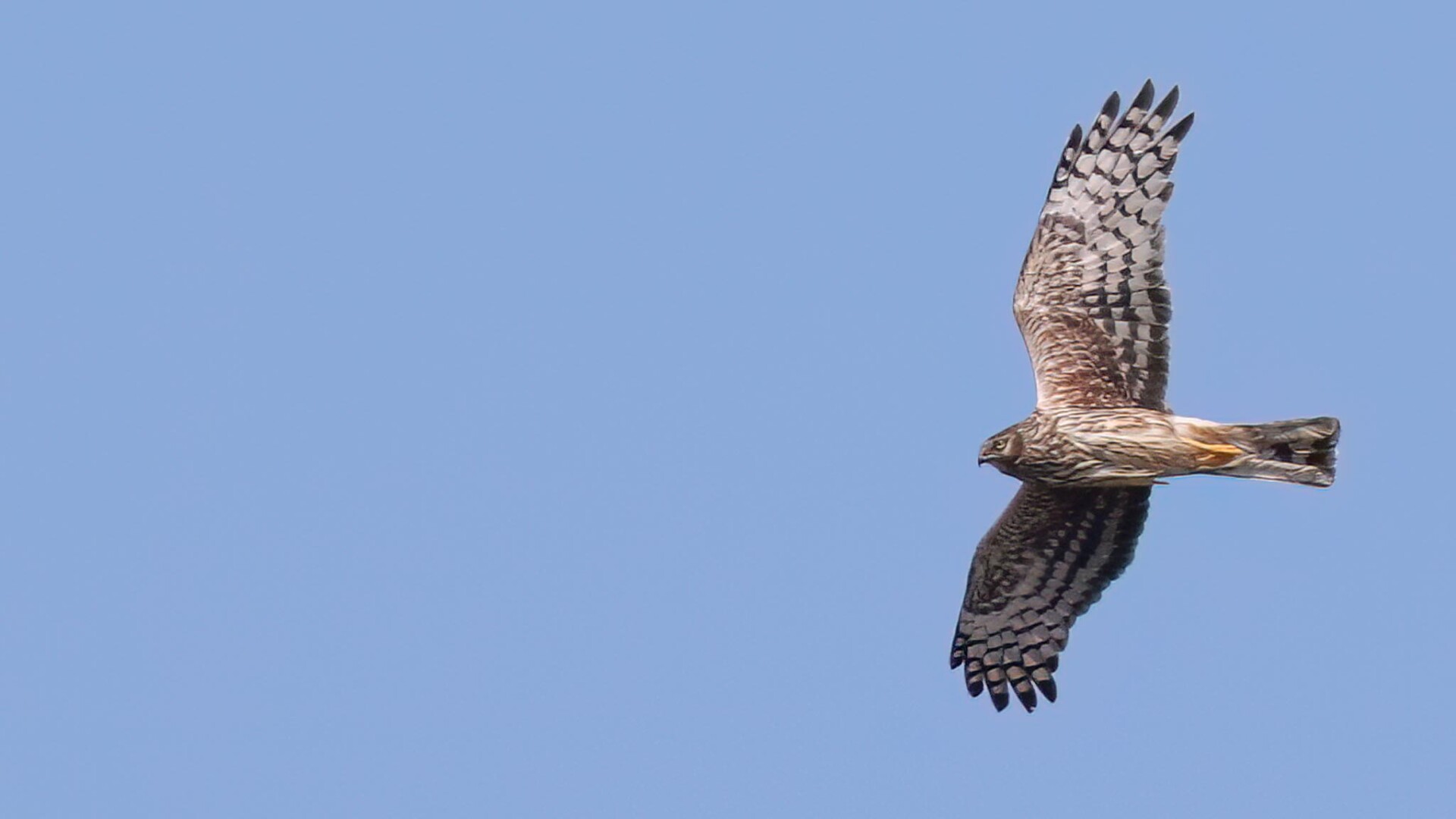
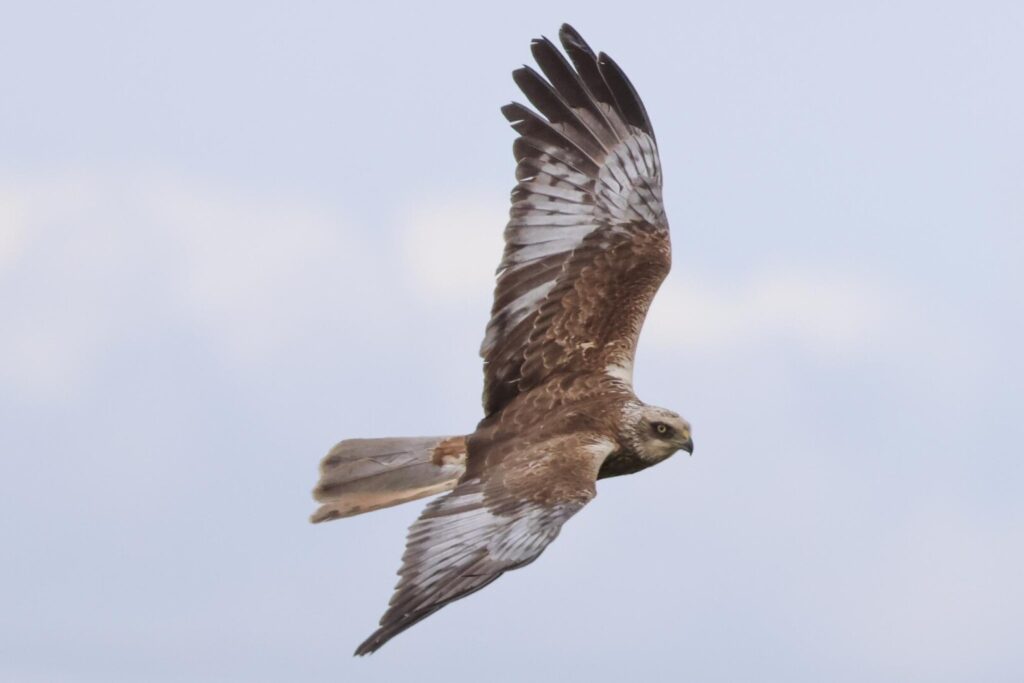
A Meadow Pipit fluttered up singing before parachuting back down and we could hear a Skylark singing too. A male Marsh Harrier flew in over the grazing marsh, pursued by Jackdaws. It flushed all the Woodpigeons from the grass and then came across the top of the bank, turning over the reedbed and flying right past us. We had a great view – the grey in its wings, amongst other things, identifying it as a male.
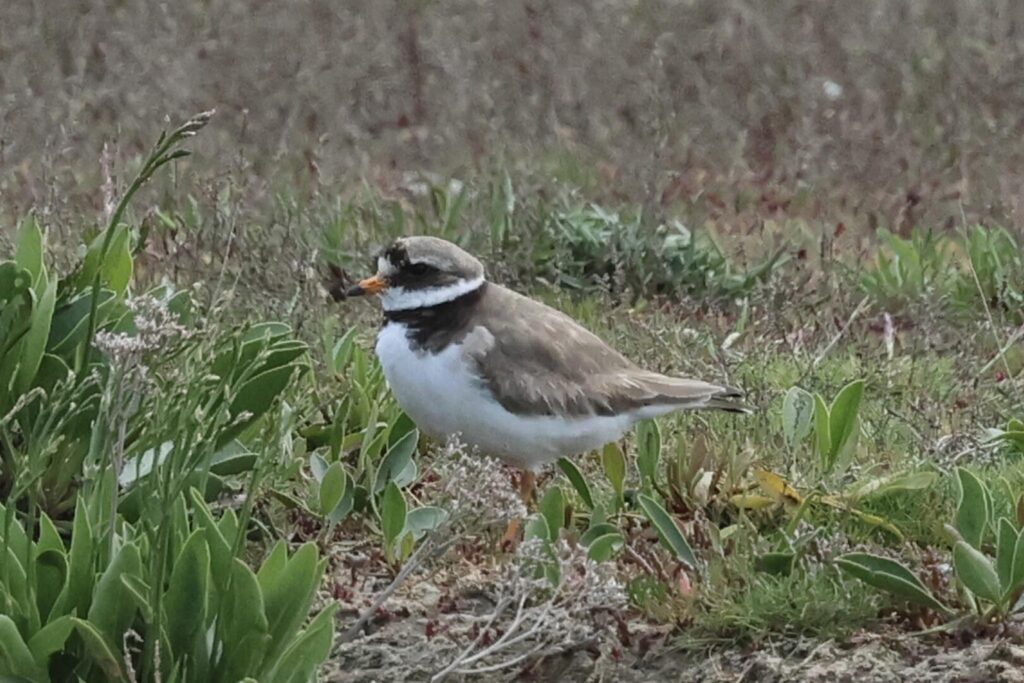
The Richardson shelter offered some respite from the wind, but there wasn’t a lot on Arnold’s Marsh today. More Redshanks, Avocets and a couple of Oystercatchers. A single Ringed Plover was standing on the bank behind the water at the front and another was right over towards the back.
A succession of Sandwich Terns flew in off the sea and west over the marshes towards us or along the inner edge of the shingle ridge, several of them carrying fish. Presumably they have nests nearby. A Little Tern was hovering repeatedly out over the water in front and a second was standing on a small shingle island nearby. We got it in the scope and admired its black-tipped yellow bill and white forehead patch. Another Little Tern was feeding on the Brackish Pool behind.
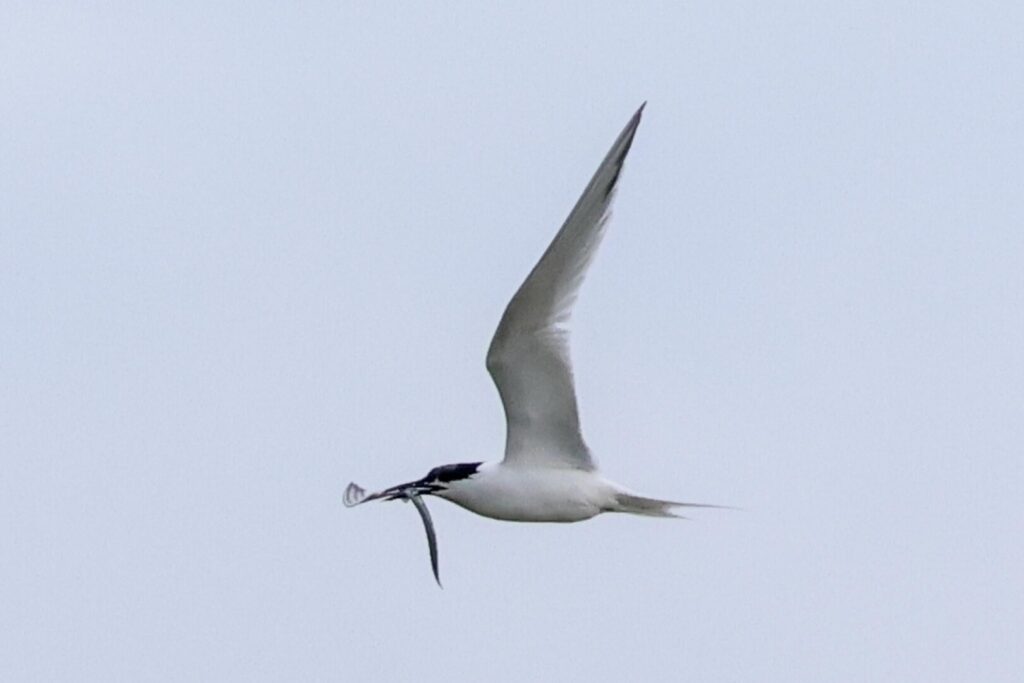
There had been some birds seen offshore earlier this morning, so we decided to brave the wind and have a look at the sea. There were more Sandwich Terns passing by constantly, mainly heading west, and another couple of Little Terns over the water. Otherwise, all we managed to see were a couple of distant Gannets and more of a surprise, a pair of Tufted Ducks flying west.
We didn’t linger too long on the beach today, and made our way back. A different Spoonbill was now out on the grazing marsh, this one an immature with fleshy-coloured bill and no crest. It was awake, so we got the scope on it, but it quickly disappeared down into the channel out of view. The same male Marsh Harrier did a repeat performance, flying in over the grazing marsh and then hunting out over the reedbed. A Great White Egret flew up out of the reeds briefly.
The sun had come out now, so we were hoping that the Marsh Warbler might be a bit more active. We walked back along the Skirts and were not disappointed. It was singing much more constantly now and we could really appreciate the variety in its song. We listened for the different species we could hear it copy – Blackbird, Swallow, House Martin, Chiffchaff, Cetti’s Warbler, Great Spotted Woodpecker , Blue Tit, House Sparrow, Pied Wagtail, Goldfinch, etc and even a little bit of Bee-eater. Amazing!
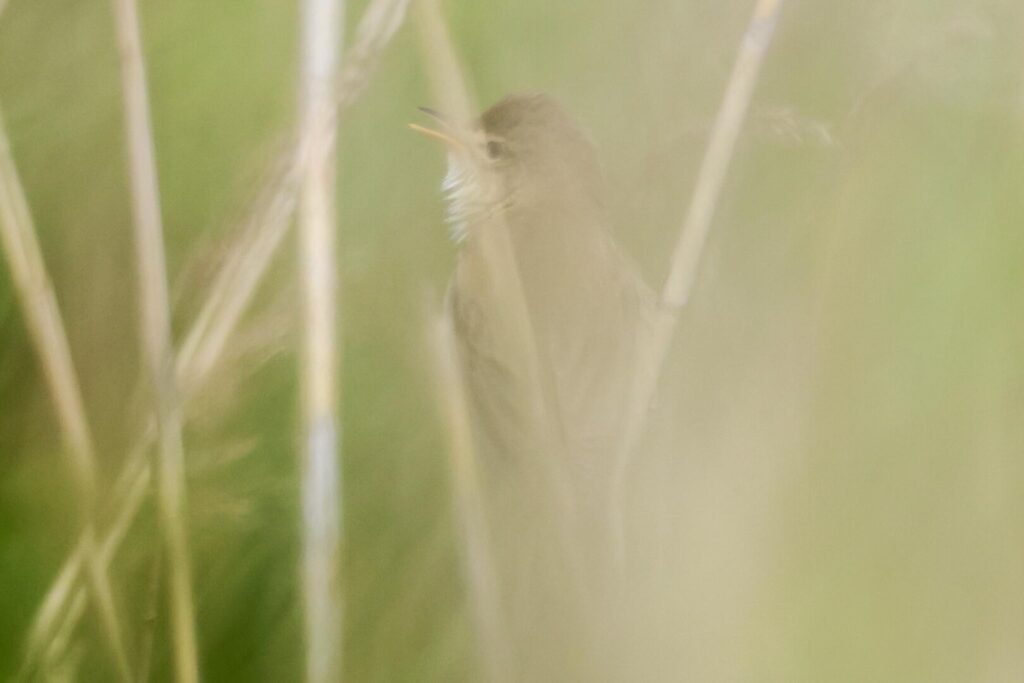
At one point the Marsh Warbler did perch on a reed stem singing for a minute or so. It was very hard to see though, low down, looking through the mass of taller reeds in front of it, and swaying side to side in the breeze. We mostly had to content ourselves with a brief view of it in flight, when it flew across over the top of the reeds. The best part of a Marsh Warbler is its song though.
After listening to the Marsh Warbler for a while, we walked back to the minibus. The Sedge Warbler was still singing by the Skirts path. As we passed Snipe’s Marsh, a Little Grebe laughed at us from somewhere deep in the reeds. We drove the short distance back to the Visitor Centre and stopped quickly to get permits and use the facilities. There was still time before lunch, so we headed out to Bishop Hide. A Red Kite was getting mobbed by Rooks over the reeds now.
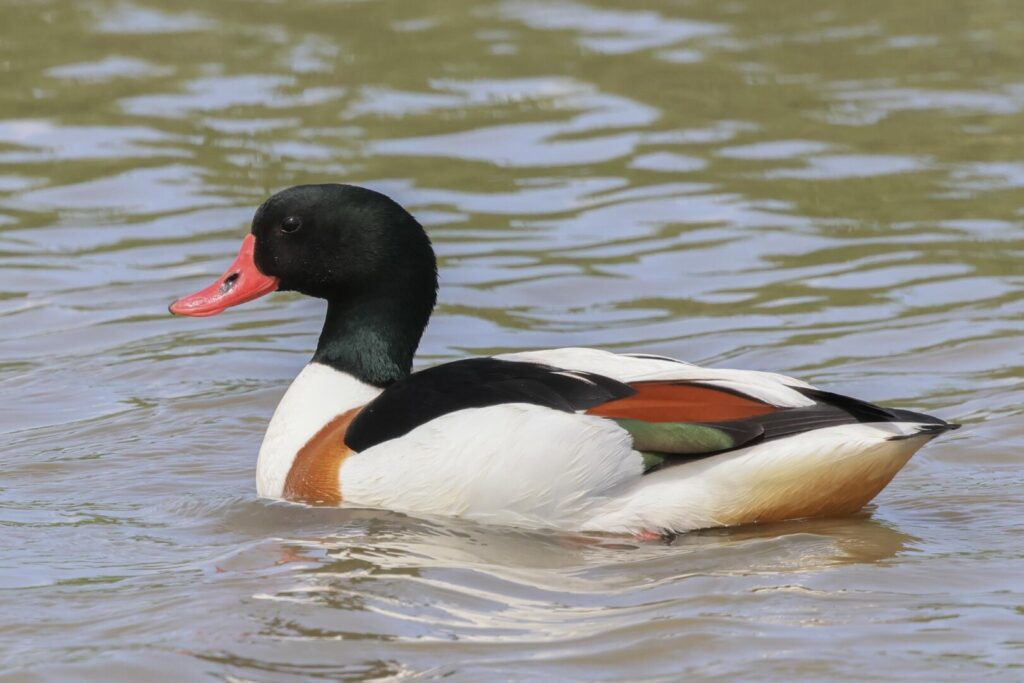
There were lots of Avocets and Redshanks out on Pat’s Pool. Scanning across, we found a pair of Little Ringed Plovers further back with one tiny chick. Little more than a small ball of feathers on legs! The female looked to be brooding some more chicks and the one we could see then made its way back under cover too. At least one pair of Shelducks had shelducklings too, while another male was bullying all the moulting ducks on the bank in front of the hide.
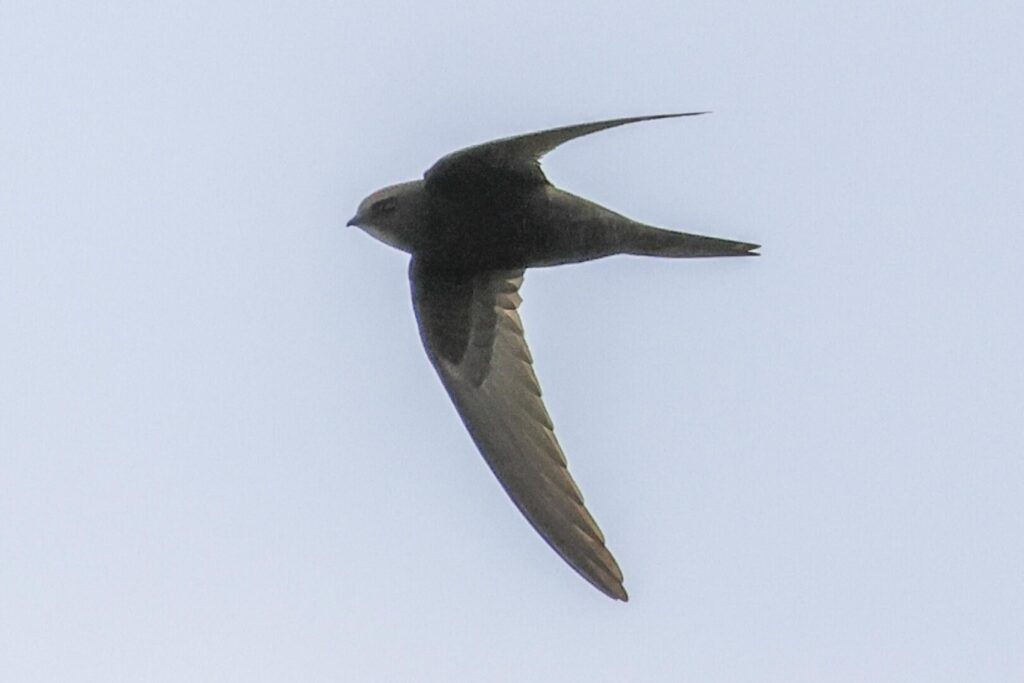
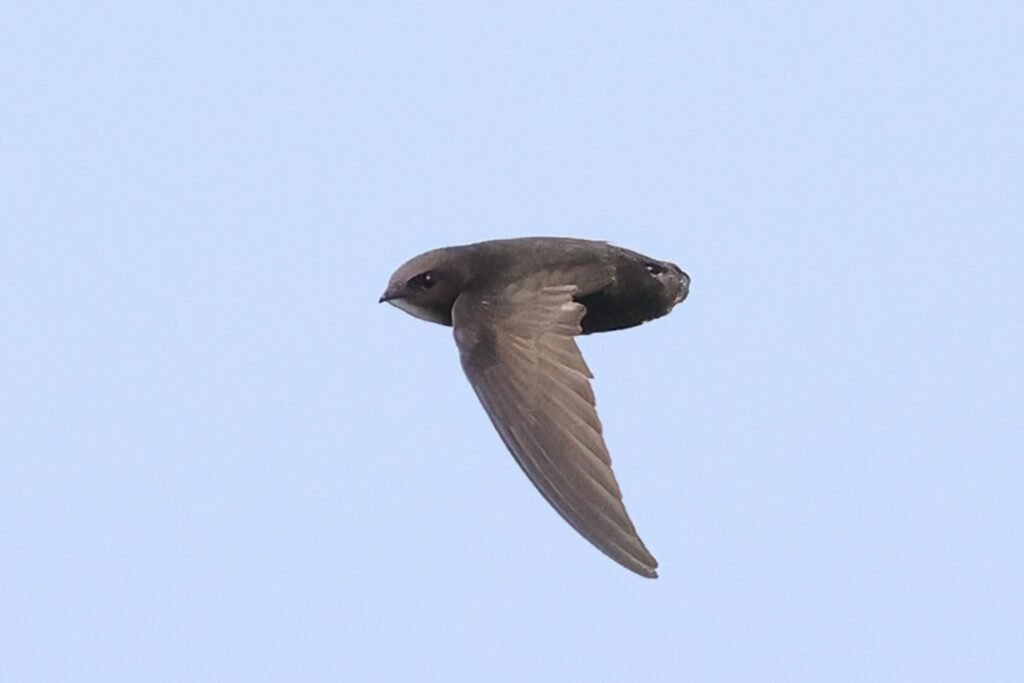
Another male Marsh Harrier came in a couple of times over the edge of the reeds, stirring up all the Avocets which tried to chase it off. There were lots of Swifts and a few Sand Martins still hawking low over the reedbed and the scrape. One of the Swifts briefly looked more interesting, reminiscent of a Spinetail, until we realised it was just a Common Swift completely lacking a tail. Presumably it had been in a scrap with something.
We picked up a Spoonbill flying in from the west. It flew towards the scrape and looked like it might land but then carried on straight past the windows.

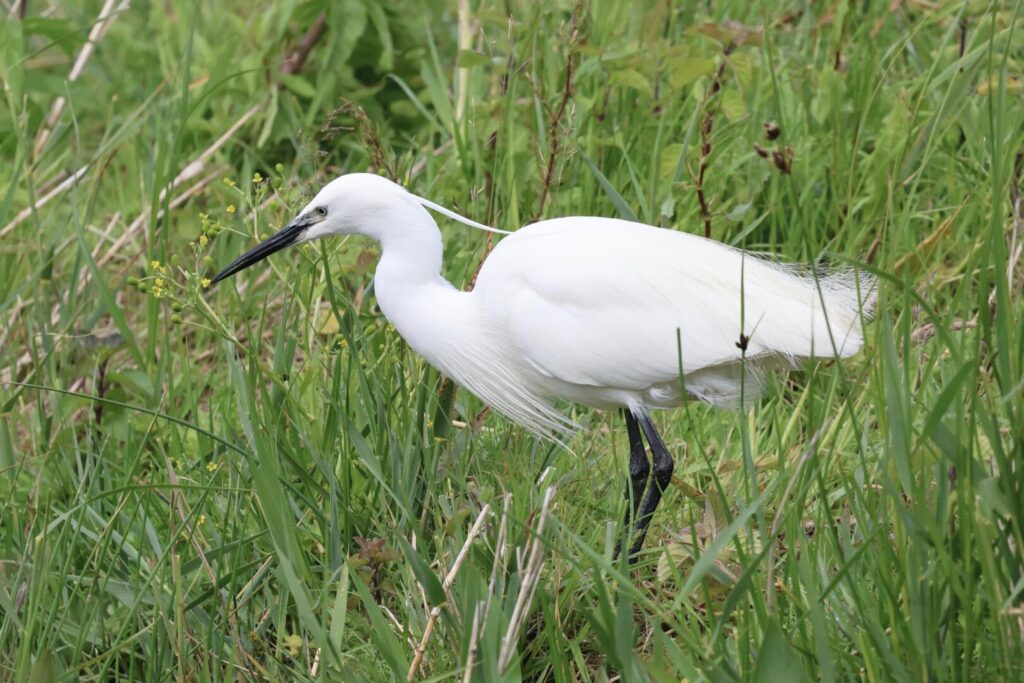
There were a few Little Egrets flying in and out too. One was fishing along the back edge of the channel in front of the hide. It settled down in front of the culvert but when another flew in, there was a disagreement over who had fishing rights to that spot.
It was time for lunch now, so we walked back to the Visitor Centre. It wasn’t too windy out on the picnic tables, the wind seemed to have dropped a bit, so we were able to sit out in front still. We were rewarded with a Hobby which circled up over Pat’s Pool.
Thankfully we were just finishing lunch when we saw some dark clouds approaching. We thought they might just miss us but we caught the back edge. As it started to rain, we made a quick dash for the Visitor Centre. The rain only lasted about 10 minutes and then the sun came out again. As we walked out to the central hides, a couple of Reed Warblers were singing by the catchwater drain and a few House Martins were flying round the warden’s house.
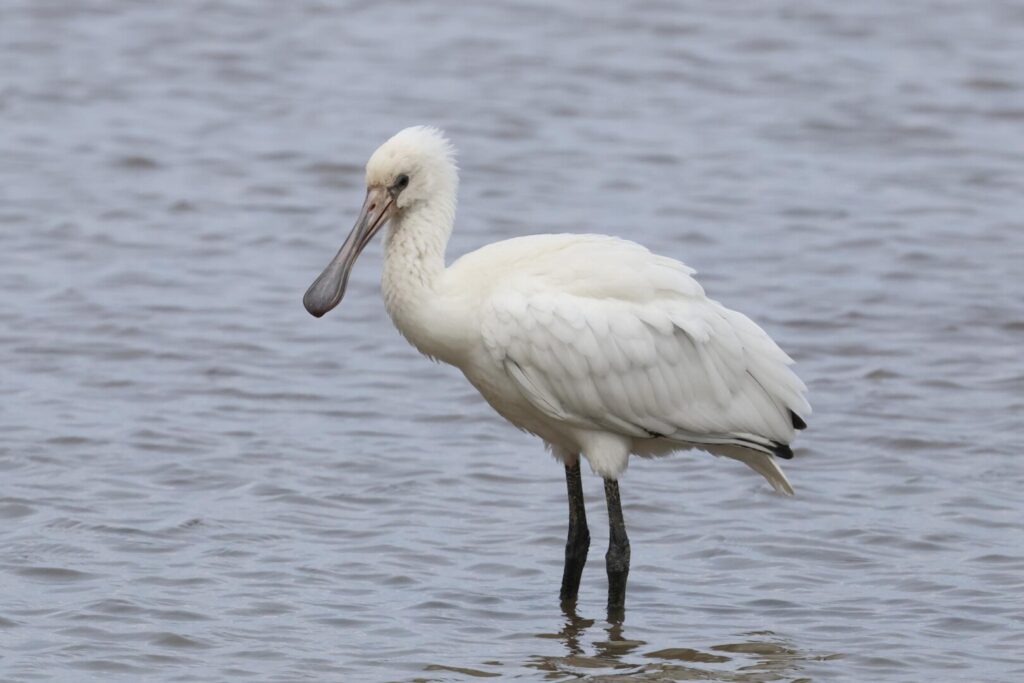
In Dauke’s Hide, there was a Spoonbill asleep right in front of the hide. When it eventually woke up and had a quick preen, we could see it was a very young juvenile with a short bill. A ‘teaspoonbill’. It went straight back to sleep, and repeated the same, only waking up briefly from time to time, all the while we were in the hide. Presumably it was waiting for its parents to come back with food.
There wasn’t much else of note on Simmond’s Scrape, just a couple of Little Ringed Plovers. We got one in the scope so we could see its golden yellow eye ring. Another band of showers blew in off the sea, so we stayed in the hide for a bit until they cleared through. A Cattle Egret flew up from where the cattle were feeding on Billy’s Wash but dropped back down out of view.
One of the broods of Swallows nesting in the hide was in the process of fledging. One juvenile had left the nest and was perching a little unsteadily on the window flaps. It kept flying a short distance and landing right in front of whoever happened to be sitting closest. The parents were in and out from time to time trying to encourage it.

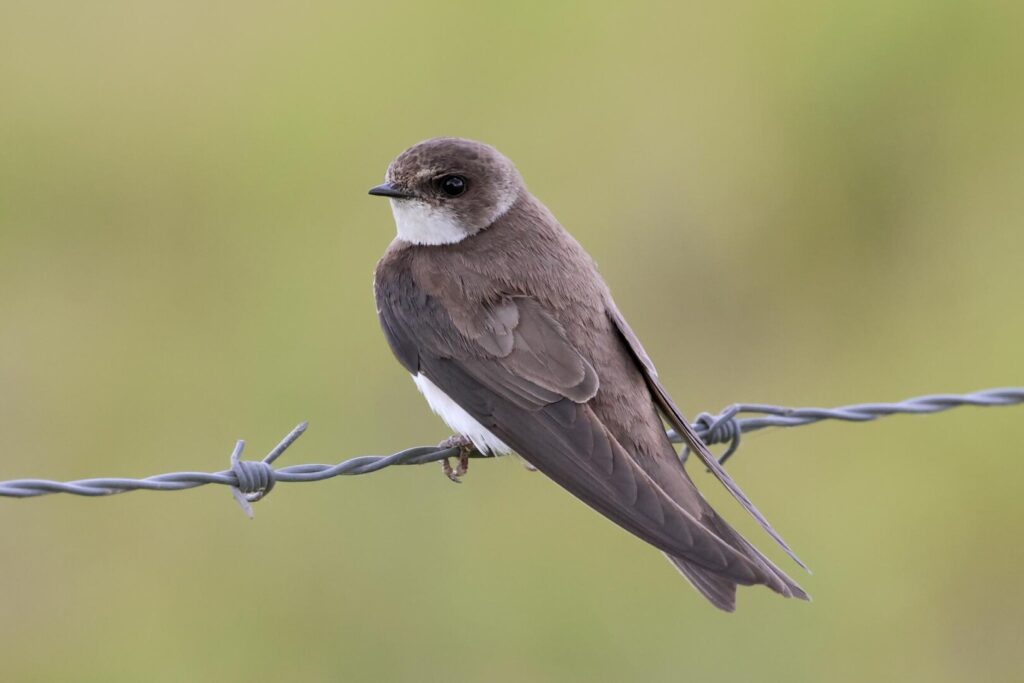
As the wind had dropped, most of the Swifts had flown off. We could see a large group very distantly now over the trees beyond the Visitor Centre. There were still a few Sand Martins flying around the scrape and a couple landed on the wires right outside the hide.
It didn’t take long for the rain to stop again, so when it did we walked back to the Visitor Centre. We decided on a change of scene and got in the minibus for the short drive east along the coast to Kelling.
There were a few House Martins flying in and out from the gable of the old Reading Room next to where we parked. Good to see, as they seem to be declining every year now. A Greenfinch was wheezing but had gone quiet by the time we got across the road. There were a few Chaffinches flying back and forth across the path. Walking up the lane, it was a bit more sheltered. There were several Blackcaps calling and singing in the trees, though they were typically hard to see. A Chiffchaff was calling in the copse.
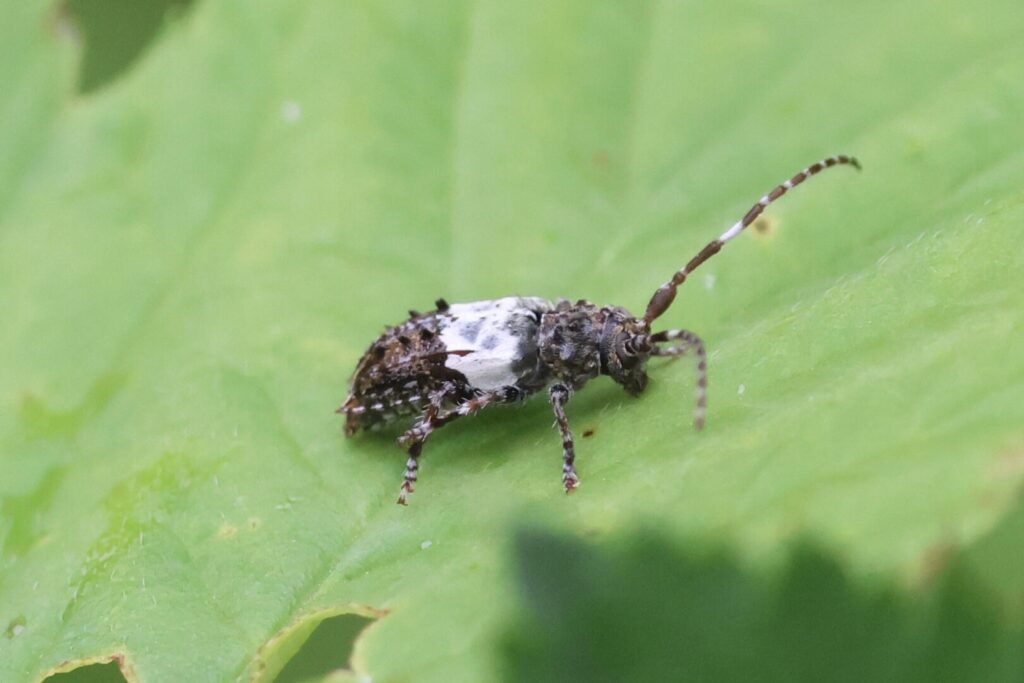
We checked the flowers in the lane There weren’t many butterflies out today – just a Red Admiral and a Large White. But there were lots of micro moths, ,ost notably a couple of Double Orange-spot (Pammene aurana) on the heads of hogweed and lots of Nettle-tap (Anthophila fabriciana) swarming all round the nettles on the verge. There were several different sawflies too. The prize for best insect when to a smart Greater Thorn-tipped Longhorn Beetle (Pogonocherus hispidulus) which we found on a leaf.
A pair of Red-legged Partridges were in the field beyond the hedge. Scanning from the gate by the copse, we could see a couple of Brown Hares in the field beyond the Water Meadow and lots and lots of Rooks. Further on, a Common Whitethroat flew up onto the top of the brambles briefly. A Sedge Warbler was singing in the dense vegetation right by the path so we stopped to listen to it. Definitely no metronome would fit with the mad stream of different chatters, churrs and rattles!
Scanning the pool from the gate on the crosstrack, we found a summer plumage Dunlin hiding on the edge of the mud. Through the scope, we could see its black belly patch when it turned round. Late for a northbound spring migrant Dunlin here, particularly a southern bird of the schinzii subspecies, it could be an early returnee already, a failed breeder. It felt a bit like autumn already today!
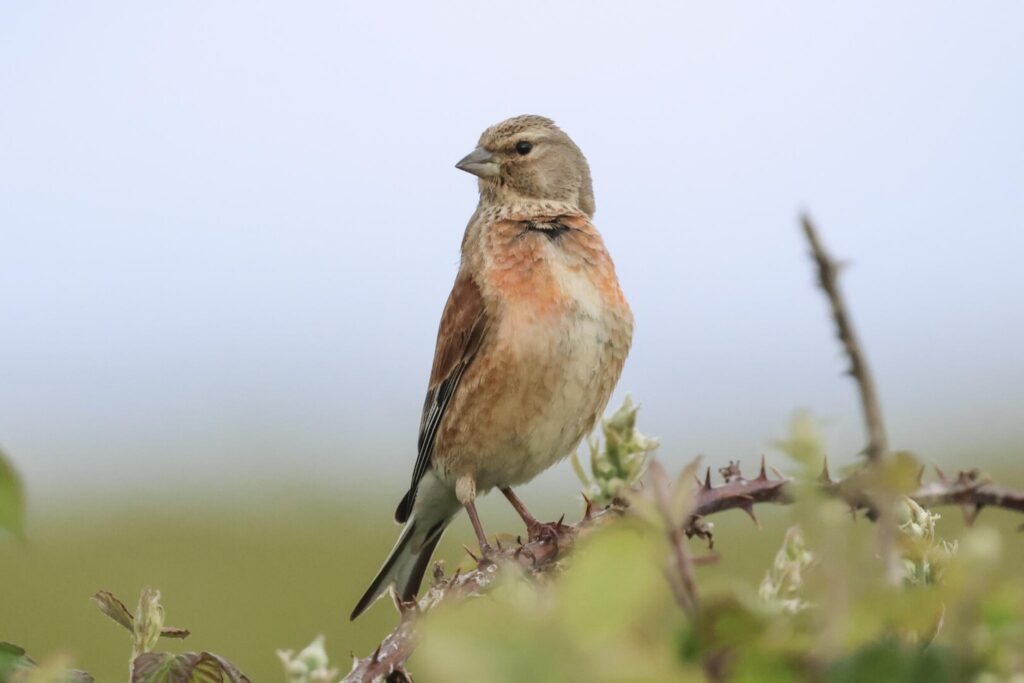
A small group of Linnets flew round overhead calling. Down along the path towards the Quags we found more perched on the brambles, including a couple of smart pinky-red breasted summer males. A couple of Stock Doves flew past.
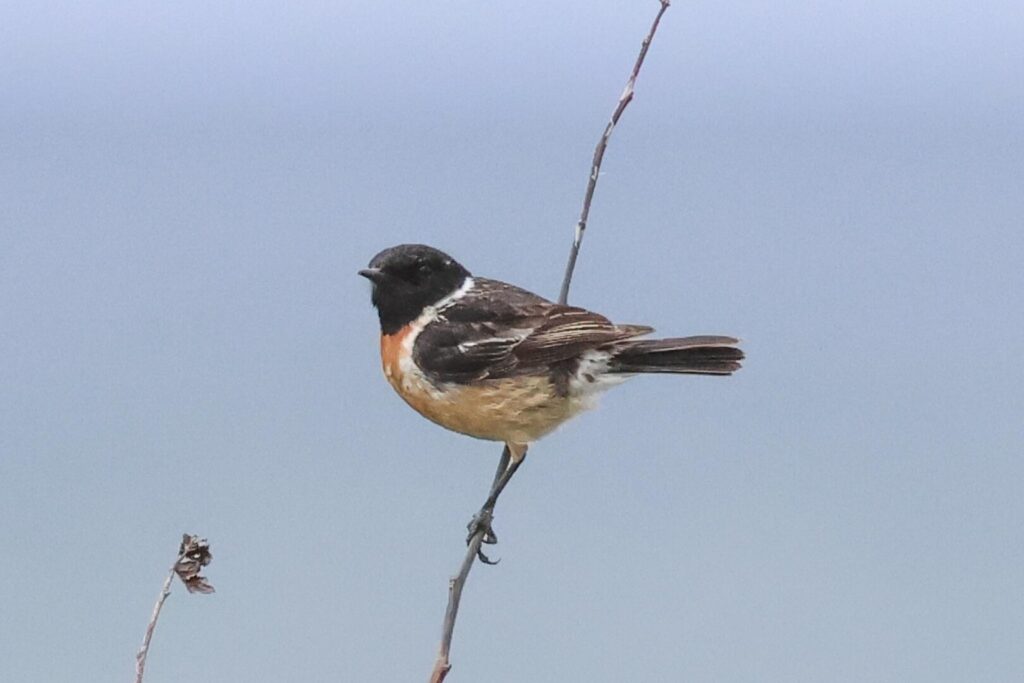
A male Stonechat was perched on the brambles on the corner but flew up into the bushes at the start of Weybourne Camp as two walkers walked past. We took the permissive path half way up towards the gun emplacements and found it again on the blackthorn clumps. It was accompanying two recently fledged, streaky juvenile Stonechats.
Looking out to sea from here, the Sandwich Terns were still streaming past. We picked up a Kittiwake flying past, in a line between two Sandwich Terns. A Kittiwake Sandwich? Not for long, the Kittiwake ‘filling’ quickly overtook the lead Sandwich Tern ‘bread’.
Unfortunately, it was time for us to head back. We had been remarkably successful today, given the weather and we had even managed to stay mostly dry!