A single day group Spring Migration tour today. It was another cloudy and cool day with a chilly NNW/NW wind coming in off the sea. We spent the first part of the morning on one of the local heaths, then dropped down to the coast for the rest of the day.
Our first destination this morning was the Heath. As we got out of the minibus, we could hear Willow Warbler and Blackcap singing in the bushes. A Stock Dove flew across the path ahead of us as we walked out. There were several Linnets perched on the bushes, there are always lots here. A pair of Stonechats was flitting up and down from the gorse.
We were just about to take one of the smaller paths to look for Woodlarks in an area where they have been feeding recently when two flew up in the distance ahead of us. They flew over towards another open area on the other side of the main path, so we decided to walk round that way instead. Once again, before we could get there they flew up and this time disappeared off over the trees out of view.
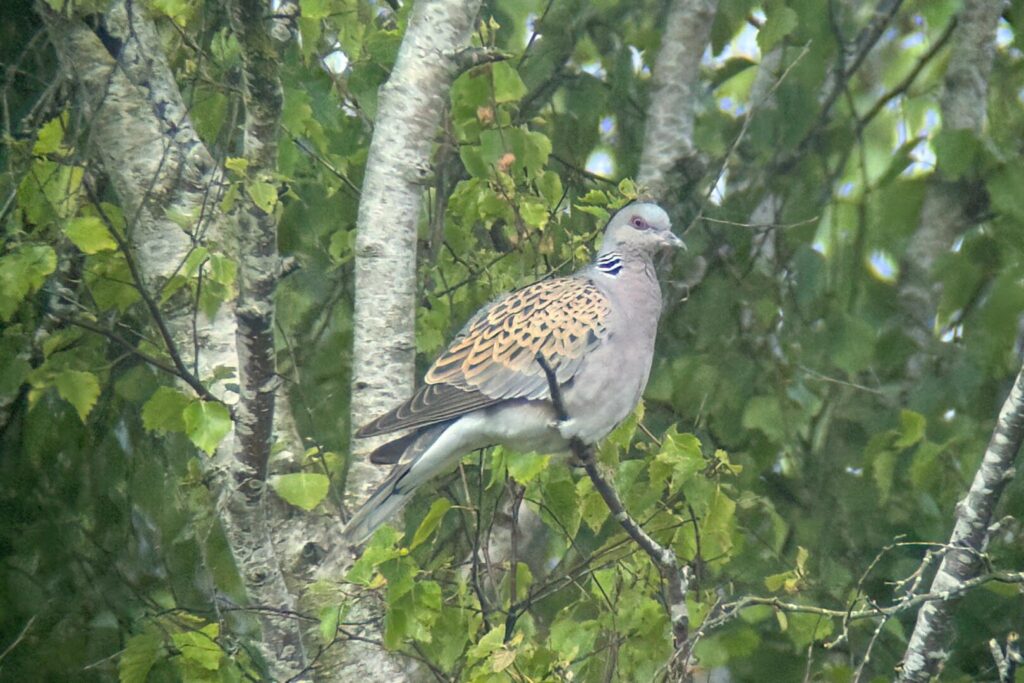
There was nothing in the open area now but then we noticed two Turtle Doves fly out from behind the trees just beyond. It looked like they would carry on away from us off over the heath, but as we raced round the clump of gorse in front to try to see if they might land, they circled back round. They landed in some birch trees further back where we got them in the scopes. They were slightly obscured in the leaves from here.
When a dog walker walked along the path below them and they didn’t fly, we figured we could get a bit closer to the Turtle Doves too. We walked round on the path and from further round we had a clear and unobscured view of the pair perched in the trees. Much better from here, lovely views. With the population down by 98% since the 1970s and the EU allowing them to be shot in France and Spain again this year (madness!), it feels ever more like we have to enjoy them while we still can.
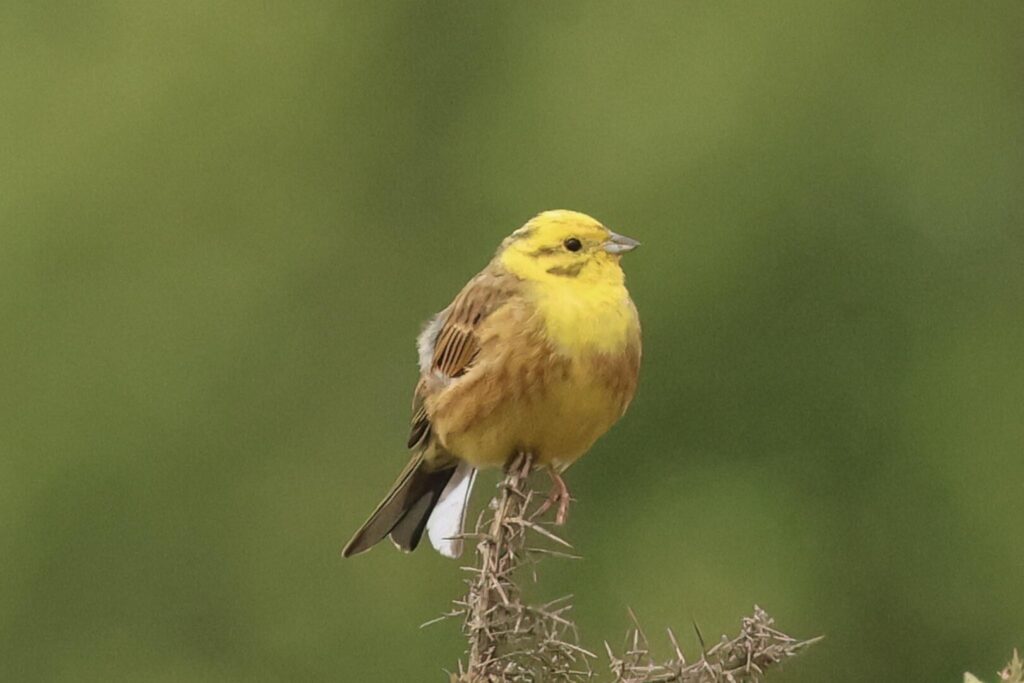
Having enjoyed the Turtle Doves for a while, we decided to move on and see if we could find any Dartford Warblers. As we walked round, we heard a Yellowhammer singing (“a little bit of bread and no cheeeese”!) and found a bright yellow male perched on a dead branch by the path. We watched it for a while through the scopes, then a female came up from somewhere below and the two of them flew off together.
On our way across the heath, there were more Willow Warblers, Chiffchaffs and Blackcaps singing, hard to see now with lots of leaves on the birches. Another pair of Stonechats flicked off the gorse ahead of us. A Common Whitethroat was singing and songflighting from the bushes.
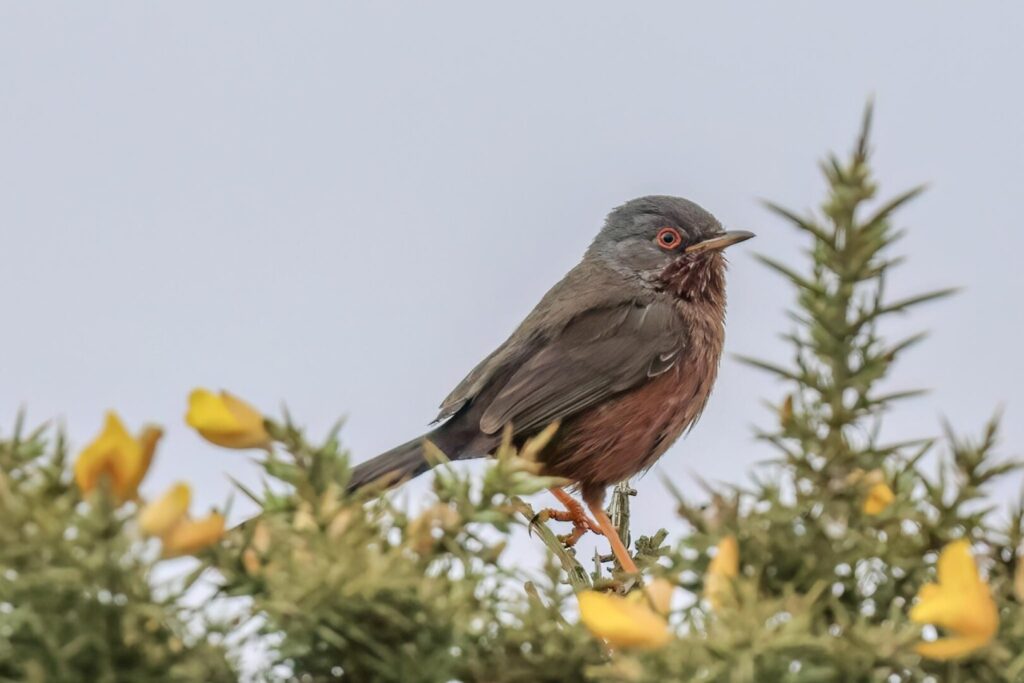
As we got to the area where we hoped to find them, a Dartford Warbler flew up out of the gorse and disappeared off round behind a nearby pine tree. We stood for a while and waited and eventually it came back in, perching up right in the top of the gorse where we had a great view of it, a male. The female zipped low across the path in front of us too.
Having had such good views of Dartford Warblers, we decided to have another go to try to find a Woodlark. We took the long way round, heading for an open area where we thought the pair we saw earlier might have gone to. On our way, another Woodlark flew up from the middle of the heath and again flew across the path ahead of us and disappeared off. Another Dartford Warbler was singing from the middle of a large, dense patch of gorse where we couldn’t see it. There were several Coal Tits in the birch trees.
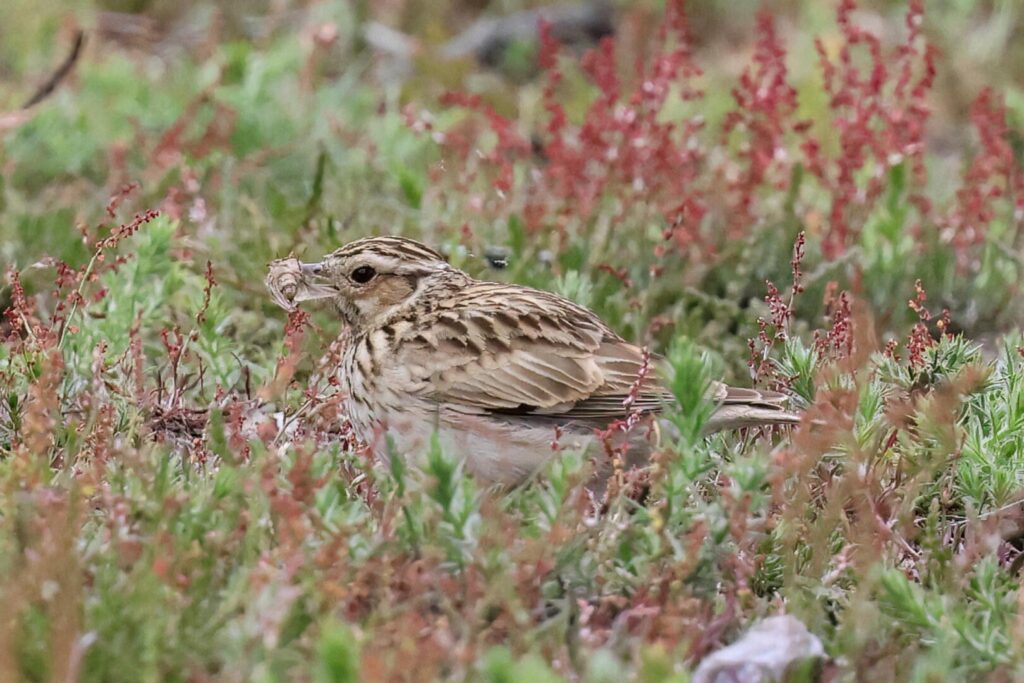
There was no sign of the Woodlarks in the open area, so we made our way back to the car park round via where we had been planning to go looking for them first this morning. Sure enough, they were back there. We found the male perched in the top of its favourite tree and got it in the scopes. When it dropped down, we could see it feeding on the ground below with a female. We watched them collecting food – presumably they have young somewhere.
A Bullfinch flew along the hedge behind us and landed in the top of a hawthorn. A smart pink male, we turned the scopes on that. While we were distracted, the Woodlarks must have flown off quietly because when we looked back they had gone.
Back to the minibus, we drove down to the coast and round to Cley next. A Common Whitethroat was singing in the car park and several House Sparrows were chattering in the hedge. After checking in, using the facilities and getting a coffee for those who needed a caffeine fix, we set off to walk out to the main hides.
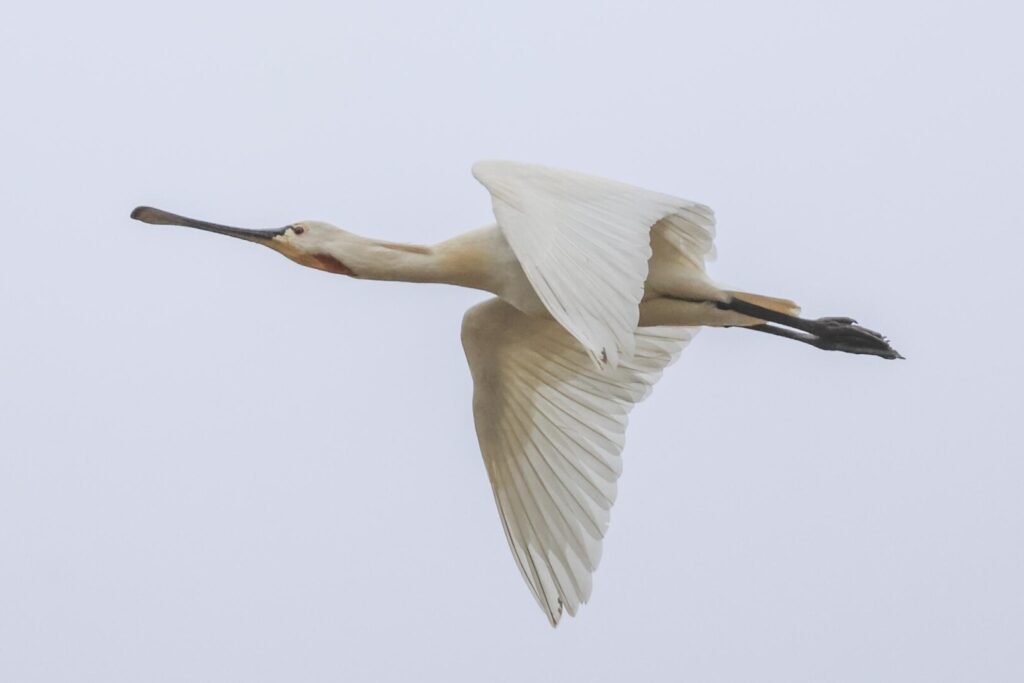
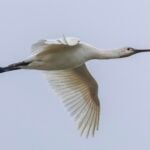
A Cetti’s Warbler shouted at us from the bushes as we stopped at the minibus to collect the scopes. Across the road, a couple of Reed Warblers were singing in the reeds by the catchwater drain. Further out, on the boardwalk, we could hear two or three Sedge Warblers singing. A chance to compare the more rhythmic Reed song with the manic Sedge! A couple of Spoonbills flew over, presumably heading out to the harbour to feed.
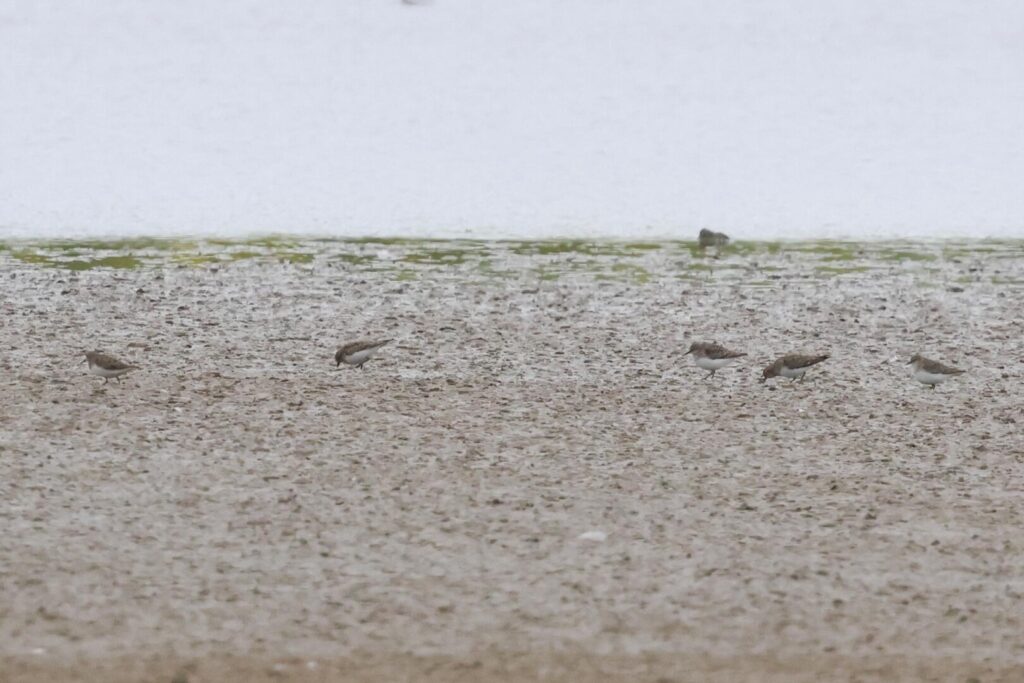
The Temminck’s Stints have been the highlight here recently. There were as many as ten in the last couple of days and still five reported this morning. When we got into Teal Hide we quickly found them out on Pat’s Pool but they were very flighty at first. Something spooked them and they flew round, heading off to Simmonds’ Scrape where they landed further back.
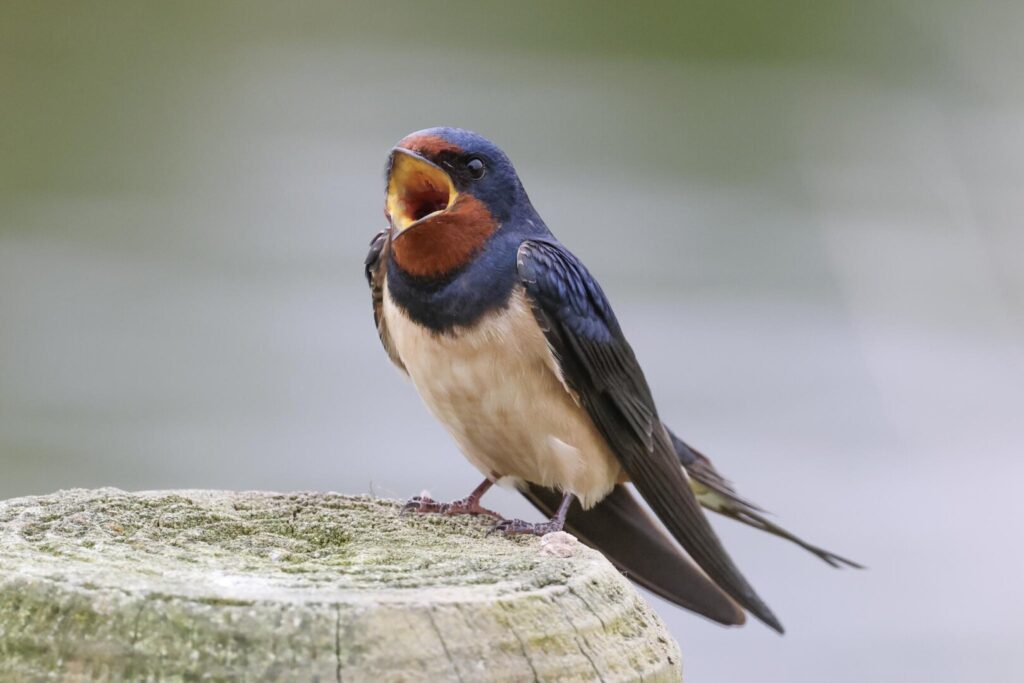
The Swallows are looking to nest in the hides here again this year and a pair was perched on the fence posts right in front of the windows. From time to time, the male was singing. There were several Sand Martins and House Martins hawking low over the scrape beyond, presumably struggling to find flying insects in the cool conditions today.
Scanning Pat’s Pool, we found a few other waders besides the Stints. A single Knot in rusty red breeding plumage was over towards the back with the Redshanks. Several Common Sandpipers were feeding on the edges of the islands along with a few Little Ringed Plovers. We got one of the latter in the scopes to admire its golden yellow eye-ring. Several Black-tailed Godwits were over by the reeds at the back.
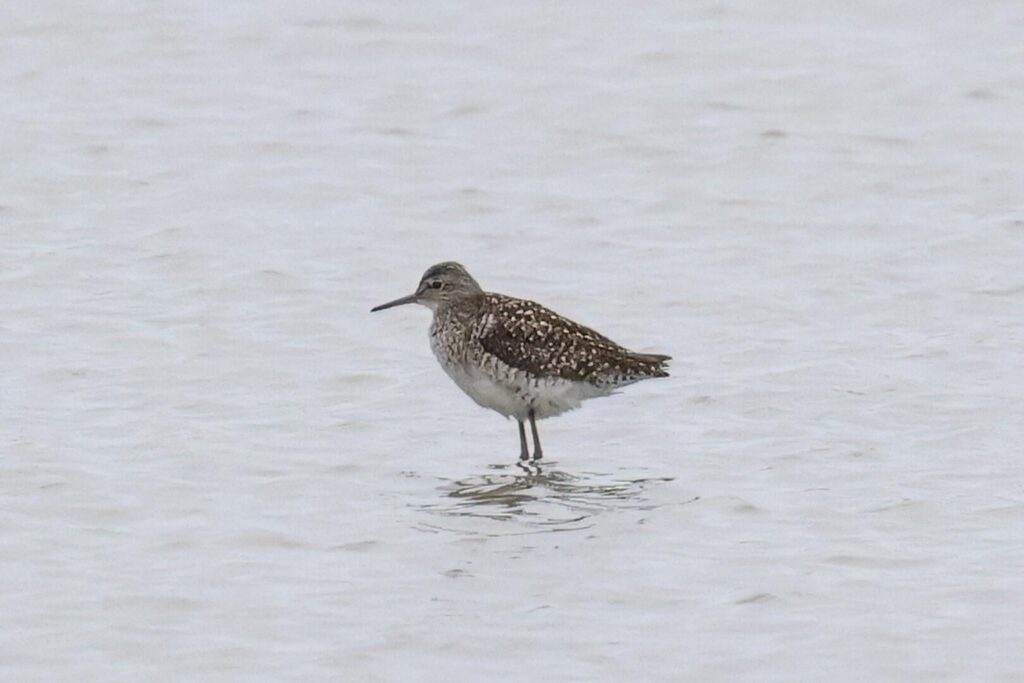
A Wood Sandpiper called and dropped in over by the Godwits. While we were watching it in the scope, it was chased by a Lapwing, round and round over the scrape. The Lapwings have a single chick on the mud and are chasing everything at the moment. The Lapwing eventually lost interest and the Wood Sandpiper landed in the shallow water much closer to the hide.
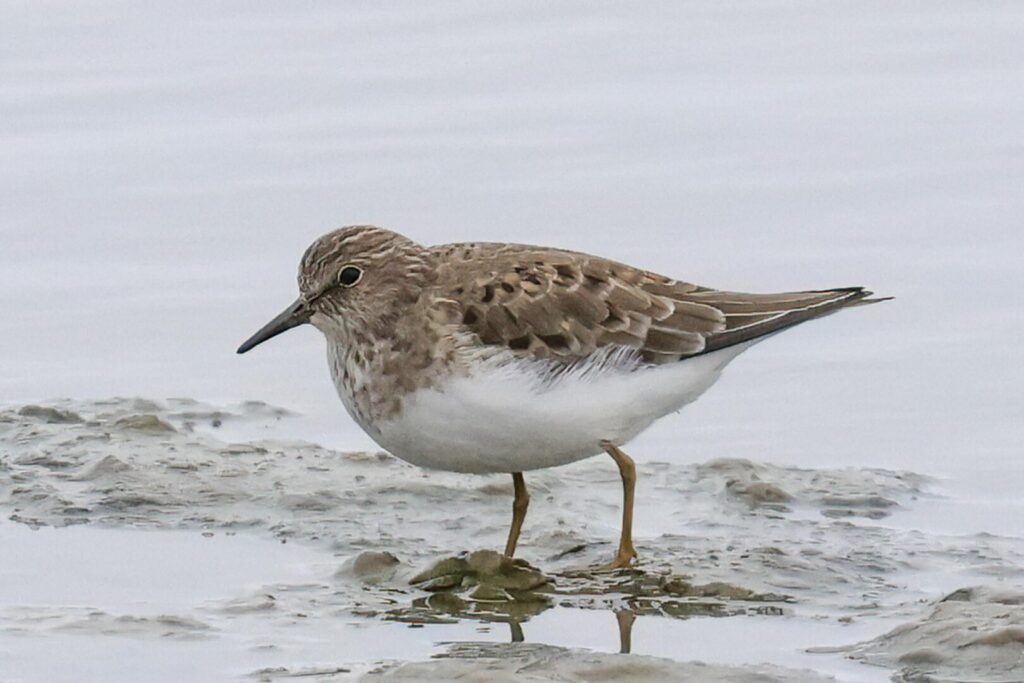
The five Temminck’s Stints flew back in and landed on the wet mud again. They gradually worked their way towards us, on the front edge of the nearest island, where we had a good view. We could see the variation in moult, some of them having more contrasting dark-centred feathers in their upperparts than others.
The Lapwing had a go at the Temminck’s Stints too and they scattered again. Three flew over and landed on the near edge of the scrape, just out of sight behind the bank in front. There is one section of the mud here which is visible from the hide and after a while they worked their way down and into view. Lovely close views of them now.
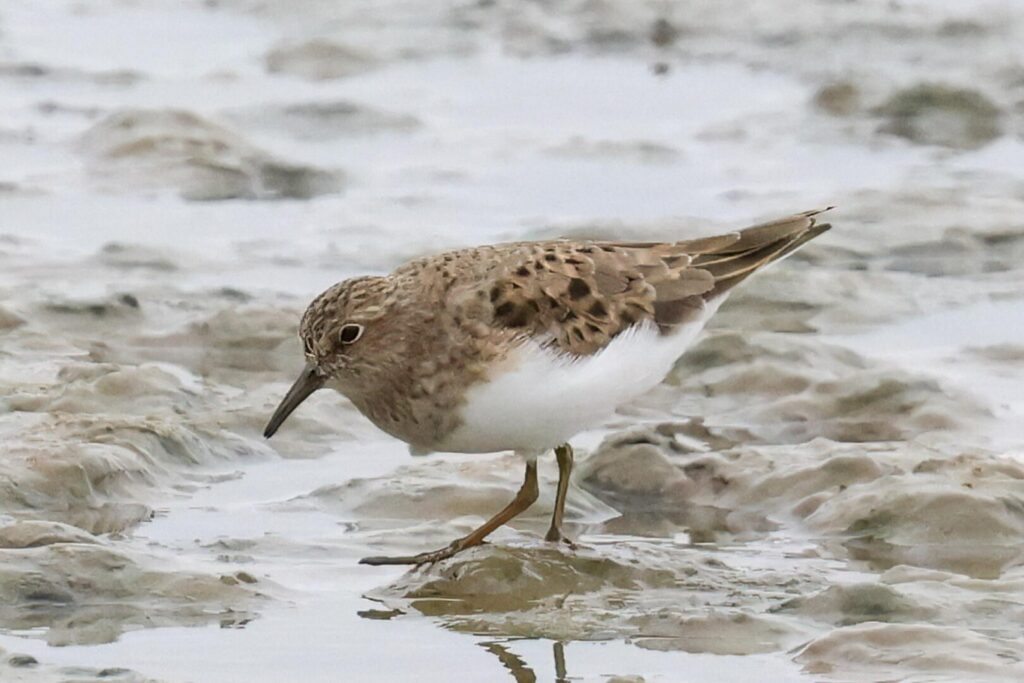
Temminck’s Stints are scarce passage migrants here. They pass through in spring in very small numbers, on their way from West Africa to Scandinavia for the breeding season. It is very unusual to see so many, but probably the cold N wind has meant they have stopped off here to feed rather than press on over the North Sea. They are much rarer here in autumn, so this is always the best time to see them here.
A message came through about a Bee-eater seen heading towards the East Bank, towards us. We scanned the sky to the east and over towards the coast road but couldn’t see anything. Then we discovered that the message had been relayed by a couple of people from the original observer and by the time it got out the bird had probably gone through already. Frustrating.
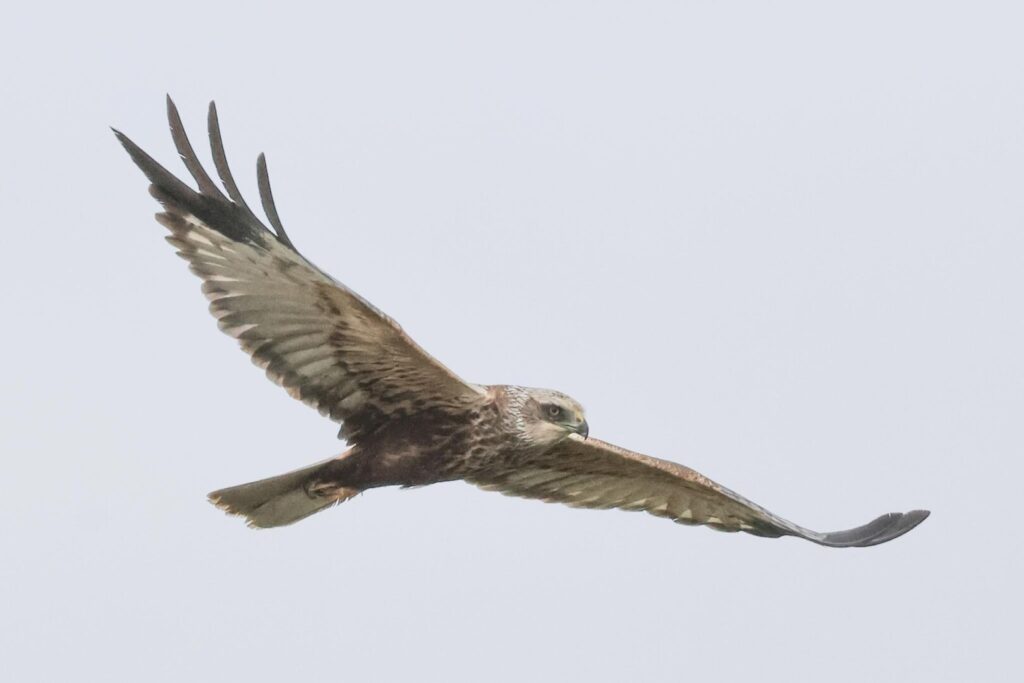
As the hide was rather full now, we decided to move on. A Sedge Warbler was singing outside the hide and a male Marsh Harrier flew in over South Pool and right past us.
There was still a little time before lunch, so we decided to drive round to the beach car park and walk out to North Scrape to see if there were any different waders on there. The sea was not as rough as it has been the last few days, but there were still not many terns offshore today, unlike a few days previously. A couple of Little Terns flew towards us along the start of Blakeney Point, but then turned and headed off back away again.
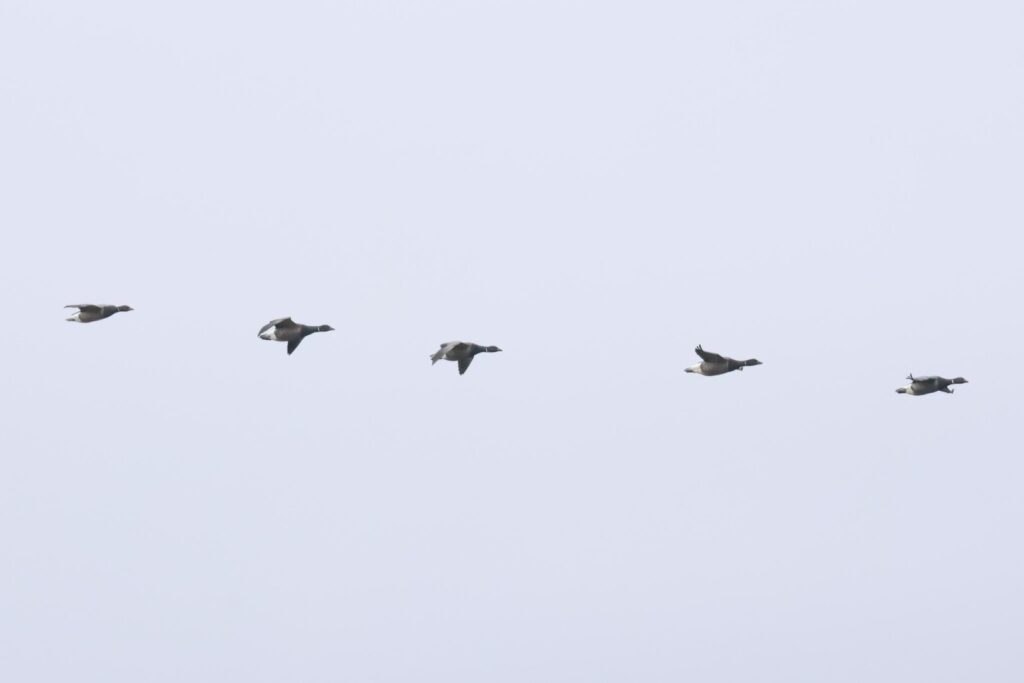
Some Brent Geese flew past over the sea and appeared to be heading out. It is about time for them to be leaving us now, heading up to Siberia for the breeding season. There seemed to be some Swallows on the move too. A succession of small groups flew past us just behind the beach, heading very determinedly west. Presumably the drop in the wind, and the change in direction to a NWerly was encouraging them to continue migration. A few Skylarks and Meadow Pipits flew round over the Eye Field or perched on the fence posts.
There was a surprising amount of haze over North Scrape, despite the lack of sun. Even so, we couldn’t see many waders out here. A few Ringed Plovers all looked like local birds of the nominate subspecies today. Four Wood Sandpipers came our from the emergent vegetation further back, more migrants stopping off on their way up to Scandinavia. A Little Tern flew round over the scrape, then dropped in to the water where it proceeded to bathe.
As we walked back to the beach car park, a couple more groups of Brent Geese flew past over the sea. Then a much larger flock came up out of Blakeney Harbour and flew towards us over the beach. Some definitely turned and flew towards the reserve, but it was hard to tell if others were heading out to sea too.
Back at the Visitor Centre, it was time for lunch. It wasn’t too windy today and we could make use of the picnic area. A few Common Swifts were hanging in the breeze over the car park. A Lesser Whitethroat landed in one of the bushes right by the picnic tables briefly.
After lunch, we drove round to the East Bank. A Little Grebe was laughing at us from somewhere in the reeds on Snipe’s Marsh as we passed. A Spoonbill flew out over the trees towards Pope’s Marsh as another flew back in. As we walked out along the bank, a third Spoonbill was still out on the Serpentine, but flew in overhead before we got there.
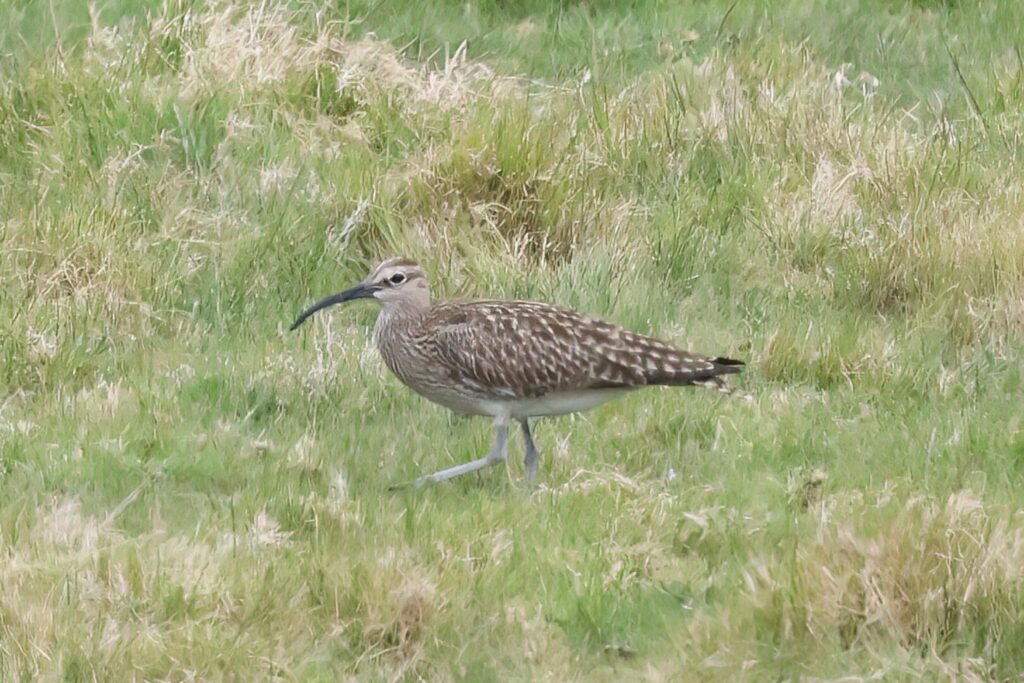
We stopped to look at two Whimbrels feeding on the grazing marsh below the path. Through the scoped we could see their humbug-striped head and shorter bills than a Curlew. Looking back to Pope’s Pool beyond, there were several Black-tailed Godwits, a single drake Wigeon, and an adult Lesser Black-backed Gull. The usual Cormorants and young Great Black-backed Gulls were on the islands.
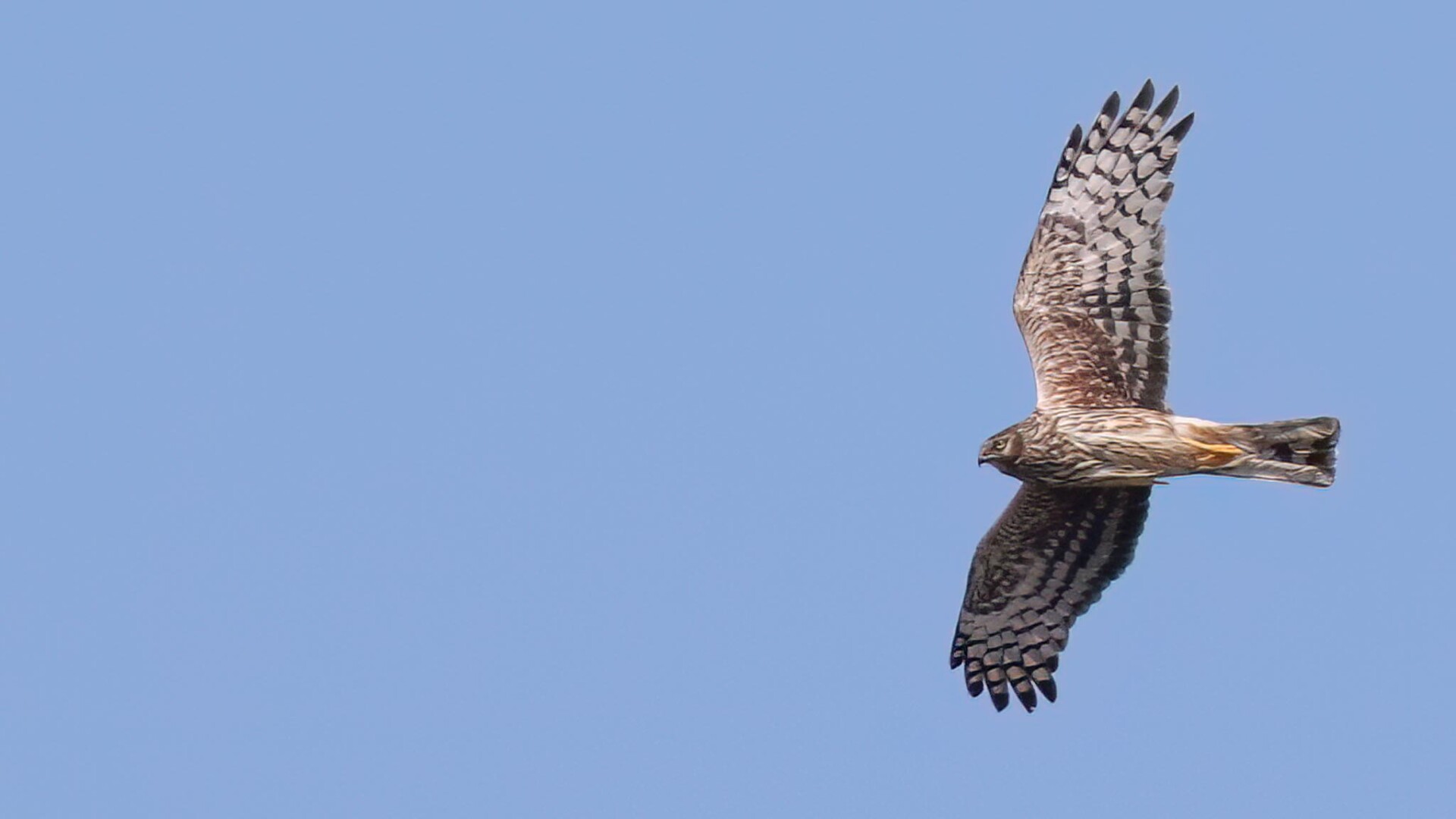
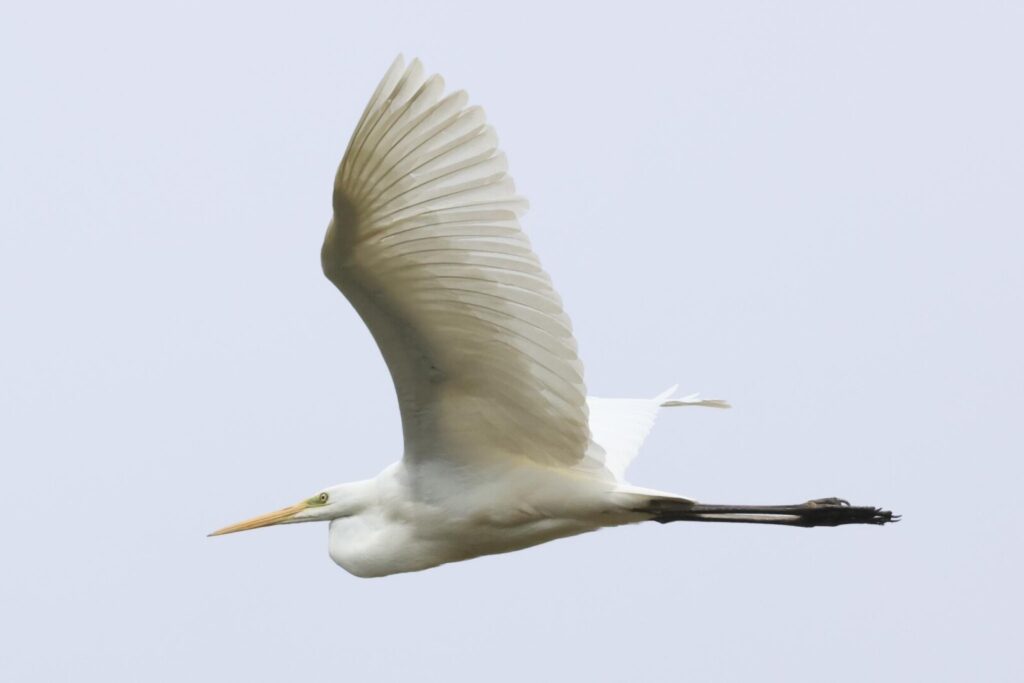
Further up, on the Serpentine, we found two more Wigeon but there was no sign today of the Pink-footed Goose which has been lingering here recently. A single Golden Plover was tucked in on the back edge. There were several Little Ringed Plovers on the mud along with two Common Sandpipers. A Great White Egret flew over and a Marsh Harrier flew round over the reedbed.
Up to Arnold’s, we managed to find a bit of shelter from the wind before Richardson Hide. There wasn’t much of note to see out here today though. Two Golden Plovers presumably included the one from the Serpentine we had just seen (it wasn’t there on the way back). Two distant Little Terns were on the back of the Brackish Pool.
We heard what sounded like a Bee-eater call, distantly out over the reedbed. It wasn’t clear though, with the wind and plenty of background noise too. We shouted ‘Bee-eater’ and scanned but couldn’t see anything. The one earlier had seemingly gone west, so we started to wonder whether we had imagined it. But then a message came through that someone else had heard it over Teal hide at the same time. Could it be hanging around somewhere?
On to the beach, we had a look out to sea again quickly. A very distant group of Brent Geese flying east were so far out they were definitely heading off back to the continent and Siberia. A single Sandwich Tern flew west and a Gannet flew east, but neither was particularly close.
We decided to head back. On the way, a Ringed Plover dropped in with the Little Ringed Plovers on the Serpentine. It seemed rather smaller and darker than the ones we had seen earlier, its mantle closer in colour to the LRPs, presumably a Tundra Ringed Plover stopping off on its way further north. Another report came through about a Red-footed Falcon flying west over Salthouse Heath. There was a suggestion it might have been heading for the Hangs, so we scanned behind Walsey Hills but couldn’t see anything (it turned out it had actually gone south-west).
We thought it might be worth a quick look to see if the Bee-eater might be hanging around in the comparative shelter of the Glaven Valley, behind Cley village. We had a quick drive round, scanning the wires, but we couldn’t see anything. So we decided to cut our losses and drove across to Kelling.
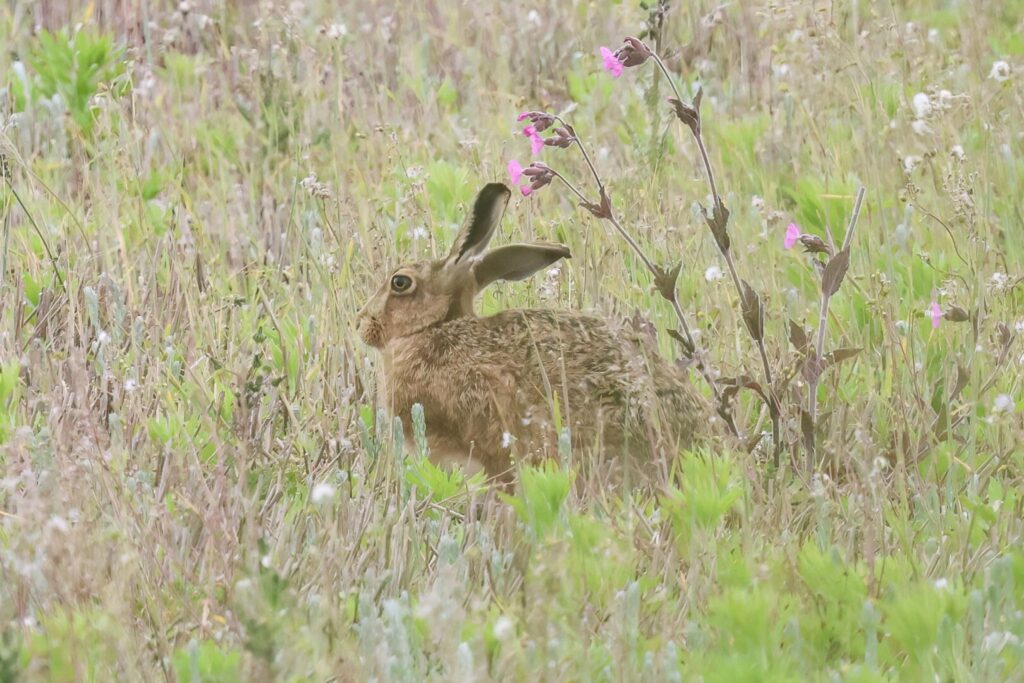
There were a few Goldfinches and a Greenfinch in the fir tree by the school. Lots of Rooks were cawing in the rookery in the pines behind. The fields were full of Rooks too, several adults with freshly fledged juveniles, all being very noisy. In contrast, as we walked up the lane it was rather quiet and there were few birds singing in the hedges this afternoon. We did see several Brown Hares in the fields.
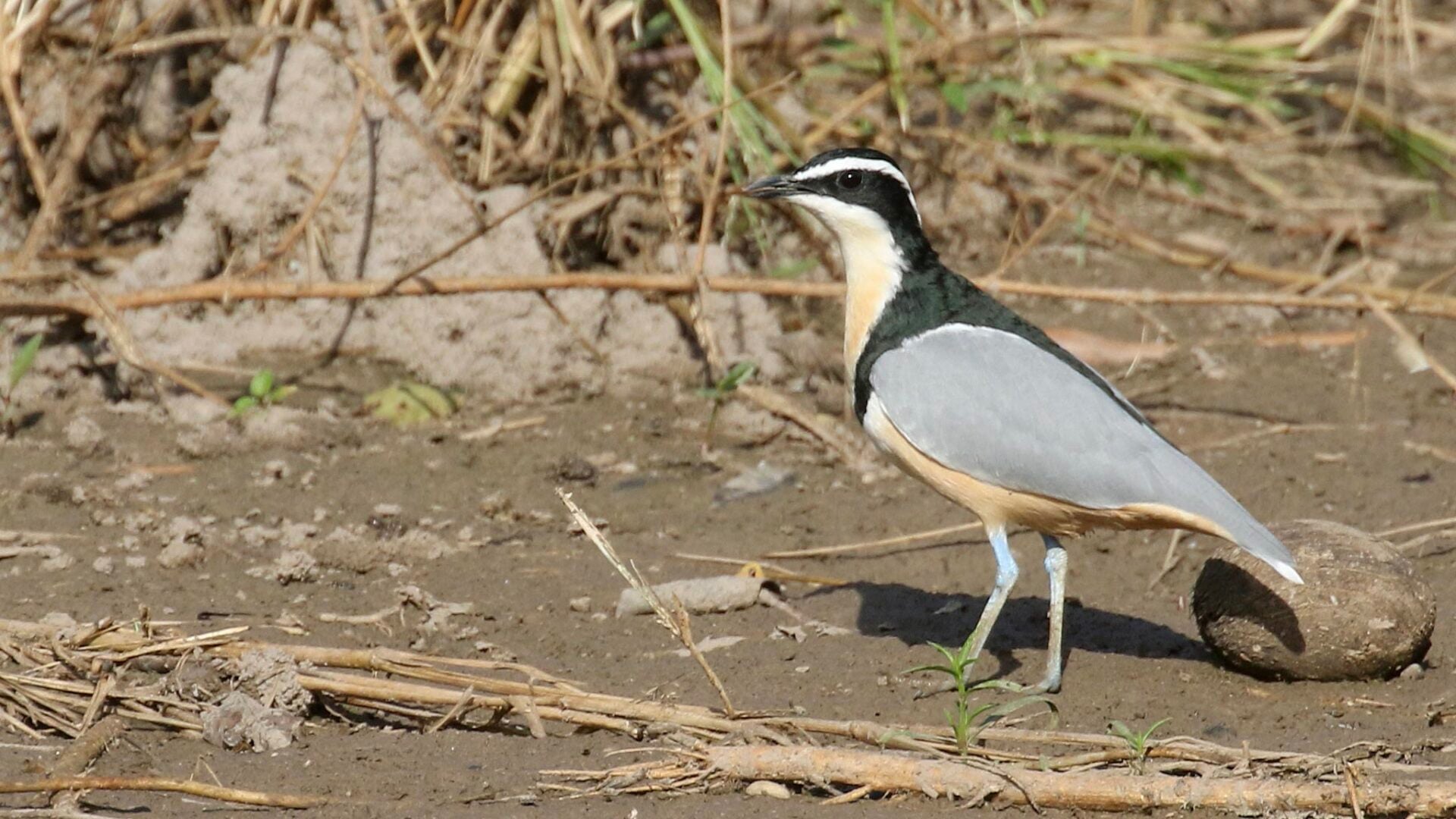
Continuing on down to the Water Meadow, we were surprised to find there was no sign of the resident pair of Egyptian Geese today. There were no wagtails with the cows either. Down towards the Hard, there were several Linnets in the brambles and a male Stonechat flicked up onto a blackthorn clump behind the beach. Up towards the guns, we scanned the sea but could only find a small group of Common Scoter offshore today.
There was no sign of any migrant passerines around the bushes or the gun emplacements. As we walked up for a quick check of the radar compound beyond, we heard a Greenshank calling. As it was overhead, we finally picked it up, very high, heading east. It seemed to get over the Camp and turn, presumably having seen the cliffs stretching off east and then south, with no further marshes in sight. We thought it might have decided to come back, but instead it headed NE out to sea.
Presumably on its way up to Scandinavia, it was a fitting end to our Spring Migration tour to watch the Greenshank heading off on the next leg of its journey. Migration in action! Sadly, it was time for us to call it a day and head back now.