Not a tour, but an annual pilgrimage to the Shetland Islands. We would still like to run a tour here, so if there is enough interest, please let us know and we will look into possible arrangements.
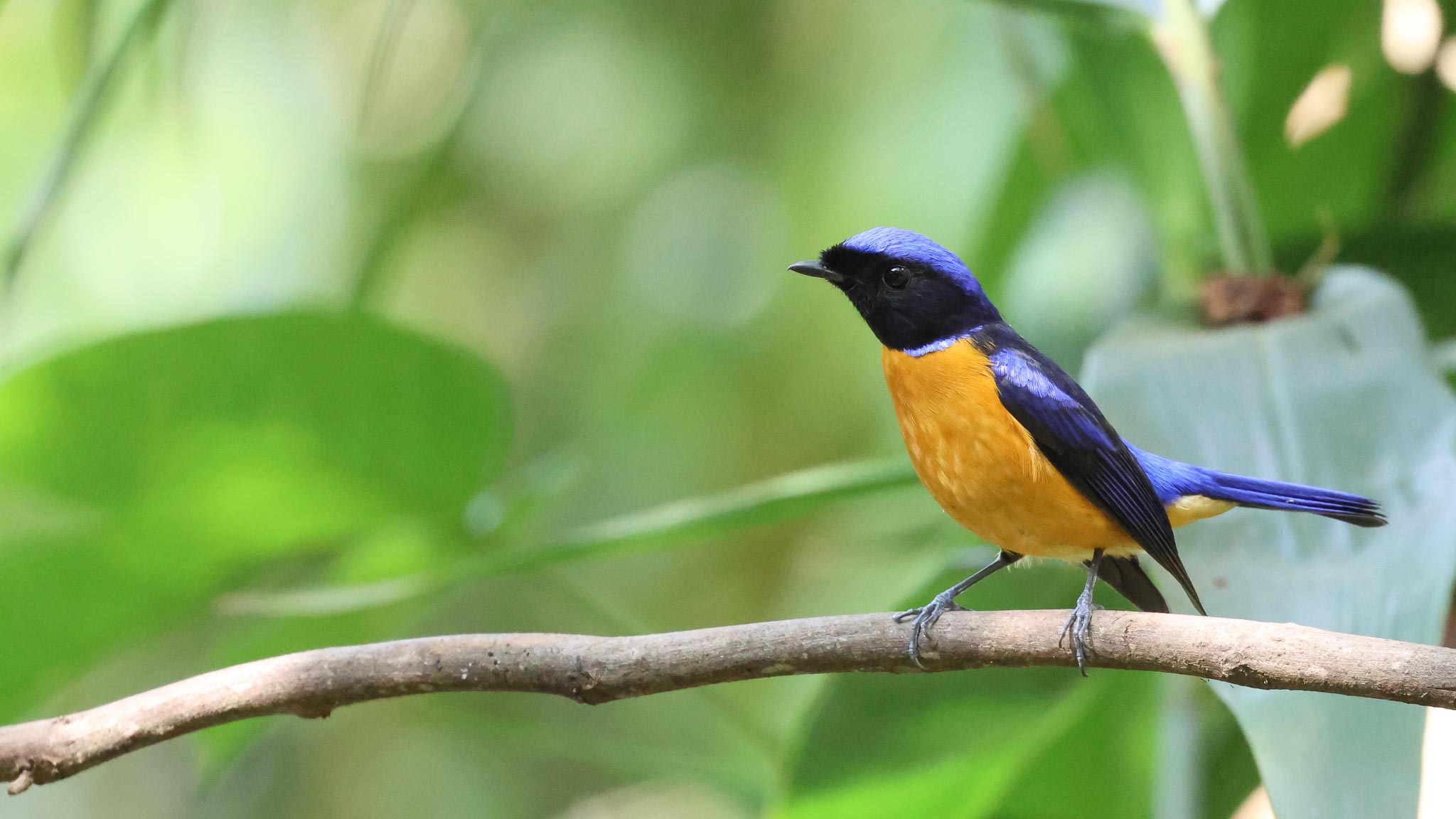
On the drive up, a short diversion in East Lothian took me down to the beach at Skateraw. As I arrived, there were already just a couple of people there and they confirmed that the Red-flanked Bluetail found here yesterday was indeed still present. It was a bit elusive though, hiding in the dense bushes and occasionally getting chased out by a couple of Robins.
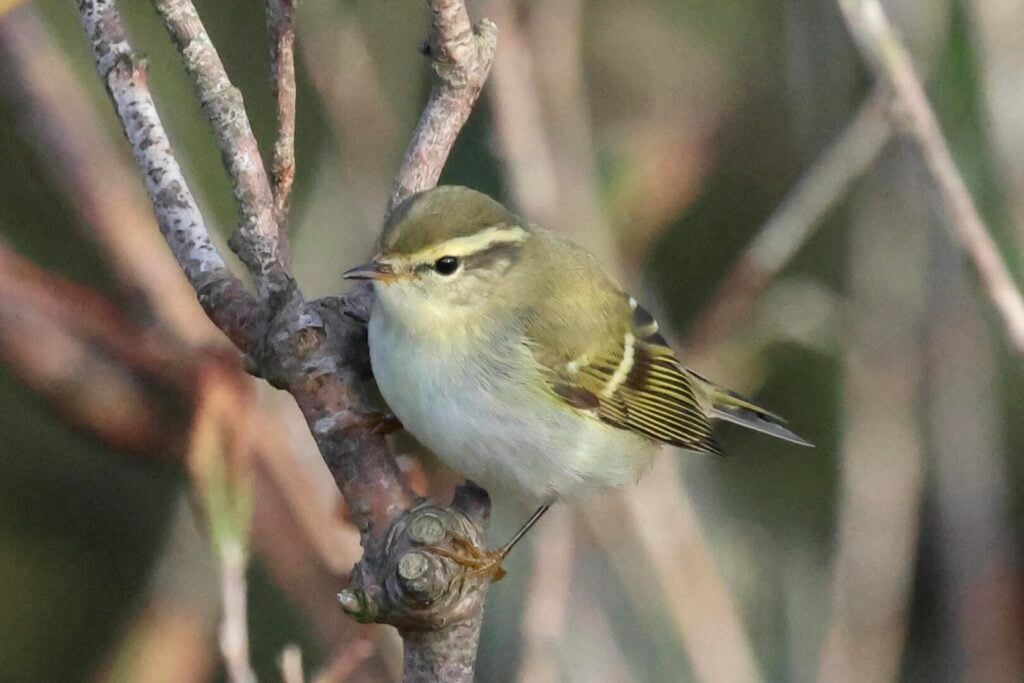
My ferry sailed overnight from Aberdeen to Lerwick, arriving at 7.30am. Needing to stretch my legs, I drove straight to Quarff for a walk, doing a circuit of Wester Quarff first and then round Easter Quarff too. The best bird I found was a Yellow-browed Warbler – there were plenty on the islands and I would come across at least one most days. There were also a few thrushes in, particularly Redwings, Bramblings and a couple of Redpolls.
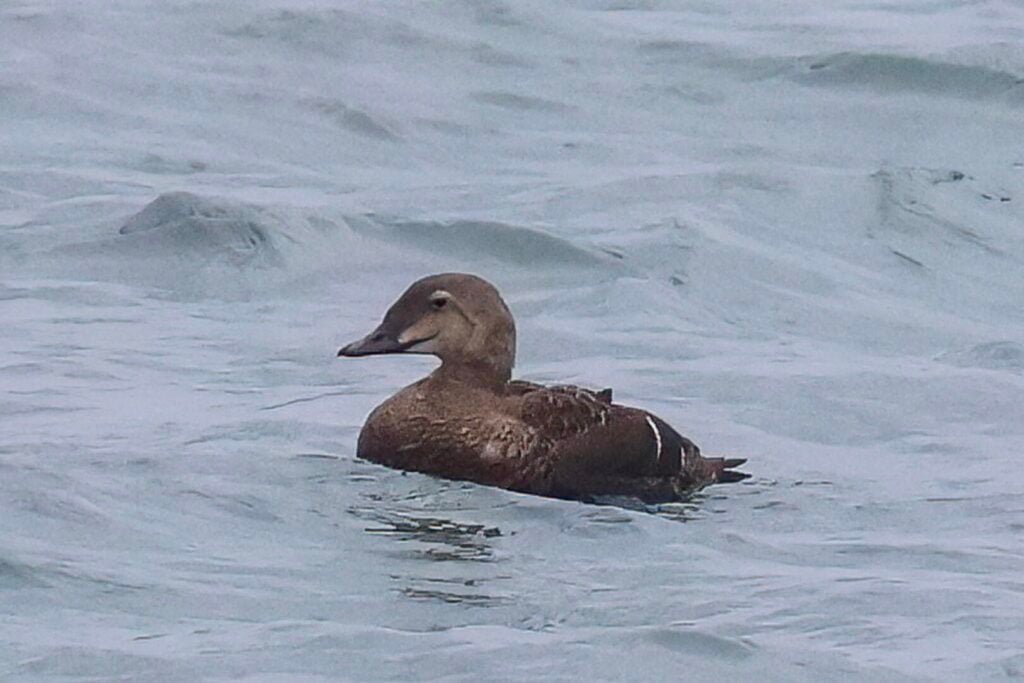
I needed to get some shopping before I checked in where I was staying, so I drove back up to Tesco in Lerwick. There had been a lingering female King Eider (Queen Eider!) just off Twageos Road in Lerwick for some time, so I went for a quick look at that after shopping. Nice views, diving with a small group of Common Eider.
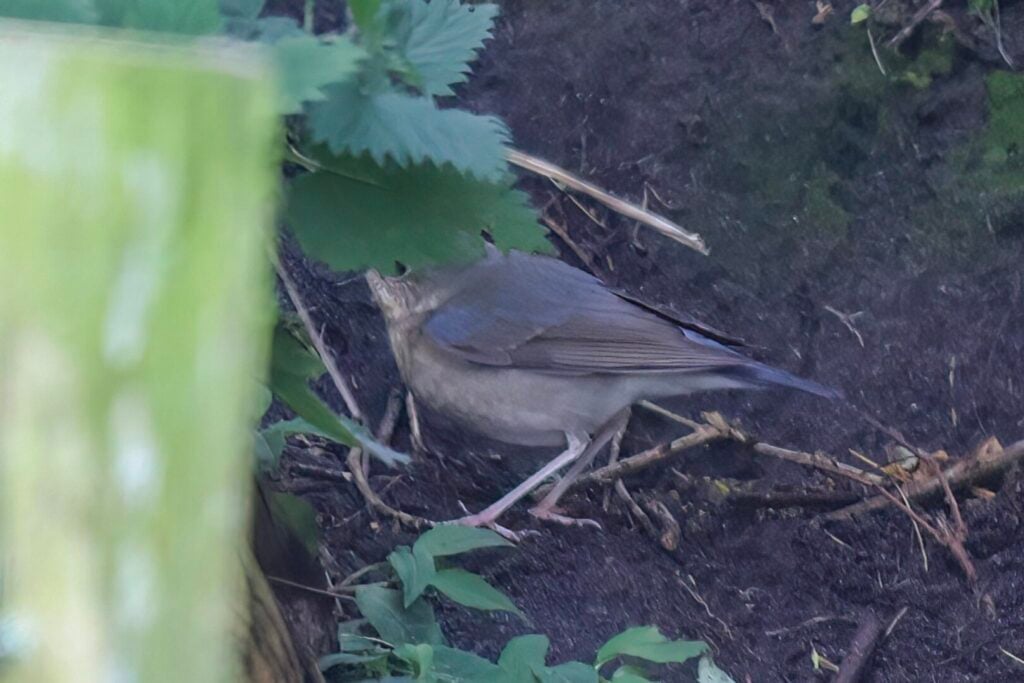
Then my plan was to head to the accommodation to drop off my shopping. But as I checked my phone I noticed several messages. There was a Siberian Blue Robin in local birder Hugh Harrop’s garden down at Hillwell! Knowing it would attract a big crowd, I was momentarily tempted to wait and go later. However, given the enormity of the record I decided to head straight there.
The first bit of luck was finding a parking space. As I drove down, I got a message to say that Quendale was full. I was about to turn round but fortuitously, I managed to get the last space in a large layby in front of some houses where I wouldn’t block any traffic. It was only about five minutes walk away.
As I arrived in the garden, there was already a large crowd. People were neatly lined up a discrete distance from the rose bushes on the side of the garden though. The next bit of luck was meeting someone I know from Cley who told me I was better going further down the line of people. Even though there were more people there, the bird was apparently visible more regularly from further down.
One advantage of being fairly tall, is that I could find a spot where I could see over people’s shoulders. I didn’t have to wait too long before I got a couple of glimpses of the Siberian Blue Robin moving about deep in the roses. Untickable views! Then a couple of minutes later it came out onto a bare patch of ground at the base of the bushes. Not for long, and I couldn’t lift my camera where I was, but it stood face on to us for a second or two, then turned round and hopped back in. Much better!
A regular (European) Robin had apparently been chasing its Siberian Blue cousin off all morning. The next thing we saw of it, the Siberian Blue Robin flew out with the Robin in pursuit. It flashed across the garden past the assembled crowd, showing off its blue tail, and disappeared into some fuchsias behind us.
My final bit of luck was that I happened to be standing in just the right place to see into a gap under the fuchsia hedge. Three or four times, the Siberian Blue Robin hopped across the gap. Mostly it disappeared out of view the other side, but it was possible to see it under the bushes at times and once it perched in the open.
What happened next, no one really knows. The Siberian Blue Robin had disappeared off to the left along the fuchsia hedge and not come back for a while. Someone seemed to see it in a small tree to the left in the middle of the garden briefly but communication was poor and no one seemed to know where it had gone from there. Hugh came out of his house and walked up slowly towards the back of the right side of the fuchsia hedge, where we were looking, to see if the bird was still in there. An (Eastern) Lesser Whitethroat flew out and disappeared off to our right – several people assumed that was it and directed Hugh that way, but it wasn’t.
By the time people realised that it hadn’t gone that way, the trail had gone slightly cold. I assumed the Siberian Blue Robin would still be under the fuchsia hedge, as it didn’t seem to have anywhere else to go. I see them regularly in Asia and Siberian Blue Robins can lurk under a bush for hours! But now it didn’t seem to be there any more. Somehow, while people were distracted by the Lesser Whitethroat, it had slipped away unseen, out of the garden.
Sadly, quite a few people who were there had not even seen it. Many thanks to Hugh for opening up his garden and letting us all it. This was just the fifth Siberian Blue Robin in the UK and the first to be accessible to a significant number of people, even if only briefly.
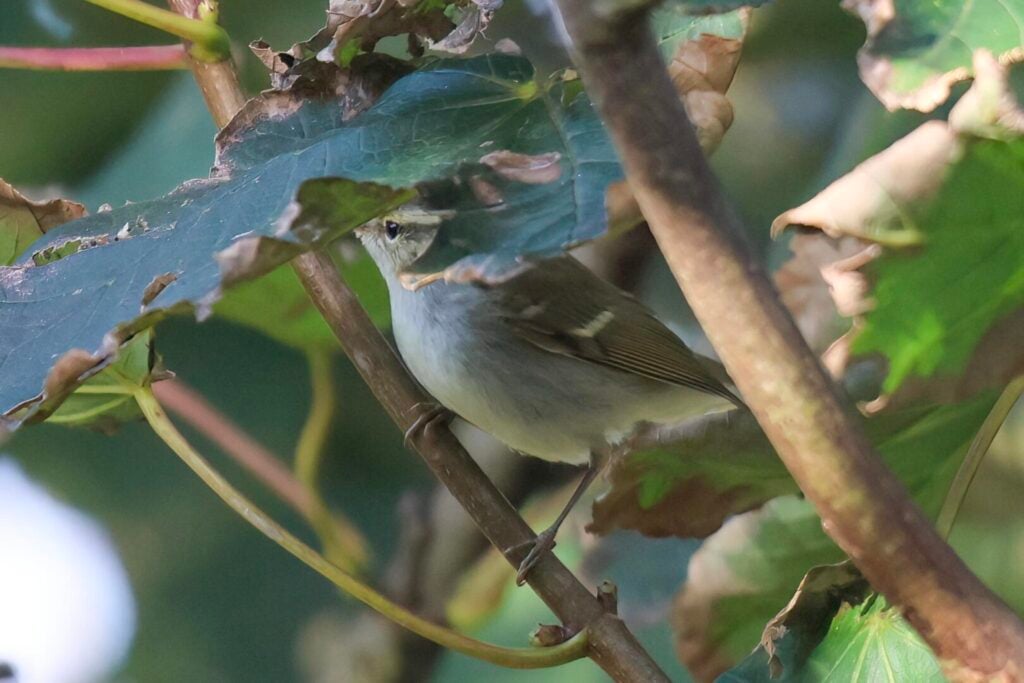
I decided to go for a walk and headed down the road at Brake. I found a couple more Yellow-browed Warblers, an Eastern Lesser Whitethroat (which may even have been the one from Hugh’s garden), plus a few Blackcaps, Bramblings and thrushes. I was just starting to walk back to the car when a message came through about a Two-barred (Greenish) Warbler just a short distance down the road at Quendale. I set off to walk, but some other birders I had just been talking to stopped and kindly offered me a lift.
The Two-barred Warbler was tricky to see at first, in the dense sycamores. A Yellow-browed Warbler and several Chiffchaffs and Willow Warblers were in there too. Eventually, it showed nicely for the small crowd.
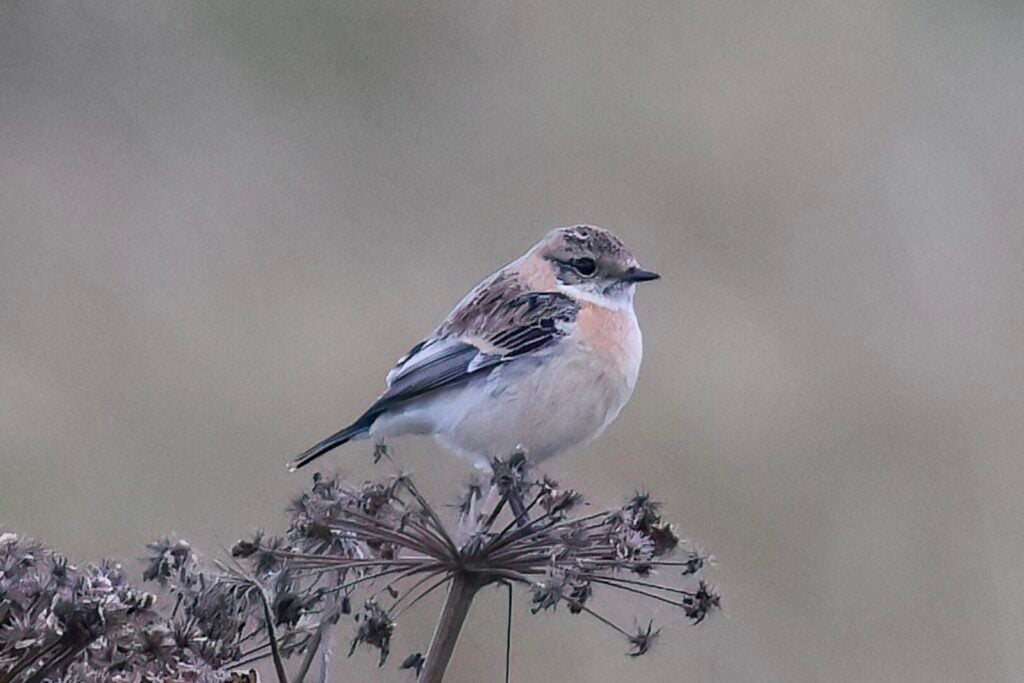
As if that wasn’t enough, I called in on my way back to see a Siberian Stonechat which had been found earlier at Levenwick. A nice, frosty 1st winter male, characteristic of the western race maurus, Siberian Stonechat in the strictest sense.
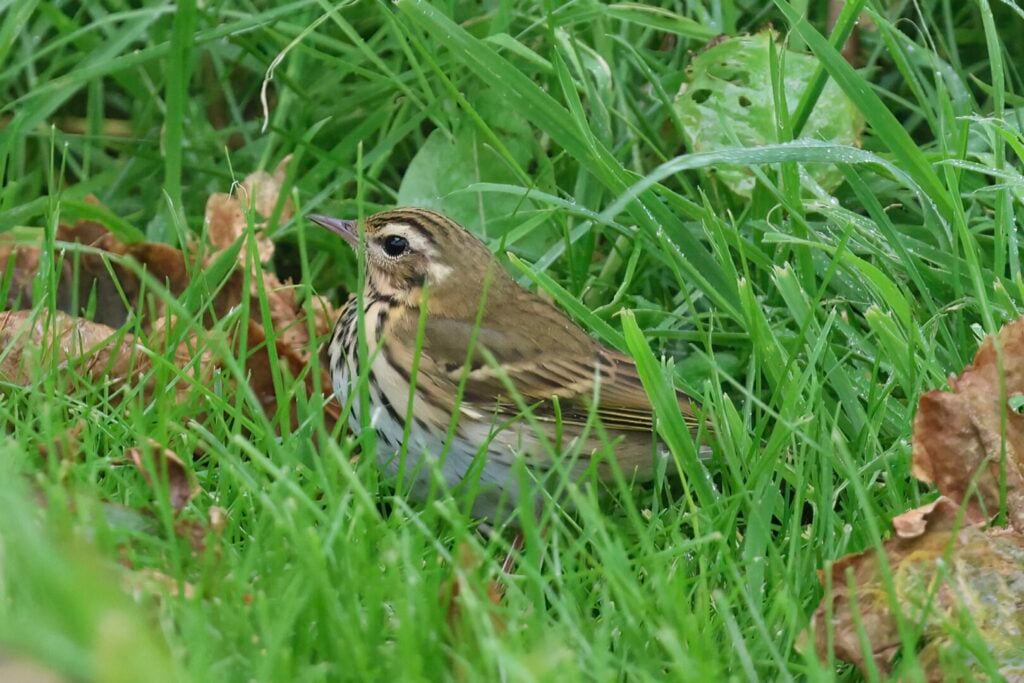
Sadly the Siberian Blue Robin never reappeared and the Two-barred Warbler moved on overnight. I spent the following couple of days finding lots more Yellow-browed Warblers and common migrants but nothing of more note. In the afternoons, I did go to see some of the other species which were around south Mainland, as I was close by – the Buff-breasted Sandpiper at Fleck and Olive-backed Pipit along the Maywick road.
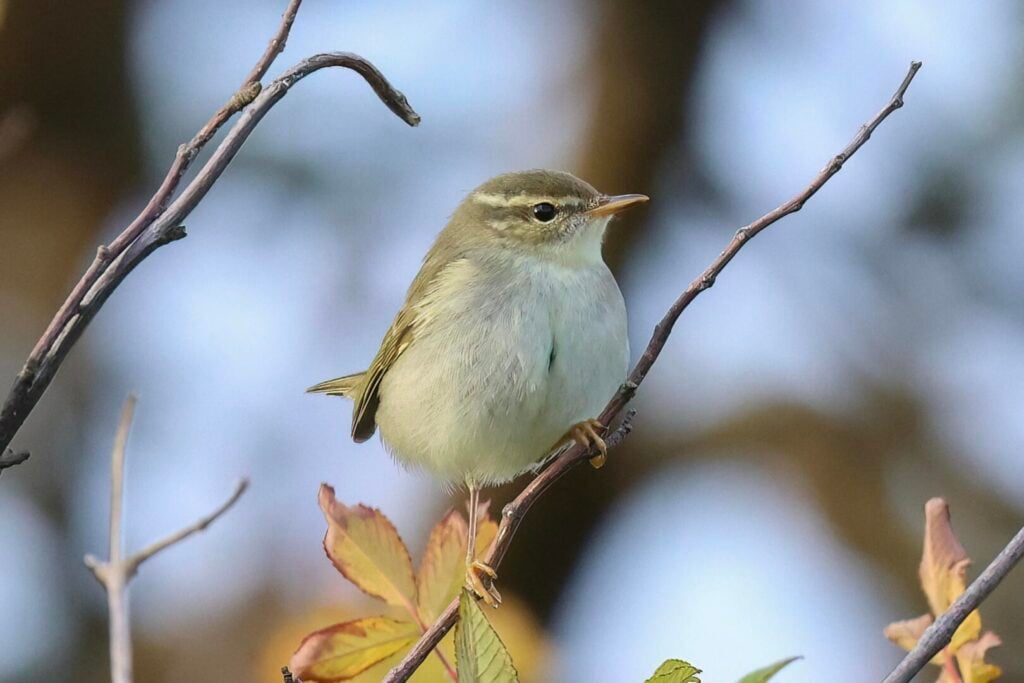
There were a couple of days of bad weather when birds were hard to find. When things improved, there didn’t seem to have been a huge arrival of migrants. Still, new birds were turning up, including a Bluethroat at Boddam, Barred Warbler at Hoswick and Arctic Warbler at Fladdabister. They all hung around for a few days, giving a chance to see them all once the crowds had died down.
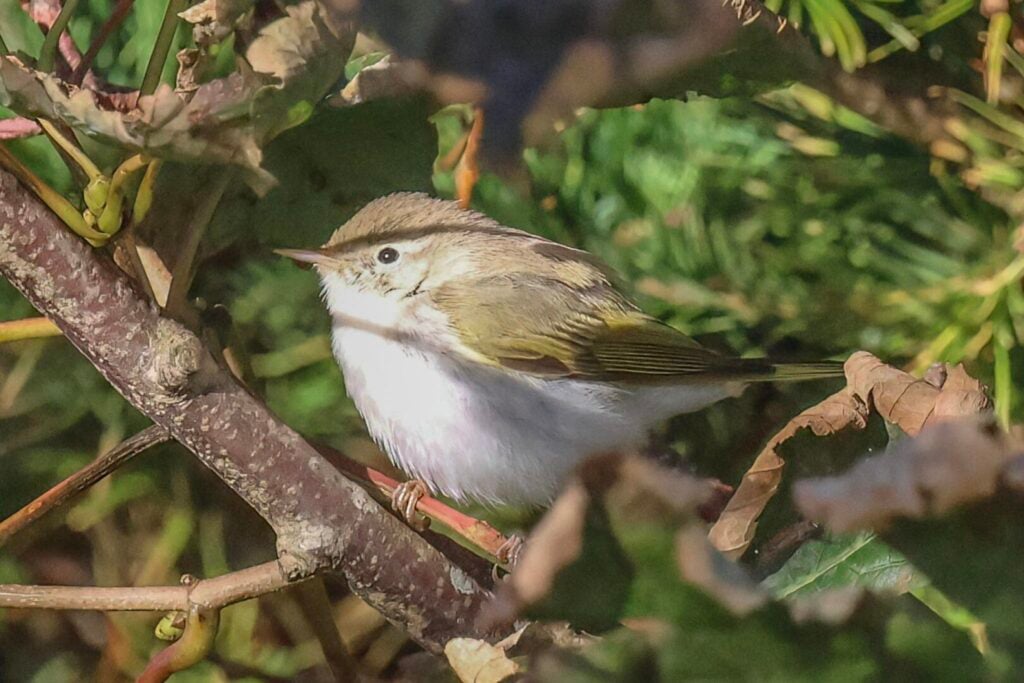
A Red-backed Shrike, two Common Rosefinches and a drake American Wigeon were all found at Spiggie. I didn’t go to try to see the Western Bonelli’s Warbler at Skelberry on its first day, so went the following morning. Just as I arrived, news broke of a Lanceolated Warbler at Sumburgh. I decided I wouldn’t wrestle with the crowds and the Western Bonelli’s Warbler then showed very nicely in a small line of sycamores. It was calling too.
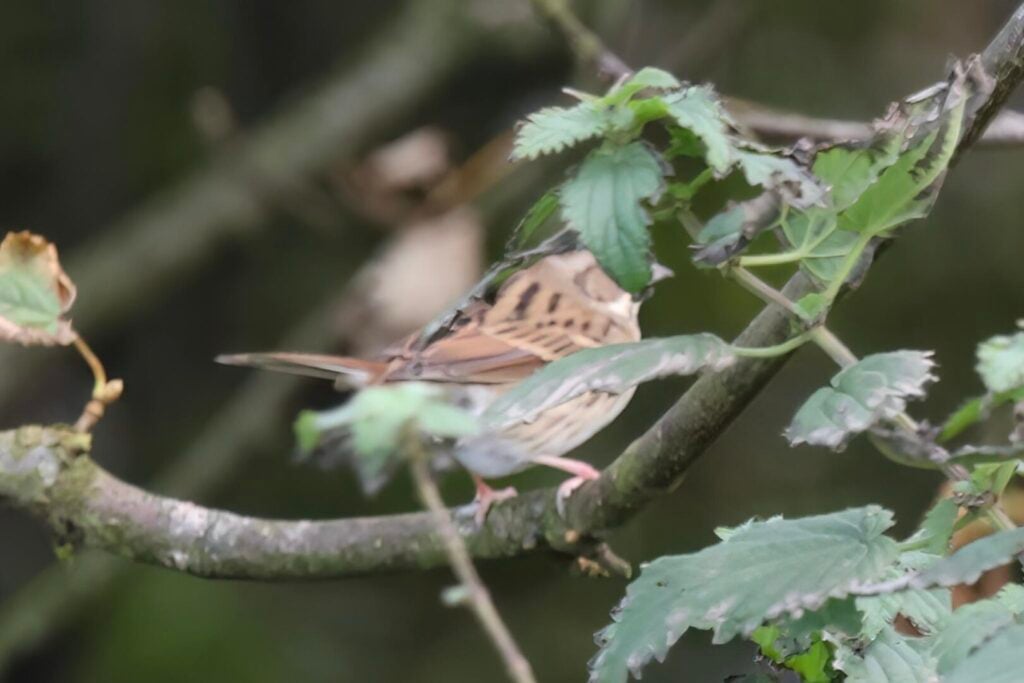
Later that same afternoon, just as I was about to head back to my accommodation, a Black-faced Bunting was found in the sycamores at Quendale. Thankfully, I wasn’t too far away. It showed well in the trees a couple of times while I was there, although it spent long periods out of view. I was hoping to go back for more the following morning but sadly it had moved on by then.
There was a huge arrival of Redwings the following morning and a Black-throated Thrush was found at the Sumburgh Hotel. Sadly it was only seen by the finders and somehow managed to vanish. I spent most of the day searching through the Redwing flocks all over south Mainland, hoping to find something in with them, but drew a blank. I did manage to catch up with the Little Bunting at Sumburgh Head and an American Golden Plover at Fleck.
On my final day, I spent the morning checking out various places again, with no success. I had to pick up some presents for the family in Lerwick, so when news of a Hornemann’s Arctic Redpoll at Sound broke, I decided to kill two birds with one stone. I sat out a heavy shower in the car, then went out to where the Hornemann’s was showing fabulously well. Then it disappeared off over the rooftops with a couple of other Redpolls.
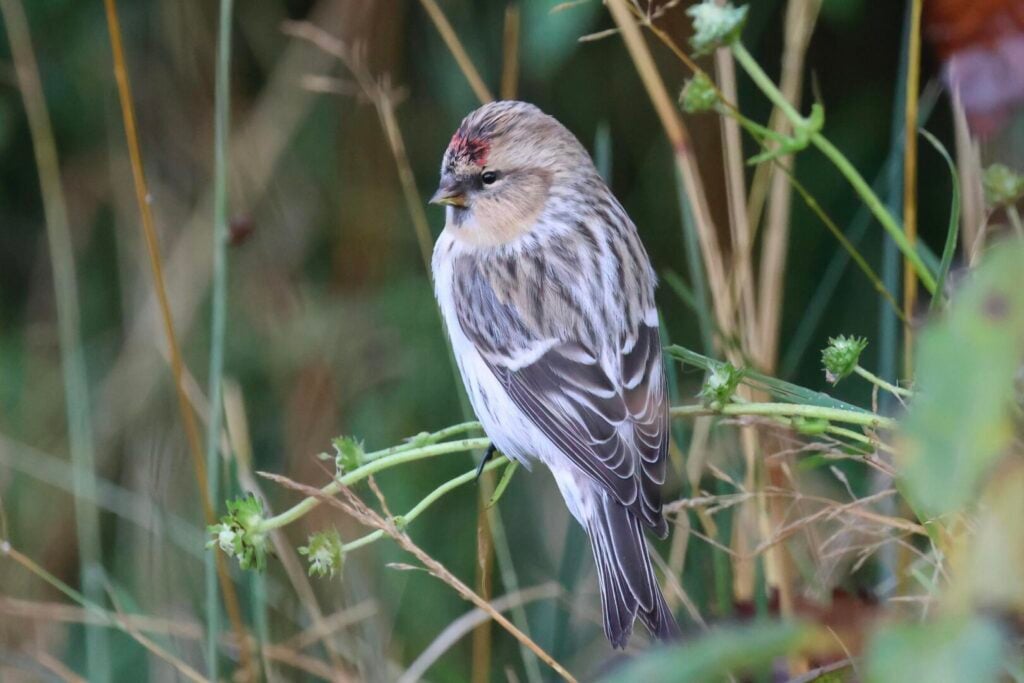
Shopping completed, I had some time to kill before the ferry. I called in at Clickimin to see the Olive-backed Pipit there, which was tricky but eventually I got pretty good views of it. I was just about to head to the port when a message came through about a North American Catharus thrush at Easter Quarff. Annoyingly, I had nearly stopped there earlier for a look round but had to get my shopping sorted! I just had time to get there.
Initially thought to be a Swainsons, when I arrived its identity had been resolved as a Grey-cheeked Thrush. It was hard to see in the willows by the burn, but I managed a couple of brief glimpses and some flight views. Then it disappeared into nearby gardens and I had to leave.
No a vintage Shetland year by any standards, with relatively small numbers of common and scarce migrants, but some amazing rarities.