The first of two back-to-back single-day Brecks Tours. It was a cloudy, grey and rather cold day, although at least it stayed mostly dry. Not ideal conditions for early spring in the Brecks but we did surprisingly well despite the best efforts of the weather.
We met this morning in Swaffham. Driving into the northern part of the Forest, we parked by the head of a ride. As we got out of the minibus, a Song Thrush was singing from the top of the trees. Lots of Blackbirds were up in the pines, and more were feeding in the ivy round the trunks. A Redwing was in with them, but hard to see.
We walked down the track and came out in to a clearing. We could see the young pines planted in furrows in the ground. A Great Spotted Woodpecker called and flew across. As we walked up across the middle of the clearing, a Chiffchaff flew up ahead of us and landed again in some low bushes by the path.
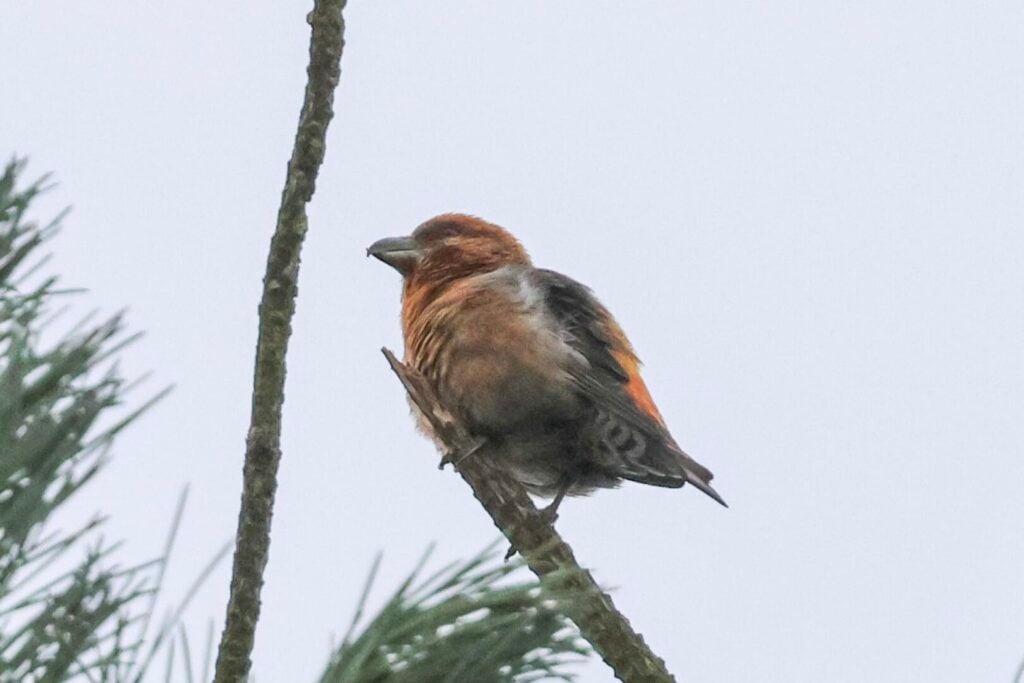
There were lots of Common Crossbills in the trees here, flying round and calling. They were right over at the back and rather hard to see at first, very active, feeding on the cones. Occasionally one perched in the top of a pine, but as soon as we got the scope on it it quickly dropped down into the needles.
We could hear a Woodlark calling behind us. As we scanned across the clearing, it flew up from the ground further back and landed half way up a pine tree. Nice scope views as it perched on a bare branch.
There were Siskins flying back and forth over our heads too and small groups of Redwings. Several Jays flew across between the scattered pines in the middle. A flock of Starlings passing overhead looked like they might be on the move.
The Crossbills started to fly in and land in the trees by the track. Now we were surrounded by them. A male perched high in the pine above us singing. Then two males appeared together preening. Lots of activity, great to watch. There was an irruption of Crossbills last summer/autumn and large numbers came over from the continent. Hopefully they have stopped to breed and some of the flocks seem to have a majority of males now.
Eventually we had to tear ourselves away from the Crossbills and carried on round the far side of the clearing. One of the group picked up a very distant Goshawk displaying. It was hard to see, disappearing behind the trees, and then dropped down out of view. But a good sign that one was up despite the grey weather.
We could hear a Mistle Thrush singing from the top of the pines over in the far corner. But no further sign of any Woodlarks which had now gone quiet. There were a few Linnets which came up out of some scrubby gorse by the track and perched up in a couple of low birches. Several Long-tailed Tits in the bushes too. Down to the bottom corner, we scanned the paddocks and found several Stock Doves on the roof of a large barn on the far side.
Making our way back along the lower track, one of the group went into the bushes to use the facilities. A Woodcock flew out and shot past over our heads, before disappearing back in ahead of us. Another member of the group had a brief glimpse of a raptor through the tops of the pines over the other side. Shortly after, we heard a Goshawk calling over in that direction, presumably what he had seen.
Making our way back out, a Mistle Thrush flew out and landed in one the trees by the path. It quickly disappeared deeper in and then we could hear it singing as we passed. Back at the minibus, we could hear a Crossbill giving its ‘toop’ excitement call high in the pines above the parking area.
Seeing some signs of Goshawk activity in the clearing already had given us some encouragement. So we drove straight over to a high point overlooking the forest. Out in the open, it was mistier and a bit damp, not much wind either. Not ideal conditions for raptors, and not even a single Common Buzzard was up at first. Still we, persevered
One or two brief Buzzards appeared, but they were still not really coming up. So when all Woodpigeons erupted from the trees over to one side, we were very pleased when we looked across to see a Goshawk flying over. It was hard to pick out though beyond all the panicking pigeons. Unfortunately not everyone could get onto it before it was lost to view dropping down behind the treetops.
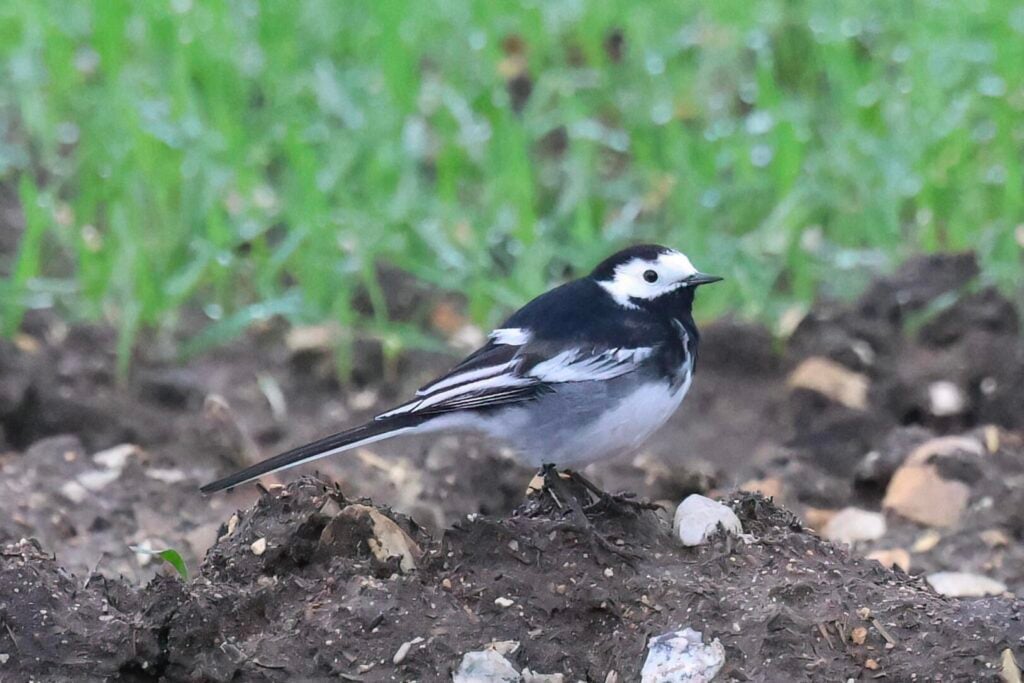
One Goshawk was at least a start, so we stood and waited. A Brown Hare was hunkered down out in the field in front. Then three appeared, chasing round briefly, but quickly lost interest. Ten Roe Deer came out of the trees, into the far edge of the field to feed too. We could see a dark ‘tenebrosus’ form Pheasant and several Red-legged Partridges, not a surprise as this is a big shooting area. A Pied Wagtail was singing in the field close in front. Two Skylarks came up singing behind but no Woodlarks here today.
Occasionally a raptor would come up briefly, mostly Common Buzzards. At one point two Red Kites circled up with a Buzzard. Then we picked up a distant Marsh Harrier flying across. A Sparrowhawk circled up and flew out over us. Just enough to keep us thinking we might get another Goshawk.
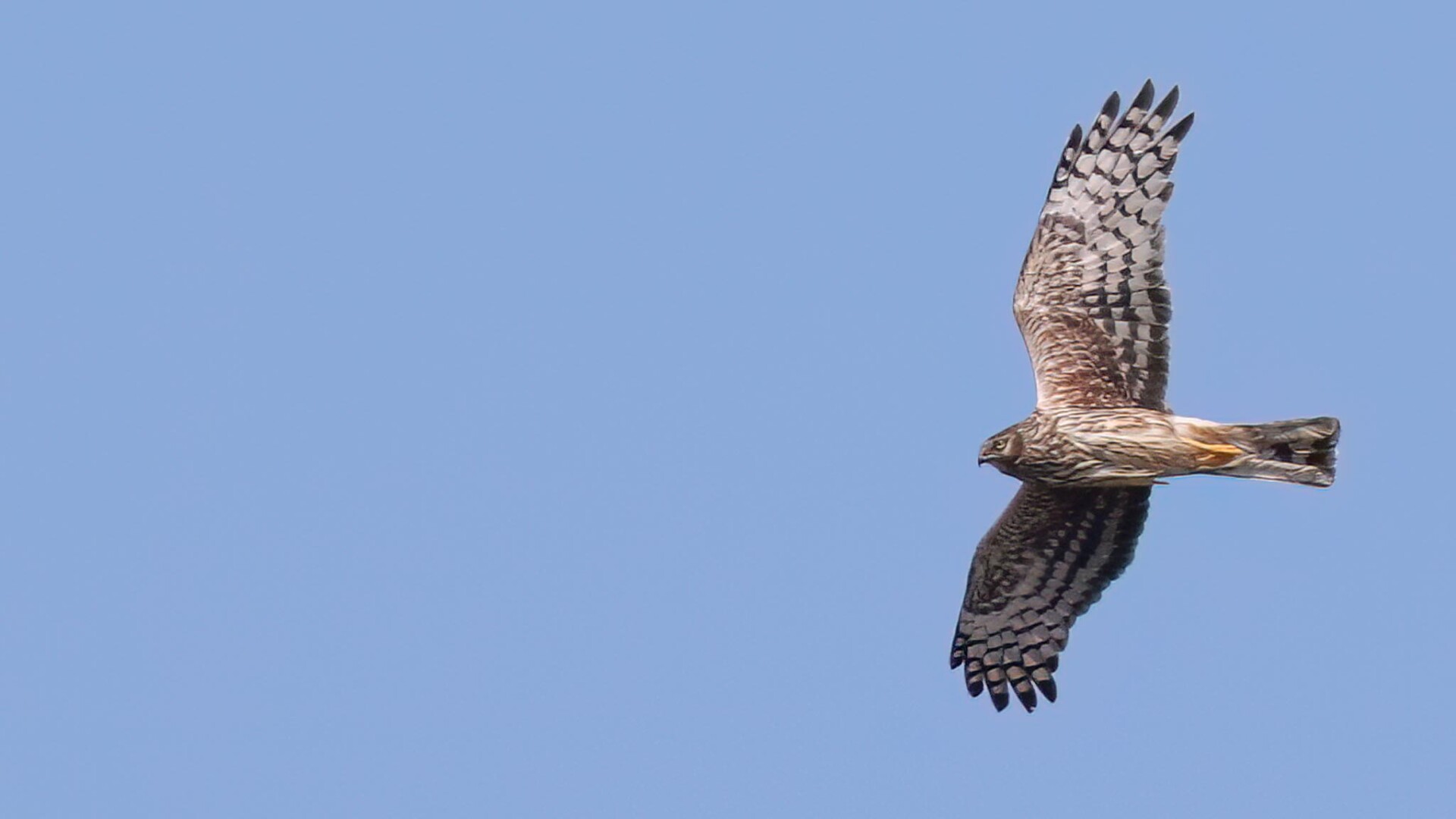
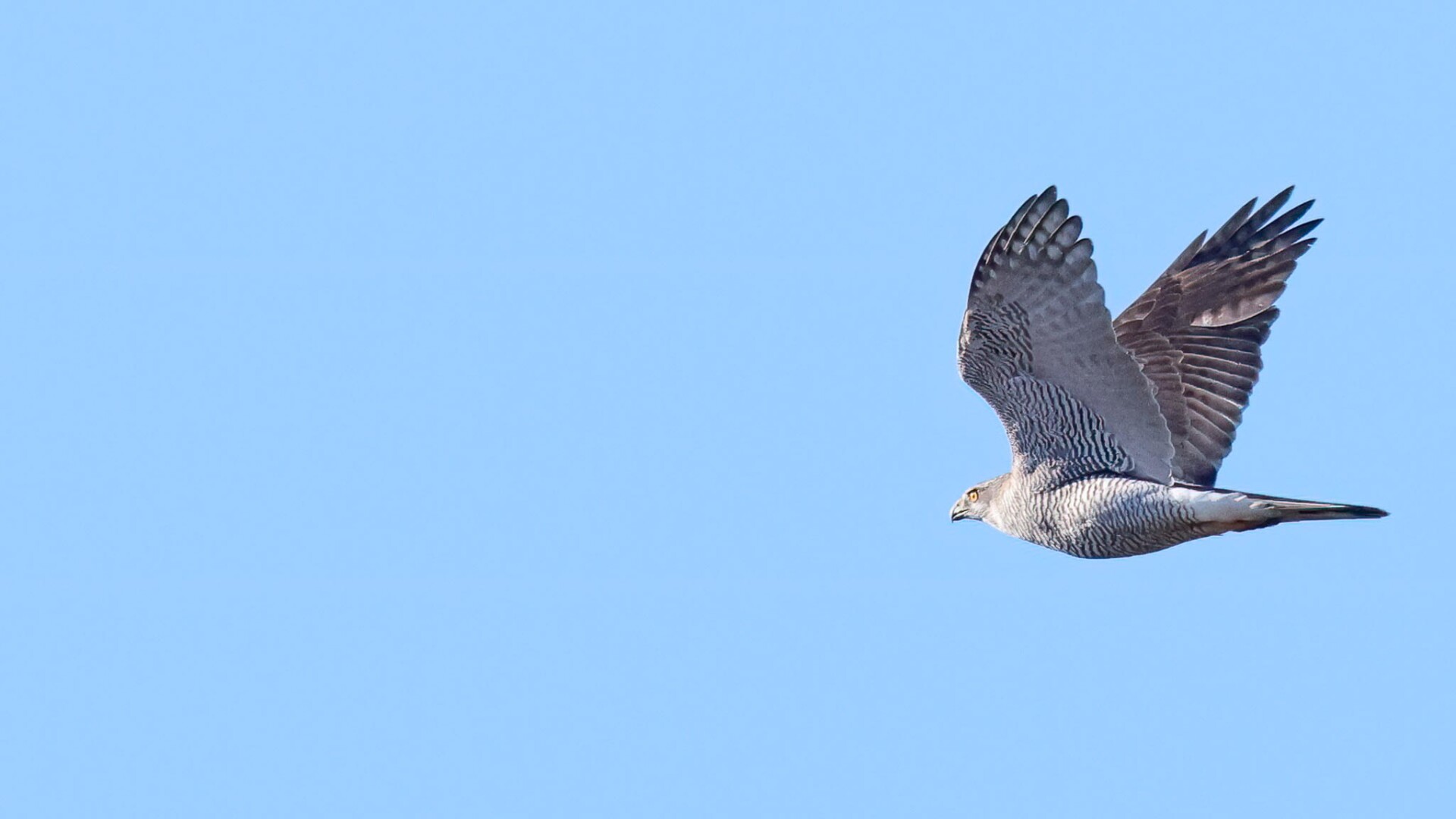
Eventually our patience paid off. A Goshawk came up out of the trees and started displaying, flying over the forest with exaggerated deep wingbeats. Like buses, then two more responded to the first and came up displaying too. For about ten minutes, we didn’t know which way to look, Goshawks in all directions. Good views in the scopes too.
It had taken a while but we got there in the end. When the Goshawks eventually dropped down again, we decided to move on. We drove further on to scan some pig fields and quickly found our target. Several Stone Curlews were hunkered down in the stones out in the middle. Very well camouflaged and hard to see until you looked through the scope. Occasionally one would stand up and was a little easier to spot.
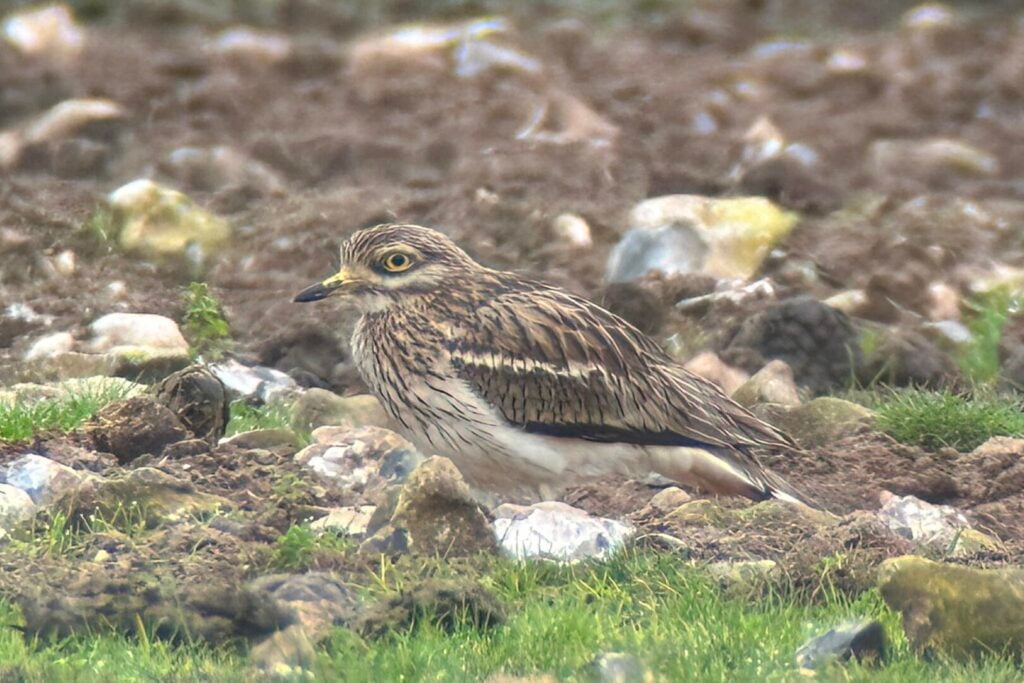
The Stone Curlews are just returning now ahead of the breeding season. The Brecks is the main stronghold of the very small UK population. Some will breed on the few remnants of the old grass heath but most attempt to raise young on farmland, where success is rather mixed. The ones here will disperse into the surrounding fields in the coming weeks.
There were lots of Shelducks in the pig fields too and a pair of Egyptian Geese. A small gathering of gulls included Black-headed Gulls, Common Gulls and several Lesser Black-backed Gulls. A distant Kestrel was perched in a tree beyond, with a rather pale Common Buzzard nearby.
It was time for lunch, so we drove over to Lynford next. The picnic tables in the middle of the car park were rather sheltered and not busy. One or two Goldcrests were in the surrounding trees while we ate. After lunch, we walked over the road and in to the arboretum. We had heard a Nuthatch calling from the car park and now we found two in the pines just across the road.
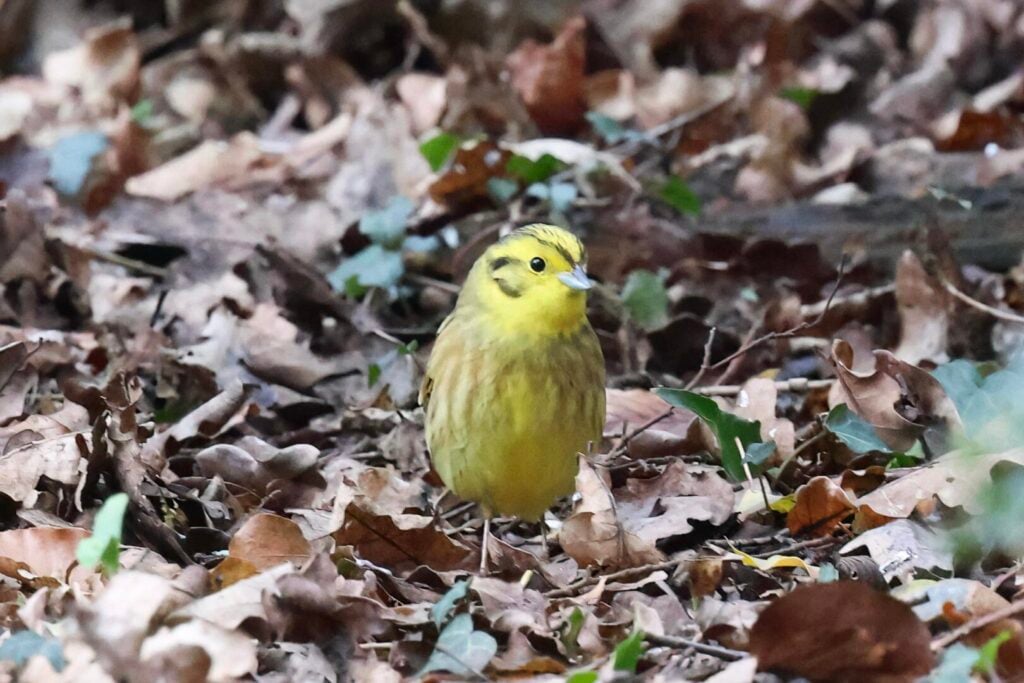
On up to the gate, and there weren’t many birds feeding under the trees today. There is not much food being put out now – apparently they have had a problem with rats this winter. Two Yellowhammers, a male and female, were feeding under the fatball cage feeder, looking for anything which was spilt from there. Several tits were coming in to the few remaining fatballs. A Goldcrest dropped down to the pool in the middle for a bath.
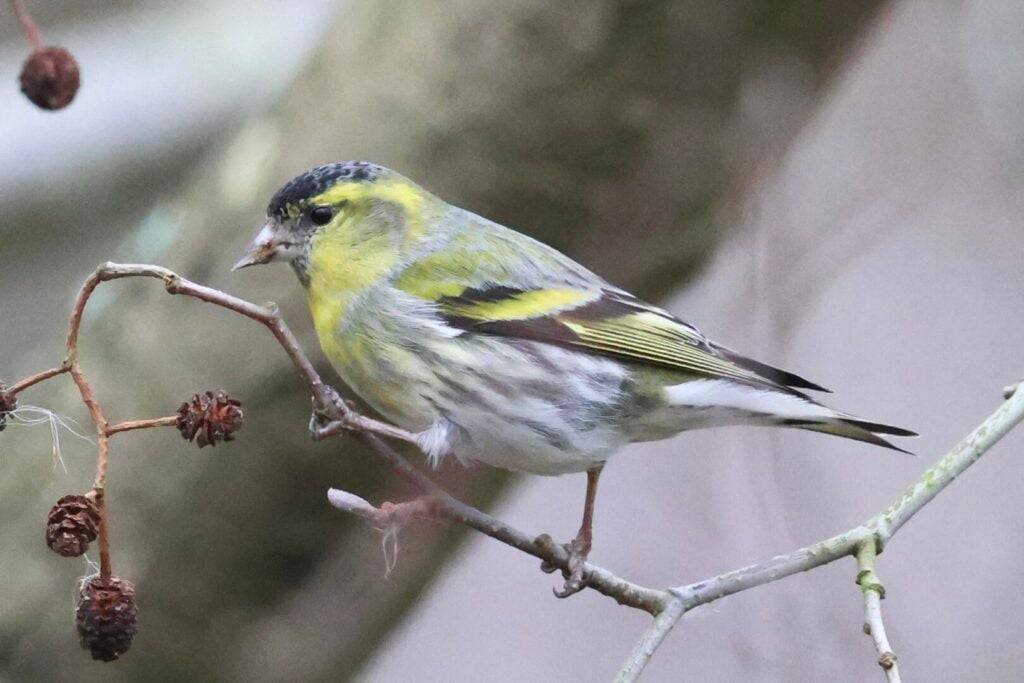
Down at the bridge, someone had put some food out on the pillars for the birds. There were lots of Chaffinches helping themselves. A succession of Blue Tits and Great Tits came in but no sign of any Marsh Tits at the moment. Lots of Siskins were feeding in the alders either side, nice views at eye level. A Little Grebe laughed from deep in the reeds.
Continuing on to the paddocks, it seemed rather quiet at first. As we stood and scanned the trees, a small group of Long-tailed Tits moved up and down through the hedge in front of us. A Marsh Tit did the same too. We could see some distant Crossbills in the tops of the poplars by the bridge looking back.
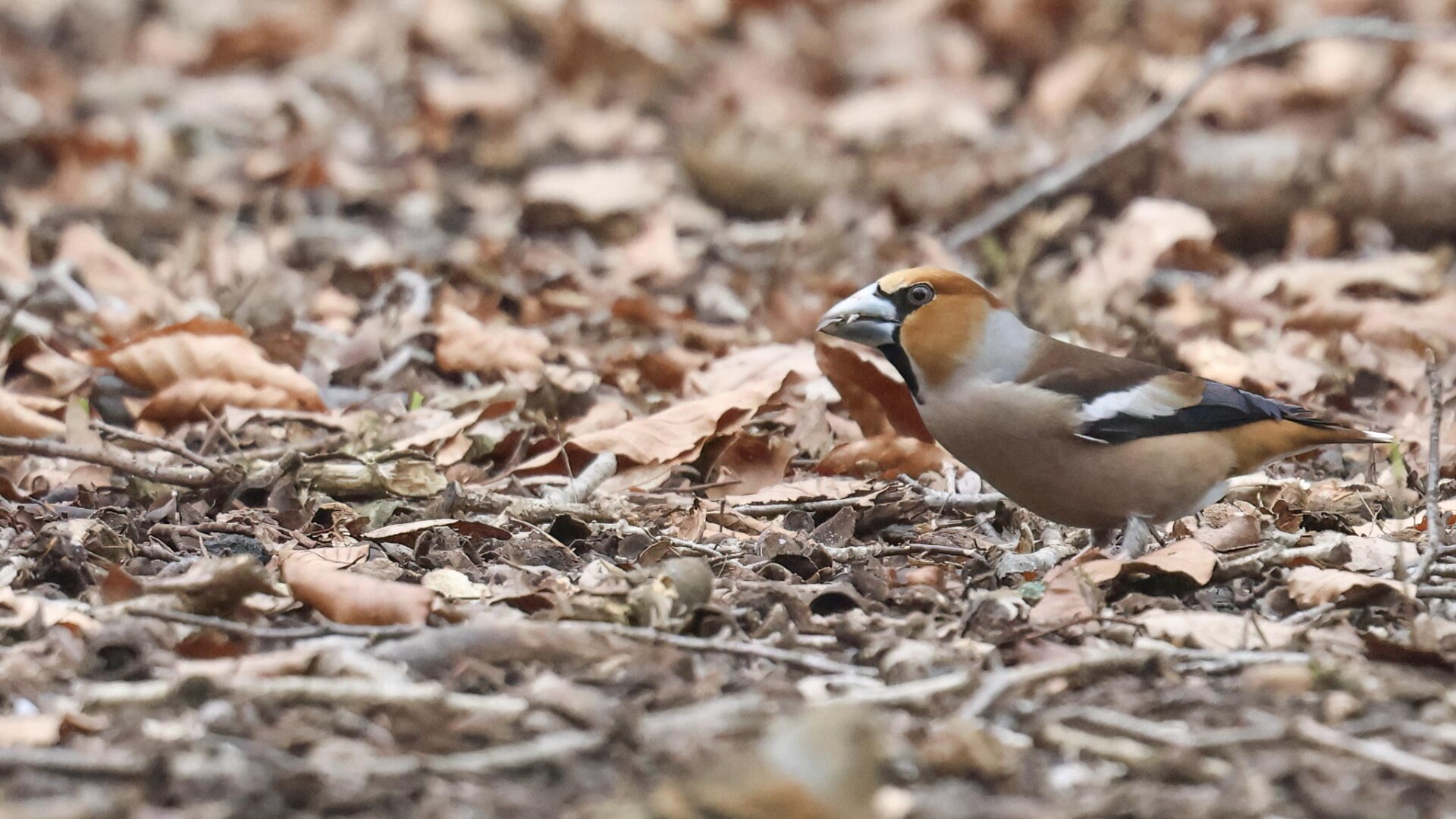
A Hawfinch appeared in the top of the fir trees beyond. We got it in the scope, but it was rather distant and the light wasn’t great. Heard to make out any colour. It took off and seemed to fly down towards the paddocks but despite looking carefully all round we couldn’t find it again in the trees.
A Song Thrush was singing in the top of the ash trees in the middle. A Redwing flew in and landed in the top too, nice views in the scopes. We could see several Chaffinches feeding under the first of the hornbeams but nothing larger with them. Several Crossbills flew in and out of the pines behind us.
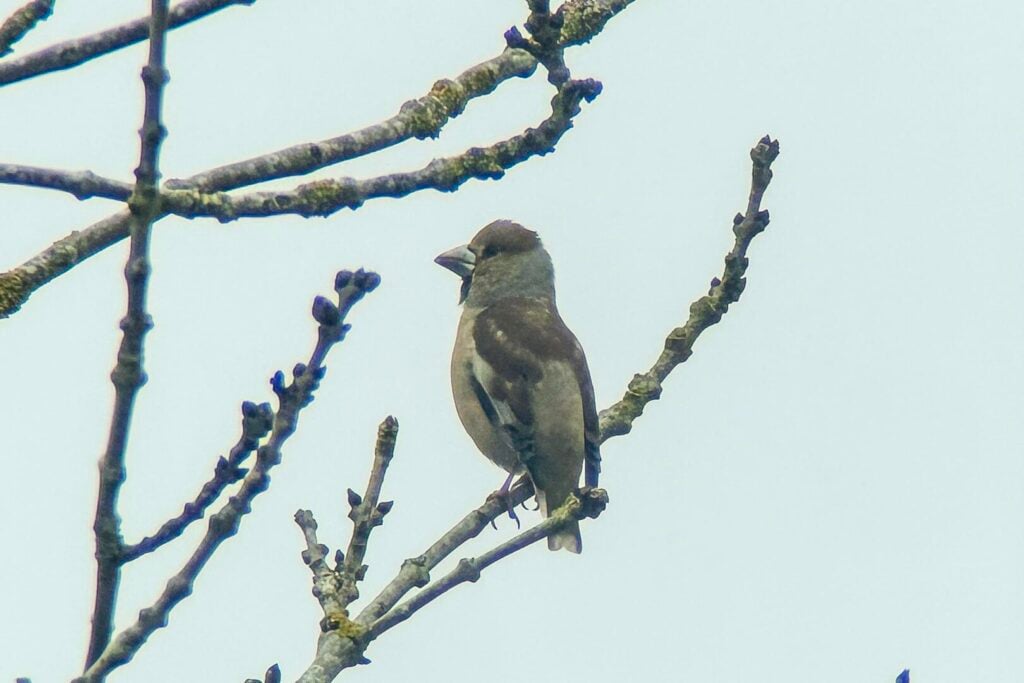
Just as we started to think that might be it, finally another Hawfinch flew in. It landed in the top of the ash trees, where we had some nice views in the scopes. A female. Then it dropped down through the branches and we lost sight of it. Just as we were about to leave, it came back up into the tops again briefly. It flew towards the first hornbeam so we walked back to look if it had come down to the ground to feed. No sign of it under the tree now.
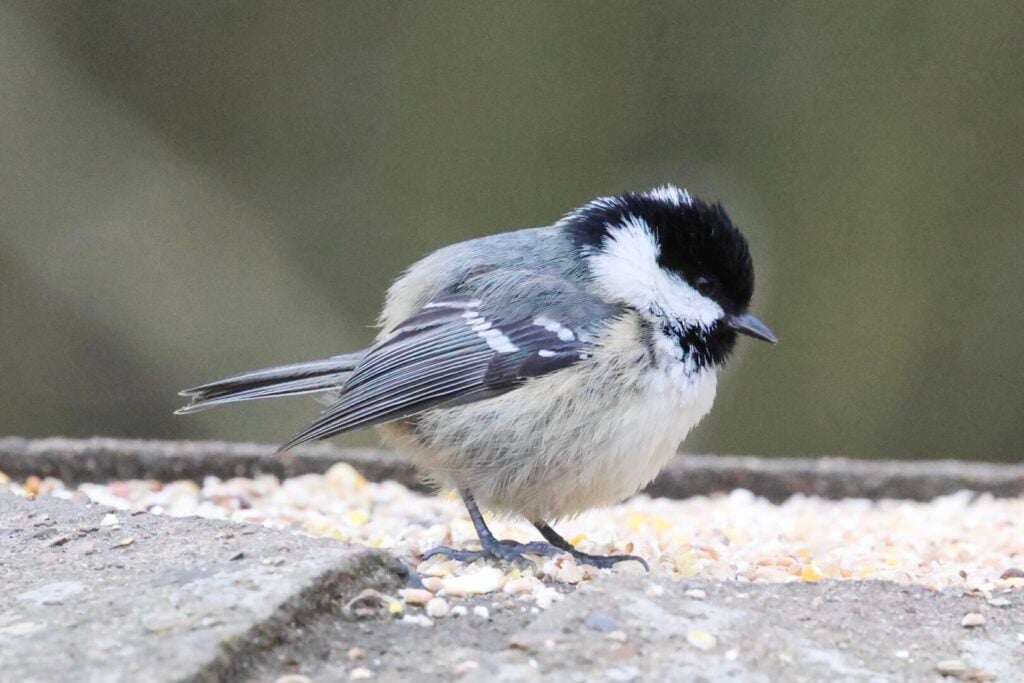
It was time for us to be starting to make our way back. We stopped at the bridge again. Lots of birds were still coming in for the food. A Coal Tit stayed on the pillar for some time, giving great views. In contrast, one of the Marsh Tits came in a couple of times too, but each time just grabbed a seed and didn’t stay long.
As we walked back up towards the car park, we stopped to have a quick look under the trees from the gate again. There was still not much coming down, although a Nuthatch was on the fatballs. Another Goldcrest came down to bathe in the pond again. A pair of Crossbills came in to drink briefly.
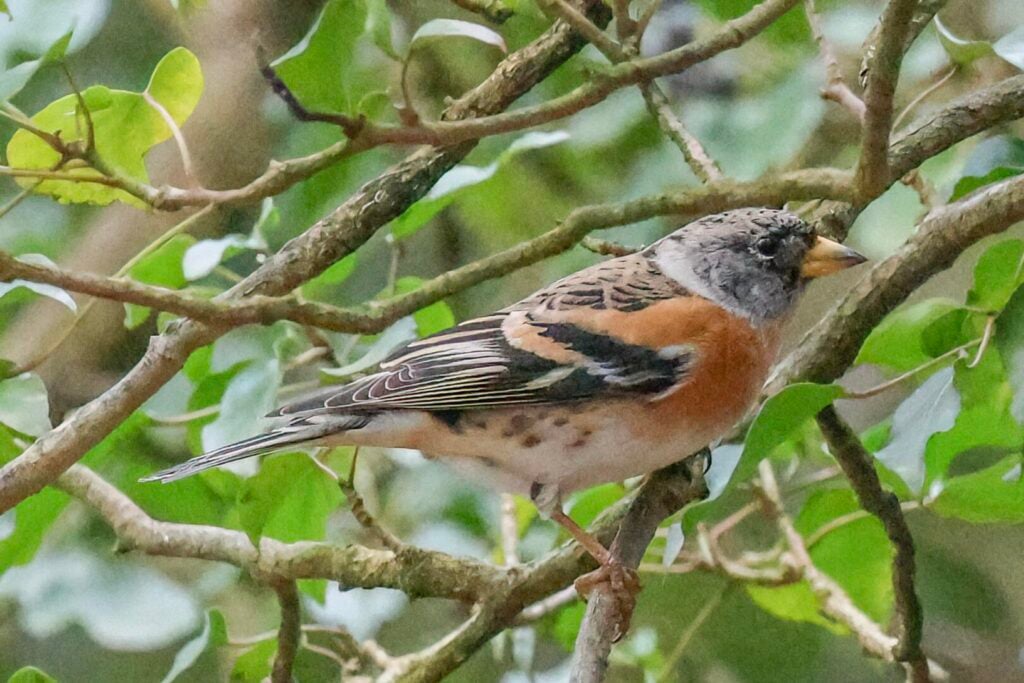
Then a male Brambling appeared on the fatballs. An odd place to see one, as it hung on to the side of the cage. Probably just because there isn’t much food out in the leaves now. Then it dropped down to the ground and started feeding more conventionally underneath the fatball feeder. They have been scarce this winter, so a nice bird to see, to round off the day.
Back to the minibus, it was time to head for home. Despite the rather unseasonal weather, we had done remarkably well today. A great selection of birds of the Brecks and Thetford Forest.