Day 3 of a 3-day Winter Birds, Brecks & Goshawks tour. It was a cloudy start with some more but thankfully only brief drizzle. Contrary to the forecast, it brightened up through the morning and the sun came out. We spent most of the day on the North Norfolk coast, but ventured inland for a bit in the morning to get some better views of Goshawks than yesterday.
Our first destination this morning was Wells. On our way up to the coast, the cloud looked to be starting to break but as we drove up the Beach Road we could see very grey clouds approaching. As we got out of the minibus, sure enough it started to drizzle. Thankfully it only lasted a couple of minutes and by the time we had got all our stuff out it had stopped already.
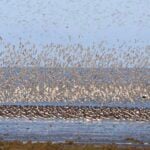
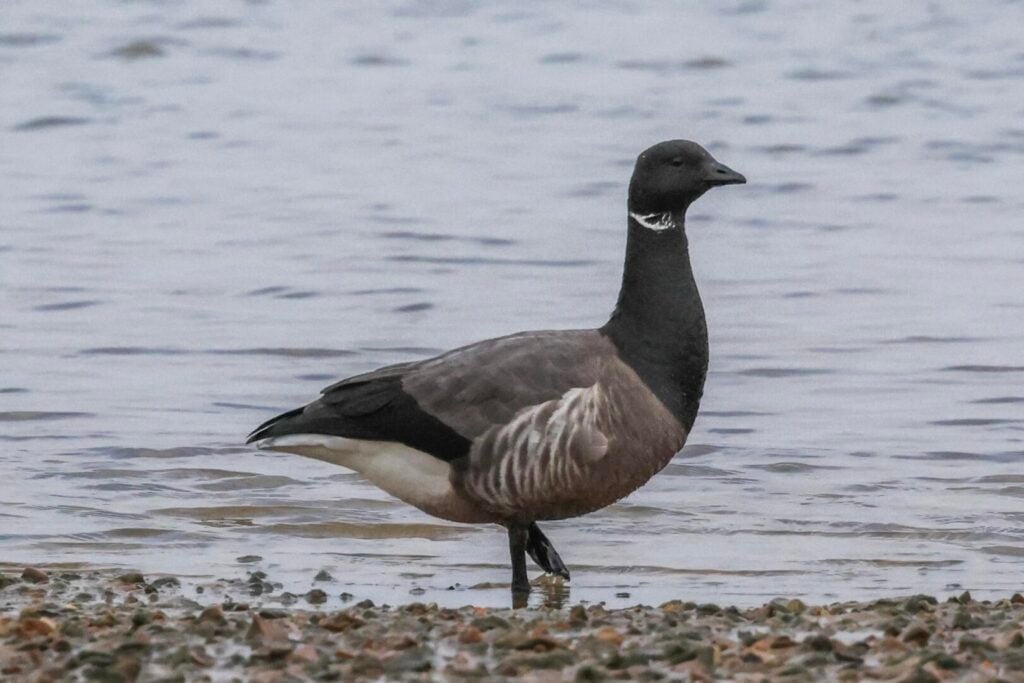
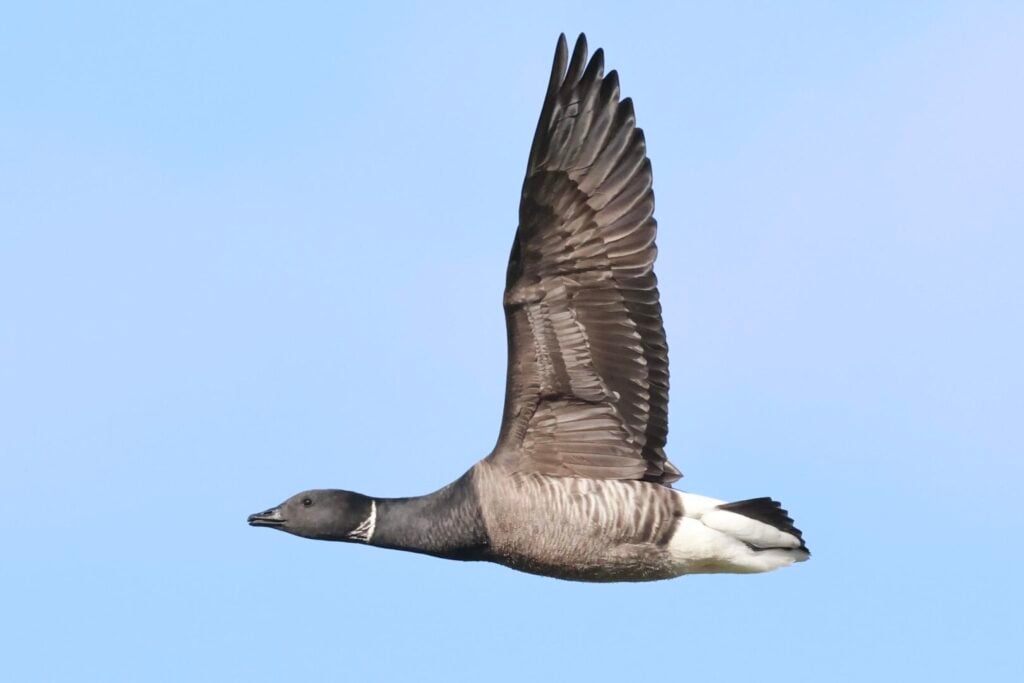
As we walked up past the new lifeboat station, we could see a couple of small flocks of Knot flying round high out over the sand opposite. We stopped to scan the harbour from the ramp and quickly picked up lots of Brent Geese feeding on the near edge of the channel.
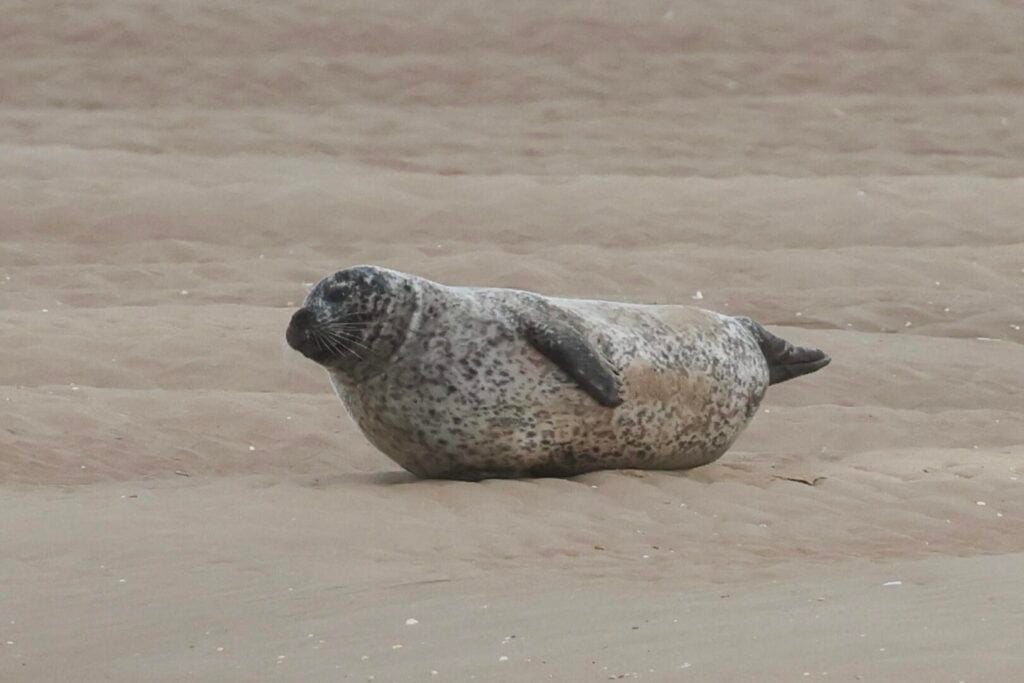
A Common Seal had hauled out on the sand opposite.
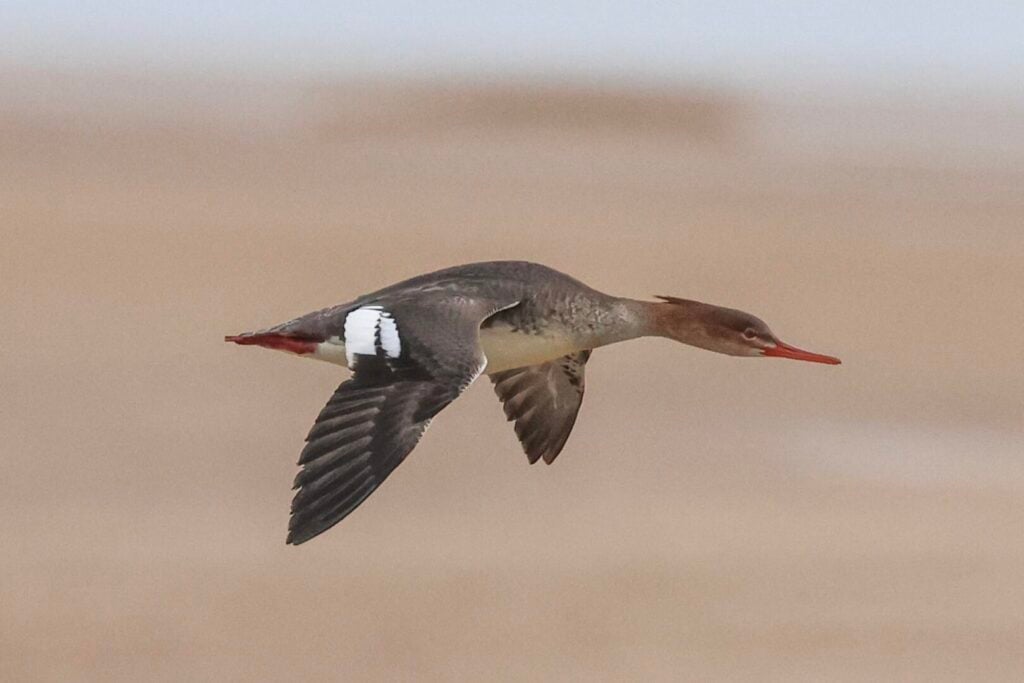
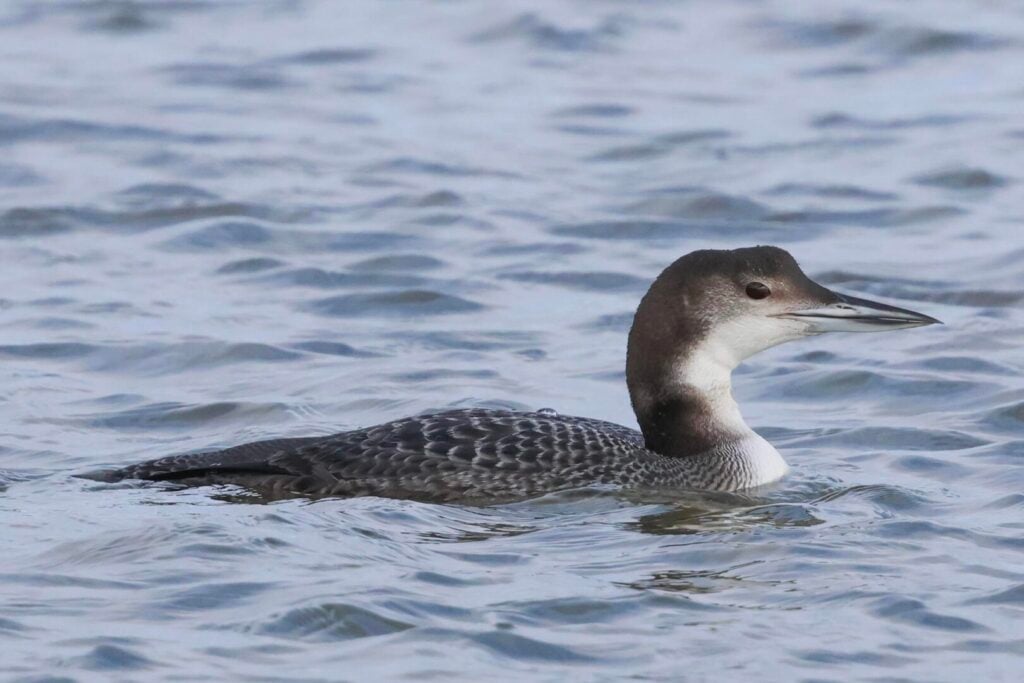
Looking further up the channel towards the sea, we could see a couple of Red-breasted Mergansers diving out on the water too. A Great Northern Diver eventually surfaced quite close to them, swiftly followed by a second. Nice if distant views through the scopes. Three more Red-breasted Mergansers flew in and landed on the water beyond the sandbar directly opposite us.
There were lots of waders on the opposite side too. A large flock of Bar-tailed Godwits circled round and dropped down next to a small group of Oystercatchers. Looking at them through the scopes, we could see several Knot, a couple of Dunlin and a Grey Plover with them too. A nice selection of typical tidal mudflat waders. Another group of Knot were feeding higher up on the sand behind.
Several Red Kites were scavenging for food out on the sand opposite. A couple flew in across the channel and we watched them flying up the beach and over the iconic Wells beach huts behind us.
The Great Northern Divers looked to be feeding just off the seal fence, lingering in the same area. We decided to walk up for a closer look. The tide was still going out and the sand was a bit damp but we got up to where they were and stopped to watch them. Great close views now. The two female Red-breasted Mergansers were still here a little further up the channel but then took off and flew past us, heading off to join the others.
The Great Northern Divers seemed to be doing well, catching a lot of food. Several times we saw them surface with small crabs and one came up with a young flatfish which it took a while to work out how to swallow. Both juveniles, raised in the high arctic last summer which probably explains why they are so unafraid.
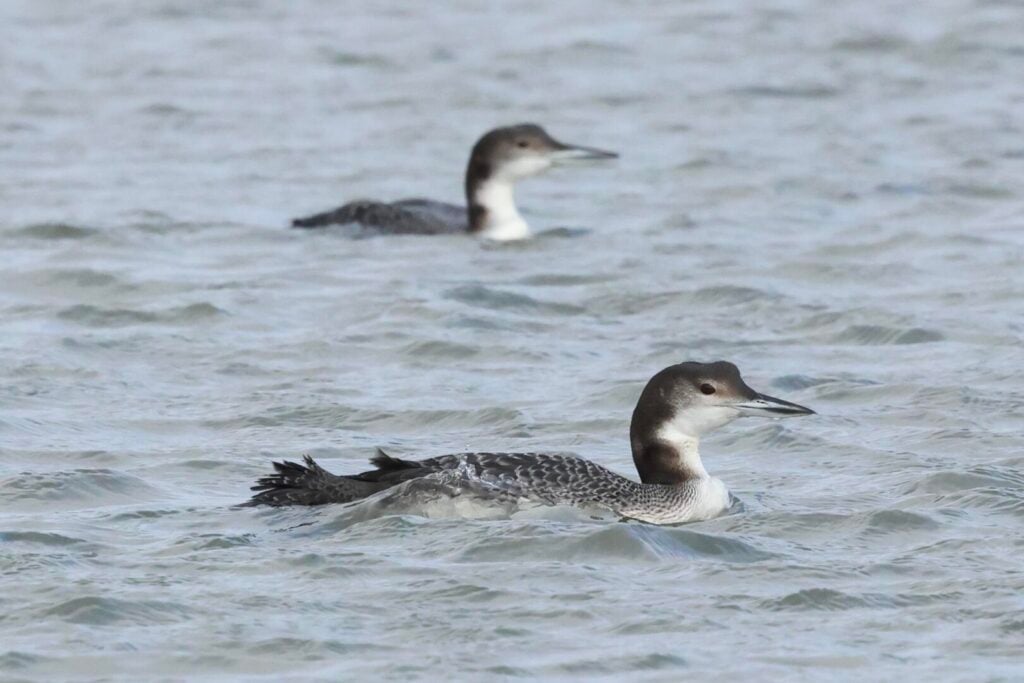
The Divers gradually worked their way up the channel past us, diving all the time. We decided to walk back and have another look through the waders further up on the mussel beds. There were lots more Oystercatchers roosting on the mussels. Looking through the groups of Knot and Dunlin, we found several Turnstones and Ringed Plovers too.
The two Great Northern Divers eventually made it all the way up the channel to where we were standing now. The sun was just starting to break through the clouds and they looked particularly smart in the low sunlight. More stunning close views.
With the weather showing signs of significant improvement now, we decided to move on and walked round back to the car park. We had only had very brief views of a Goshawk yesterday so we wanted to try again today. A bit of sunshine might help, particularly as there was a good breeze today. We headed inland to try our luck.
By the time we arrived, it had clouded over again. Still, there were a couple of Common Buzzards up and it looked brighter away to the north and to the south. We set ourselves up and waited.
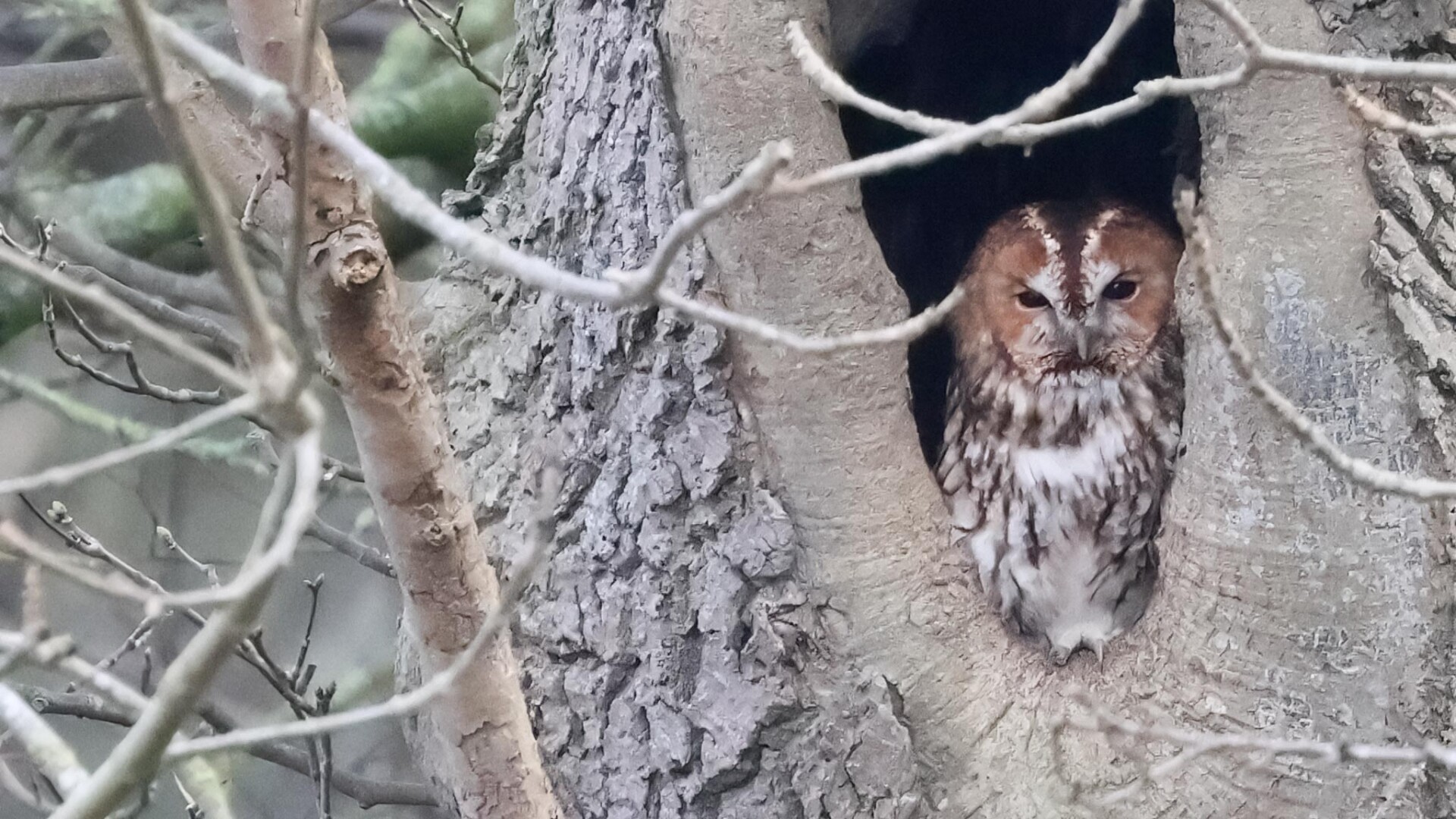
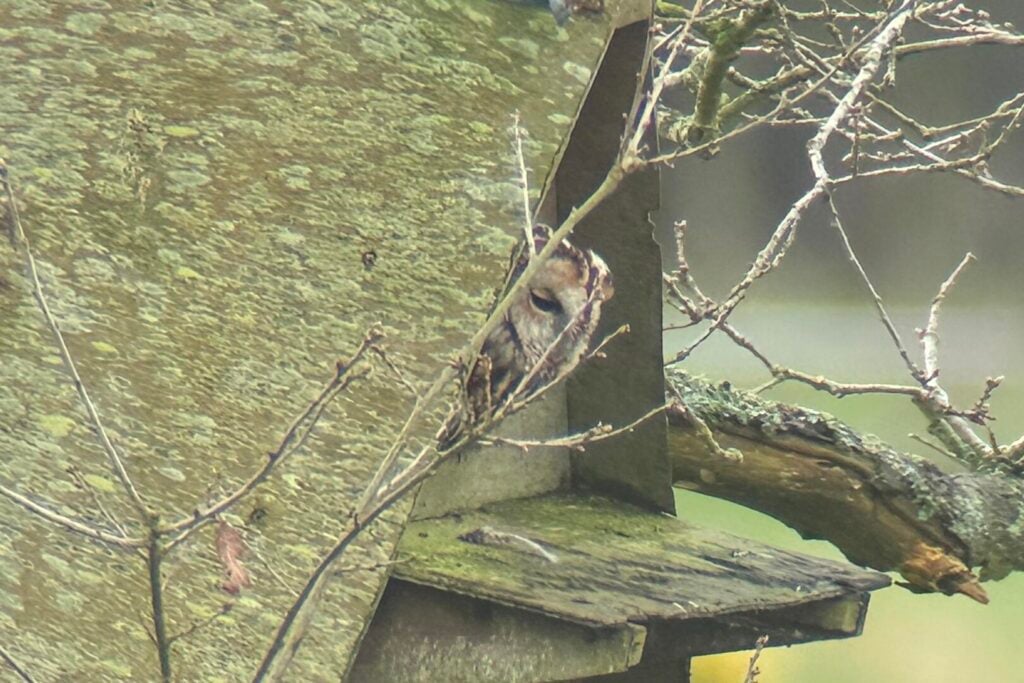
A large flock of Chaffinches came up from the field in front, several Yellowhammers in with them. One of the group noticed that a Tawny Owl was looking out from the hole in the front of a nearby Barn Owl box. A Great Spotted Woodpecker landed in the top of a pine and looked round calling. A Mistle Thrush flew up and landed briefly on one of the pylons in the field.
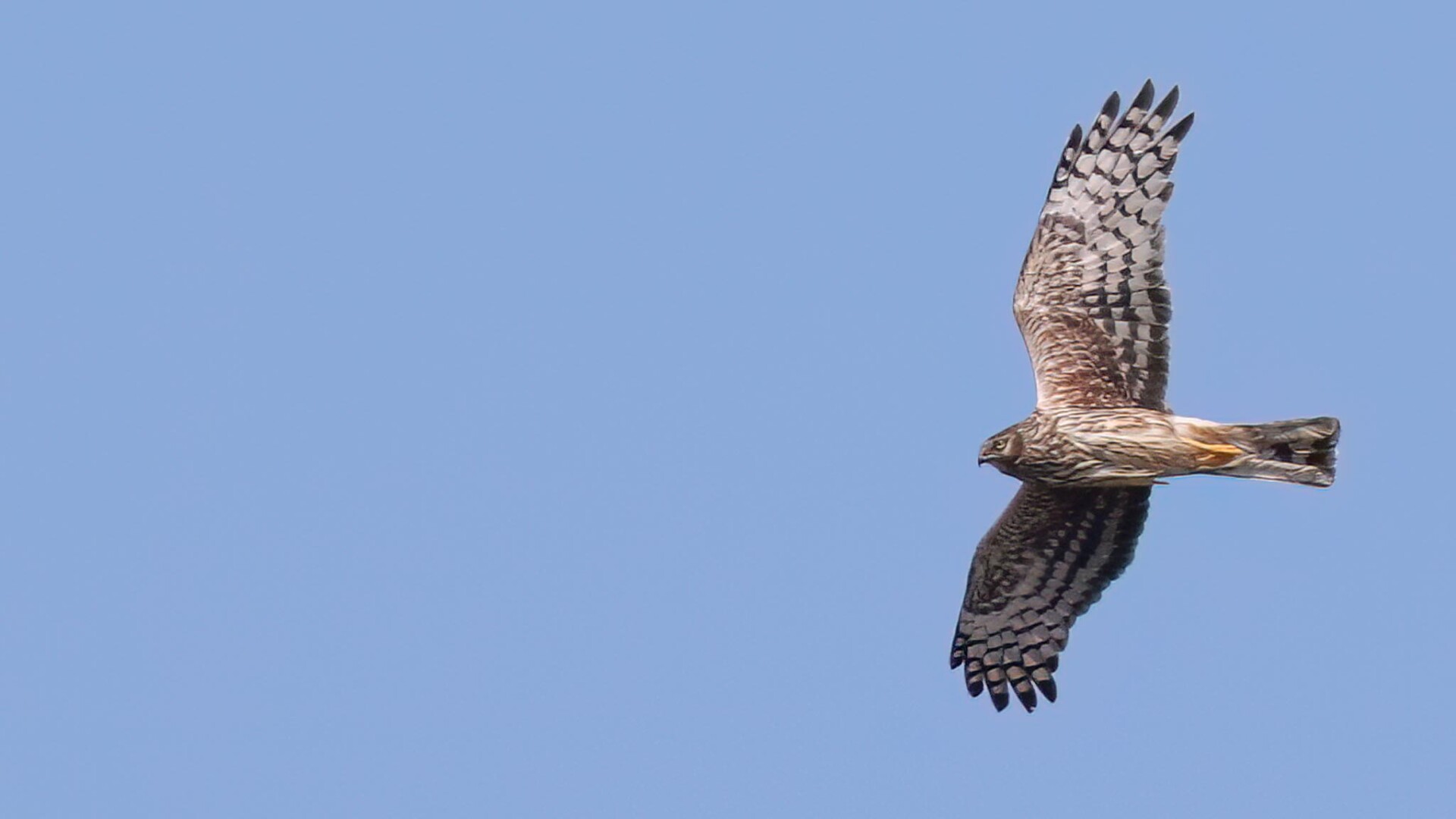
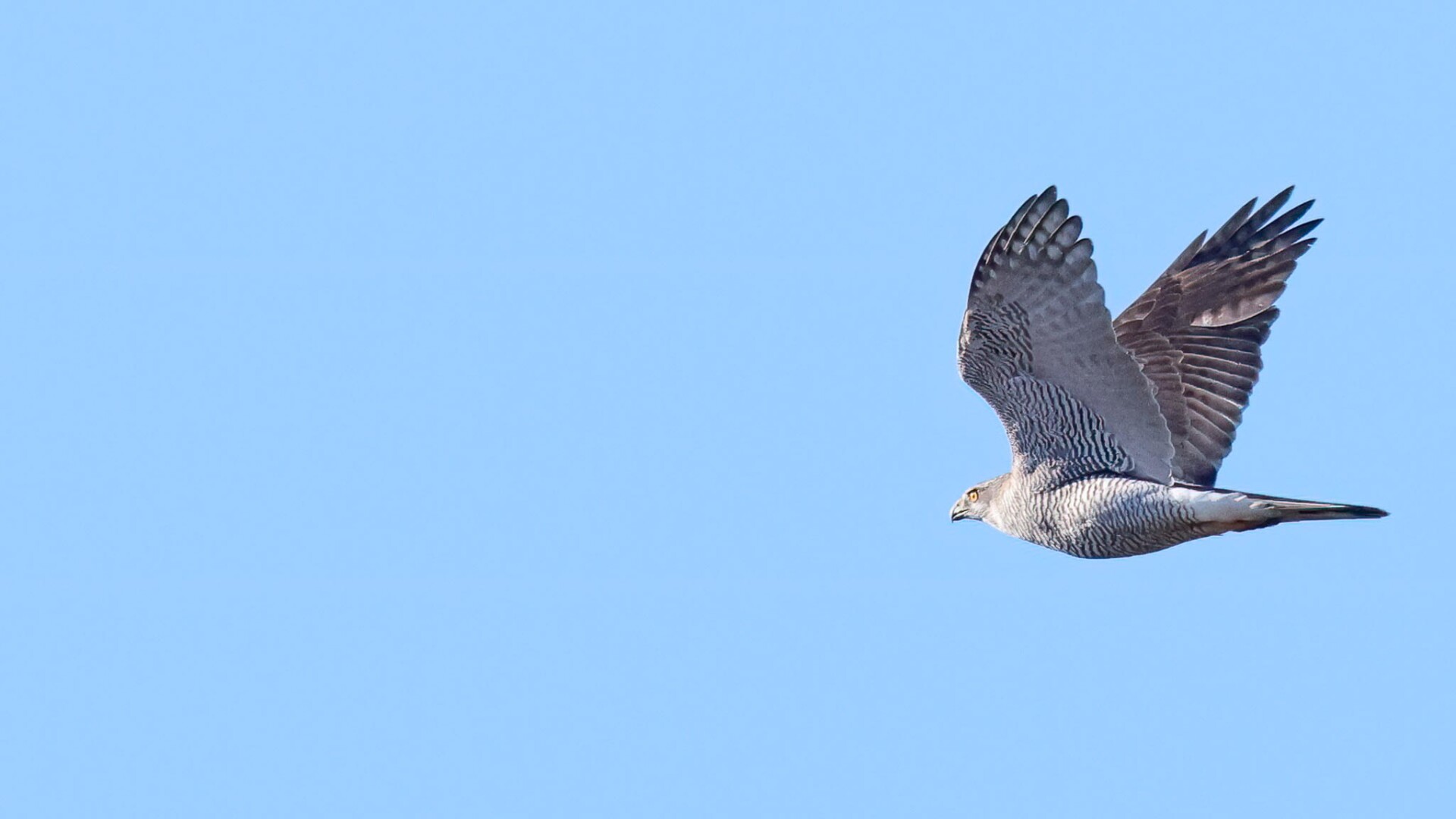
Gradually, the skies brightened again and quickly the birds responded. A brief Goshawk came up over the trees off to our left but dropped down again. As we scanned over the pines, we did find a very distant Crossbill perched up in the very top of one. Another Goshawk then drifted over very high and, as it did so, another (or the first again) came up below. It started displaying over the wood, flying with deep, exaggerated wingbeats and its white undertail coverts fluffed out.
After that, there were Goshawks up pretty much constantly for the next hour or so. The displaying bird was joined by a second and we we watched them flying up and down. The Buzzards had come out in force now too. At one point, we watched a couple of Goshawks circling in a kettle with at least seven Buzzards. Two Goshawks then chased each other very rapidly across over the trees.
A couple of Sparrowhawks circled up too.. Then a pair of Goshawks came up over the closer trees, the larger female continued to circle slowly while the smaller male drifted off. It wasn’t displaying but we could see its distinctive white undertail coverts.
After several days of inclement weather, the Goshawks had probably responded by all coming up as the sun finally came out. We counted at least five different individuals, and good prolonged views too through the scopes. After about an hour or so, the activity level seemed to drop. We decided to head back up to the coast.
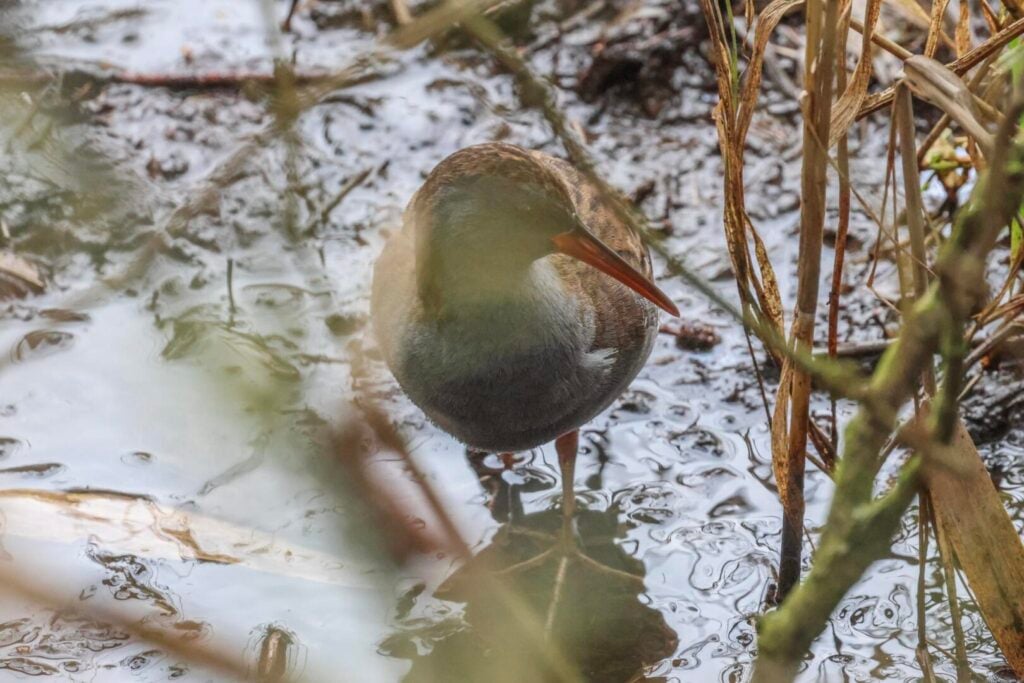
When we arrived at Titchwell it was time for lunch, so we made good use of the tables which are now back in the picnic area. Afterwards, we walked out for a quick look at the reserve. We didn’t have to venture far up the main path before we found the Water Rail in the ditch below, although it was trying to hide under the overhanging bushes.
Further up, we stopped by the Reedbed Pool. There were several Tufted Ducks between the bushes and the reeds and a raft of sleeping Common Pochard out in the middle. A Great White Egret was stalking the reeds along the back edge and a Little Grebe was diving in the far corner. We noticed a Common Snipe which was feeding in between the sleeping ducks on the cut reed at the front. A Marsh Harrier hung in the air over the reedbed beyond.
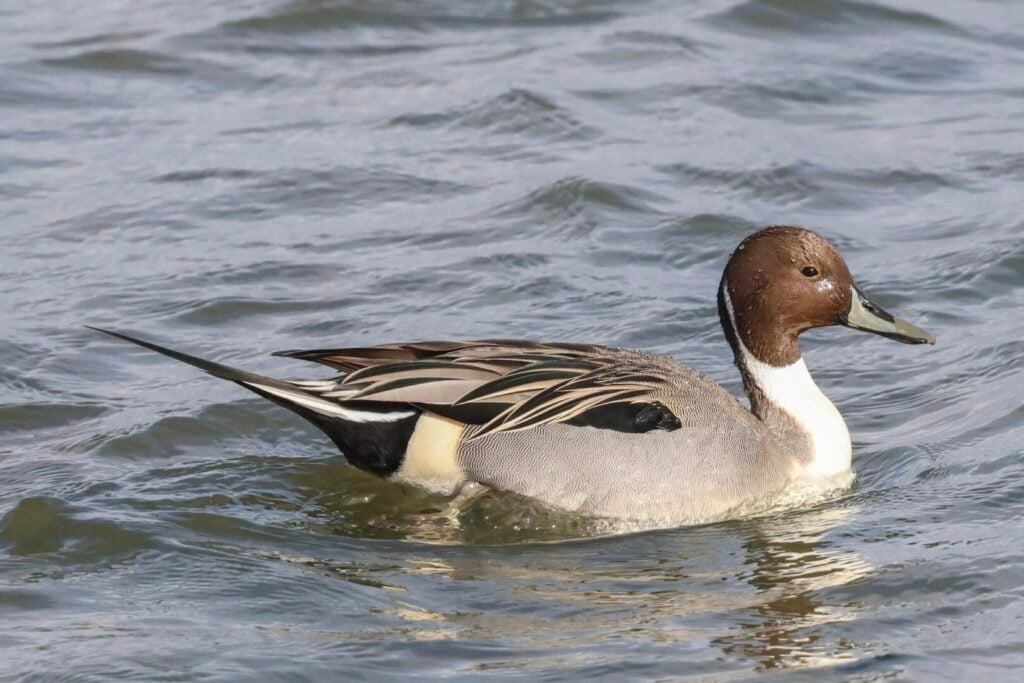
Pressing on to the Freshmarsh, a Chiffchaff was calling from the reeds just beyond Island Hide. The water levels are still high on all three compartments. Not great for returning waders, but at least the ducks were enjoying it. A pair of Pintail were upending on the water just below the bank – great, close views.
Several Brent Geese were out in the middle too. They then flew off in small groups, past where we were standing on the bank and out to the saltmarsh the other side. More Brent Geese were already feeding out on the saltmarsh.
We had heard a Mediterranean Gull calling on the walk out here and now we found several in with the Black-headed Gulls over on the island on the far compartment. All adults in various states of moult into breeding plumage, one particularly smart individual was already sporting a full black hood.
A couple of Ruff were on one of the islands at the back too. A small group of Golden Plover were asleep on another island and more were well camouflaged roosting in the vegetation on the bund, with some Lapwings.
There was not much on Volunteer Marsh. The tide was starting to come in again now so the mud in the channel had been exposed for several hours. We could just see a few Curlew and Redshank.
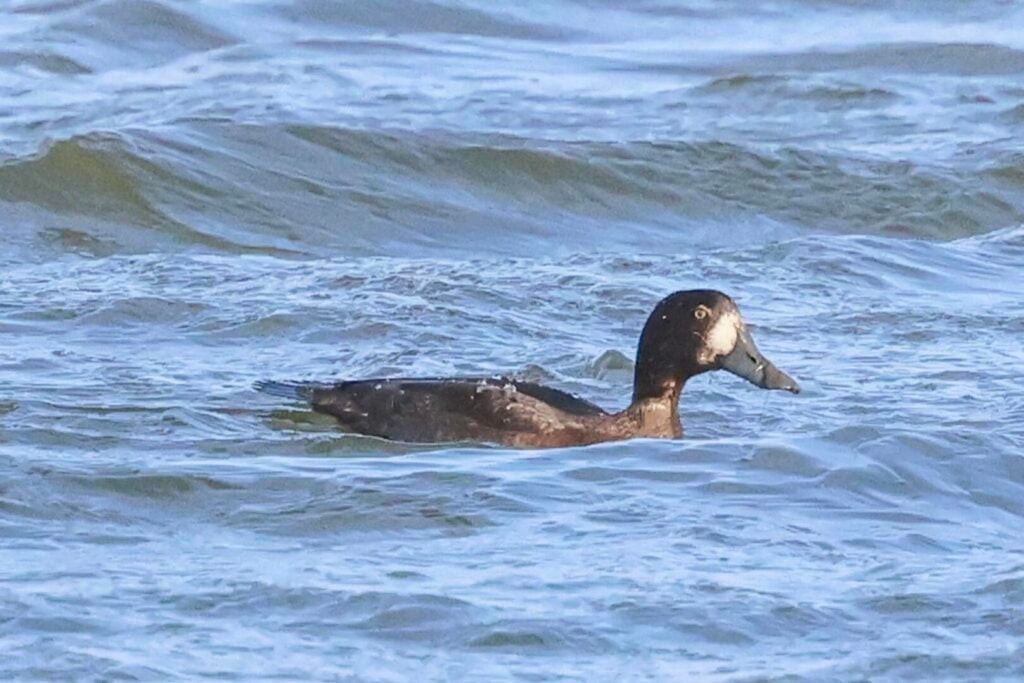
As we walked on up to the Tidal Pool, a small flock of Redshank flew in from the saltmarsh and landed on the mud. We couldn’t see anything else in with them. The long-staying female Greater Scaup was busy diving further up, behind the raft of Shoveler. We got it in the scopes and could see the extensive white around the base of its bill.
Out on the beach, one of the volunteers had just been watching the Long-tailed Ducks out on the sea. Scanning across, we could see about a dozen Red-breasted Mergansers and one or two Goldeneye at first. Then we picked up four of the Long-tailed Ducks much further out. Hard to make out much detail at that range and four more were even further out still. A single Common Scoter was out on the sea too and a few Great Crested Grebes.
With the tide coming in, the mussel beds were already covered. There were several silvery-grey Sanderling still on the beach though, running up and down along the edge of the water, in and out of the waves.
As we made our way back past the reedbed, a couple coming the other way told us they had seen the Firecrest by the path, close to the feeders. By the time we got there, we couldn’t see it now but we did find some Long-tailed Tits and a couple of Treecreepers in the trees.
They looked like they might be part of a mixed flock so we followed it across to the Visitor Centre. At the start of Fen Trail we managed to catch two Goldcrests in the sallows briefly before they moved deeper in. It looked like the flock might be heading for the car park, so we walked back round that way. The best we could find round here now though was a single Chiffchaff in the sallows.
We still had time for one last quick stop. There had been some Tundra Bean Geese on Ken Hill Marshes over the last couple of days, right at the south end so we thought they would be easy to find. As we walked up along the bank, a Barn Owl flew quickly past us.
There were lots of White-fronted Geese out on the marshes, in scattered groups spread around the grass and small pools. Great views of some very close to the bank. As we had seen on Friday, there are large numbers around at the moment, come over from their regular wintering grounds in the Netherlands. We could see lots of Greylags and Canada Geese and a few Egyptian Geese too.
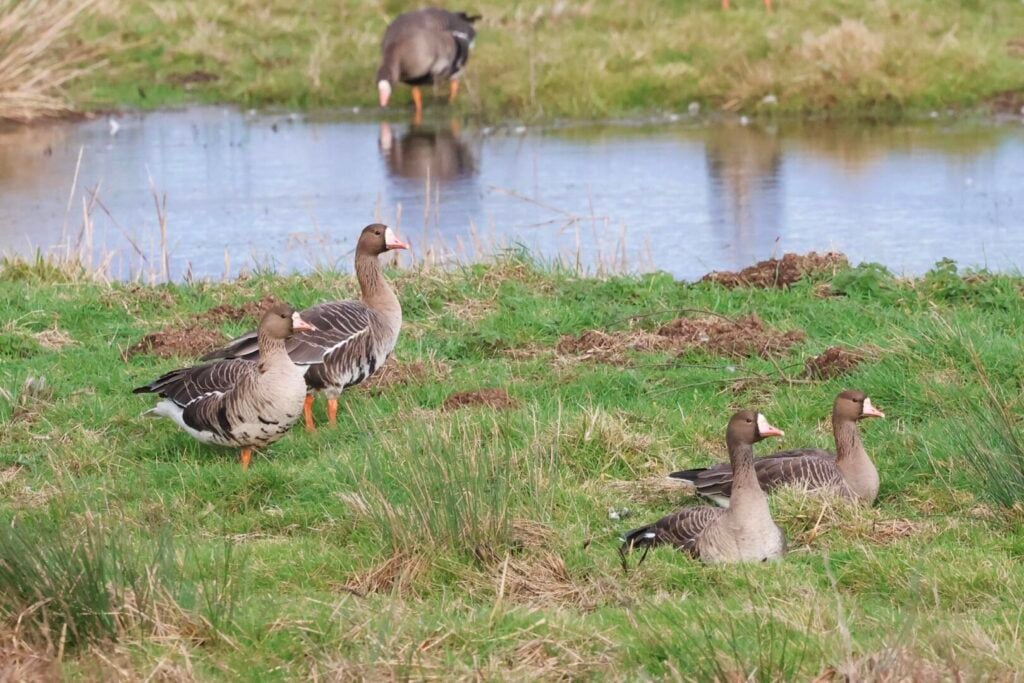
Several of the geese were hidden behind little patches and lines of reed so we kept walking on a little further and stopping to scan. This turned up a couple of pairs of Pink-footed Geese, but still no sign of any Tundra Beans. It was already time we should be thinking about heading back but we knew the latter would be out here somewhere. We were just about to give up when a Tundra Bean Goose put its head up from out of the grass.
In the end we realised there were at least five Tundra Bean Geese here, probably more. We could see their dark bills with a variable dayglo orange band around it. They were in the same group as two of the Pink-footed Geese we had seen much earlier, but had chosen a low lying wet patch with long grass, tucked in behind some reeds, where they were impossible to see from further back. Even from here, they kept disappearing when they put their heads down.
Mission finally accomplished, we headed back to the minibus. Back at Hindolveston, we said our goodbyes and headed off home. The weather hadn’t always been kind to us this weekend, but we had enjoyed a very successful three days in the end. A great selection of winter birds, Brecks specialities and lovely views of some Goshawks.