Day 2 of a 3-day Autumn Migration & Wader Spectacular tour. It was a lovely bright, sunny morning, though with a rather fresh SSW wind again. A couple of the forecast showers did actually arrive this afternoon but we successfully managed to dodge them. We spent the day on the North Norfolk coast.
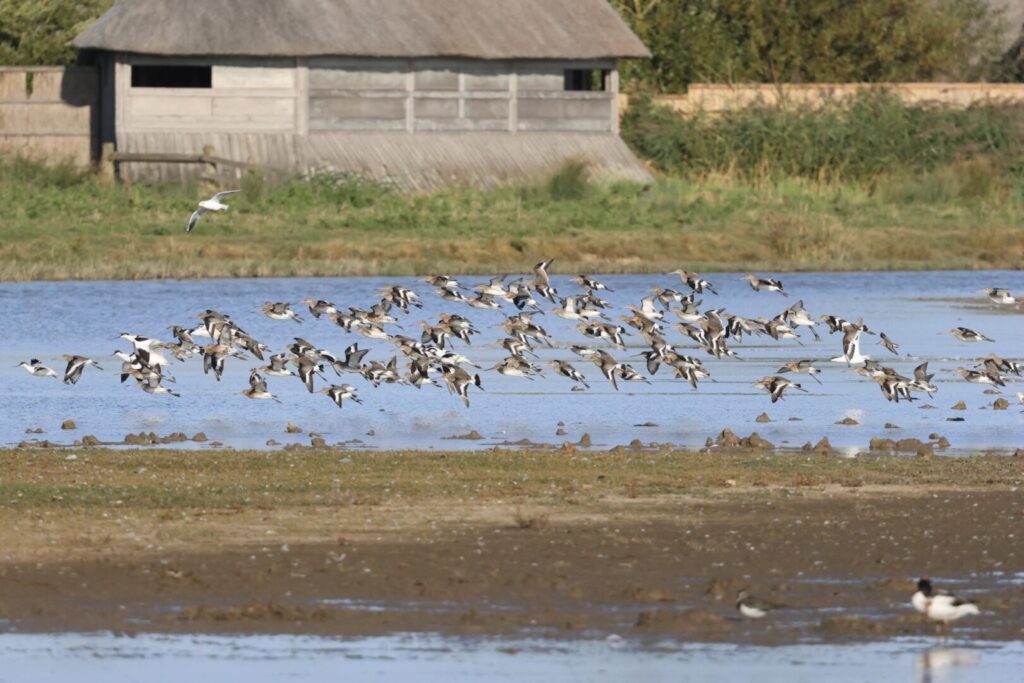
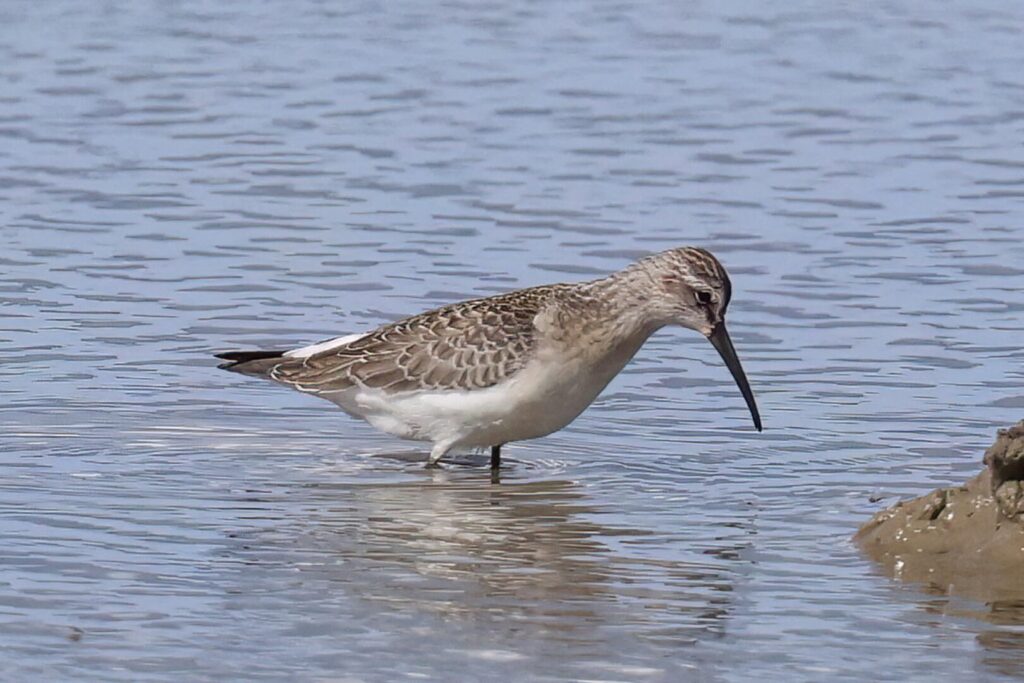
This morning, we headed for Cley first thing. With early sunshine, we made our way out Bishop Hide where the light would be behind us, looking out over Pat’s Pool. There had been several Wood Sandpipers here earlier but they had apparently just flown off. They would probably have gone to South Pool, which they have been favouring lately, so we could look there later. In the meantime, there were mainly lots of Ruff and Lapwings on here now. A large group of Black-tailed Godwits and Avocets were dozing behind the island off to the left. A single juvenile Curlew Sandpiper was feeding right over at the back.
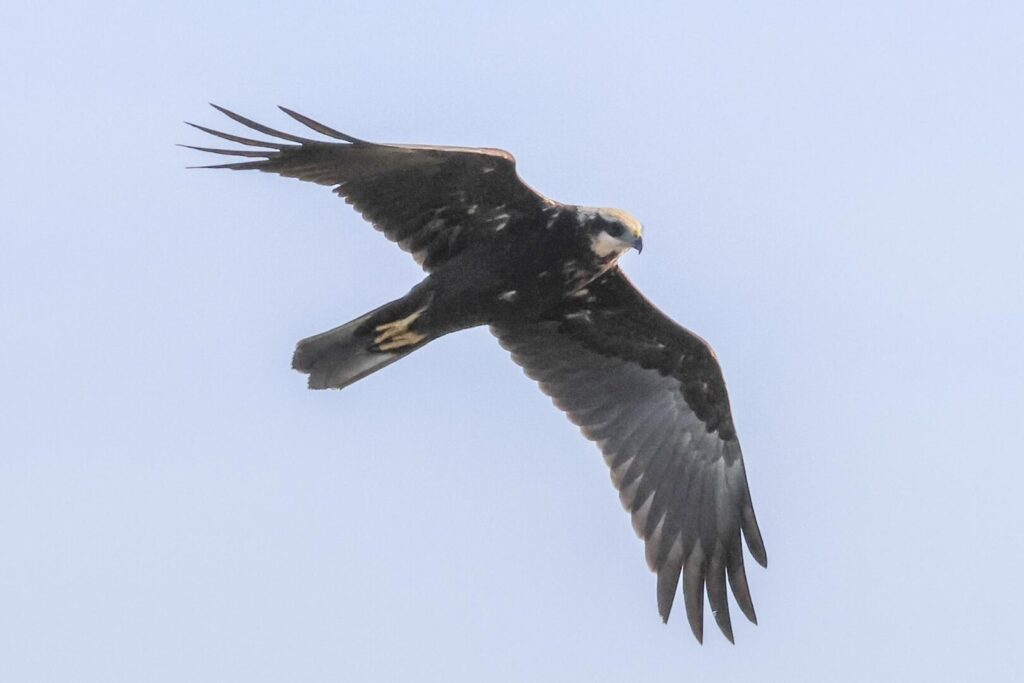
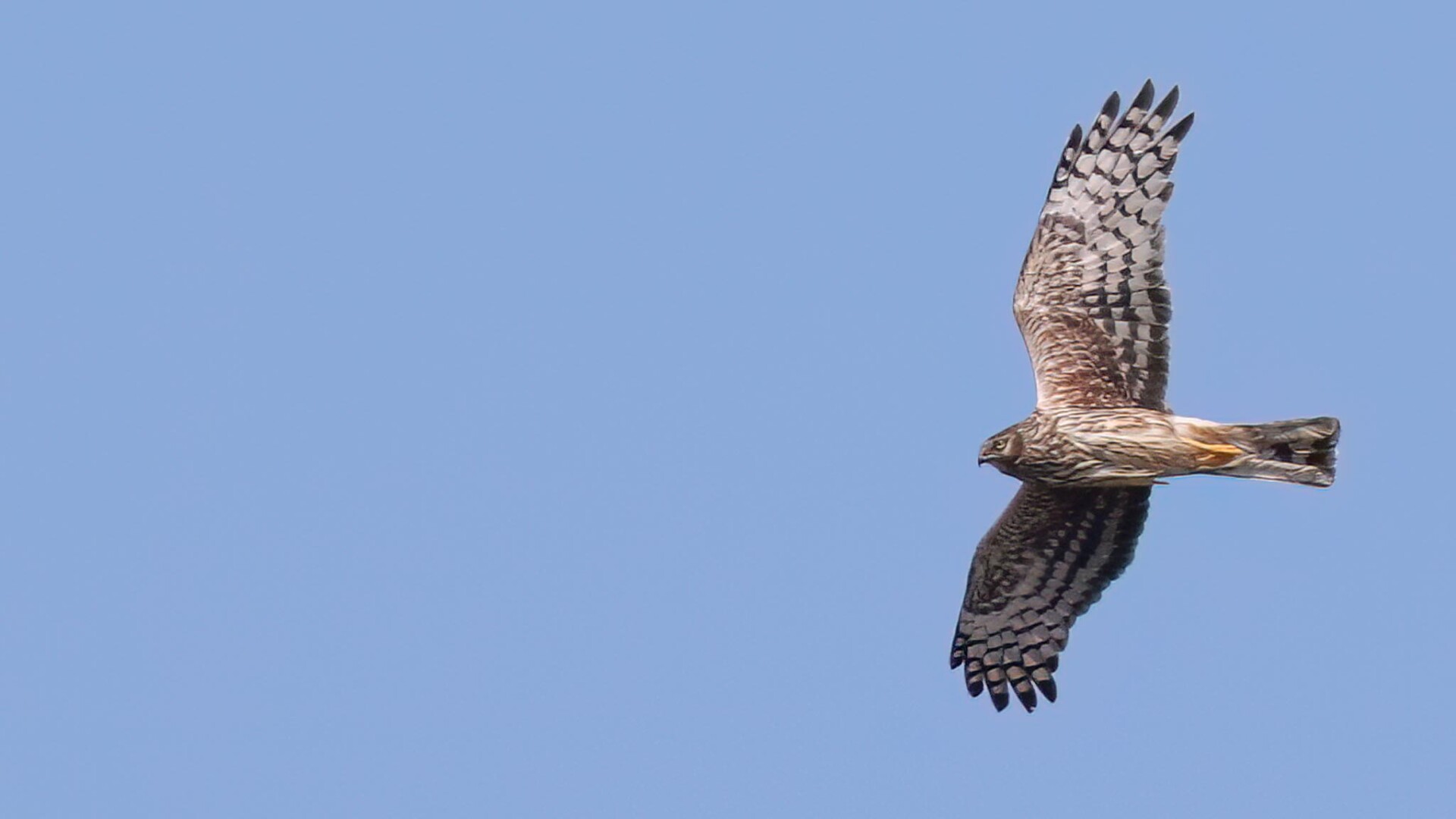
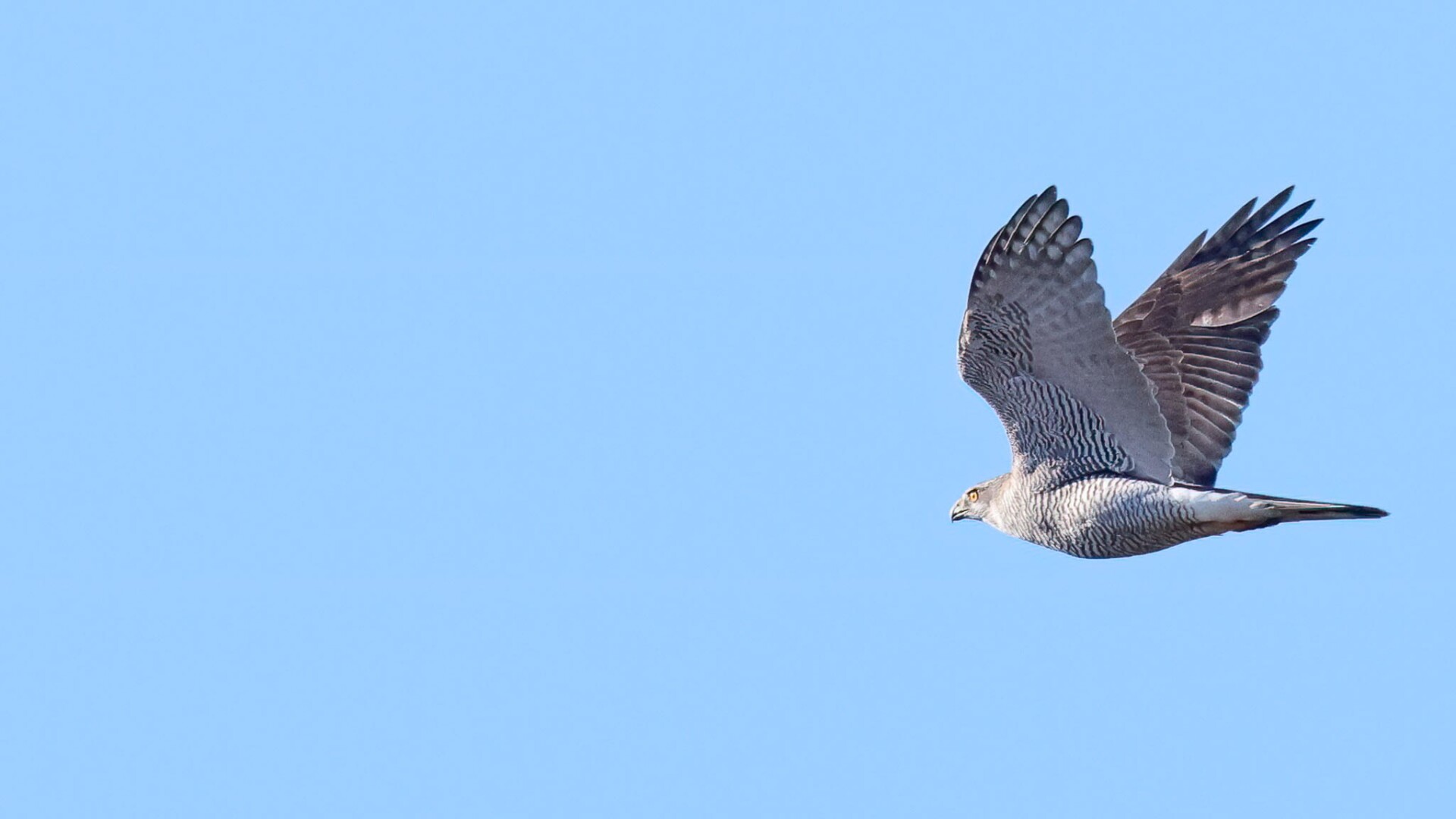
A couple of Marsh Harriers kept coming up over the reedbed and after a while, one drifted in along the bank in the front of the hide, giving us a nice close view. It was one of this year’s juvenile, dark chocolate brown with a pale head. A Sparrowhawk flew in over the central hides too, across over the scrape and disappeared off over the reeds beyond.
With all the raptor activity, the waders spooked from time to time and flew round. A flock of smaller waders flew back in. When they landed, we could see four more Curlew Sandpipers and two Little Stints with the Dunlin. Nice views through the scope and again, a good chance for comparison side by side. When a large group of birders came in to the hide, we decided to move on.
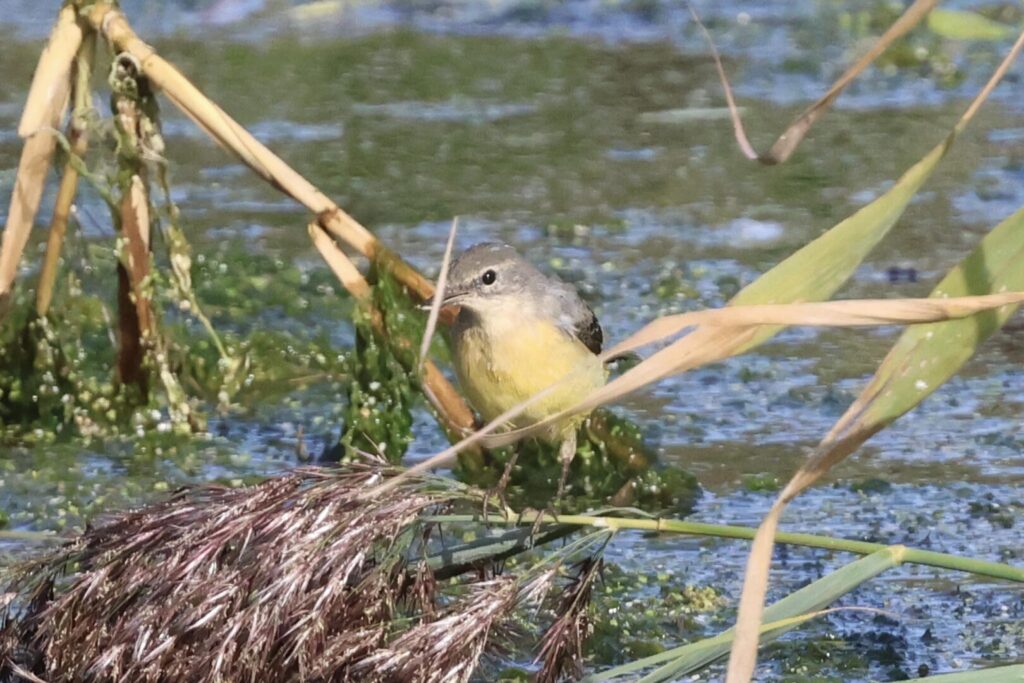
We drove over to Walsey Hills next. As we got out of the minibus, a couple of Common Buzzards came up over North Foreland plantation. Snipe’s Marsh was almost dry and there was nothing on there but we did spot a single Stock Dove in with the Woodpigeons in the field behind. As we crossed the road, two Grey Wagtails flew along the Catchwater Drain and landed on the water weed. They don’t breed here so these would either be migrants or birds dispersing from inland. The first surprise of the morning.
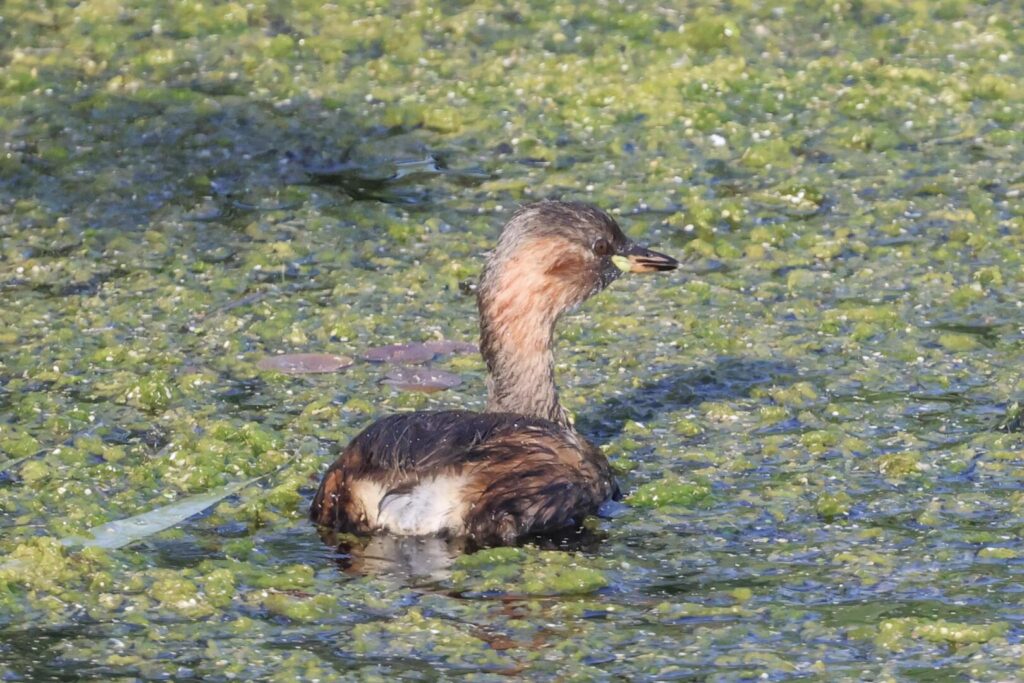
From the start of the East Bank, we could hear a Cetti’s Warbler singing (or shouting) from out in the reeds. Typically, it remained stubbornly hidden. A Little Grebe was diving on Don’s Pool and surfacing through the blanket weed. The reedbed beyond was quiet – it has been a poor year for Bearded Tits anyway and it was probably a bit breezy today too.
There were hirundines on the move again today. A succession of groups of House Martins flew through, some lingering to feed over the reedbed. There were a few Swallows with them, and a single Common Swift. It won’t be long now before they have all left us for the winter. There were lots of Greylags and Canada Geese out on the grazing marsh and a few Jackdaws and Rooks in the grass. We walked on up to the Serpentine for a closer look at the corvids in the scope.
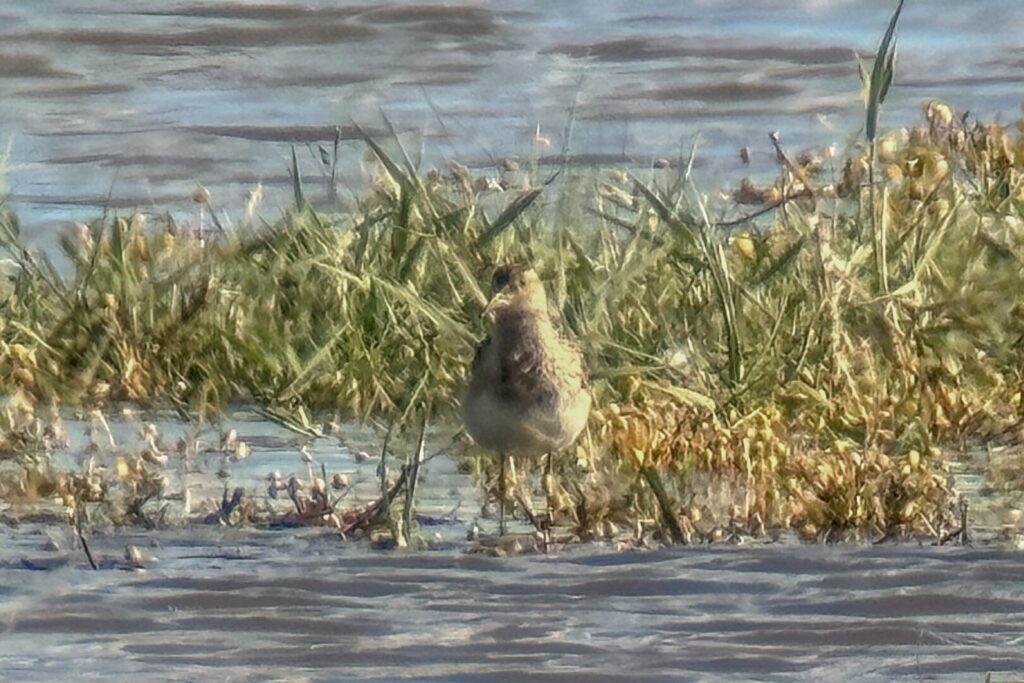
Scanning the muddy edges around the far end of the Serpentine we were surprised to find a Pectoral Sandpiper. We got it in the scope and everyone had a look, before it walked off to the left, out of view. When we scanned across to find it again, we realised there were actually two Pectoral Sandpipers together. A bit like buses! They disappeared round the end of the spit they were on, so we walked further up and found them again.
Although we had seen one or two at Titchwell yesterday, Pectoral Sandpipers are not common birds here. Scarce migrants from North America or far eastern Siberian, it seems these might be the first at Cley for three or four years. So we put the news out on the local WhatsApp groups, but when we looked up again they had disappeared. No one saw them fly off. Several local birders came out to see them but we couldn’t refind them.
Eventually we decided to walk on and leave everyone else scanning. A Kingfisher flew over the bank ahead of us and stopped to hover for a few seconds out over the start of the Brackish Pool. It dropped down out of view but before we could get up there, it flew up again and disappeared into the Main Drain. Presumably it flew off low over the water towards the West Bank because we couldn’t see it from the sluice either.
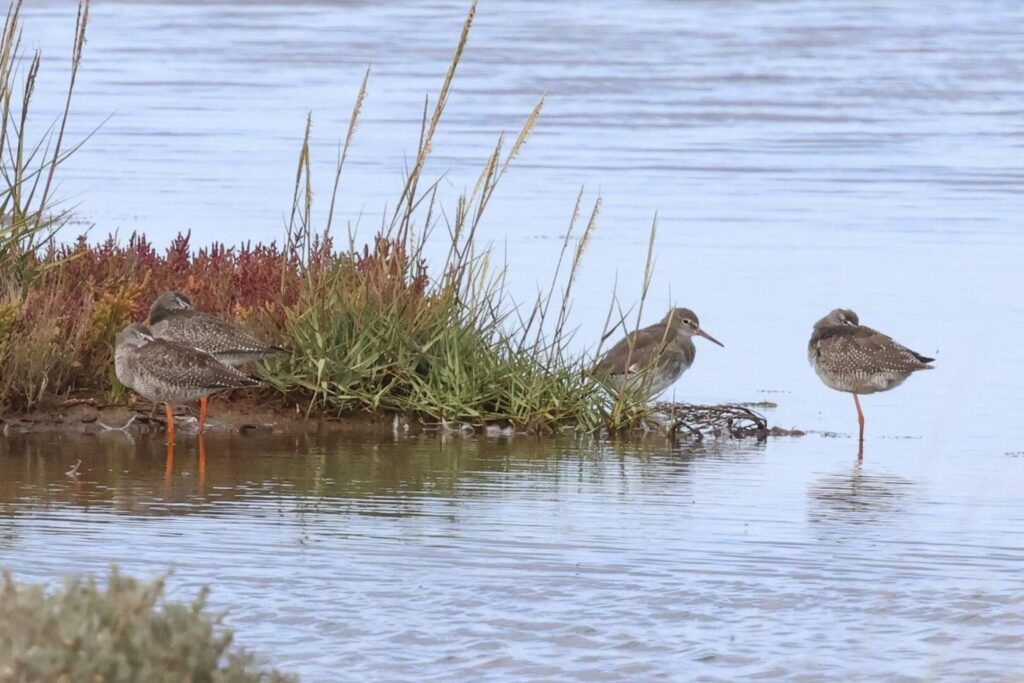
Looking further back, we did find four Spotted Redshanks now on the Brackish Pool. All smart dusky juveniles. They had earlier been seen on Watling Water, presumably freshly dropped in, and had now moved the short distance to here. We had a nice comparison next to a Common Redshank before they went to sleep.
Further back, there were three Dunlin with some more Common Redshanks on one of the small muddy islands. As we scanned across, we then realised that the two Pectoral Sandpipers were now asleep right on the back edge. Although we telephoned the other birders back by the Serpentine to come up, it was one of those days and while we were on the phone they flew and disappeared again. (Thankfully there was a happy ending eventually for the locals – although there was no further sign of them all day, they were refound in the evening at Salthouse on the Iron Road pool)
We went into Richardson Hide, out of the wind, to scan Arnold’s Marsh. There was a large group of Sandwich Terns loafing on here, which we had seen on the way out, so we had a closer look at those now. Through the scope, you could see the yellow tips to their black bills. There were lots of Redshank and Curlew, the latter particularly after the cows had flushed a large flock from the field behind. A single female Pintail was out on the water.
Several Meadow Pipits were flying round, chasing each other, but kept landing back down in the vegetation out of view. Eventually one landed on a post where we could get it in the scope. Still more groups of House Martins were flying west, just behind the beach, and as well as a few Swallows we found a couple of Sand Martins in with them now, as well as two more Common Swifts.
Out at the beach, the Sandwich Terns had been fishing just offshore but there was no sign of any activity here now. A few more seemed to fly in high, off to our right. We could see a scattering of gulls still loafing on the sea and scanning through them we found a couple of Caspian Gulls on the water briefly distantly off to the west. With no terns here now, the gulls quickly flew off. An adult Mediterranean Gull was in with the Black-headed Gulls distantly to the east but hard to see on water and drifting quickly away with tide.
A female Tufted Duck flew west close in. Then it seemed to change its mind and turned round before heading back east much further out. A couple of Gannets flew past, distantly out towards horizon.
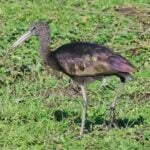
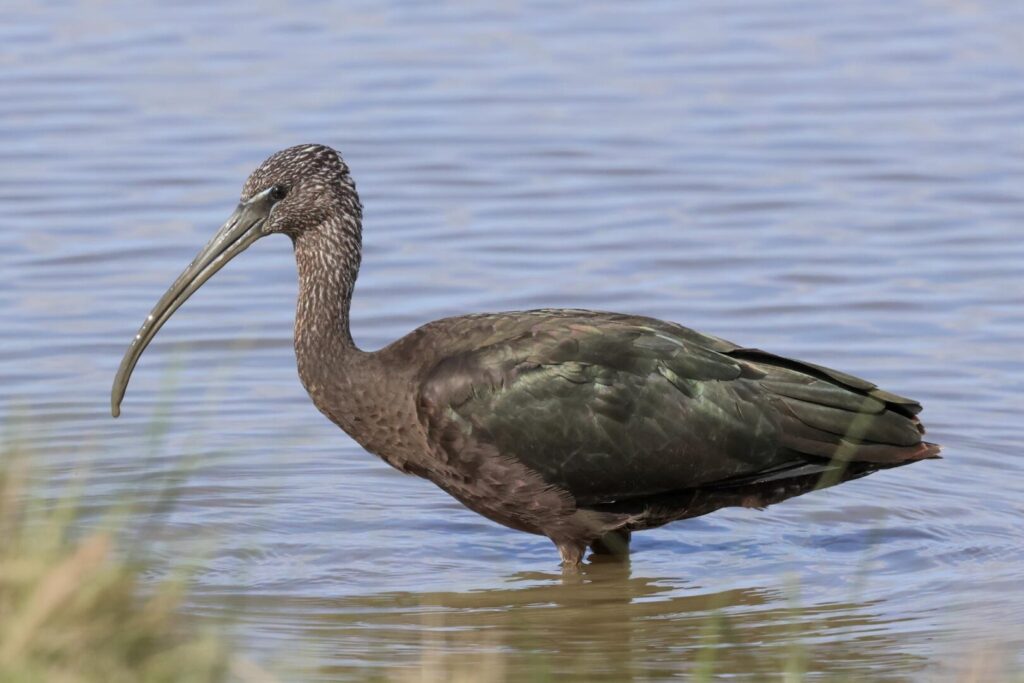
There had been a Glossy Ibis around the last couple of days but it had been mobile and hard to pin down. It (or another) had been seen flying over Salthouse this morning and then off the West Bank. We had a message now to say that it had apparently dropped in to Pat’s Pool in front of Bishop Hide, so we walked back with a view to heading over to see it. As we stopped to check if there was anything with a few Blue Tits which were in the sallows on the edge of the reedbed, seventeen Spoonbills flew in over the reeds behind.
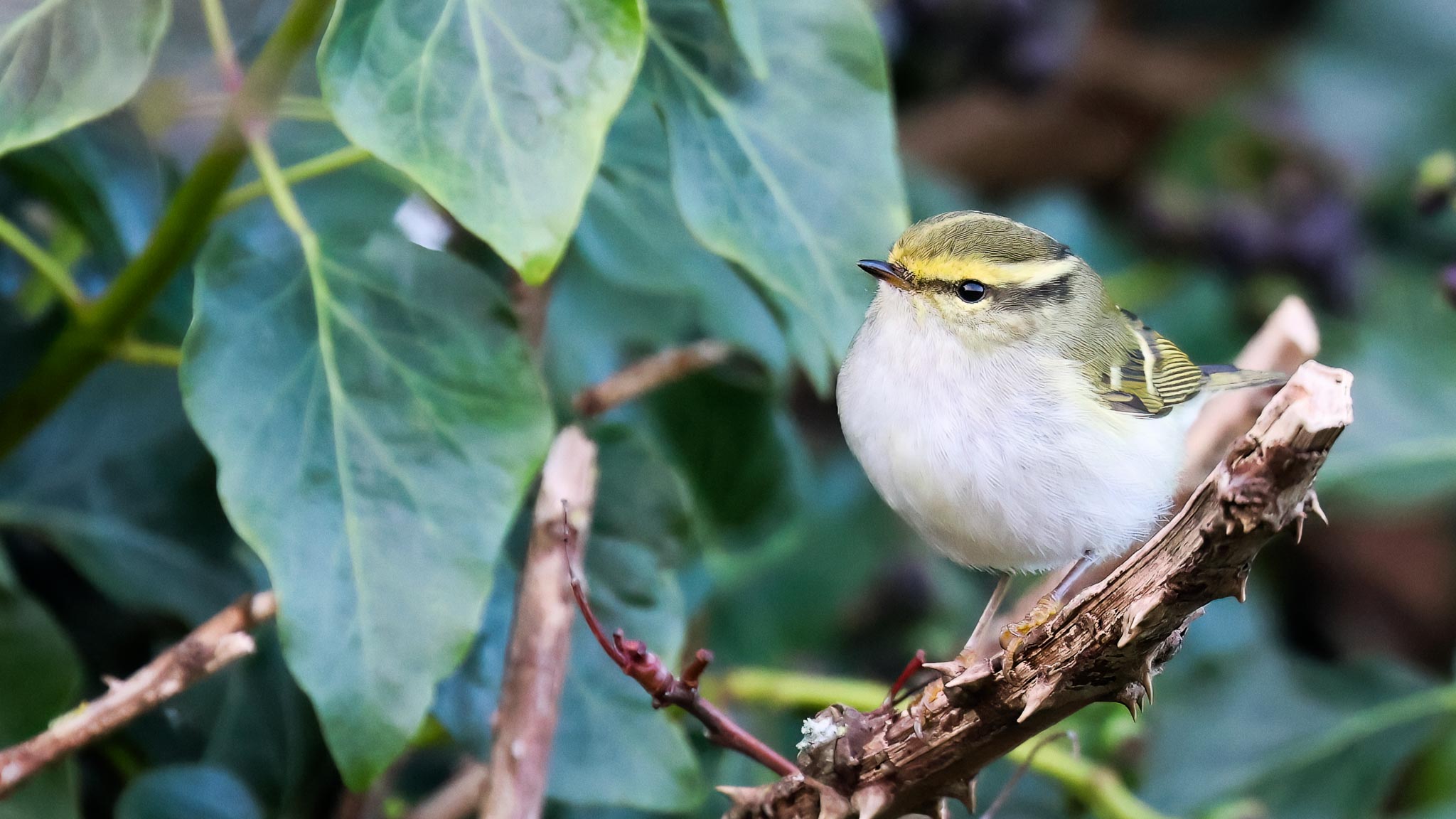
Back at Snipe’s Marsh again, there were more small birds in and out of the trees behind. As well as more Blue Tits, we could see a couple of Chiffchaffs chasing round in the bare branches in the sunshine. A Kestrel was hovering over the top of Walsey Hills. We had a quick look at the feeders at Walsey, but all we could see were a couple of Chaffinches and several more Blue Tits in and out.
Back round to the Visitor Centre, we needed a stop to use the facilities first. While we were waiting, we put the scope up on the terrace. We couldn’t see the Glossy Ibis from here but we could see a couple of Wood Sandpipers distantly on South Pool. Two more Common Swifts were lingering with some House Martins over scrapes. A male Marsh Harrier drifted over the reeds just across the road.
There was no update on the Glossy Ibis, but we went over for a quick look back in Bishop Hide. When we got there, we couldn’t see it at first until someone pointed out that was because it was feeding right in front of the hide, so close that it was hidden by the grass on the bank. We saw its head come up a couple of times and then it gradually worked its back and out into the open. Fantastic views.
A Hobby came in over the back of the scrape, flushing all the waders. Then it drifted further back and we could see it hunting dragonflies out over North Scrape beyond. A couple of times, it drifted back in closer again.
The same Curlew Sandpipers and Little Stints were still here. One of the Curlew Sandpipers landed much closer to the hide for a better view. Four Greenshanks had appeared on here now too. Presumably freshly arrived, like the Spotted Redshanks we had seen earlier they were now sleeping off the journey.
We were just about to leave, when one of the locals spotted an Arctic Skua distantly over the shingle ridge. We could see it chasing a Sandwich Tern just offshore before it gave up and flew off east, dropping behind the shingle our of view.
Try again, this time we did make it back to the Visitor Centre and it was time for lunch. The most bizarre moment of the day was when someone walked into the picnic area, set up a own chair, and started playing the guitar. Not what we were expecting here! Still, it was lovely now sitting outside in the sunshine. But after lunch, we could see dark clouds approaching off to the south-west. We made a beeline straight out to the Central Hides.
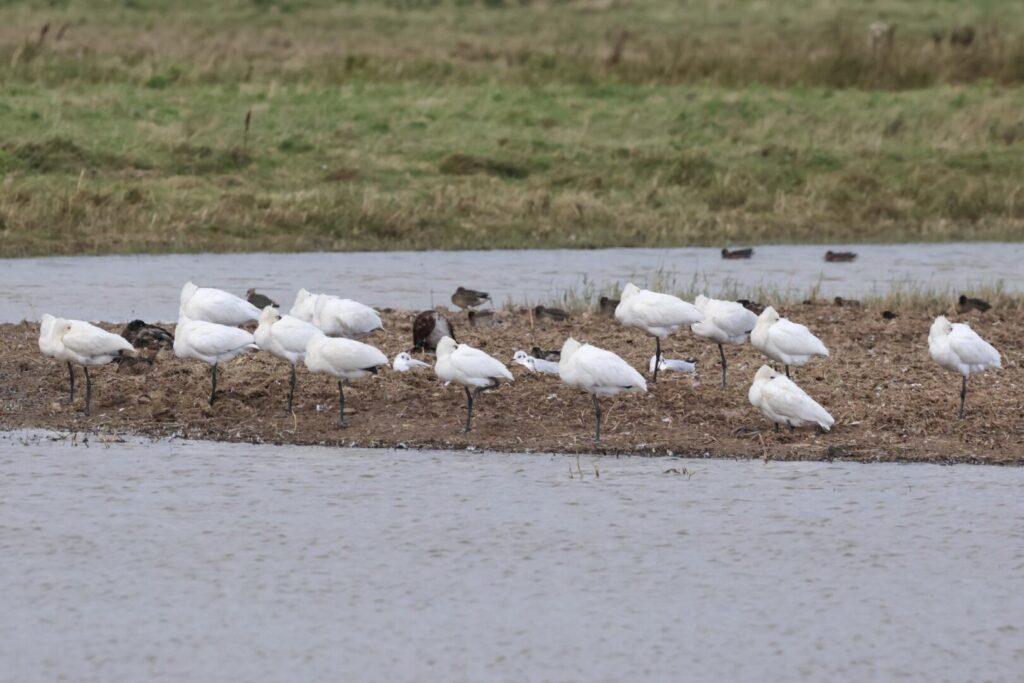
Into Daukes’ Hide first, there were just a few Ruff and Lapwings on Simmond’s Scrape and a scattering of ducks, nothing new. The Spoonbills we had seen earlier were now on the islands on Whitwell Scrape, all asleep. Four Wood Sandpipers flew over calling, but disappeared down onto North Scrape, out of view. Presumably the same birds we had seen on South Pool from the Visitor Centre.
It was clearly about to rain, so before it arrived we walked round to Teal Hide. There were much the same birds on Pat’s Pool as we had seen earlier. While it rained, we had more nice views of the Little Stints and Curlew Sandpipers. The Greenshanks were now awake and feeding, walking round quickly in the shallows with the tips of their bills in the water. As the rain arrived, they started calling and then flew over to South Pool. We could see out to South Pool from Teal Hide and there was no sign of any Wood Sandpipers now.
The rain did bring a few more waders in, possibly migrants brought down by the weather. A couple of Golden Plovers dropped down onto Pat’s Pool. Then we noticed a juvenile Knot had appeared on the front of Simmond’s Scrape too. The dark clouds eventually cleared through to the north-east, the rain stopped and the sun came out again. As we walked back to the Visitor Centre, we could see an amazing double rainbow out over the sea.
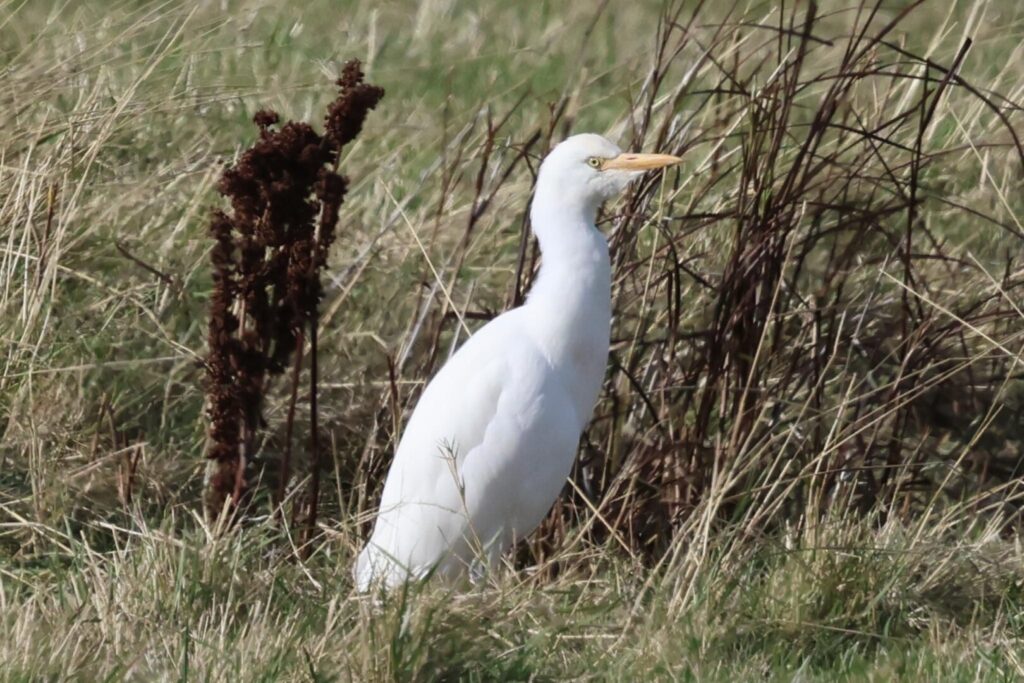
We planned to go for a quick walk at Kelling to finish the day. As we drove over, we made a quick stop in Salthouse when we spotted five Cattle Egrets in the field with the cows by Beach Road. Then we carried on to Kelling village.
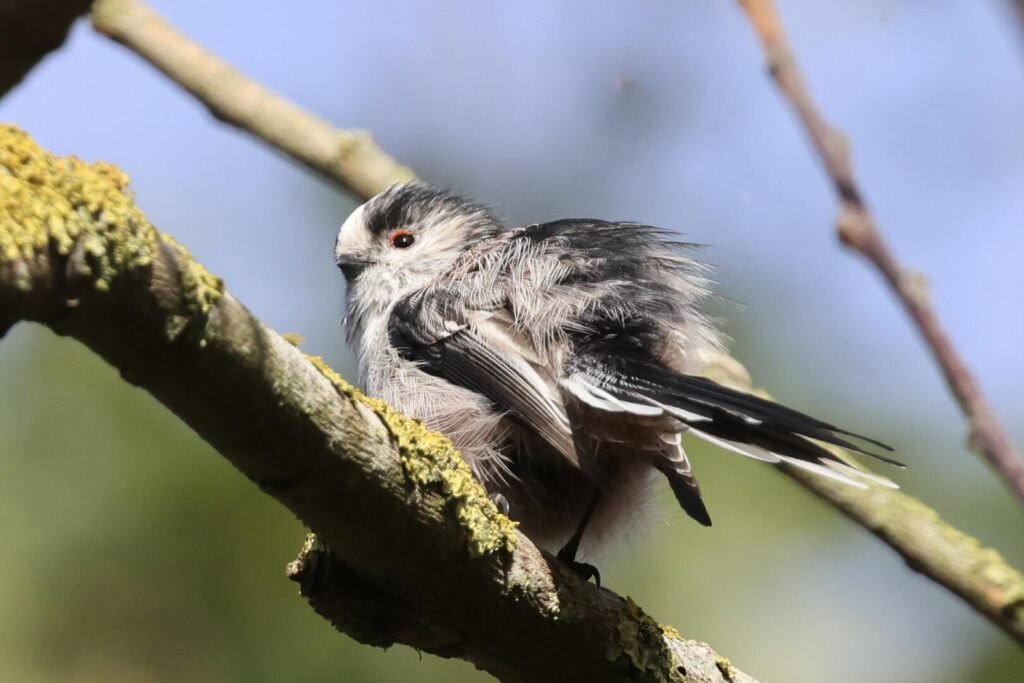
As we walked up lane, there were several Chiffchaffs calling and flitting in and out of the hedge ahead of us, along with a small group of Blue Tits and Great Tits. When we got to the copse, we found a flock of Long-tailed Tits in the trees too with several more Chiffchaffs. We couldn’t see anything else with them though. Lots of Ivy Bees were buzzing around the ivy flowers in the sunshine.
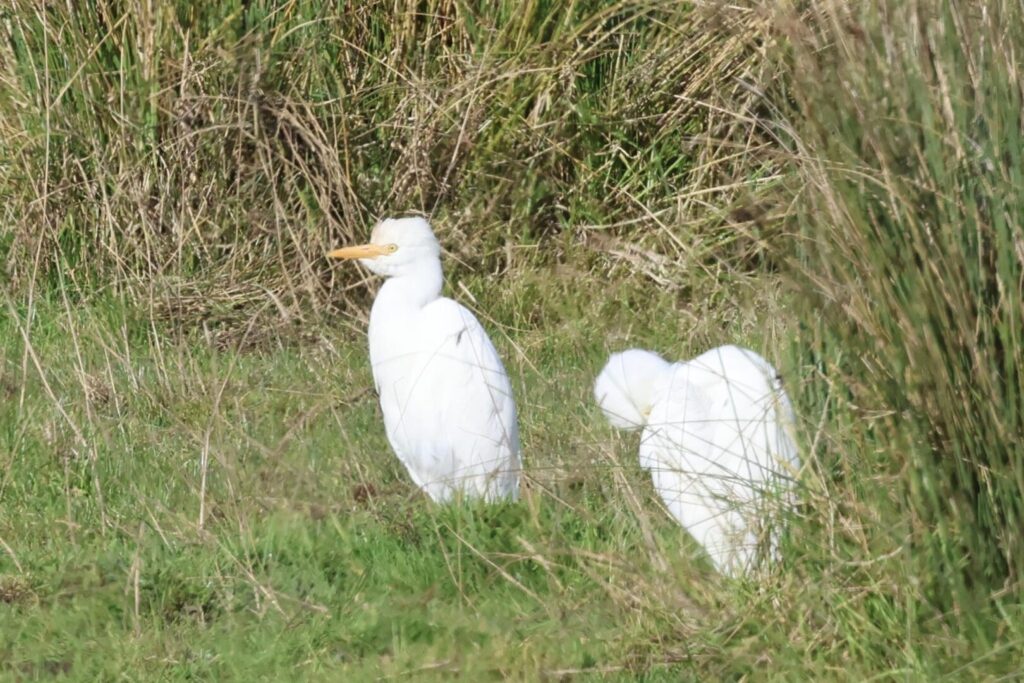
We stopped to scan the south end of the Water Meadow from the gate beyond. Three more Cattle Egrets were out in the long grass around the feet of the cows, but there could have been more out of view in the rushes. One of the Cattle Egrets was a fairly recently fledged juvenile with an all-dark bill. Lots of Rooks were out on the short grass on the hillside beyond.
As we turned to walk on, we noticed some very ominous black clouds starting to build behind us. We didn’t have long now anyway, but we decided discretion is the better part of valour. It was preferable to head straight back now and ensure we stayed dry rather than risk getting caught in a downpour. As we drove back through Holt, it started to spit with rain and on the way back to Hindolveston the heavens opened.
And it meant we were back in time for tea and cake today. Plenty of time for more birding again tomorrow!