Day 2 of a 3-day Summer Tour in Norfolk and just into north Suffolk today. It was another hot sunny day, topping out at 27C this afternoon inland and cooler once again on the coast in the NE wind. We spent the day in the Brecks and Fens and then went out again in the evening to look for Nightjars on one of the North Norfolk heaths.
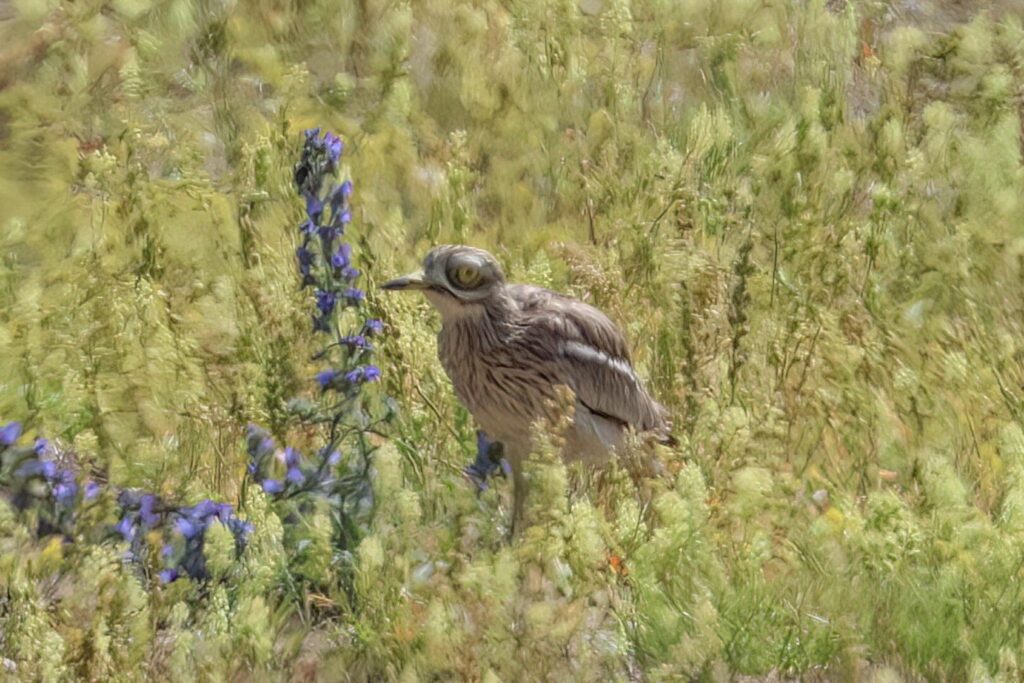
Our destination for the morning was Lakenheath Fen, but on the way down we stopped in the north Brecks. After breeding, the Stone Curlews start to gather in favoured fields and the first ones can move in already in July. So we wanted to have a look and see if there are any present yet. We stopped at a gate to scan one of the fields and immediately could see a couple of Stone Curlews. We got the scope out, and looking more carefully now we counted at least nine spread around the field. An Oystercatcher flew over calling and a couple of Red-legged Partridges picked around the margin.
The Stone Curlews were a bit distant from here but we could see they might be visible a little closer from another gate the other side. We drove round to try our luck. A couple of Egyptian Geese were right in front of the gate, so we approached carefully, to make sure we didn’t spook anything. We immediately found a group of 14 Stone Curlews together from here, standing in the flowers preening.
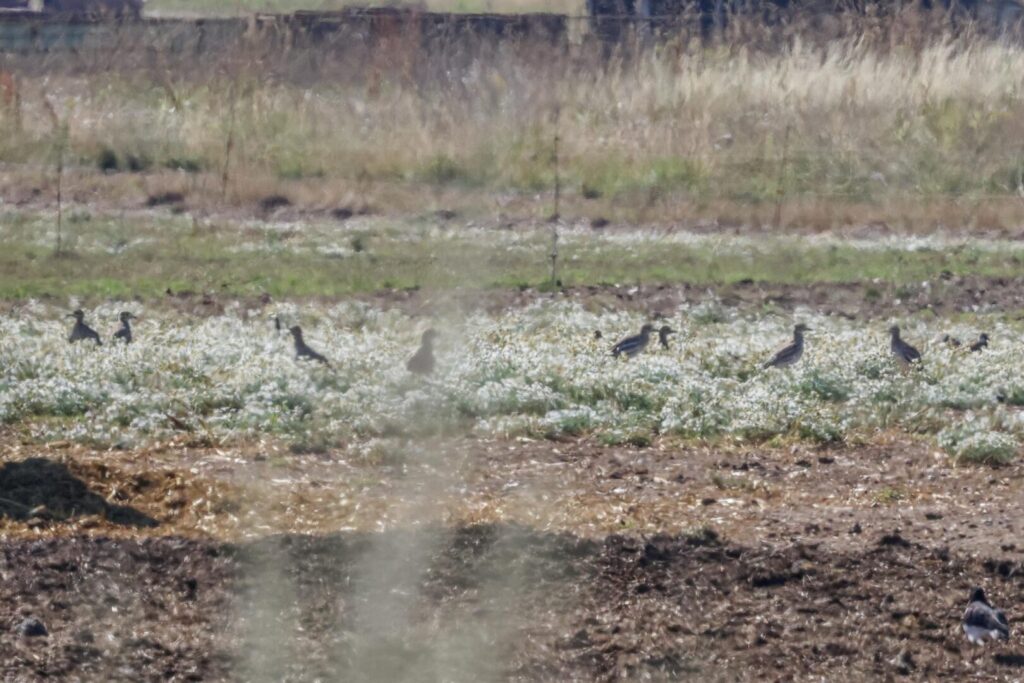
It was hard to tell exactly how many Stone Curlews there were in total. We assumed that we had seen some of the 14 from the first gate. There were another two still further back, where we had seen at least four earlier, but the view was obscured from here. Probably there were even more there, but we could confidently say there was a minimum of 18 Stone Curlews here today.
There were several Lapwings in the field too and several flew up and off over our heads. As we loaded the scopes back in the minibus, a Yellowhammer was singing from further down along the road.
We drove straight on to Lakenheath Fen next, as it was already starting to get hot. A Blackcap was singing in the poplars by the car park and a Painted Lady flew past. A couple of Reed Buntings were on the feeders behind the Visitor Centre.
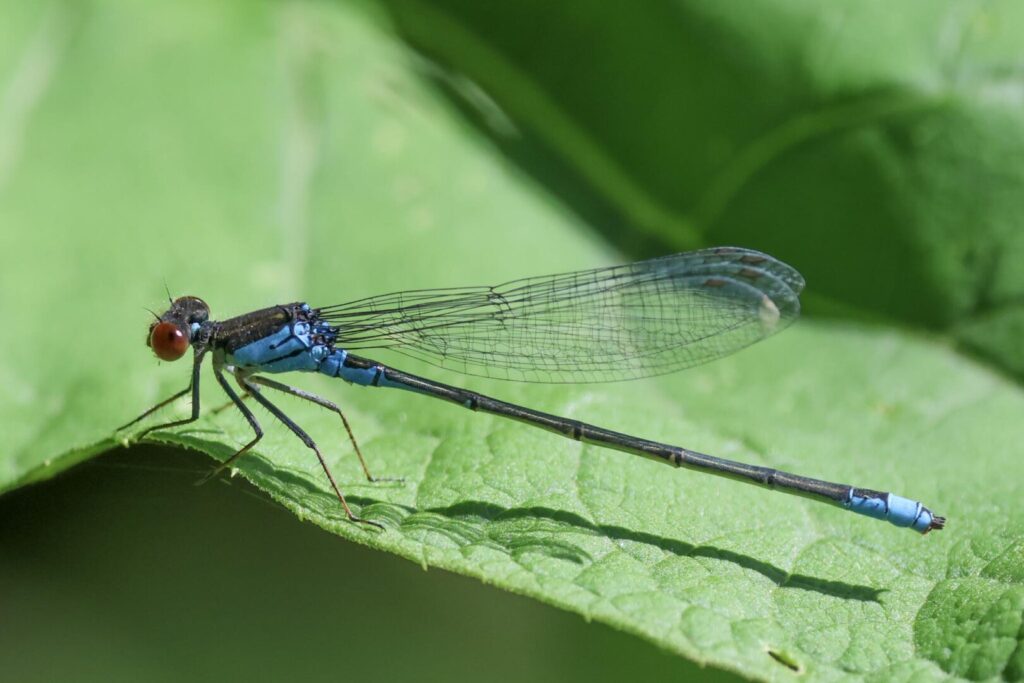
Probably due to the heat, there was not much activity as we walked out. One or two Reed Warblers flew back and forth across the path, in and out of the sallows. A couple of Common Whitethroats were feeding by the track. Lots of Brown Hawker dragonflies were hawking back and forth. At the far corner of East Wood, we stopped to look at a couple of Common Blue Damselflies and a single Small Red-eyed Damselfly in the vegetation.
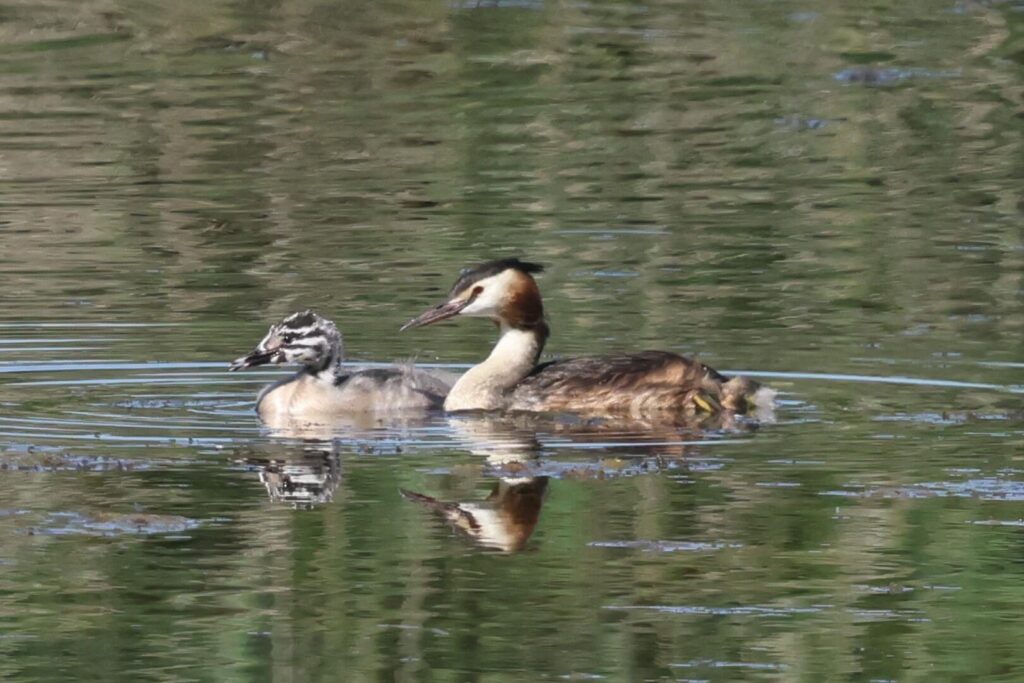
We stopped for a break at New Fen Viewpoint. An adult Great Crested Grebe was out in the middle of the water with a stripy headed juvenile. Further back, a Little Grebe was on the edge of the reeds with one of its young. There were several Moorhen and Coot and Reed Warblers flitted back and forth between the reeds. A Jay flew out of the wood behind and off across over the reeds. There was no activity further back over the reedbed now though.
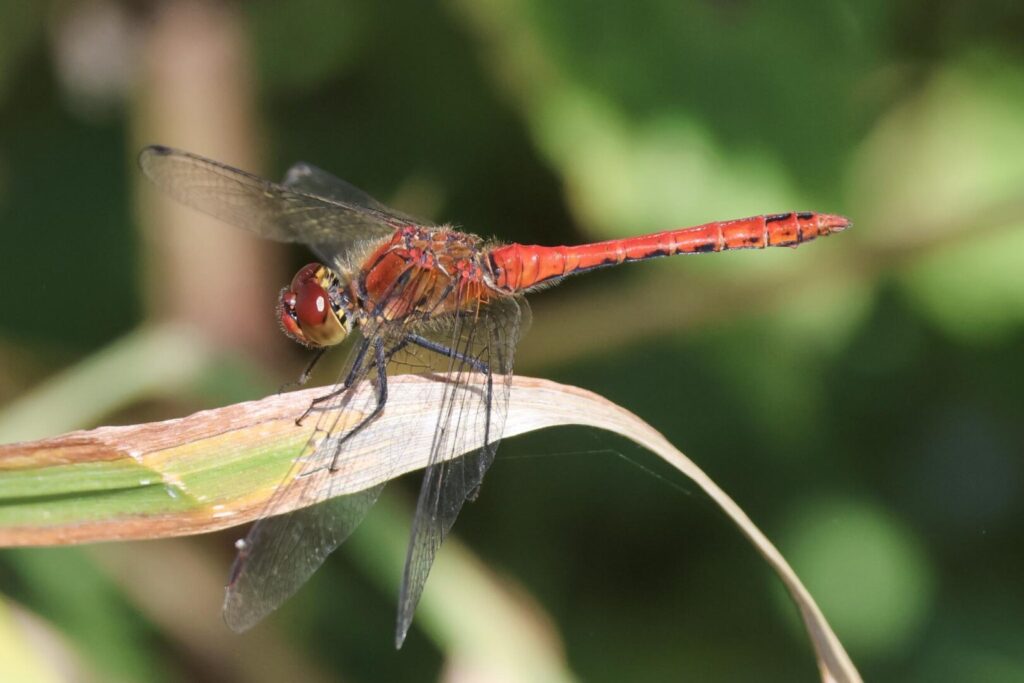
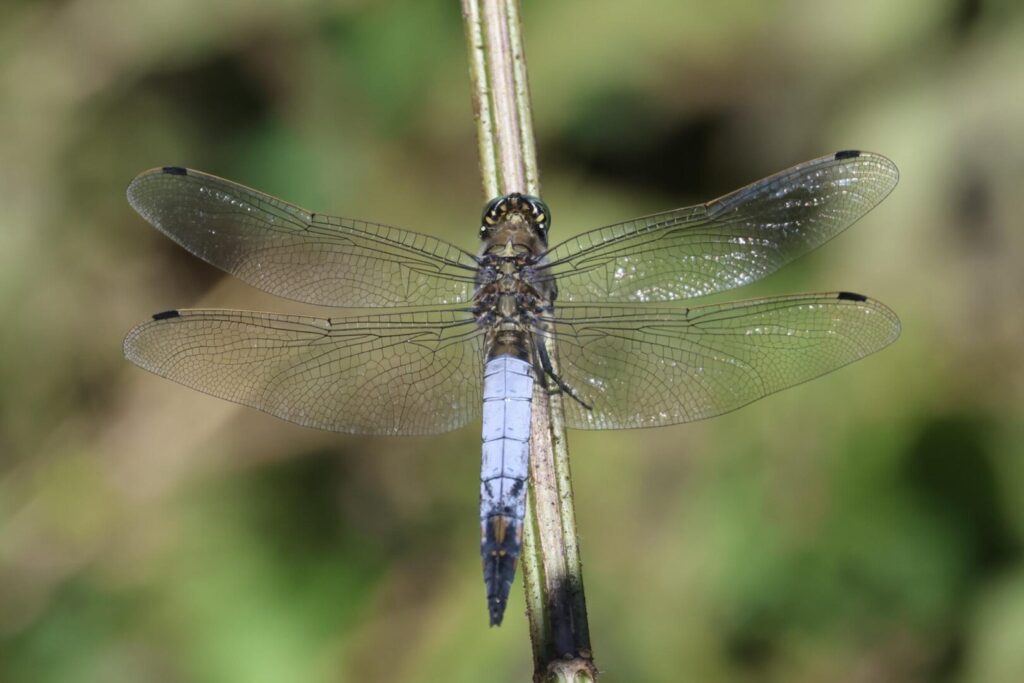
We walked on down along the upper path beside the reedbed. There were more dragonflies and damselflies in the vegetation here. Several Ruddy Darters included a couple of pairs in cop. Two or three Black-tailed Skimmers were sunning themselves and flying on ahead of us. The odd Reed Warbler flitted through the reeds but otherwise there were few birds active now. A couple of Common Pochard were diving on the pool at the far end.
The main track is open again now past West Wood. As we walked along, one of the group had a brief glimpse of a Bittern flying across but it disappeared behind bush and didn’t come out the other side. We pressed on to Joist Fen Viewpoint.
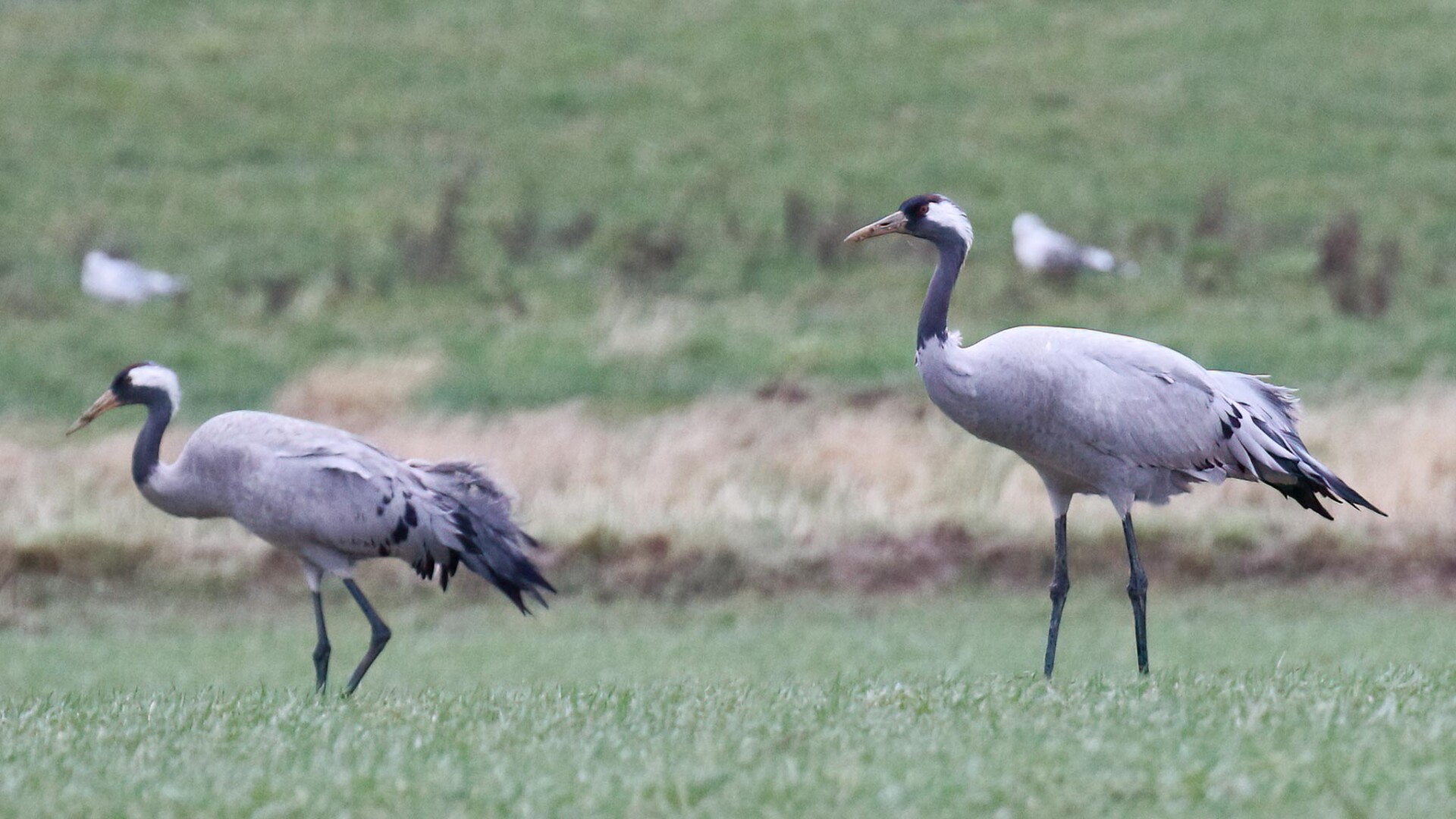
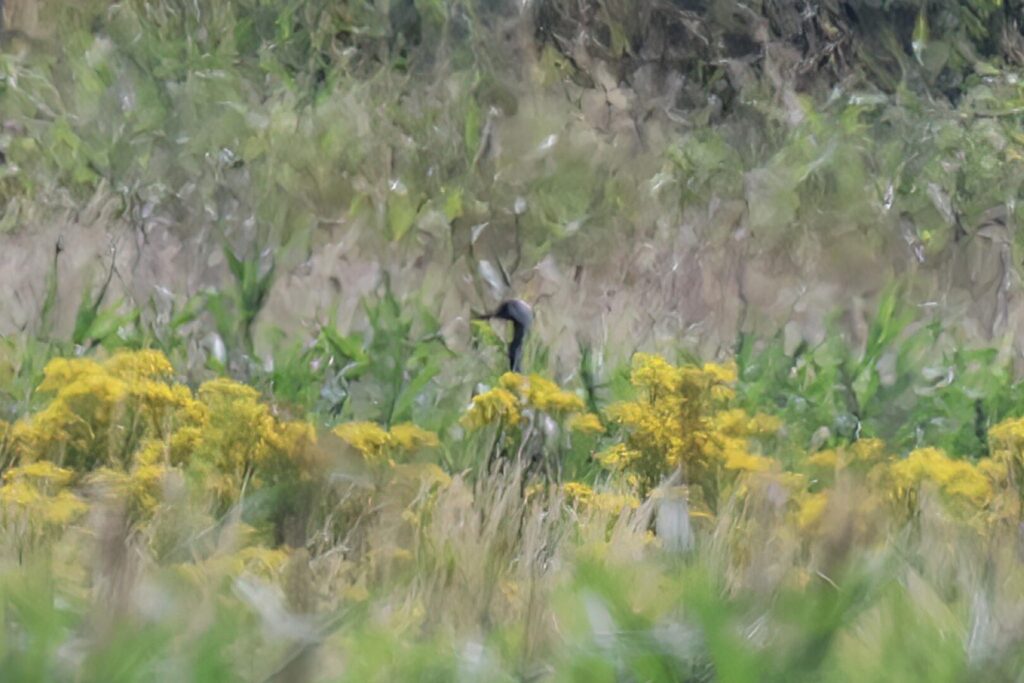
Scanning from the benches, we could see a pair of Common Cranes in the meadows. The vegetation is very tall now and despite standing over a metre tall they were not always easy to see in the flowers. We could just see their heads and necks sticking out when they stood up.
We retreated to the shade on the far side of the shelter, but that meant we couldn’t see what was going on behind. A Bittern flew in from that direction but we only picked it up as it flew past the shelter. It started to turn and looked like it might land in front but then turned back and dropped down by the channel further back out of view. A nice view, if brief.
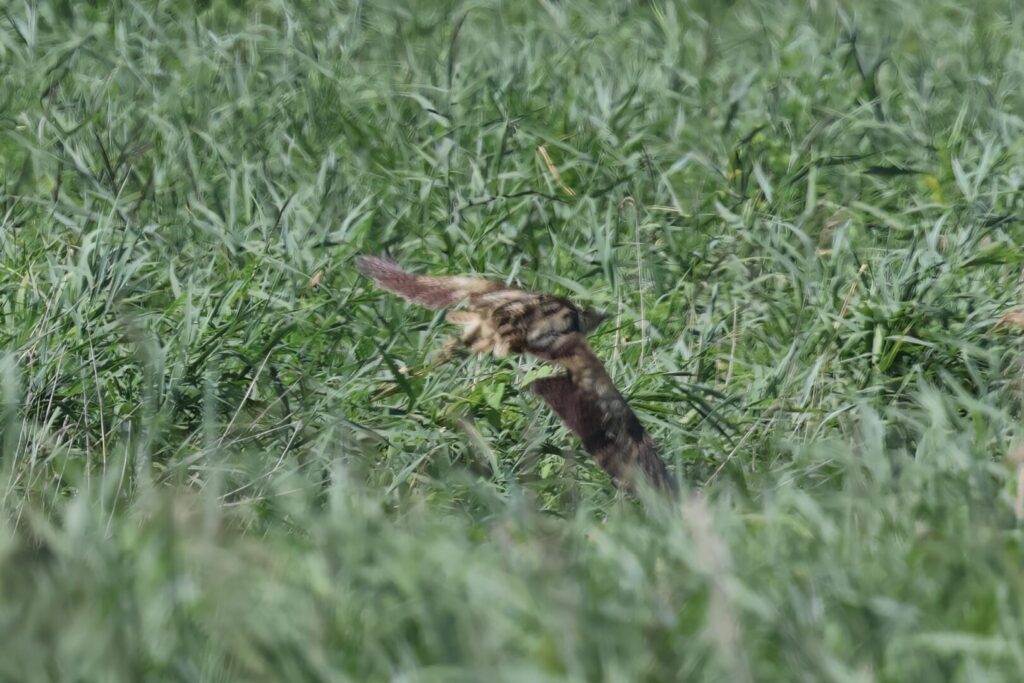
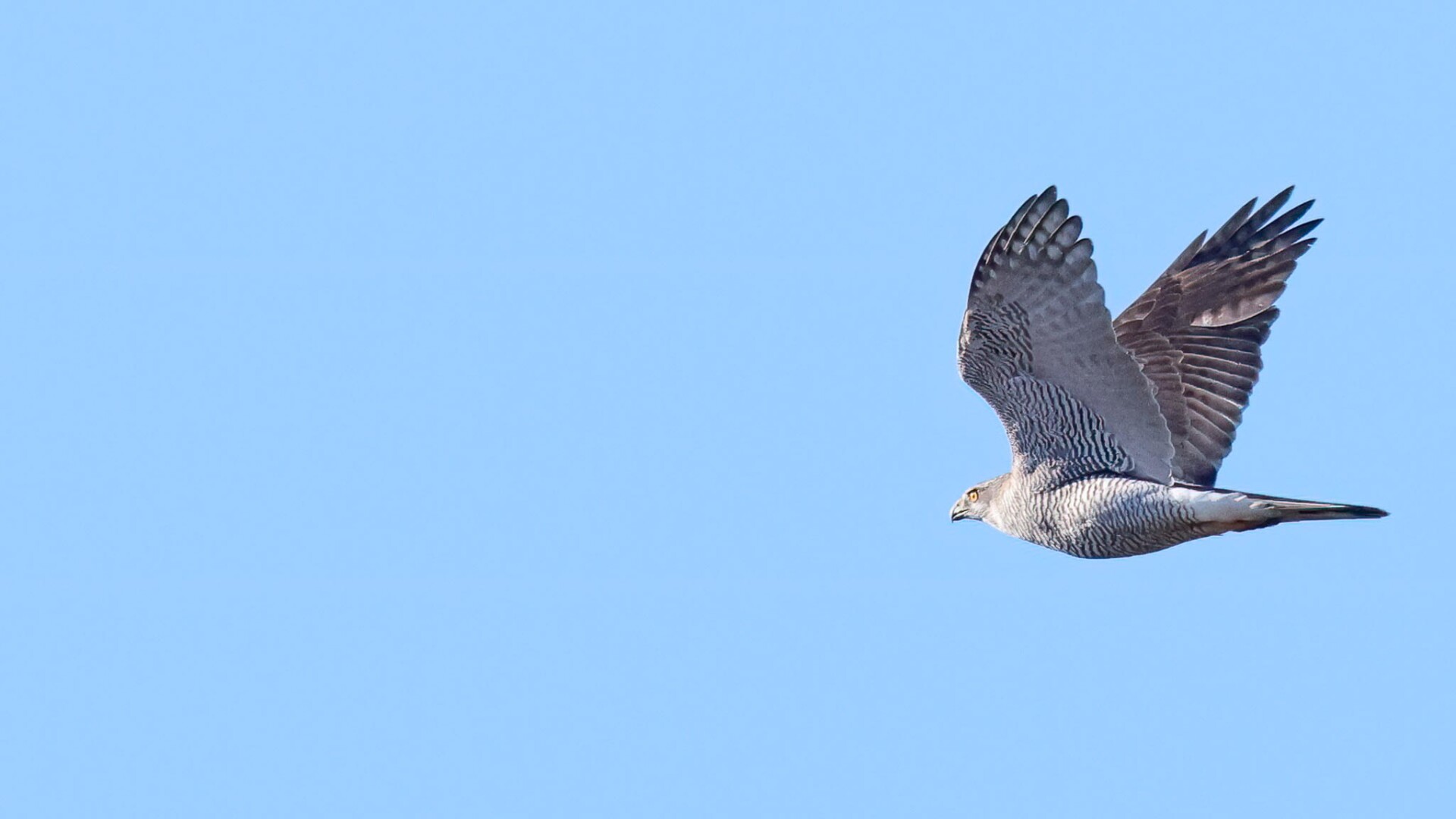
We waited a little longer to see if it might come back up, but there was no more sign of it. There were some distant Marsh Harriers and a couple of Common Buzzards up over the wood at the back. A Sparrowhawk flew past with something in its talons. A few Little Egrets came up from the reeds and a Cormorant eventually flew up and landed on its usual post. A pair of Stock Doves were on another post closer to us.
More Cranes started bugling from further back but despite being very noisy there was no sign of them flying up. We decided to start walking back.
On the way, we broke the walk with a break in Mere Hide. There were lots of dragonflies and damselflies buzzing round over the water and landing on the reed stems, mainly Four-spotted Chasers and Black-tailed Skimmers. A pair of Mute Swans was dozing in front of the hide, with only a single juvenile asleep on the edge of the water next to them. More Reed Warblers flew across between the reeds. Otherwise, there was no sign of anything else now.
We continued on back to the Visitor Centre for lunch, which was ate inside watching the feeders. A succession of Goldfinches and a couple of Greenfinches came in. We felt we had earned an ice cream today, after the long walk in the heat. The rhubarb and ginger was as good as ever!
As we were passing, we called in at Weeting Heath. The pair of Stone Curlews in front of West Hide had disappeared for several weeks but are now back and having another nesting attempt. One was sitting on the eggs laid last week, with the other standing in the grass nearby. A third, lone Stone Curlew has joined them and was standing directly out of from the hide, preening. A good view through the scopes.
We had time for one last stop, so we drove on deeper into the forest. We walked out along a ride to a clearing and stood at first in the shade to scan the scattered trees. It seemed very quiet at first, in the heat of the afternoon. But first we picked up a male Yellowhammer in the top of a tree out in the middle and then we found a Tree Pipit by the track further up. We walked over for a closer look and got it in the scope. We could even see its curved hind claw before it flew down into the middle of the clearing.
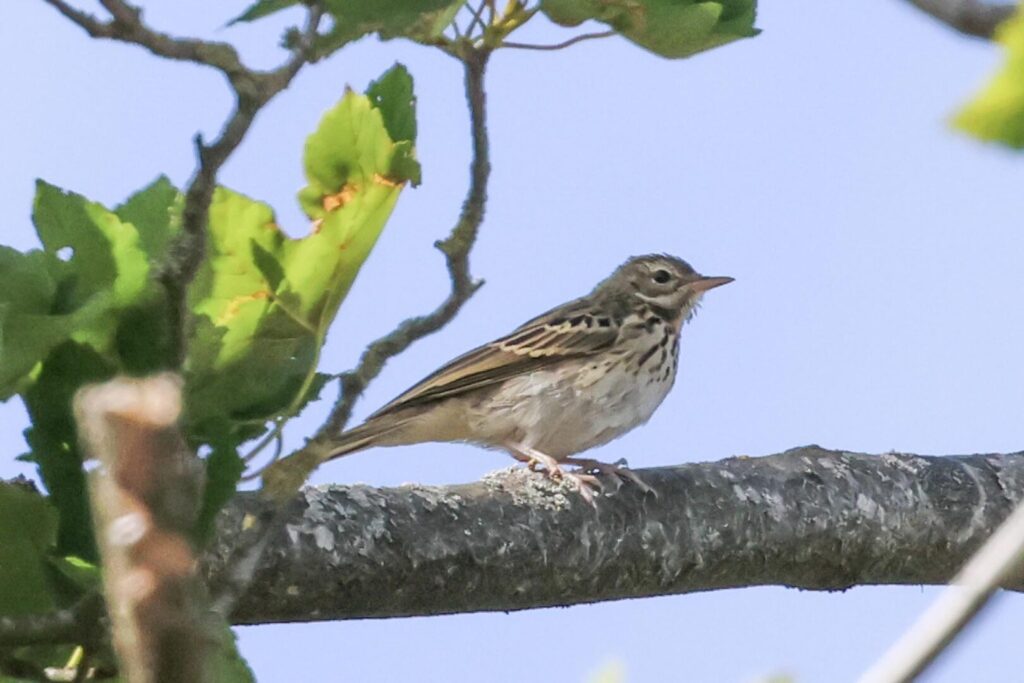
Another Yellowhammer appeared much closer to us, a smart male, so we turned the scope on that now. A male Stonechat landed on the bushes in front of us singing. Then the Tree Pipit flew back up and landed on a dead tree stump.
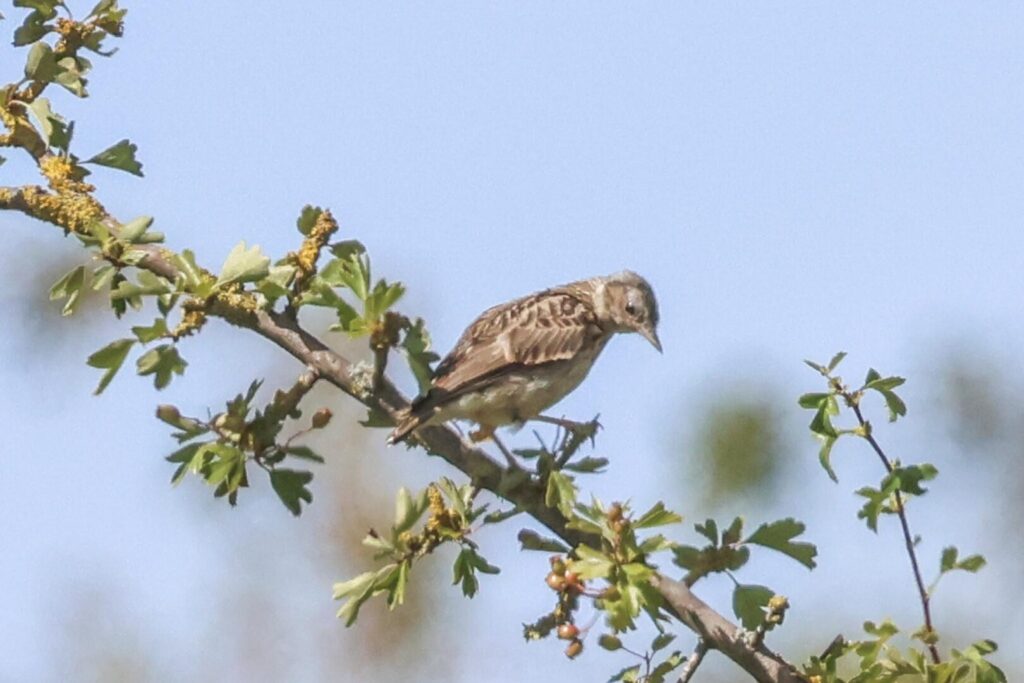
We were just about to leave, but had one last scan of the clearing. A Woodlark flew up right over the far side, rounded wings and short tail. It landed in a tree, but was very distant and even in the scope it was hard to make out much detail. Then it dropped down.
We decided to walk round the far side and see if we could relocate it. Down at the corner, we heard Crossbills calling, but despite stopping and listening we didn’t hear them again. They were probably just flying over.
We took the path along the far edge and stopped to scan again. A male Yellowhammer was singing from one of the trees and then a Woodlark flew up. It landed briefly, but then flew again, across in front of us and then dropped down in the edge of the field the other side of the path. We stood and waited and then one flew up into the hedge where we had a good view in the scope.
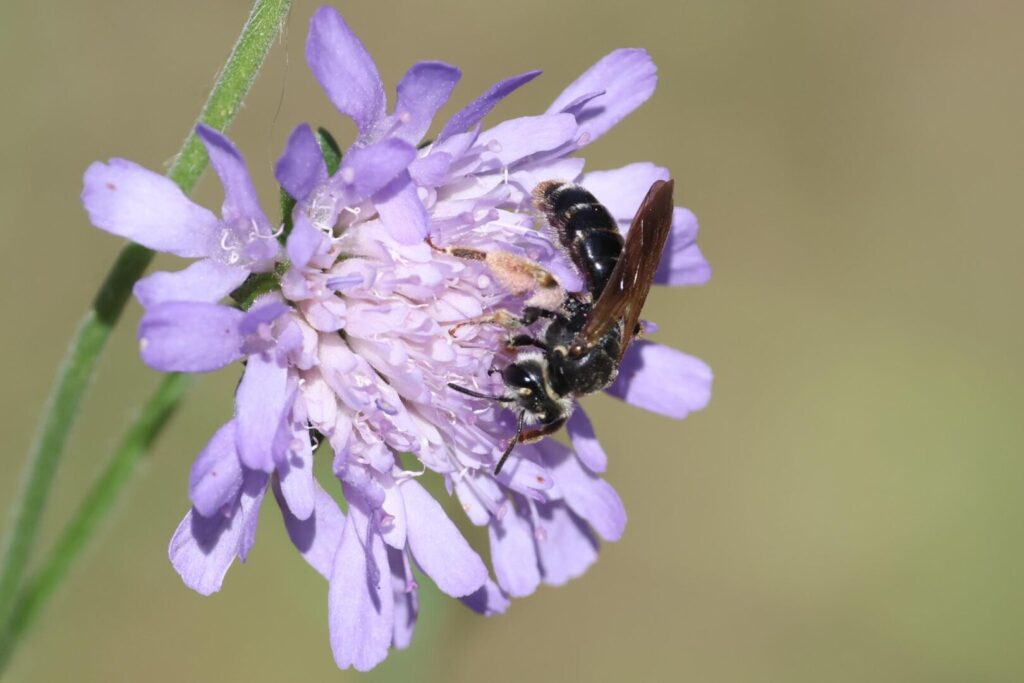
We walked back round the way we had come. There were lots of flowers beside the path, scabious, knapweed and thistles. Lots of insects were nectaring, including our first Small Skipper butterflies, several Dusky Sallow and Scabious Longhorn (Nemophora metallica) moths. A couple of Large Scabious Mining Bees (Andrena hattorfiana) were collecting pollen from the scabious flowers.
We would be going out again this evening, so we had to head back now. Time for a rest and dinner first.
Nightjar Evening
We met again at 8pm. The Common Swifts were screaming round the rooftops in the village as we got into the minibus. We headed out first to look for Barn Owls. There hasn’t been a lot of activity this summer and it looks like another poor breeding season. The box on the outskirts of the village was quiet again. We would see if there was any more signs of life down towards the coast.
We drove round via the meadows and all was quiet there too. Stopping at our usual venue, we got out to scan the grazing marshes. It was all rather quiet at first and it felt like we were going to be out of luck. Then one of the group spotted a Barn Owl flying determinedly across over the reeds to our right, heading out to the marshes, presumably to hunt. It dropped down out of view behind the bank.
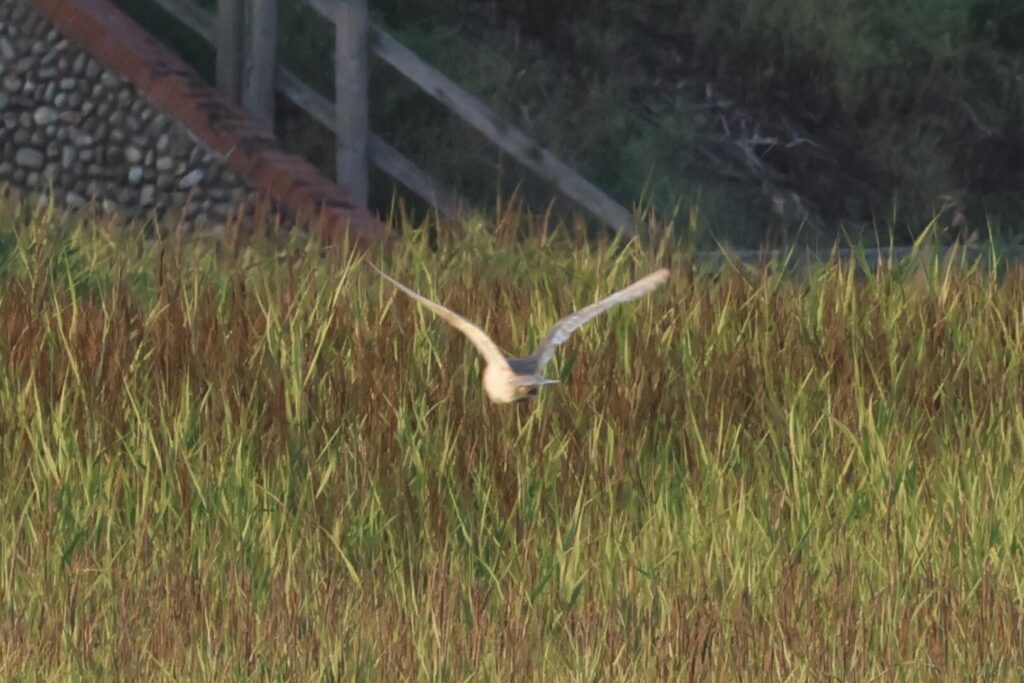
We thought we would walk out along the bank and try to catch it hunting. But by the time we had locked up the minibus, we saw a Barn Owl come up off the marshes in the distance with a vole in its talons. It flew up high and kept going and going, all the way round behind the village to the far side before it dropped down. Presumably it is nesting there and has hungry young to feed.
We thought the first Barn Owl would have had to be very lucky to get all the way out to where this one had come up from, and catch a vole in the time available. It was not such a surprise therefore when it appeared again, right out over the far corner of the grazing marshes.
It was more of a surprise a couple of minutes later when we realised there were still two Barn Owls out there. When one of them caught a vole, it did exactly what the Barn Owl had done earlier – flew up high and all the way in round the back of the village. We hadn’t seen the other one come back out, but perhaps it could have gone out low where we couldn’t see it. Or if was the other one of that pair. Either way, it was good to know at least this pair has young this summer.
We were out of time and had to make to make our way round to the heath now for the main event. As we made our way out into the middle, a Nightjar churred briefly from the edge of the trees. The temptation was to stop here, but we pressed on out to our regular territory.
We didn’t have to wait long before we heard our regular male Nightjar call and turned to see it flying in over the gorse. It looked like in might land in the dead tree where we had trained the scopes but at the last minute diverted deeper in to the trees. Then it started churring. It didn’t churr for long, but flew out again and this time came straight towards us. It circled round above us, a great view especially as it was still quiet light. We could see the white flashes across its wingtips and at the corner of its tail before it disappeared off back out over the heath.
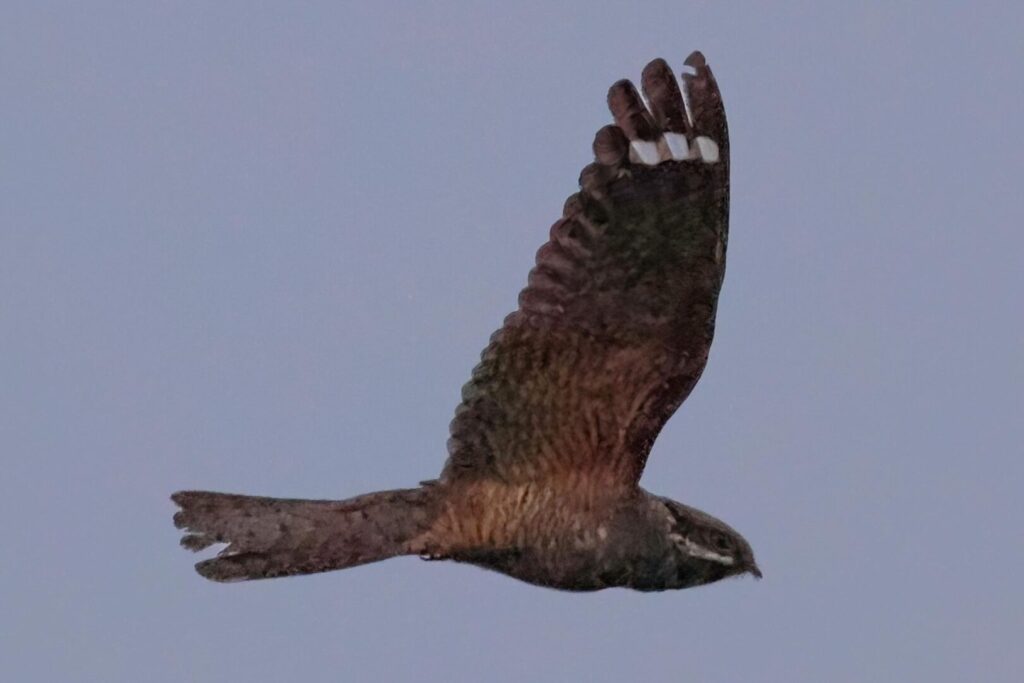
A minute or so later the female Nightjar flew in to check us out too. We could see its all dark wings, lacking the white.
The neighbouring male Nightjar then started to churr in the other side of an oak tree right behind us. This was obviously disputed territory and ‘our’ male was not happy. It flew back in and circled round the tree, presumably chasing the other male our because the two of them flew across together wing clapping. Several times the same thing happened: when the first male was out on the heath, the second flew in to the oak and started churring. The first male responded by churring from a couple of different trees each time before finally chasing the rogue male out of the tree again. Great to watch!
In between all the arguments, it was nice to just stand on the heath and listen to all the Nightjars churring. In addition to the two closer males, we could hear another two further off, one each side. One of those was probably the one we had heard briefly on the way out. What a great way to spend a summer’s evening.
As the light started to fade, the activity seemed to dip so we decided to make our way back. A fifth Nightjar was churring now, right over the far side – serenading us off the heath.
Time for a few hours sleep now, before our last day of Summer Tour tomorrow.