Day 1 of a 3-day Summer Tour in Norfolk. It was a hot sunny day, reaching a peak of 31C inland. The ENE wind picked up in the afternoon and, coming in off the North Sea, helped to keep the temperature down a little on the coast.
Our first destination for the morning was up on the Heath. We were hoping to have a look round before it got too hot but it was already very warm and seemed like it might have gone very quiet already. We could hear a Blackcap and a Chiffchaff singing intermittently in the distance. A few Linnets flew around the car park and a Chaffinch was feeding on the path just beyond gate.
We walked round along the edge of the open heath, past the birches. A mixed flock of tits was feeding in the trees, along with a couple of Chiffchaffs which flew up from the bracken ahead of us. A Great Spotted Woodpecker called from somewhere deeper in.
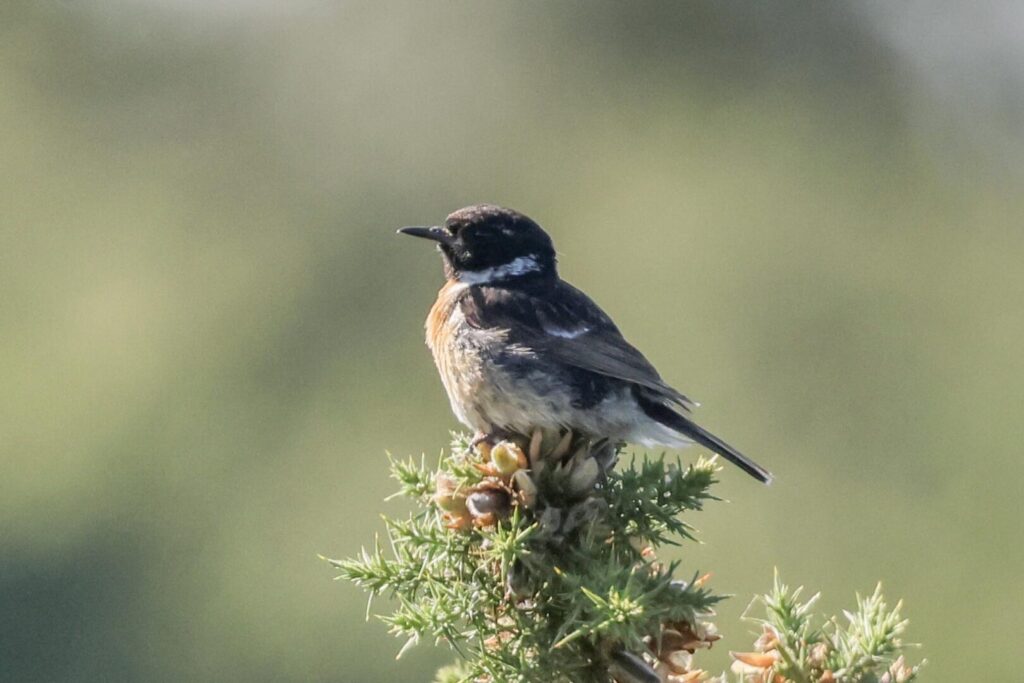
As we cut across the open heath, we found a family of Stonechats, the adult pair and a couple of streaky juveniles still following them round to be fed. While we were watching them, we caught a glimpse of a Dartford Warbler in the heather. There were two birds, presumably a pair. They were not particularly close but the female eventually showed well in a small birch tree and again perched up on the top of the gorse nearby. Then it flew further back and was lost to view.
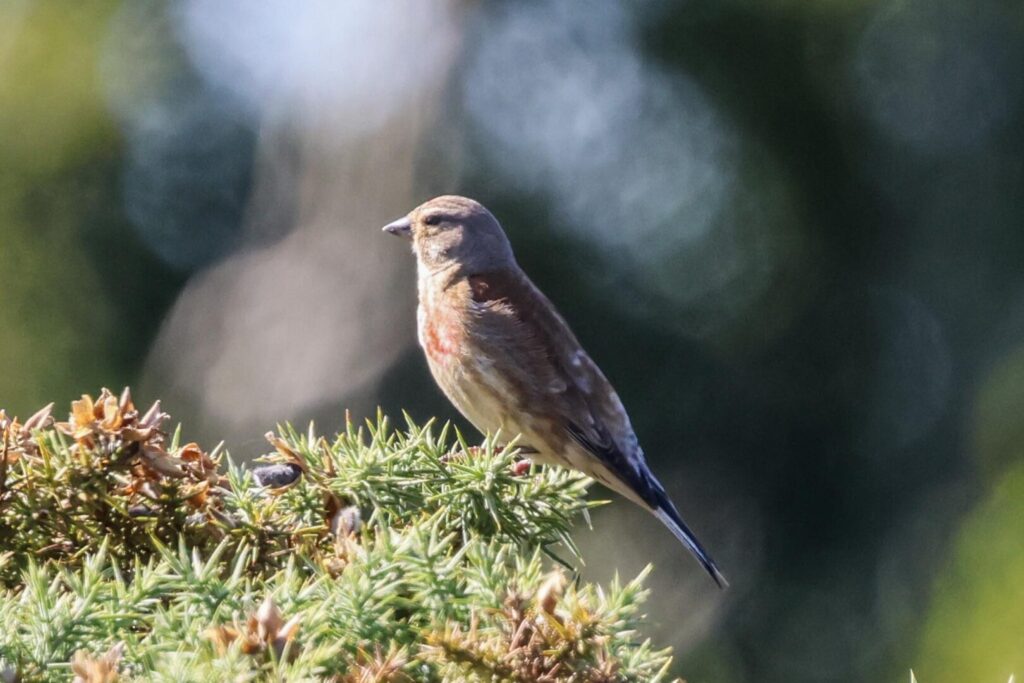
A good start, but we thought we would try to get better views further on. As we walked round, a female Kestrel was perched on the fence but flew off as we approached. There were more Linnets here, flying round and perching on the gorse, but there were fewer than normal (there are lots of juveniles on the wing now) and we suspected some were already hunkered down in the shade.
Another male Stonechat was perched on the top of the gorse, with another streaky juvenile in tow. It made a couple of sallies form its perch, catching insects but otherwise seemed to be conserving its energy. There had been several Dartford Warblers here yesterday but there was no sign of them now. It felt like maybe it was just too hot this morning.
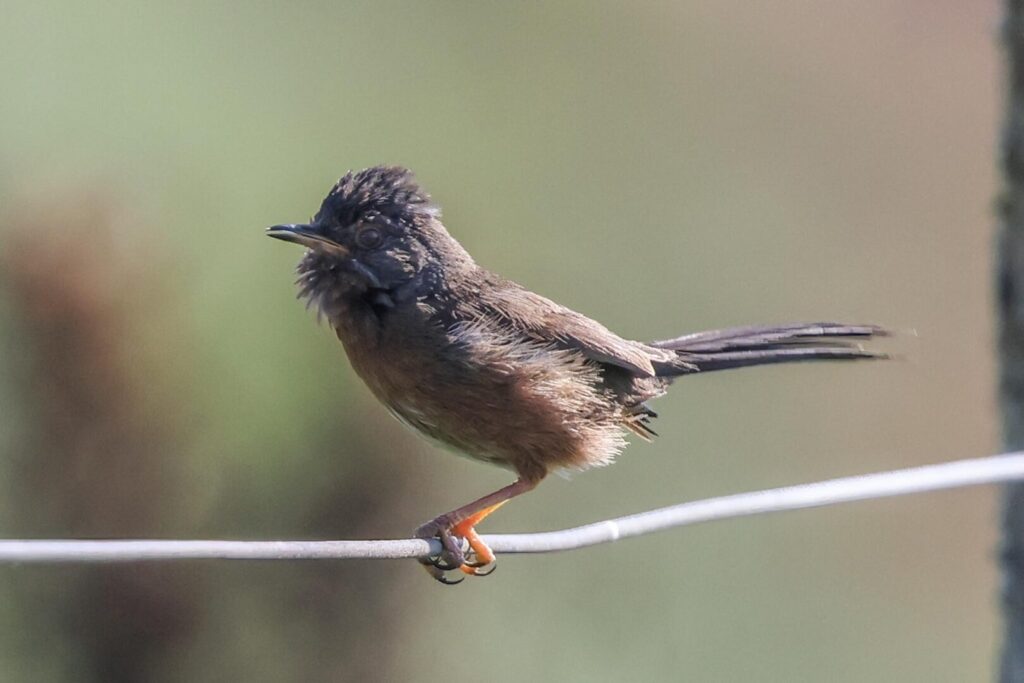
Then, as we looped back round, a female Dartford Warbler flicked up out of the bracken ahead of us and landed on the fence. It perched there on the wire for a while, looking round, lovely close views. Even when it moved a little further along the fence, we could still see it as it flicked up and down between the wires and the bracken below. Thankfully we had a chance to watch it for a bit before two cyclists came down the path and the Dartford Warbler flew back and disappeared into the heather.
We could still see the Dartford Warbler from time to time, but it was a lot more distant now. Several Common Whitethroats were in and out of the bracken and bushes too, seemingly a pair of adults collecting food for the juveniles. There was also another pair of Stonechats here.
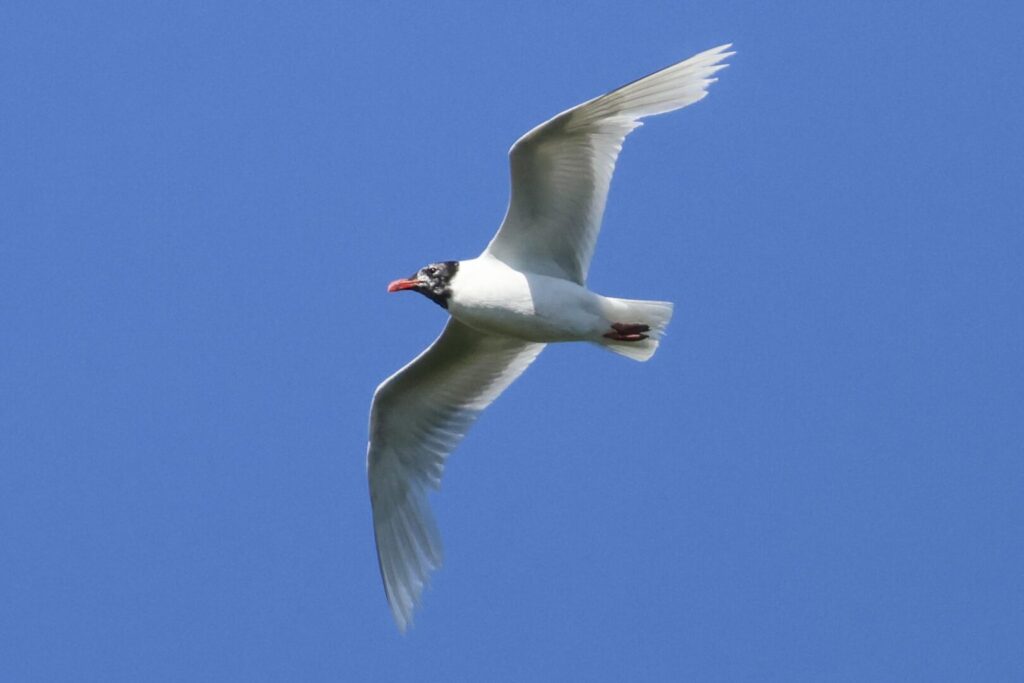
It was getting hot now sp, with the main target here acquired, we decided to head down to the coast where it would hopefully be a little cooler. On the walk back, we stopped to watch lots of Black-headed Gulls which were flying round in the sky, catching flying ants. It didn’t take long to find several Mediterranean Gulls in with them, although they were not easy to pick out initially. Then one or two came right overhead and we could see their translucent white wingtips. A couple of Common Buzzards came up now too.
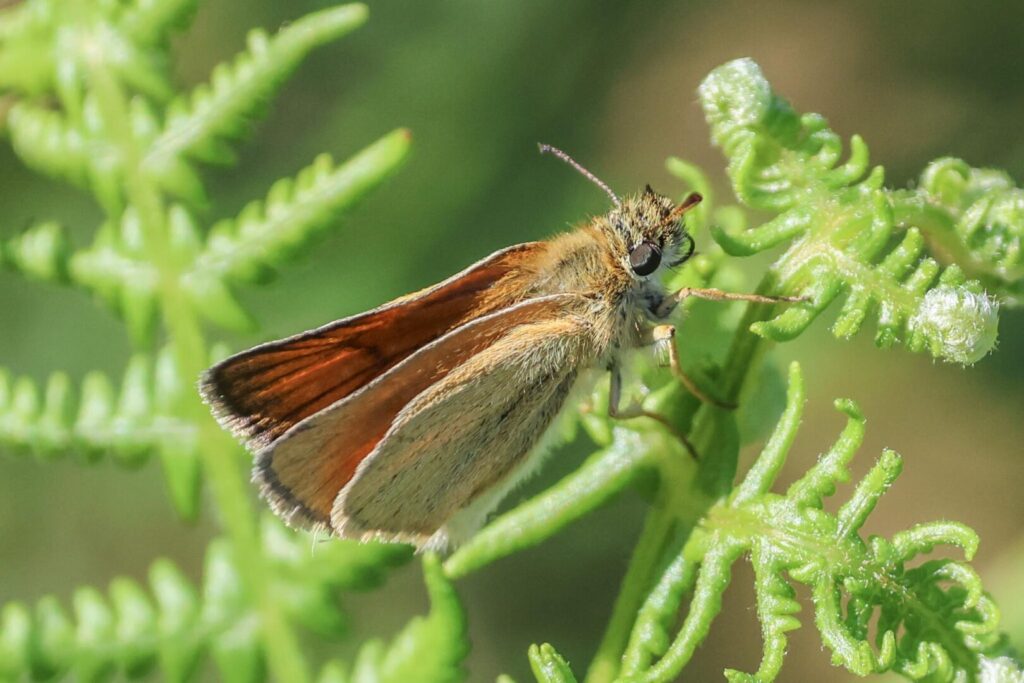
Almost back to the car park, we found lots of Essex Skippers feeding on the Vipers Bugloss flowers. Close up, we could see the black tips to their antennae. A rather tatty blue butterfly nectaring on a clump of creeping thistle nearby turned out to be a male Silver-studded Blue. There were lots here a couple of weeks ago but they seem to be over now, rather early this year. A Red Kite circled over as we got back into the minibus.
We drove down to Cley and parked in front of Walsey Hills. A Little Grebe laughed from Snipe’s Marsh and, as we walked along the path, we could see three or four on the water. One adult was feeding a well-grown stripy-headed juvenile. A single Shoveler was on the water at the back. A Blackcap was singing in North Foreland plantation and a Reed Warbler rather half-heartedly in the reeds.
Crossing the road, we set off up along East Bank. We heard a Bearded Tit pinging ahead of us, by Don’s Pool, but it had gone quiet by the time we got there and wouldn’t show itself. One or two Reed Warblers flitted back and forth between the reeds. A couple of juvenile Coots and another Little Grebe were on the water. As we walked on, a Sedge Warbler was feeding in the edge of the reeds below the bank before it flew up and dropped down into the channel out of view.
Pope’s Pool is completely dry now. Looking across, we counted at least 50 Curlew on the dry mud and nearby grass. It may seem like summer to us, but for a lot of waders autumn is here and they have already returned from breeding grounds further north to moult. Two Grey Herons were on the grass too, probably wondering where all the water had gone. A couple of Lapwing and a few Greylag Geese were out in the grass and a Skylark fluttered over, still singing.
The Serpentine still had plenty of water in it and we were hoping to find some more waders on there. There had apparently been some birds moving earlier on this morning. When we got up and looked though, there was surprisingly next to nothing on it. Just a pair of Shelduck.
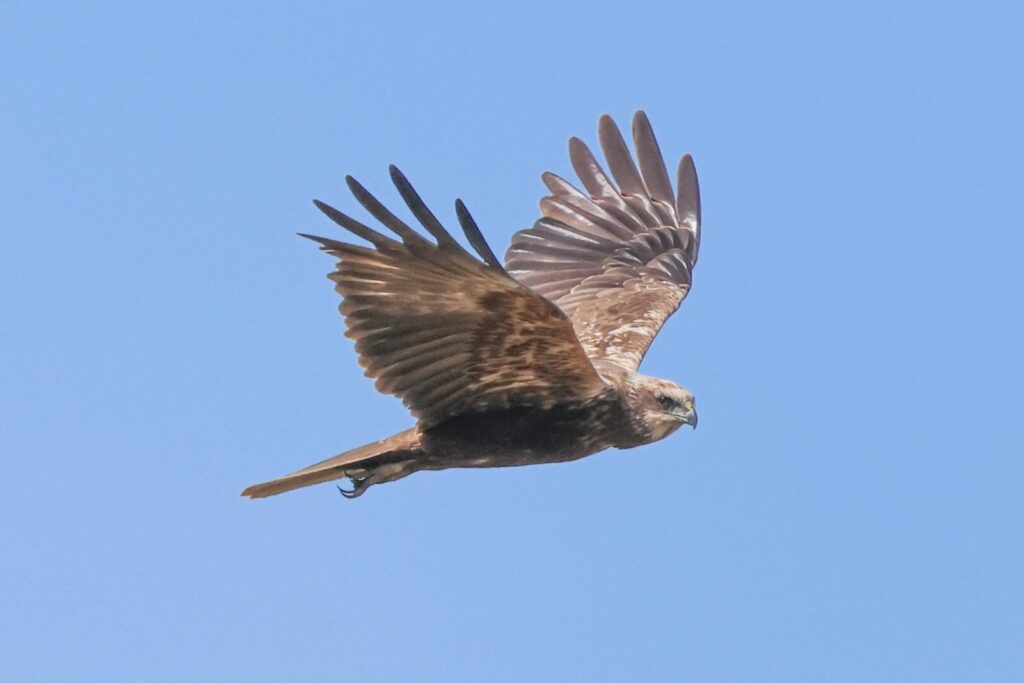
Looking out over the reedbed, we could see two Marsh Harriers over the reeds, an adult and a fresh juvenile. The latter was all dark, chocolate brown with a bright orange head. A very distant group of Cattle Egret flushed up from the Eye Field and flew off towards Blakeney. A Great White Egret came up briefly from the reeds. A male Reed Bunting was feeding on the side of the path.
We walked on up to Arnold’s Marsh. A Brown Hawker dragonfly was hawking up and down over the main drain. There were not many waders on Arnold’s either, just a few of the resident Redshanks and a single Ringed Plover. We did find a single Whimbrel right over towards the back. A couple of Common Terns were on the shingle islands. Several Cormorants, Great Black-backed Gulls and a Lesser Black-backed Gull were loafing on the sand at the back.
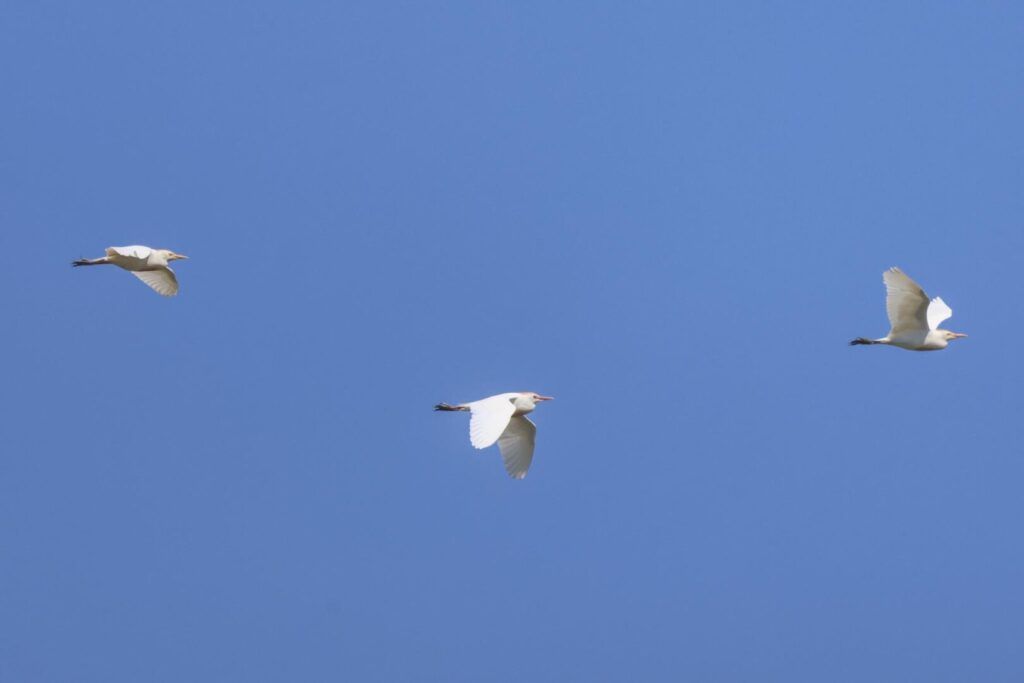
Looking round behind, we picked up another three Cattle Egrets flying straight towards us. We had a good view as they flew past, dumpier than a Little Egret with shorter legs, short neck tucked in, and yellow bills. As we walked on towards the beach, two Avocets flew over.
Out at the sea, there were lots of Herring Gulls following a crab boat in front, and two large feeding frenzies distantly, first off to the west and then away to the east. A couple of pairs of Sandwich Terns flew past, with one closer in off to our right. We picked up two very distant Gannets out towards the horizon.
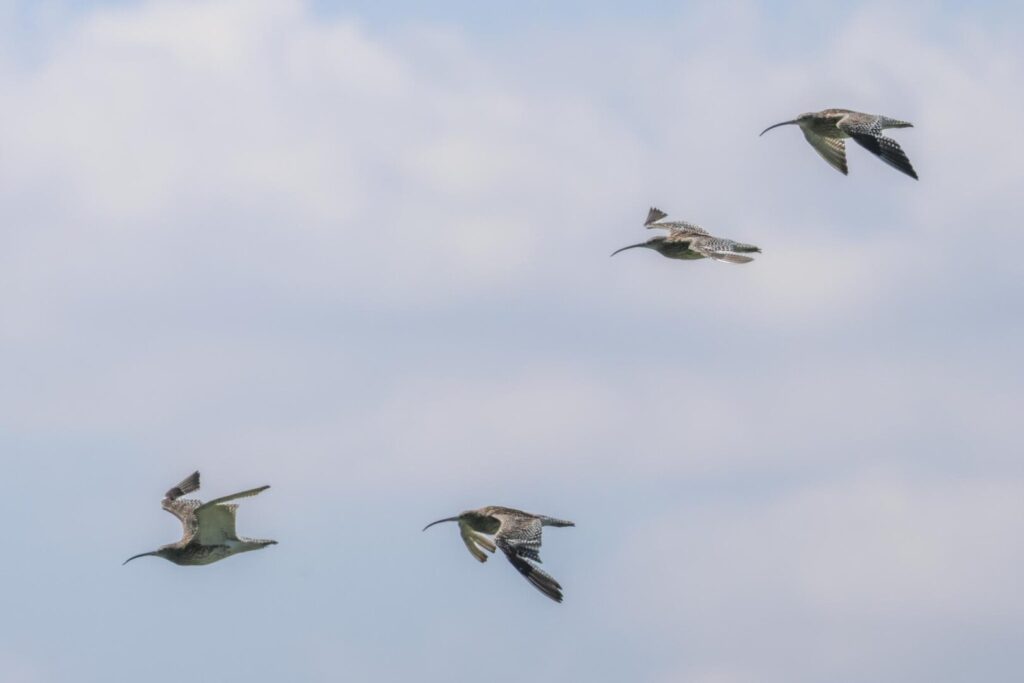
As we started to walk back, a small group of Curlews flew in over the reedbed and across in front of us. Already in heavy wing moult, we could see the big gaps in their wings. Back to the minibus, several Swallows were gathered on the wires at Walsey Hills together with a couple of Greenfinches.
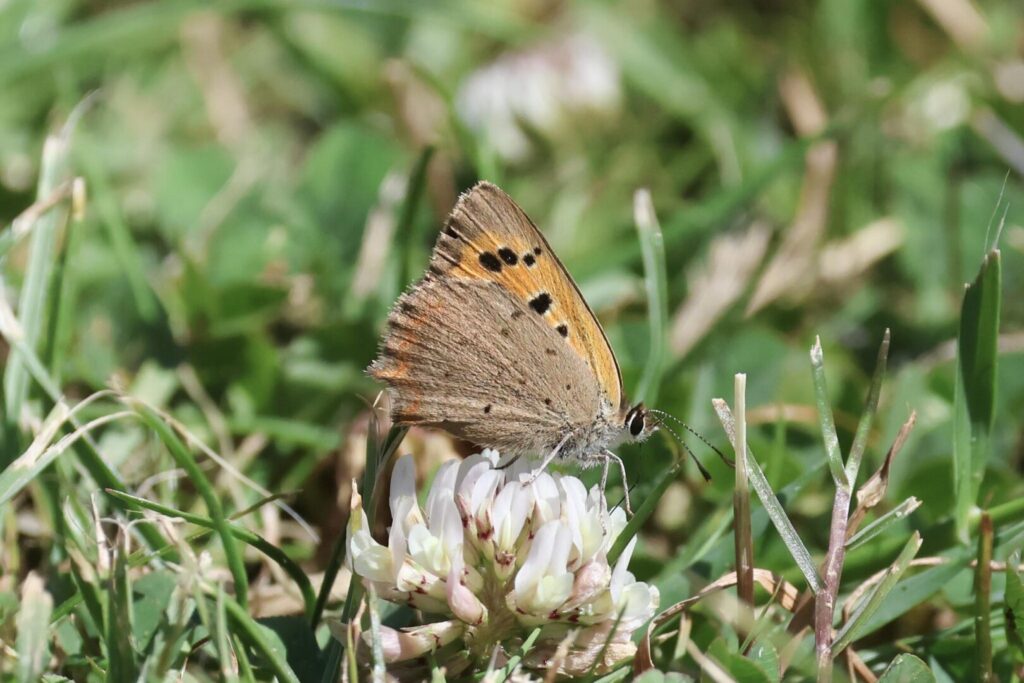
We drove round to the Visitor Centre for lunch. From the picnic area, we could see up to twenty Cattle Egrets with the cows out on the South Pool marsh. Several Sand Martins were flying round over the central hides. A Small Copper was nectaring on the clover between the tables as we ate.
After lunch, we made our way out to Bishop Hide. A couple of Mute Swans were down in the Catchwater Drain as we crossed the bridge. From the hide, we could see lots of waders, a good variety. The Lapwing and Avocets on the scrape were probably local birds. Several distant Little Ringed Plovers included several juveniles, which were likely raised here. The Black-tailed Godwits were returned from Iceland, mostly still in full breeding plumage, bright rusty heads and breasts.
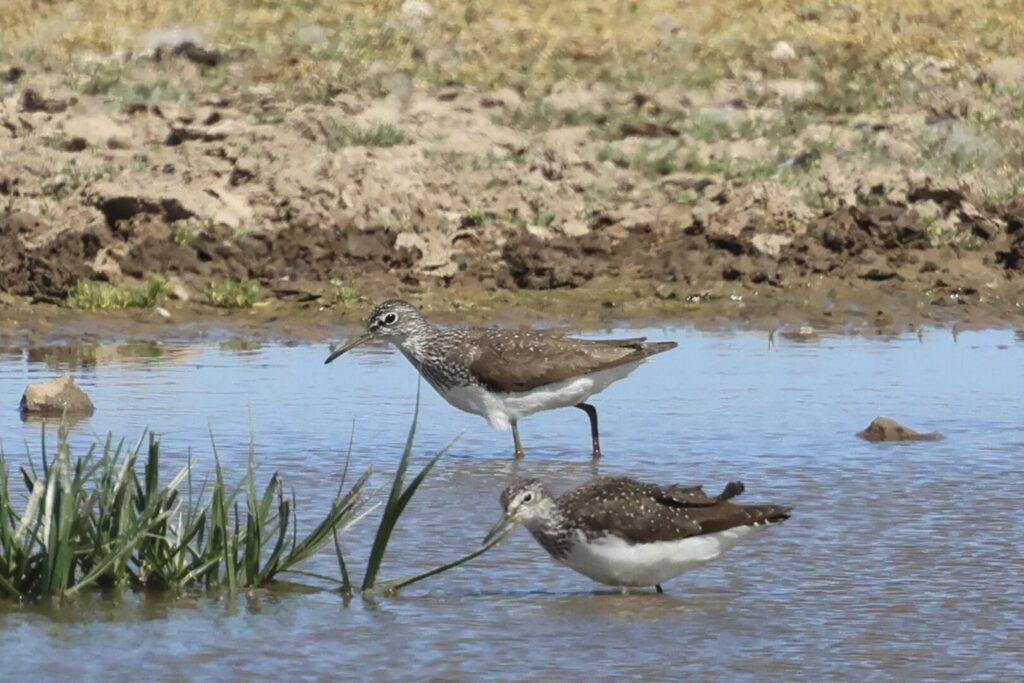
Two Green Sandpipers appeared from behind the reed island, feeding in the mud. There was a nice selection of male Ruff too, all very different, no two alike. They had all lost their ornate ruffs already, but were otherwise very different colours. One particularly striking one had a white head and bright rusty back, one male looked more like a female.
We decided to make our way round to the central hides next. On our way back to The Skirts, a Ruddy Darter dragonfly was perched on a bush by the path. Round to the boardwalk, several House Martins were flying round over the houses on the edge of the village.
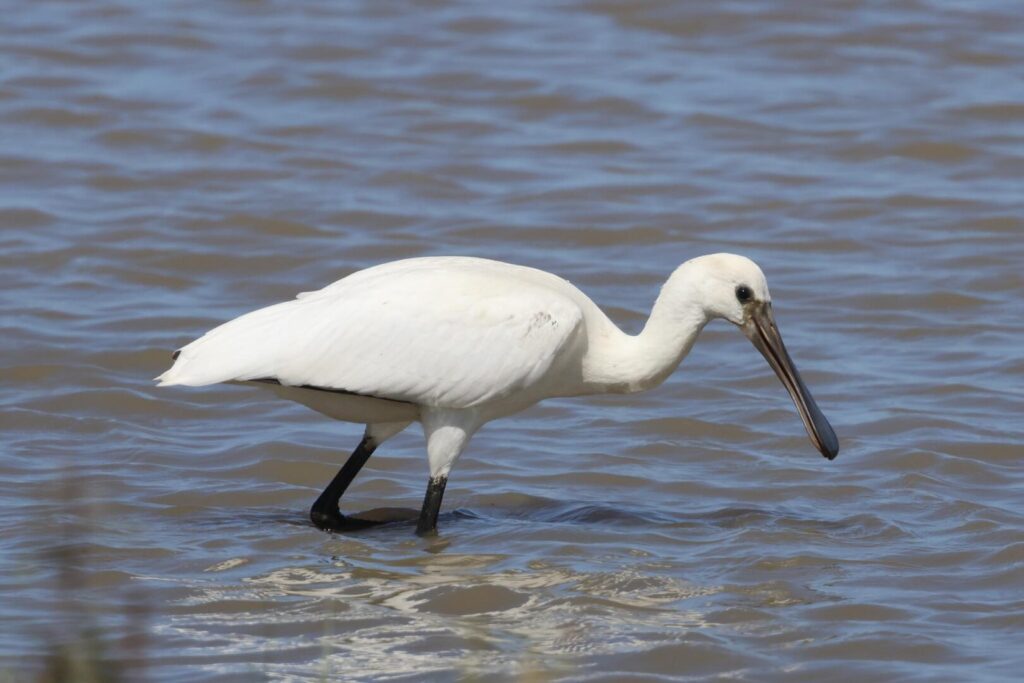
We went into Daukes’ Hide first. There were several juvenile Spoonbills on the islands on Simmond’s Scrape, still with only half-grown bills – known locally as ‘teaspoonbills’. One was practising its fishing skills in front of the hide.
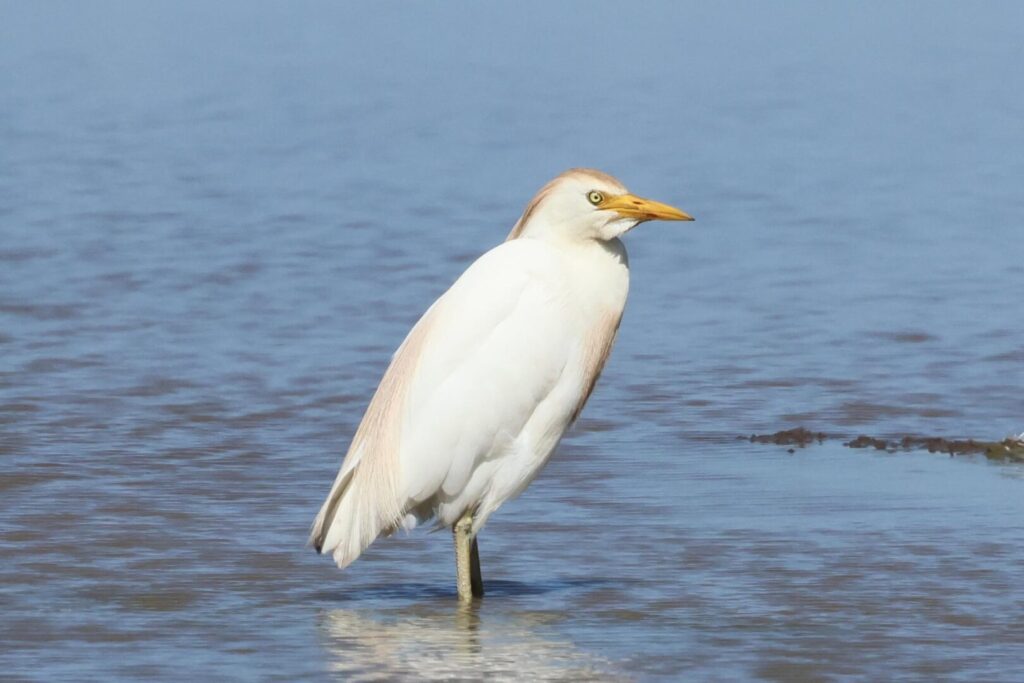
Two fresh juvenile Cattle Egrets with dark bills were on the islands too, believed to be birds from the Holkham colony. Something then flushed the rest of the Cattle Egrets from the cows and they flew in and landed on the scrape. We counted 32 in total, an impressive sight and amazing to think they were still a rarity here just a few years ago.
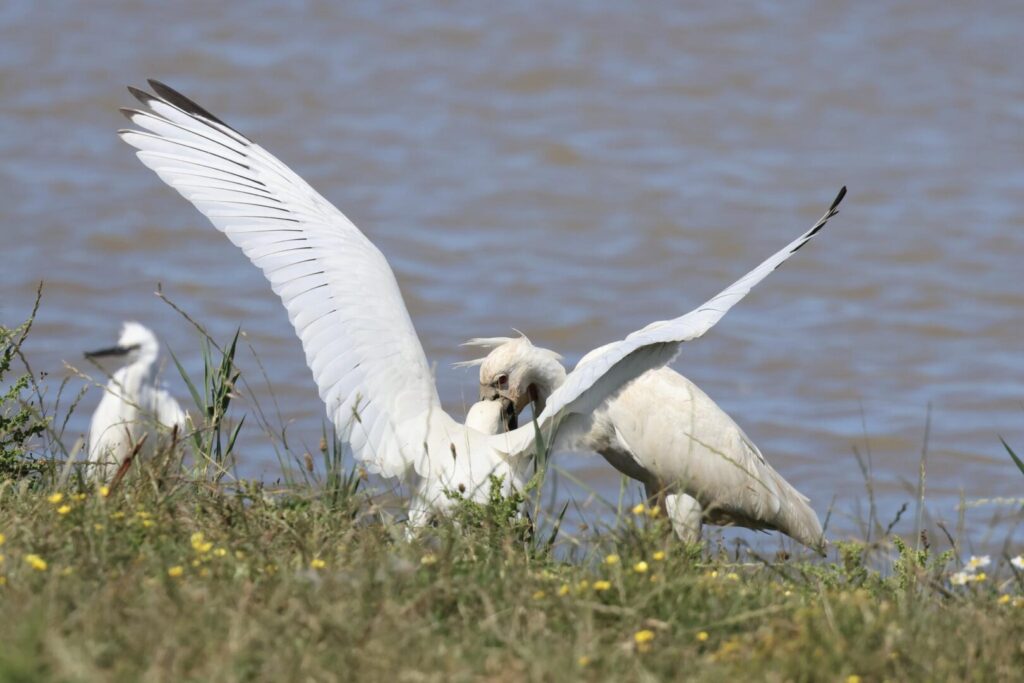
A couple of adult Spoonbills flew in and instantly their respective juveniles were off after them, begging to be fed. One of the adults flew round and round over the scrape with two juveniles in pursuit, which was relentless. The other adult was trying to walk away and its youngster was walking behind it bobbing its head up and down, calling and flapping its wings.
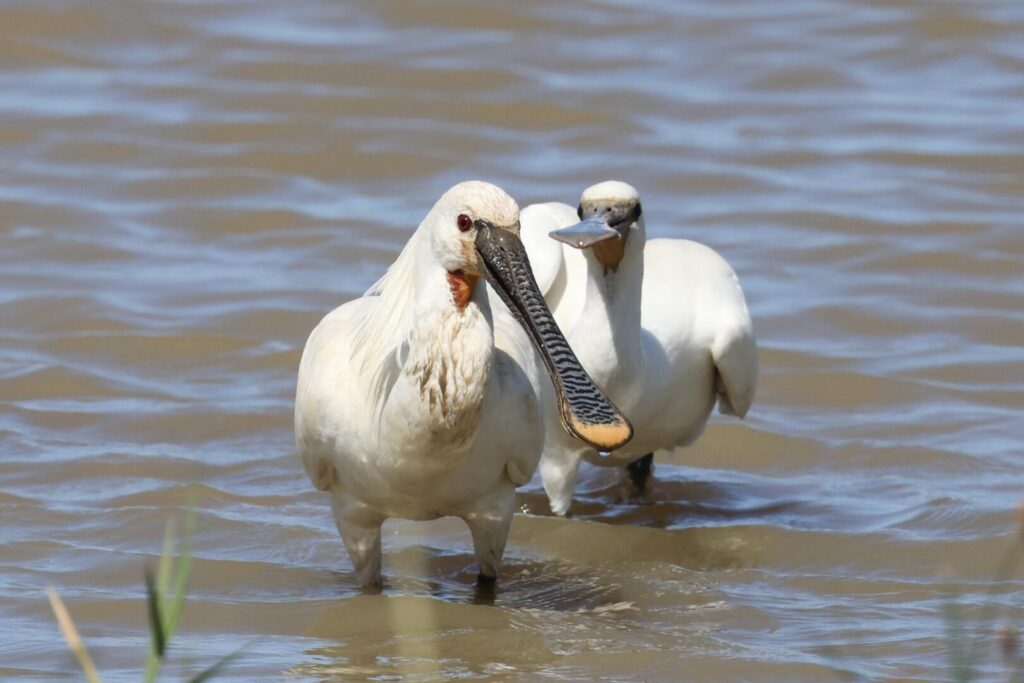
Eventually the adult Spoonbills gave in. The juveniles thrust their bills into the adults gape and were treated to a regurgitated meal. It didn’t look a very comfortable experience for the adults! Even after being fed though, one of the juveniles still followed its parent round begging, as it tried to feed again. Great for us to be able to watch all the activity.
Apart from all the Spoonbills and egrets, there were several more Little Ringed Plovers on Simmond’s Scrape. A single Common Gull dropping in with the Black-headed Gulls. A couple of Marsh Harriers drifted round over the reeds.
Into Teal Hide, two Green Sandpipers were out in the water closer this side. We could still see more further back, perhaps 4-5 in total on Pat’s Pool now. A couple of almost full grown juvenile Avocets were loafing on the island. Always good to see, as breeding productivity is generally very poor here.
A female Gadwall with several ducklings swam past in the channel in front of the hide. A pair of Shelducks with shelducklings had an altercation with the moulting Mallards, the male Shelduck trying to chase them off. There were several Pied Wagtails around the islands but no sign of any Yellows this afternoon.
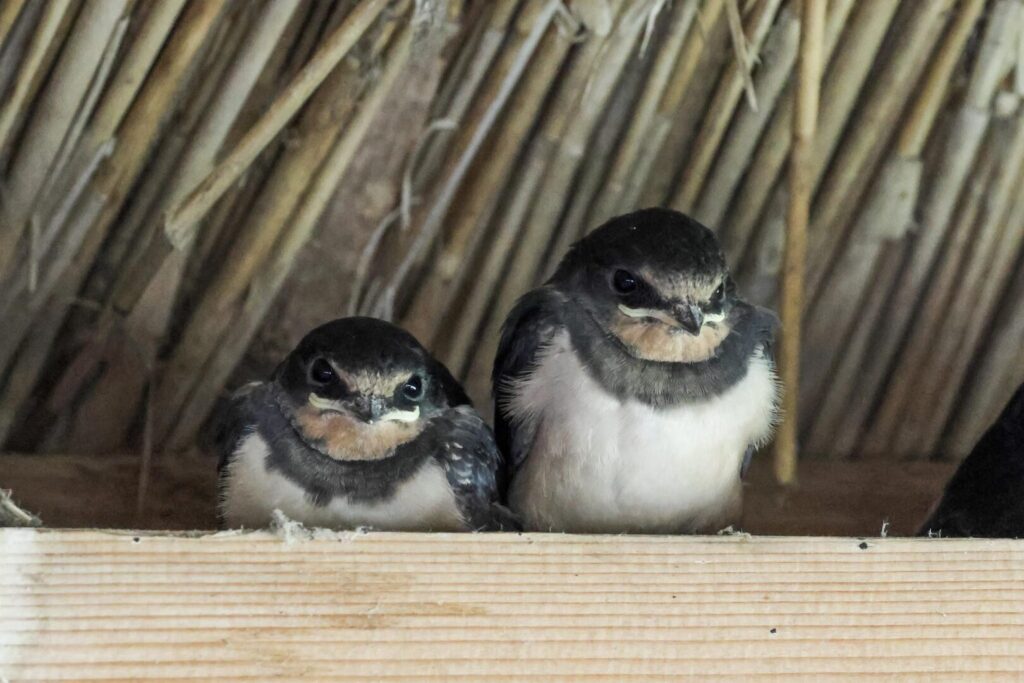
The Swallows have nested in the hides again and one brood in Teal Hide have just fledged. The juveniles were still sitting around in the rafters, totally unconcerned by us walking up and down right below them.
When we got back to the Visitor Centre, we still had time for one last quick stop. It was too hot to go walking far, so we decided to have a quick look for some butterflies at Stonepit Heath. We figured it would be shady in the trees there.
As we parked and got out of the minibus, our first Silver-washed Fritillary flew past along the verge opposite. In through the gate, we found several more around the buddleia, along with Peacocks, Red Admirals, a Comma and several Large Whites. There were Gatekeepers on the brambles nearby too.
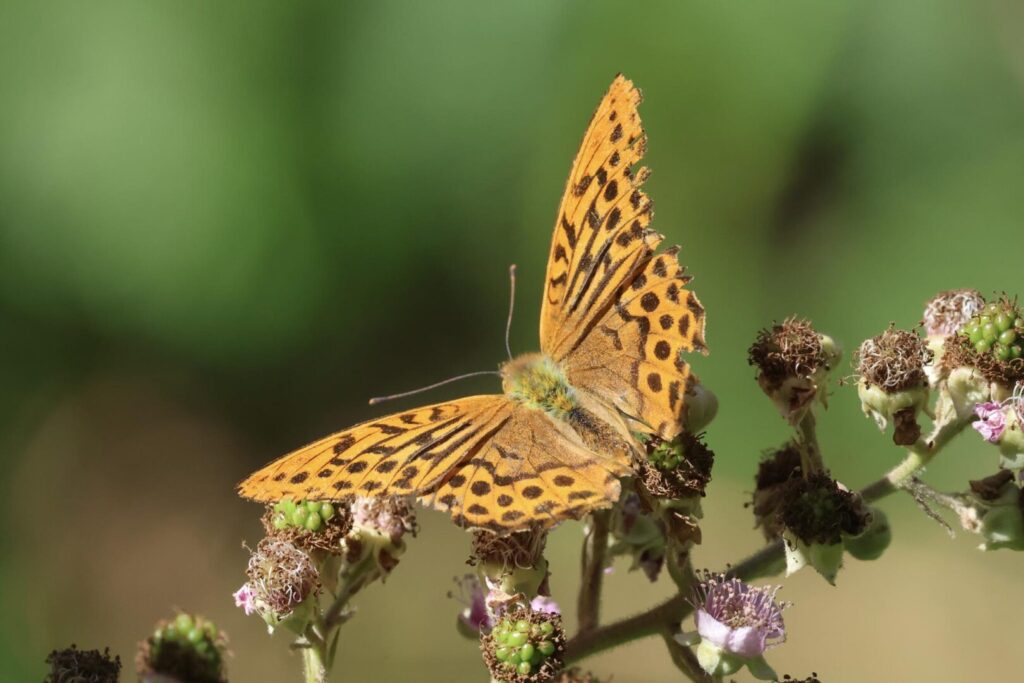
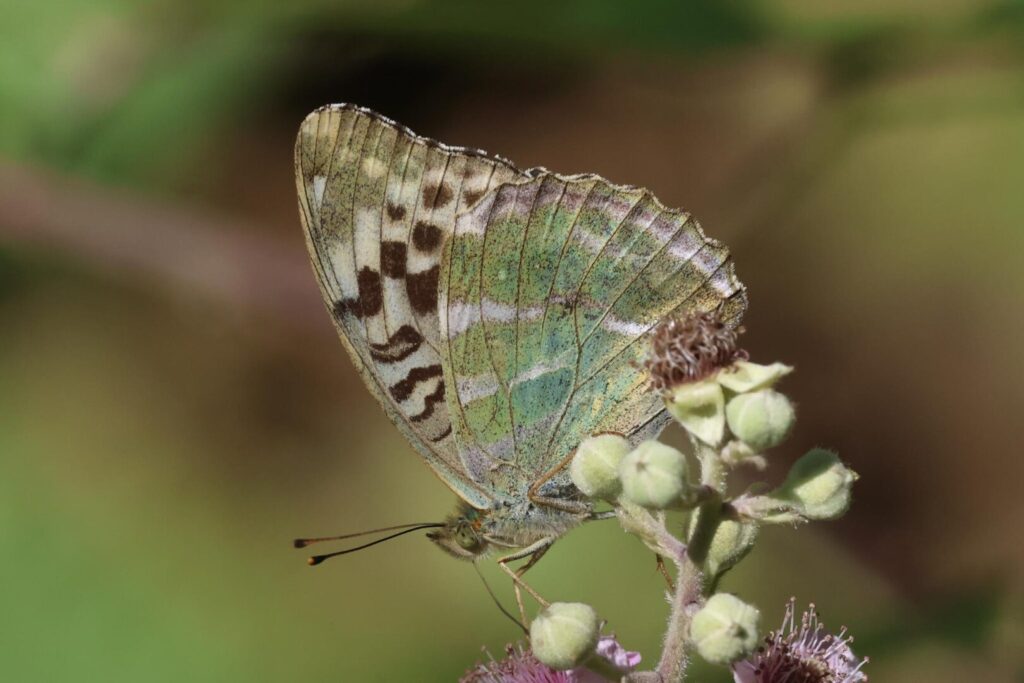
Further into the wood, and there were lots more butterflies on a large clump of brambles. Lots more Silver-washed Fritillaries included at least one female of the ‘valezina’ morph, with greys, greens and browns replacing the usual orange colouration. A smart Brimstone flew in, and there were several Ringlets and a Green-veined White to add to the butterfly list.
This is one of the last regular sites locally for White-letter Hairstreak, an elm feeder which has declined massively after Dutch elm disease killed off most of the UK’s elm trees. There are still some small elms here and one of the locals showed us a tree where he had seen some hairstreaks earlier. We managed to see one fluttering around the top which landed on the leaves, but unfortunately on closer examination it turned out to be a commoner Purple Hairstreak.
It was a nice way to end the day with such a great variety of butterflies. Now it was time to head back for tea and cake. More summer birds and wildlife tomorrow.