Day 4 of a 4-day Autumn Migration tour. It was another blustery day, drier than yesterday in the morning but with a few showers blowing in off the North Sea in the afternoon. With the wind having swung round more to the NE, we were hoping for some passerine migrants from the Continent today.
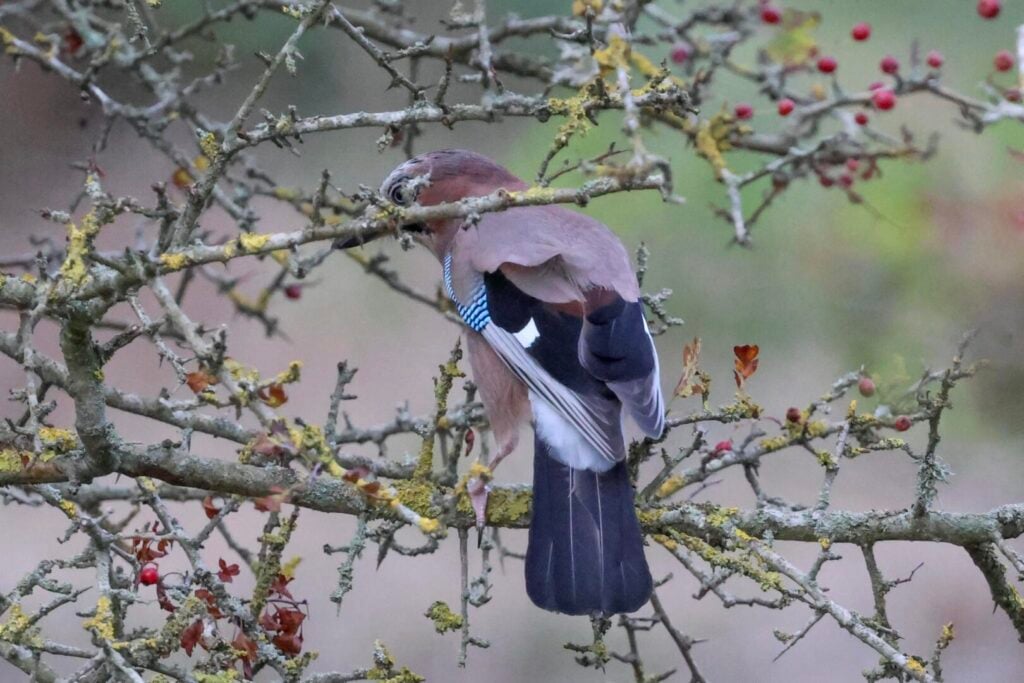
Some Redwings over the B&B as we met this morning felt like a good sign. As we drove out of the village, three Mistle Thrushes flew from the wires and off across the field. Up to the coast, we headed for the beach car park at Wells. Several Jays flew over the trees from the car park.
As we walked in past the boating lake, we could see several Little Grebes on the water. There were a few Mallard and a pair of Mute Swans but no Tufted Ducks yet.
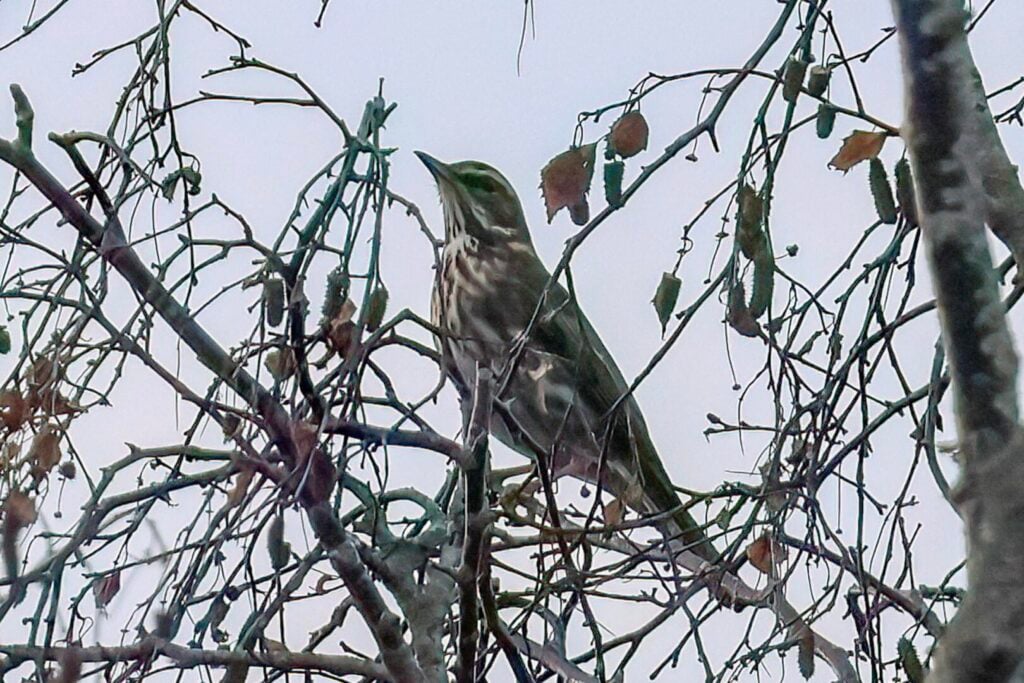
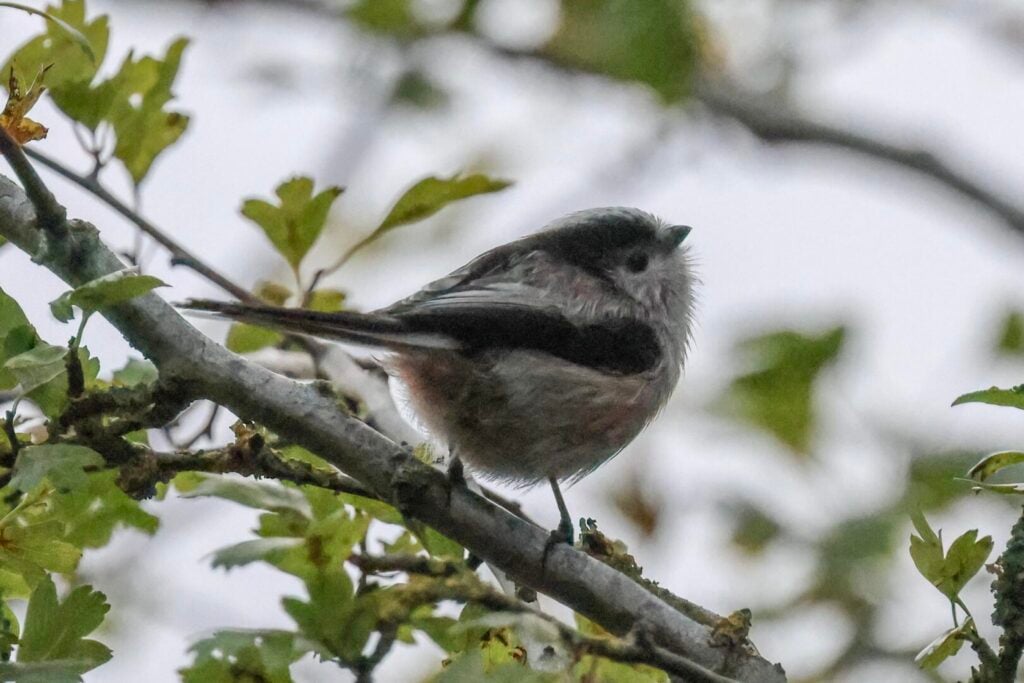
Into the birches, we quickly found a mixed tit flock. Lots of Long-tailed Tits, Blue and Great Tits, Coal Tits, a brief Treecreeper and a couple of Goldcrests. Then they moved off deeper into the trees. Several Redwings came up out of the bushes calling. One or two landed up in the birches long enough for us to get them in the scope. Autumn migrants fresh in from from Scandinavia.
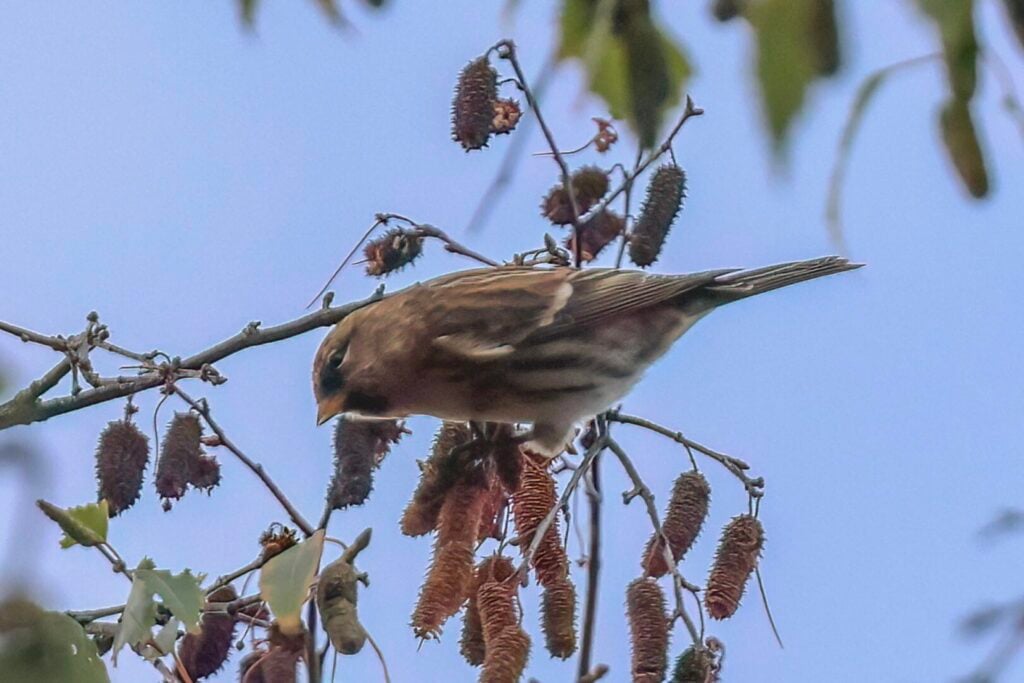
We heard Redpolls calling and looked up to see a couple flying over. They landed in the birches back behind us with a flock of Goldfinches. So we walked back and found them in the trees feeding on birch cones. There were three or so small dark ones here now, Lesser Redpolls. We got a couple in the scope before they were spooked by a Jay flying over and flew off. More autumn migrants.
As we set off back through the birches again, a Brambling flew over now. It landed in the top of a tree where we could get that in the scope too. Round by the east side of Dell, we found the tit flock again. Several Long-tailed Tits looked to be leading the group our way, and we had better views of the Goldcrests now. Then the flock turned and went back the way we had come. We tried to follow, but they kept going quickly and we lost them.
Out onto the main track, we walked on west. Several Blackbirds were feeding on the berries in the bushes, presumably migrants freshly arrived from the Continent. We were surprised to see lots of vehicles parked ahead, in a clear area beside the track. Apparently they were filming a commercial, although the subject seemed to be a big secret!
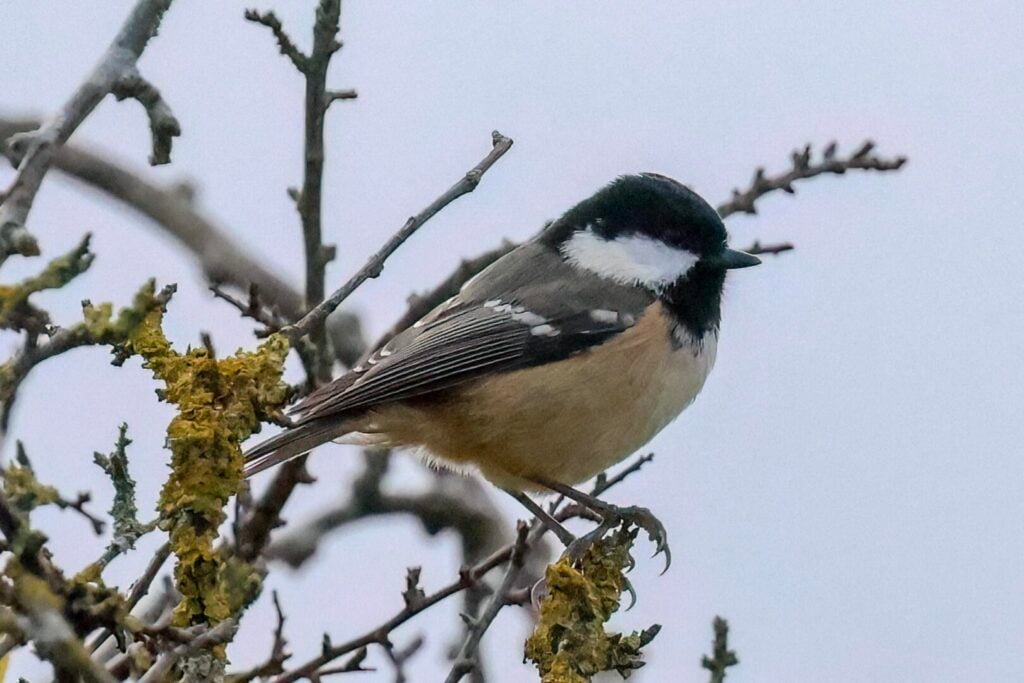
We decided to cut in to the south of the track and check the bushes there. We quickly found another tit flock – more good views of Coal Tits and several Goldcrests. Several more Jays too. We flushed a Green Woodpecker from the ground as we came round behind a pine tree. It flew off low before everyone could get a look and we couldn’t find it again.
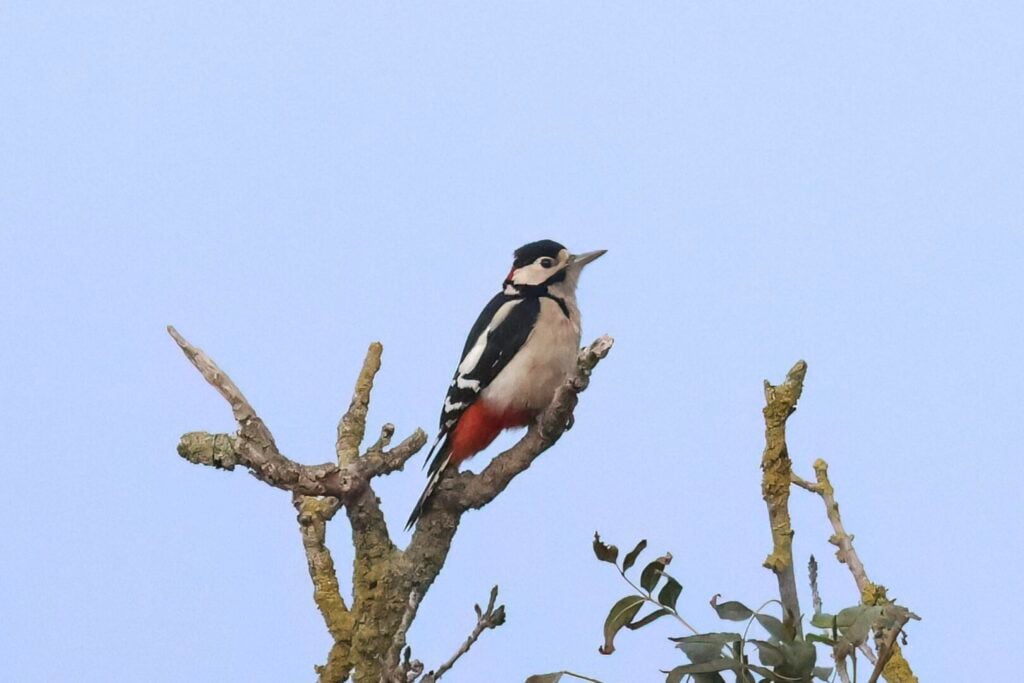
Continuing on, a Stonechat flicked up ahead of us and perched briefly. We could hear a Chiffchaff calling and several more Blackbirds flew out of the bushes. A Great Spotted Woodpecker flew out too and landed more obligingly in the top of a tree in front of us.
We came back out to the main track on the far side of all the vehicles. There was a report of an Arctic Redpoll at the Drinking Pool now, so we walked down to check. No one there, no birds, very quiet. It appeared the location given was incorrect! We continued our way west on the main track but it was very quiet in the trees along here too.
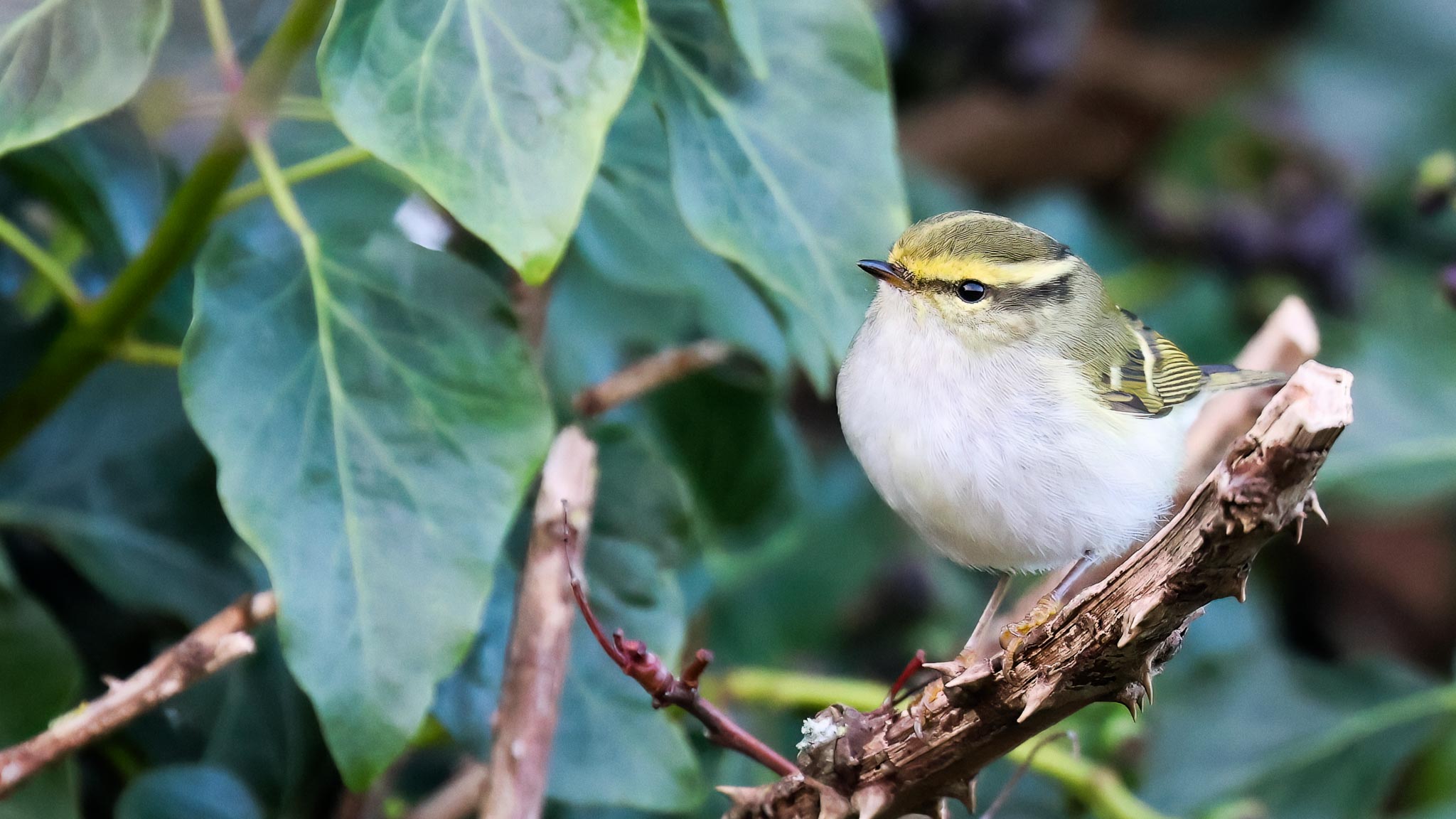
So we turned and started to make our way back. We hadn’t gone far when we heard a Yellow-browed Warbler call. Looking through the bushes, we could just see it further back, before it dropped down. We walked round and deeper in and found it again in the top of the reeds in the ditch below. Then it flew up into the bushes beside the track.
Out onto the track again, there was no sign of the Yellow-browed Warbler at first, then it flicked up out of the brambles into the top of a bush in front of us. Good if brief views, then it moved deeper in where we could just see movement through the branches. When it flew again, down to the next bush along, we thought we might see it again. But when we walked up, it had completely disappeared.
We stood and scanned for a few minutes but not further sign. So we cut our losses and set off to walk back. Past all the film crew vehicles, we cut in around the north side of the Dell. It was very quiet here now too, no sign of the tit flock.
Back through the birches, there seemed to be a lot more Redpolls here now, 20-30. There were several paler ones, certainly Mealy Redpolls, but it was hard viewing from underneath, looking up in the leafy birches. A small group flew out into a bare tree and one looked to lack any undertail covert streaks. An Arctic Redpoll? But they flew off again before we could get a look at the rest of it.
Back out, we decided to walk over to the other side of the car park and have a quick look to see if anything had been blown in to the harbour channel. We walked up past the RNLI station and found lots of windsurfers, sailors, even a foilboarder out on the channel. Too much disturbance.
We usually walk round via the beach, past the old lifeboat station slipway, to check the far end of the channel. But it was still very windy out here today, so we decided to take pity on the group and not drag them round in the wind. Back past the RNLI station, we had a quick look in the outer harbour but couldn’t see anything in amongst the boats now.
It was time for lunch, so we ate by the Beach Cafe today where it was more sheltered. After lunch, we drove round to Holkham. The grazing marshes by Lady Anne’s Drive are still very dry, no water in the pools. We could see a few Pink-footed Geese dropping down further back.
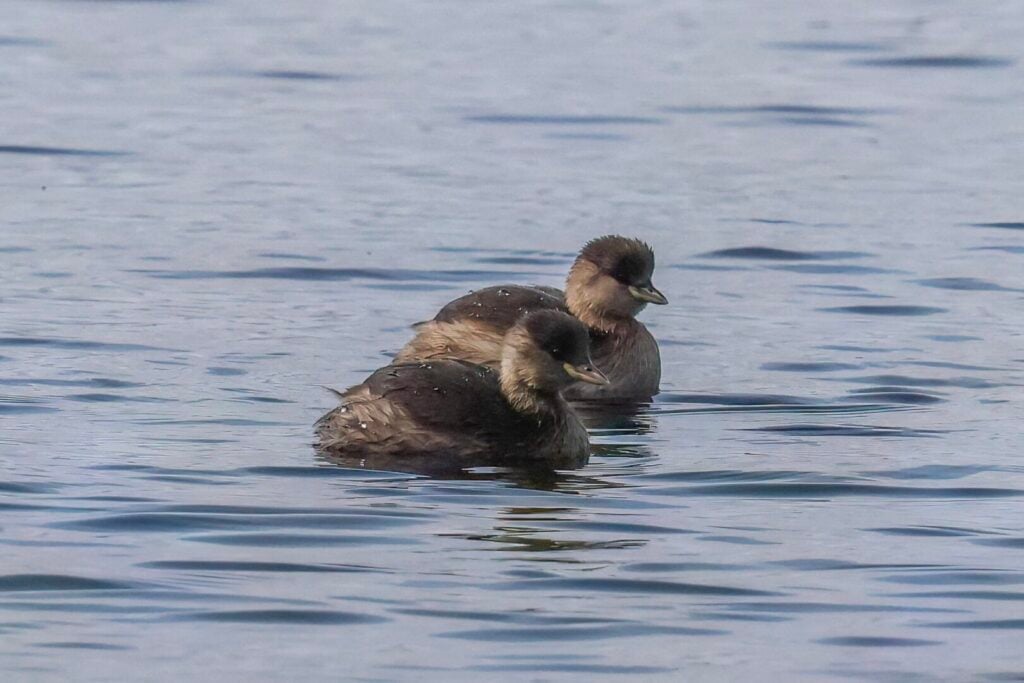
We set off to walk west on the south side of the pines. The trees were rather quiet at first. Stopping at Salts Hole, there were lots of Little Grebes out on the water and a few ducks, mainly Wigeon and Gadwall. More Jays flew back and forth. A Kestrel was perched in a large hawthorn much further back.
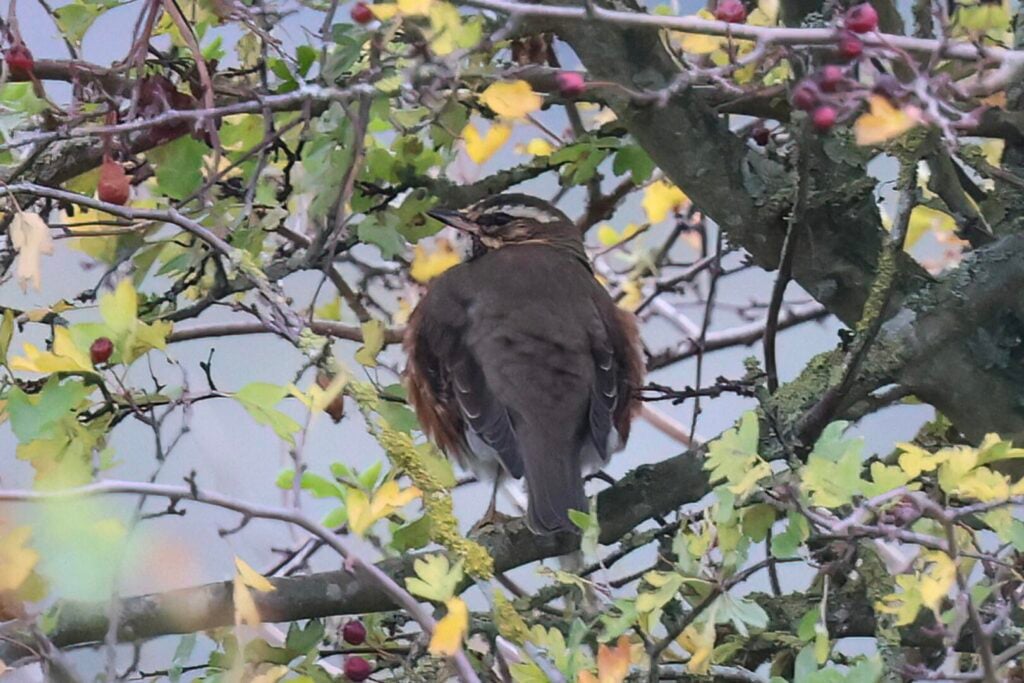
We stopped again at the next gate to scan across the grazing marshes. There were a couple of Redwings in a small hawthorn on the edge of the reedbed opposite. One was perched but we could only see its body, not its head – a good view of its orange flanks though. There seemed to be more activity in the same bush. A Cetti’s Warbler was climbing around in the tangled branches low down, its tail cocked. A couple of Blackcaps were flycatching from one side. A Robin and a Wren too.
Several Long-tailed Tits flew out of the trees and along the line of bushes to the same hawthorn. Then they turned round and went back to the trees. We walked on a short way along the main path to check if anything was with them. But they changed there minds again and we just caught the back of them as they headed out along the edge of the reedbed and off. A Stonechat was out in the middle of the reedbed flycatching, and we did have a better view of the Redwing from here.
Carrying on west, we could see all the Pink-footed Geese out on the grazing marsh now. We found a gap where we could see across and and got them in the scope. As we continued on, it started to spit with rain. We were just catching the edge of it, so we walked on to Joe Jordan Hide to wait for it to pass over.
Looking out from the hide, we could see some distant Cattle Egrets with the Belted Galloways. Otherwise it was a bit quiet here today. Two Egyptian Geese were out on the grass, as were a couple of Curlews. The Decoy pool is now completely dry – a surprise given they had managed to keep water in it all summer. Several Hornets were nectaring on the ivy in front of the hide.
There had been a message about a female Desert Wheatear by the RNLI station at Wells a few minutes earlier and now it was confirmed. Just where we had been earlier, we should have walked round in the wind after all! It would be a nice bird to see and, given it was quiet here, we decided to walk back.
It was just a short drive back round to Wells. Up to the RNLI station again, we could see people down on the beach below now. We joined them to be told the Desert Wheatear had been really close on the beach but had just flown across to the bank on the far side of the outer harbour. It hadn’t gone but we couldn’t see it at first
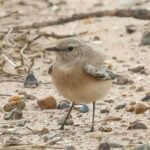
Thankfully, after a minute or so, the Desert Wheatear reappeared. Through the scope, we could see it feeding on the top of the bank. Nice views. We watched it for a while, as it kept disappearing into a sheltered spot then back out. There was a Red-throated Diver in the outer harbour now as well. It surfaced right in front of us, and kept diving in the water between the boats and the shore.
The Desert Wheatear had been gradually working its way further back along the sand. Then it turned and flew back closer. It landed briefly, then flew across the water straight towards us, landing on the beach again only about 20 metres away. Lovely close views now.
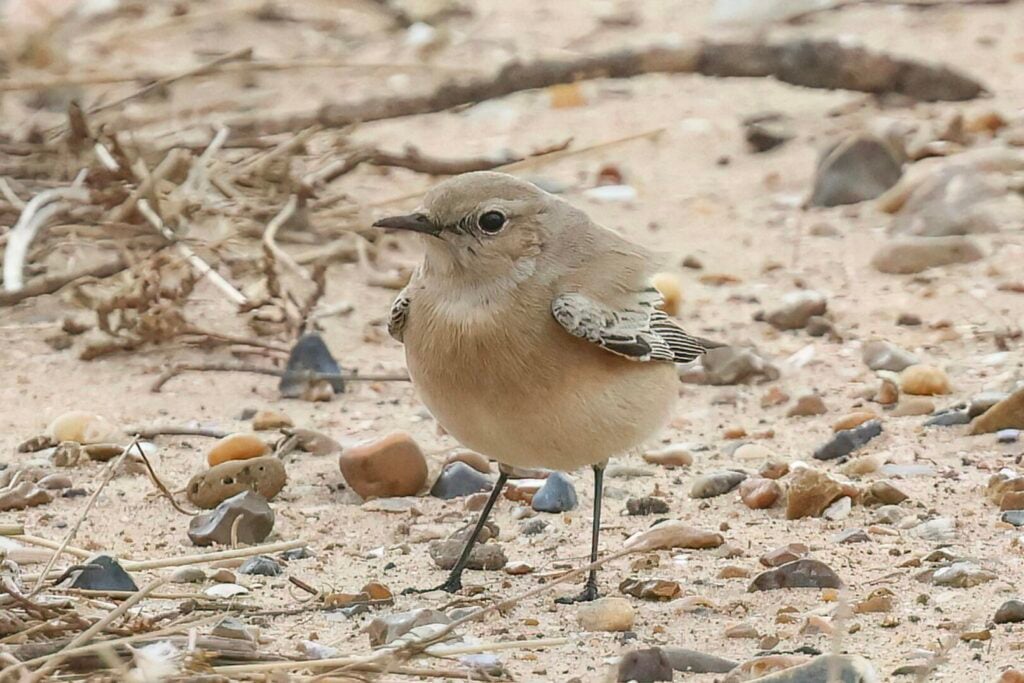
A rare visitor but annual here, Desert Wheatear breeds in North Africa and from the Middle East across Central Asia. The eastern birds migrate, down to NE Africa, Arabia and Pakistan for the winter. This bird had probably come from the east, a little off course!
Just then, a sharp shower came in over the harbour. The Desert Wheatear flew towards us, landed briefly, then did the same and landed right in front of us. Unfortunately it didn’t stay long and as it started to rain, it flew over the trees behind us.
After sheltering by the RNLI station for a couple of minutes while the rain quickly blew through, we walked round to the beach on the north side. We had just arrived where people were watching the Desert Wheatear again when it flew once more, disappeared off past the new slipway towards the beach huts. Given we had enjoyed great views already, we decided not to follow it further.
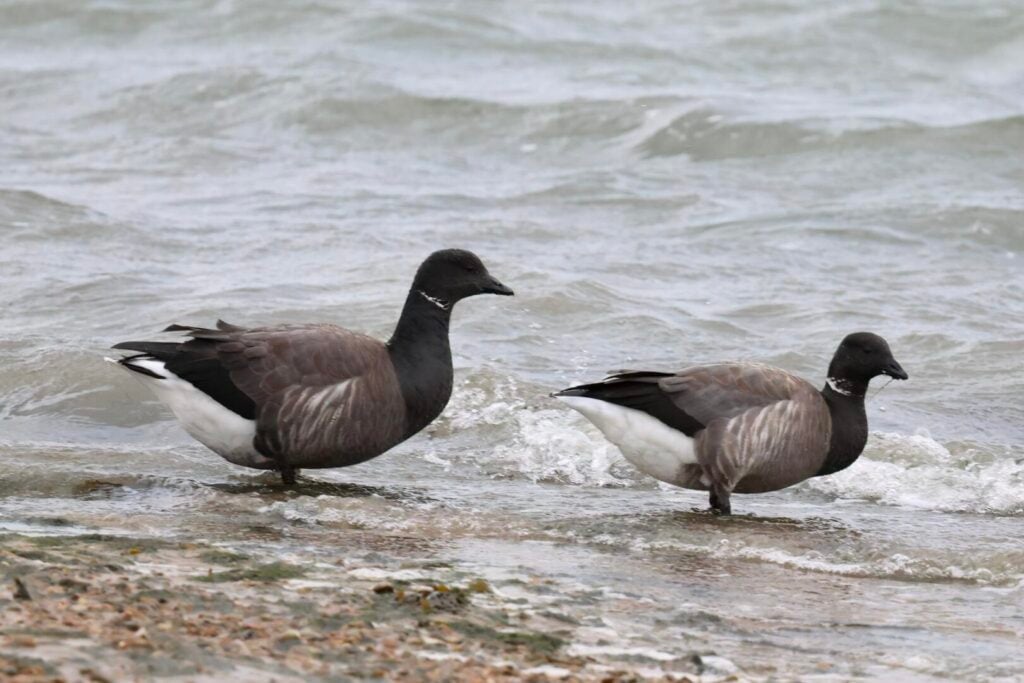
Several Brent Geese were feeding on the edge of the channel right in front of us. Great close views. A Common Gull next to a Herring Gull on the near shore gave us a good chance at comparison.
There were lots of Oystercatchers now on the mussel beds on the far side of the channel. Scanning through, we found three or four Turnstones in amongst them. A few Bar-tailed Godwits, Grey Plover and Ringed Plover were out there too.
The Desert Wheatear was a very nice autumn migrant to end the tour with. So we walked back to the minibus and drove back to Hindolveston, where we said our goodbyes.