Day 1 of a 4-day Autumn Migration tour. It was a bright day with some nice sunny spells but a rather blustery SW wind. We spent the day on the coast in NW Norfolk.
Our destination for the morning was Titchwell. When we arrived, there were not too many cars yet so we went for a quick walk round the overflow car park to see if anything had arrived overnight. It was rather quiet – just a couple of Dunnocks and Wrens.
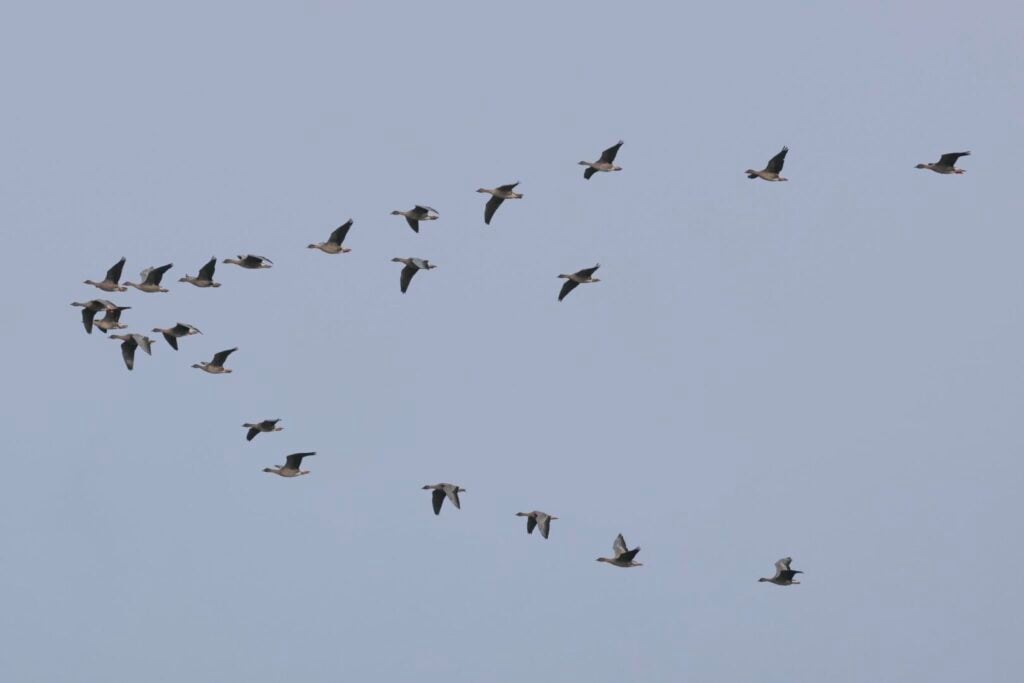
Scanning the paddocks from the gates at the far end, there was a bit more activity in the hedges. Several Chaffinches and Goldfinches, a couple of Blackbirds, and a Song Thrush flushed by a person walking along the East Trail beyond. Several small groups of Pink-footed Geese flew over, heading west, calling.
As we walked back, a Jay flew high over. They have been on the move in the last few weeks, probably dispersing to find food given a lack of acorns this year. A flock of Long-tailed Tits flicked through the trees and we could hear a Chiffchaff calling. At the back of the main car park, a Great Spotted Woodpecker was perched in the top of the trees.
As we made our way out onto the reserve, past the Visitor Centre, we stopped to scan Thornham Grazing Marsh. There was nothing in the hedge but several Skylarks and Meadow Pipits flew round over the grass. A distant Red Kite was over the houses beyond. Walking on, a Blackbird shot past us through the trees and a couple of Chaffinches came up from the path. Autumn migrants perhaps?
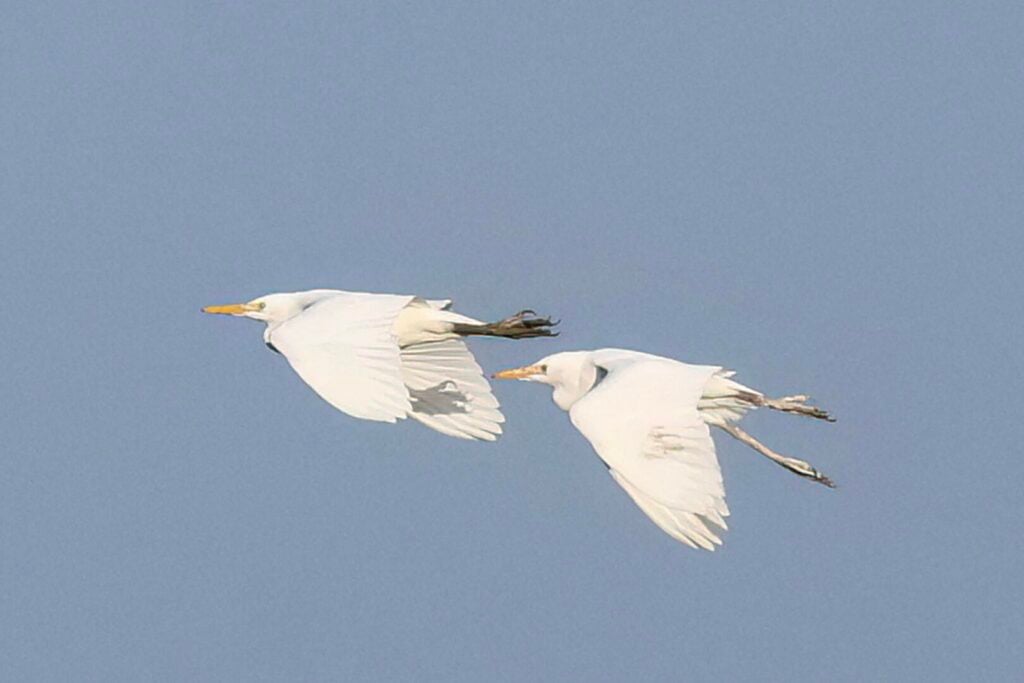
Out of the trees, we noticed two Cattle Egrets flying over and watched as they disappeared off towards Thornham. A couple of flocks of Starlings flew through heading west. Most likely migrants the way they were going, there were definitely some birds on the mover today. A Marsh Harrier quartered over the Thornham reedbed and a Common Buzzard drifted over behind. We could see another large flock of Pink-footed Geese distantly beyond Thornham village.
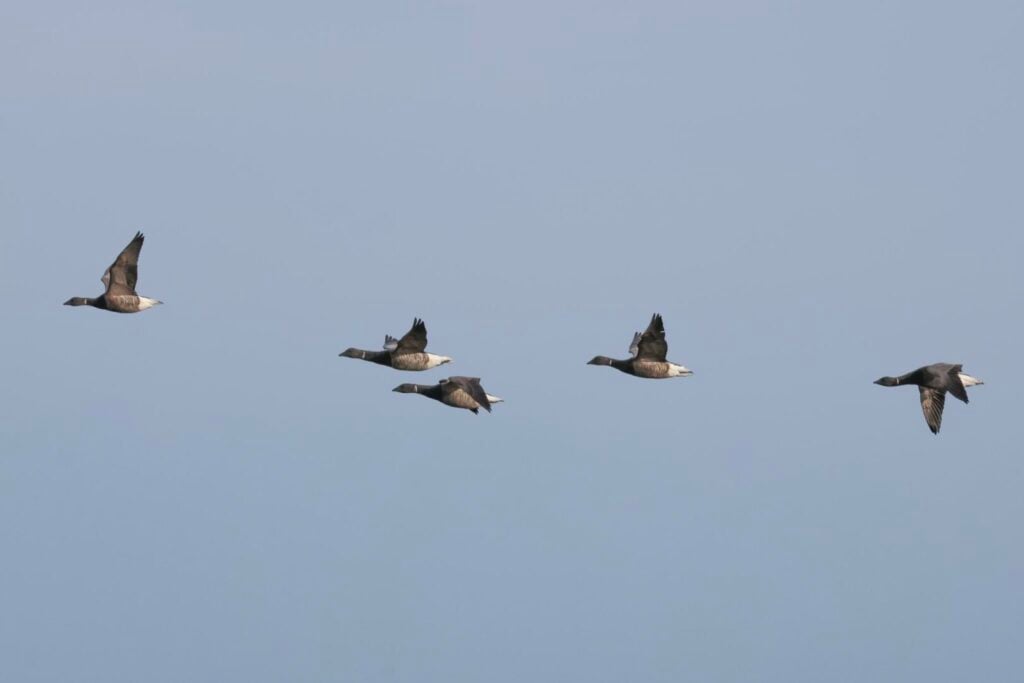
A flock of Brent Geese came up off Freshmarsh and flew off out over the saltmarsh towards the harbour. Nice to have them back again for the winter, after a summer in Siberia.
A Kingfisher called behind us and we turned in time to see it flash off over the reeds. As we walked up, a Curlew and a couple of Redshank were out on the saltmarsh. More Skylarks flew over calling and a Rock Pipit circled round, back from Scandinavia.
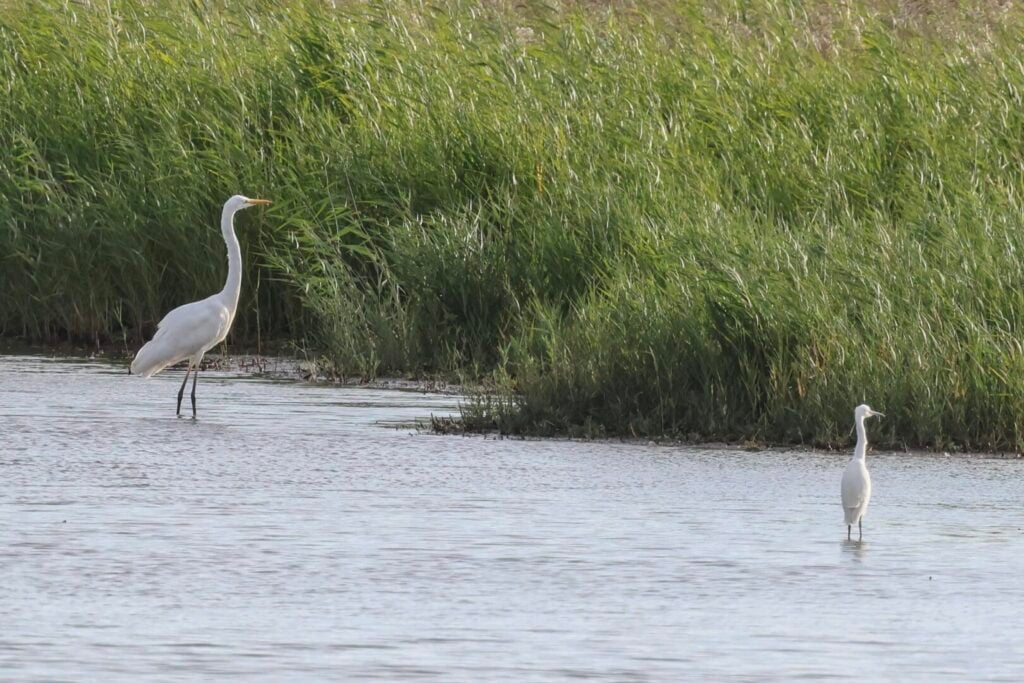
Up to the Reedbed Pool, we could see both a Great White Egret and a Little Egret standing out in the water. A good comparison view side by side. There were also a couple of Coot and a selection of commoner ducks.
All the Black-tailed Godwits came up off the Freshmarsh and whirled round, along with several Lapwings. We looked over to see a juvenile Peregrine circling. It had a couple of goes at the Godwits, a bit half-hearted, then gave up and flew in over the reedbed. It turned over the trees behind us and headed off west. A little later, a distant flock of Golden Plover came up over Thornham harbour, possibly flushed by the Peregrine.
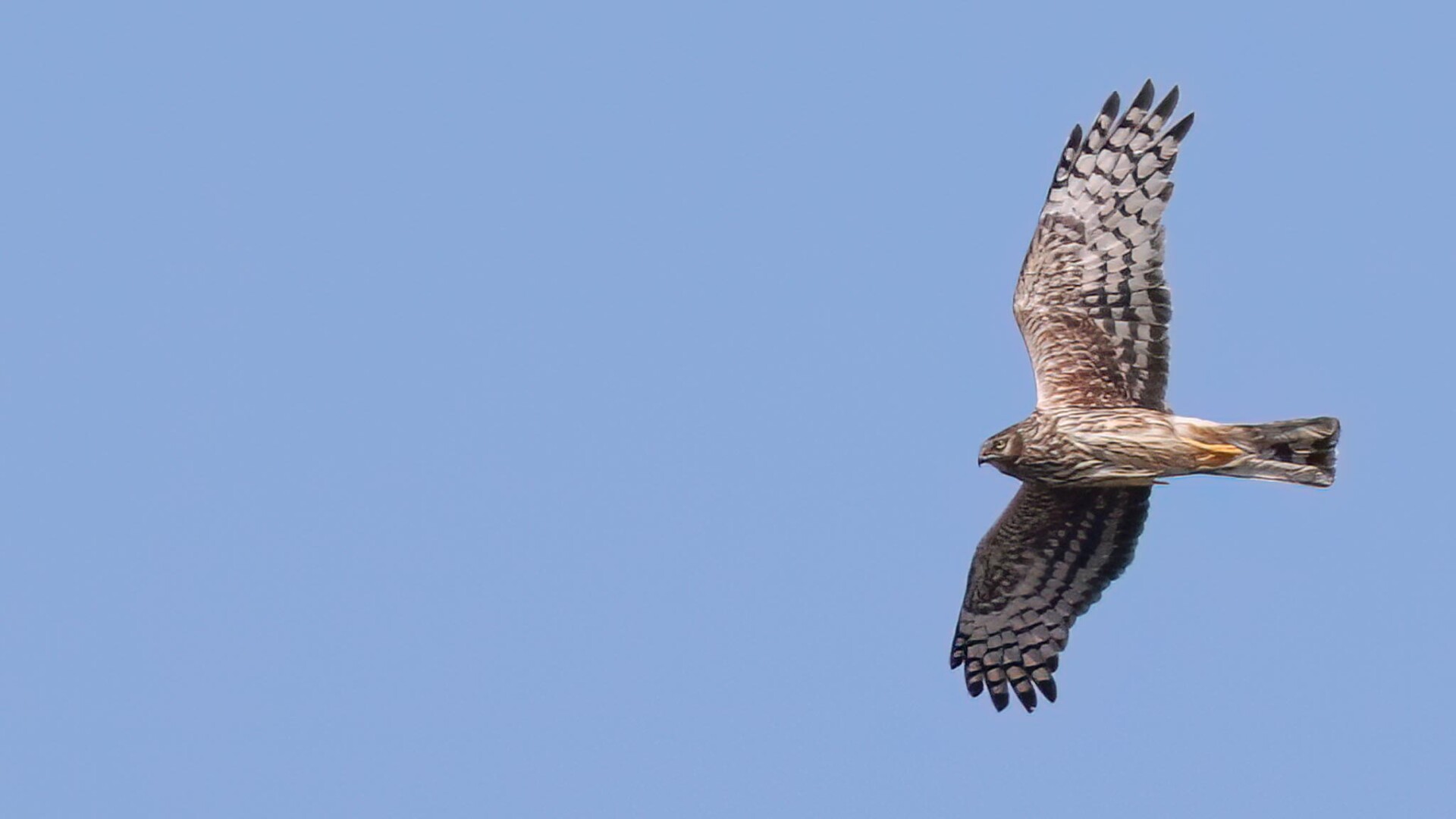
Another Marsh Harrier, a male this time, drifted in over the reedbed and across the Reedbed Pool. It flushed all the ducks again, which had only just settled down after the Peregrine.
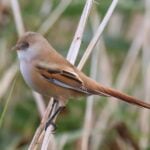
We carried on up towards Island Hide. Just before we got there, we heard a Bearded Tit pinging in the reeds. We couldn’t see it at first but then it flew up out of reeds and off back behind us before dropping in again by the borrow pits. Fairly typical views of Bearded Tit!
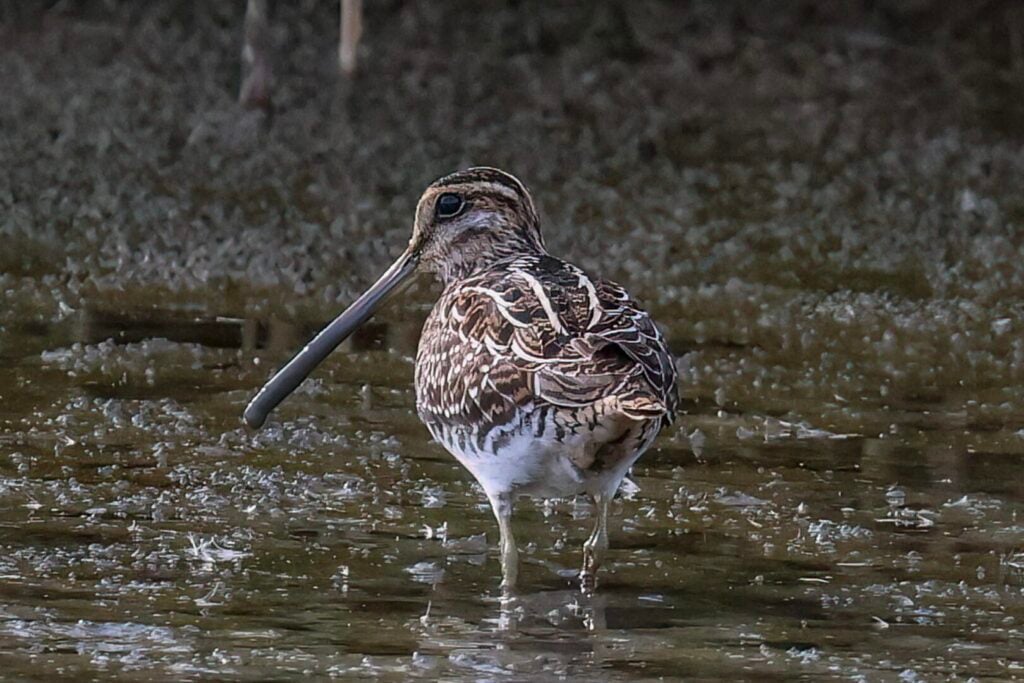
A Common Snipe was in the near corner of the Freshmarsh but we were looking into the light from up on the main path. We had a better view once we got in the hide. We watched the Snipe feeding on the edge of the reeds.
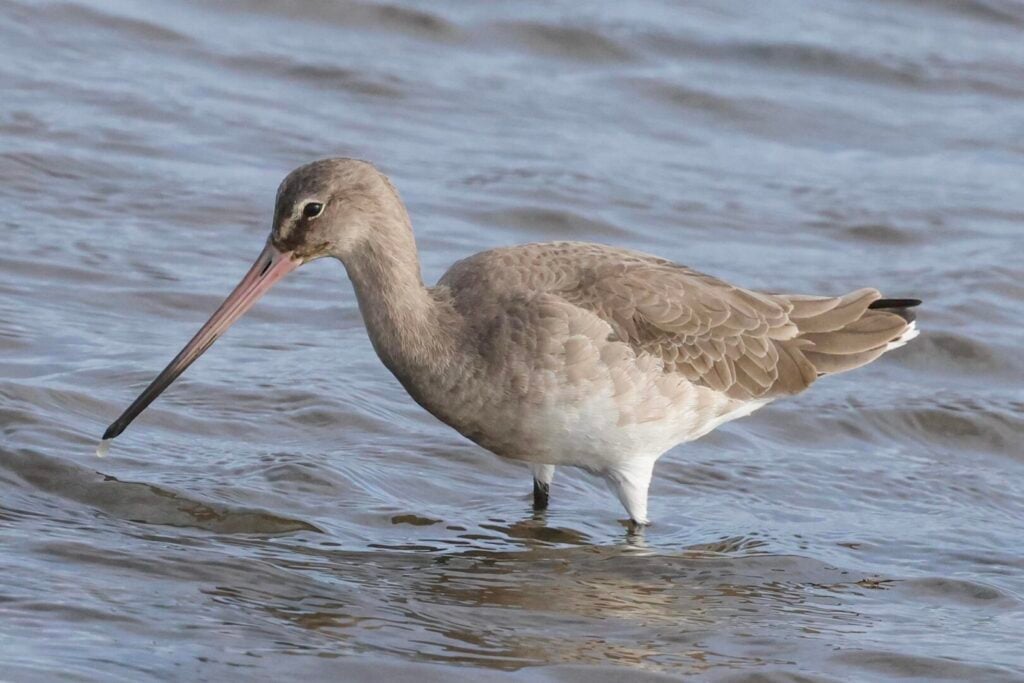
The Black-tailed Godwits had all settled down again and were now mostly roosting on the island in front of the hide. A few were in the water nearby, feeding. A lone juvenile Ruff was on the front edge of the island too and a few Lapwings were roosting with the Godwits. There are not many Avocets left now, the water levels are probably too high on the Freshmarsh to provide good feeding opportunities. We could only find four, asleep on one of the islands further back.
There was the usual selection of ducks on the Freshmarsh, and the drakes are slowly emerging from their drab eclipse plumage. A couple of Shoveler and some Teal were feeding in front of the hide. There were quite a few Wigeon further back. Looking through, we found a single Pintail with them.
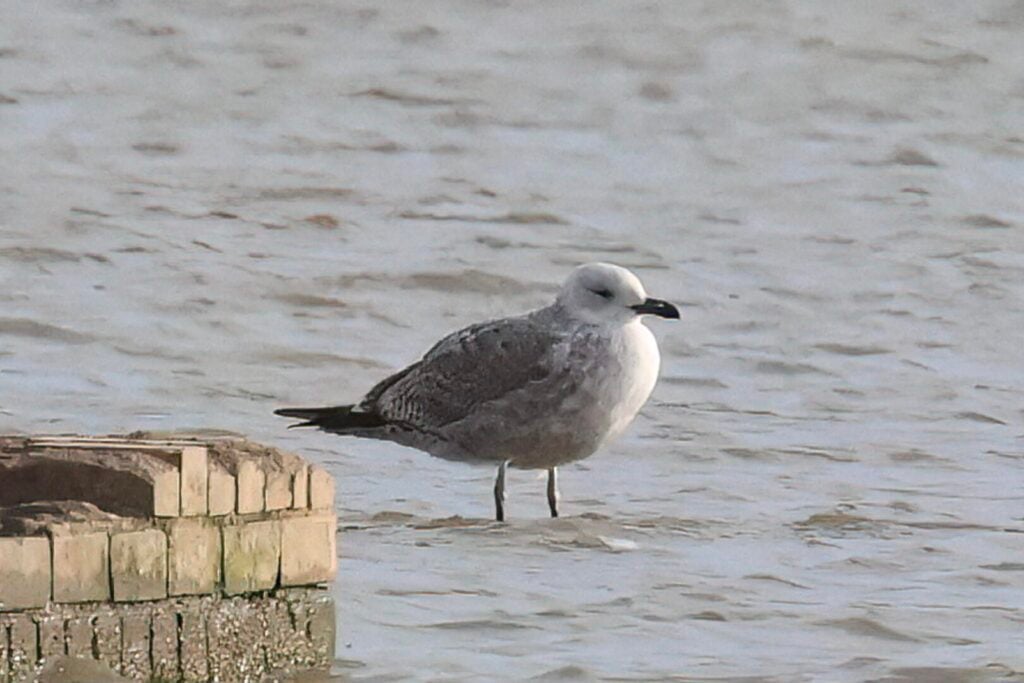
There were just a couple of large gulls at the moment, in the water towards the back. Both were young, but one had a noticeably whiter head. A first winter (or 1st calendar year) Caspian Gull. It promptly went to sleep, tucking its head in, but eventually woke up again. Now we could see a few streaks on its head. Combined with stronger barring on its outer greater coverts, it suggested it might come from one of the colonies on the near Continent, where there has been hybridisation in the past.
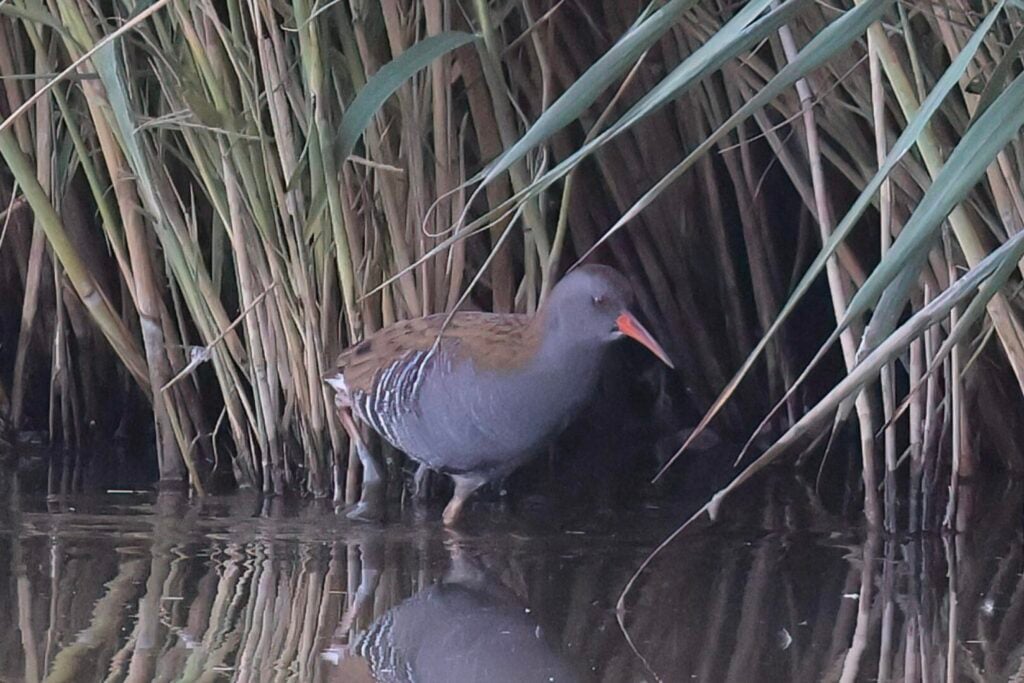
A Water Rail squealed from the reedbed. We looked over and could see it working its way down along the edge of the reeds towards us. Good views before it eventually disappeared deeper in.
Back out onto the main path, we carried on further up. The water level is back up on the NW compartment and there is no mud. Not many waders on there now – at least it is good for ducks!
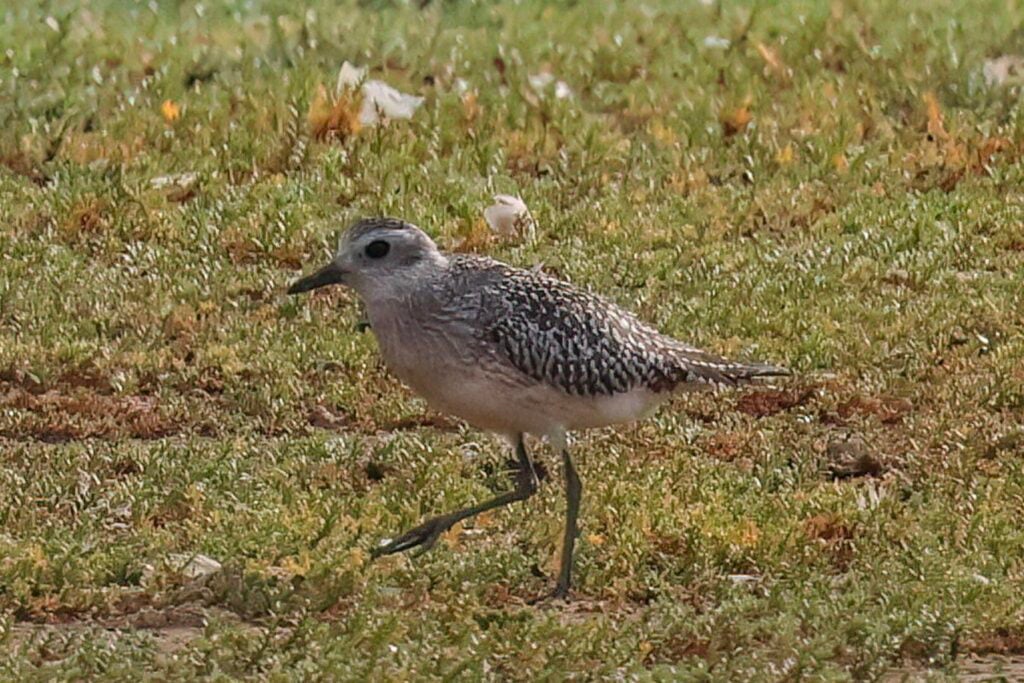
We continued round to Parrinder Hide. Looking into the sun, this side of the Freshmarsh looked rather quiet at first. We found a single juvenile Bar-tailed Godwit behind one of the spits, preening. A lone Grey Plover was walking around on the grassy island in front. Three Common Snipe were feeding busily on the muddy edge of the channel closer to us.
Scanning across, we found a single small wader by the bund over at the back. It was silhouetted at first, but it looked good for Curlew Sandpiper. Then it flew and we could see its white rump. Helpfully, it eventually settled where the light was a bit better and where it was joined by a second Curlew Sandpiper. Nice views in the scope.
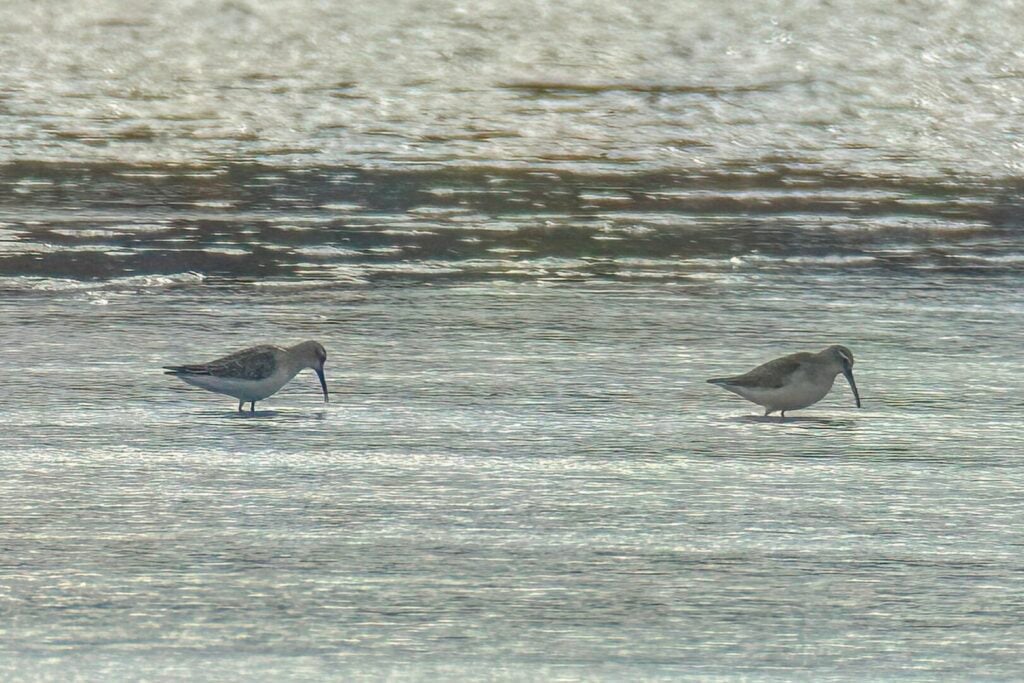
Two Dunlin flew in too. They landed a short distance away, so scanning back and forth, we could compare the two. A Rock Pipit flew in and landed in front of the hide briefly and a couple of Meadow Pipits dropped in too.
Back out to the main path, a small flock of Golden Plovers flew in over the saltmarsh and circled round overhead. There is nowhere really suitable for them on the Freshmarsh at the moment, so they disappeared off again without landing. The tide was in and there was nothing on Volunteer Marsh. A Red Kite drifted in along the far bank.
There wasn’t much on the Tidal Pool either today, a bit of a surprise given the tide. A few Black-tailed Godwits included one very close to path. Other than that, all we could see were three Redshanks and a couple of Curlew.
Continuing on out to the beach, we could immediately see several juvenile Gannets just offshore. A couple were diving really close in, folding their wings back and shooting in to the water like a dart. Impressive to watch!
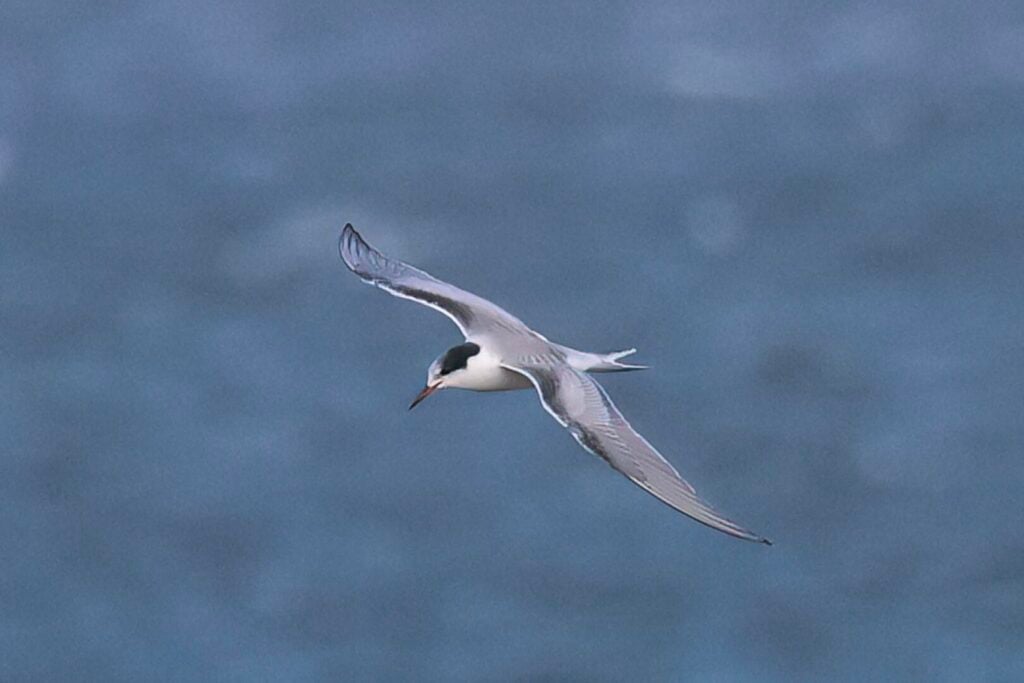
A single Sandwich Tern was patrolling up and down just offshore too, and was joined at one point by a lone juvenile Common Tern. Most of the terns have already left us and there are just a few left now, still to go.
Scanning the water, there were quite a few birds out on the sea today. Several Razorbills, Red-throated Divers including a couple still with their summer red throats, and Great Crested Grebes. Probably a lot of small fish offshore at the moment. A single female Common Scoter was diving just behind the breakers.
The mussel beds were covered but there were still a few waders on the beach, mostly Oystercatchers and a few Sanderling. Several Bar-tailed Godwits were feeding along the shore.
There was not much visible migration now, looking out to sea. A couple of small groups of Wigeon were still moving west offshore, arriving for the winter. A single Skylark came in over the waves and landed on the beach. It looked exhausted! After a couple of minutes, it seemed to recover and flew in over the dunes.
It was time to head back for lunch now. Nothing different on the way, so we found a couple of tables in the picnic area. After lunch, we drove round to Holme.
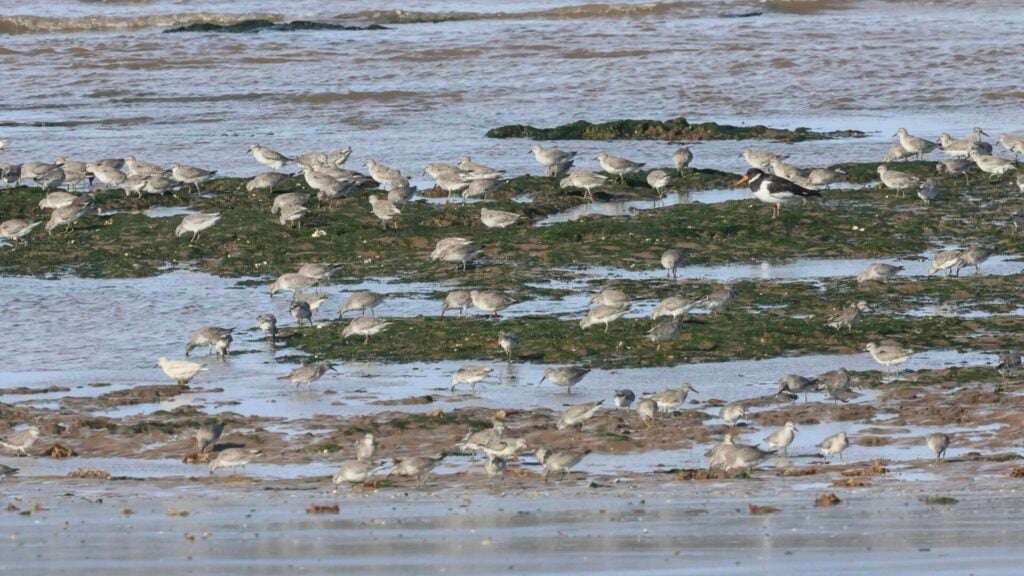
After checking in at the Visitor Centre, we walked out to the beach. There were lots of Knot and Oystercatchers on the mussel beds now, which were just starting to emerge as the tide receded. That was despite the disturbance – a man walking along the shore flushed them. Further up, a couple of dogs off the lead were running right through all the birds, their owners completely oblivious to the harm they were doing.
There were more Razorbills and Red-throated Divers on the water off here, as there had been at Titchwell earlier. Scanning across the sea, we picked up a small tern coming in offshore. In the scope, we could see it was a juvenile Arctic Tern. When it got closer in, it was joined by a second and the two of them disappeared off west towards the Wash.
We set off east along the beach. As we walked, we continued to scan the sea and picked up a large flock of Starlings flying west out over the water. As we were watching them, a second group flew through our binoculars much closer, over the beach. Definitely on the move today.
When we got out to the point, we could see several people out there all looking in different directions. Apparently the Snow Bunting had flown off five minutes before we arrived, the Shorelarks had disappeared too and the Lapland Buntings hadn’t been seen since this morning. We looked around and could see several Great Black-backed Gulls in the gull roost in the harbour channel. A couple of Ringed Plover were out on the mud, hunkered down behind tufts of vegetation out of the wind.
The Snow Bunting had apparently flown across the corner of the saltmarsh and a photographer we spoke to thought it had landed over on the other side. We walked round but there was no sign of it there. A few Skylarks and Meadow Pipits out of saltmarsh. It felt like we were going to draw a blank.
As we started to walk back round, more Skylarks came up from the middle of the saltmarsh. We looked over and saw two Lapland Buntings with them. The Lapland Buntings started to fly towards us and were joined by a third, but then they turned again and circled round a couple of times. As they dropped away from us, a fourth came up too but they all disappeared off back and appeared to land again beyond the low shingle ridge the other side.
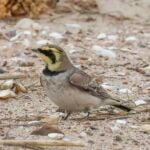
We continued round back round to see if we could find them again. As we got to the shingle ridge, we heard a Shorelark call and turned to see the three Shorelarks flying in over the beach. Up to the top of the low ridge, we found them out on the beach beyond. Nice views in the scope.
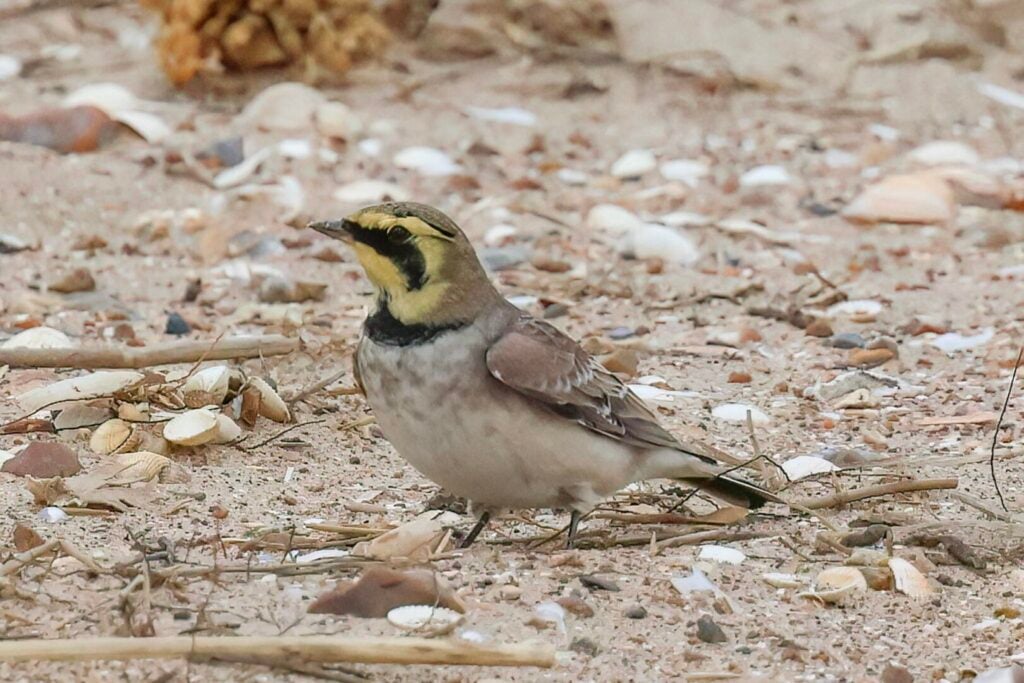
The Shorelarks were rather mobile. They took off again and flew round behind us, landing again in front of a different photographer. As he walked towards them, they walked slowly back our way. Then they flew back out over the dunes to the beach.
We had a quick look at the far end of the shingle ridge but there was no sign of any Lapland Buntings there now. Probably they went down out in the middle of the saltmarsh in Thornham harbour.
As we set off back, we found the Shorelarks again on the top of the beach. They flicked ahead of us along the tideline a couple of times, then flew back over the dunes to where they had started.
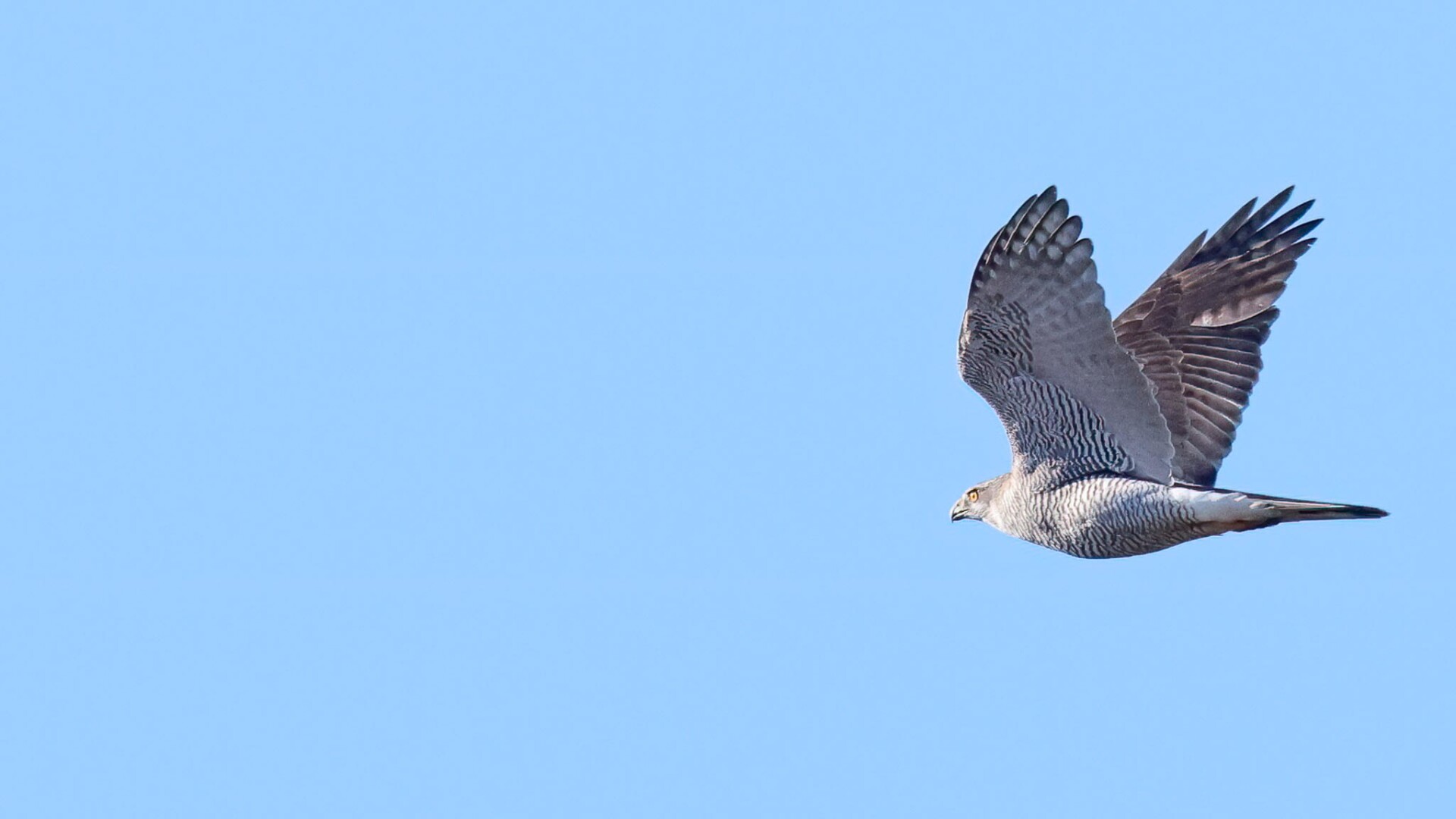
We continued back to the Firs. There had been three different Jack Snipe from the NWT hides earlier so we went for quick look. We tried hide 1 first but there was no sign of the two there. We had even brought a thermal imager. The battery was going but we managed a couple of sweeps and nothing. A couple of Little Grebes were on Broadwater and a Sparrowhawk flew low across over the grass behind.
Holme is one of the few reserves which still closes at 5pm (Cley used to as well, but back in the 1970s!), and the gate is locked. It doesn’t open until 10am too – we are ever hopeful that one day it might make it to the 21st Century! So we were running out of time, but we decided to have a quick look in hide 3. There was no obvious sign of the Jack Snipe there either. A Stock Dove dropped in for a drink briefly.
As we hurried back, we noticed a Barn Owl out over the dunes. It flew across in front of The Firs and we lost sight of it as it headed out over the grazing marsh beyond. We got back to the car park at 4.59pm. Thankfully there were still a couple of cars there and no one had gone to lock up yet. We packed up and drove out. On the way back along the entrance track, another Barn Owl was hunting over the grazing marsh as we drove alongside. A nice bird to end the day.
By the time we got back to Hindolveston, we were a bit late for coffee and cake today. Plenty more opportunities and another day of Autumn Migration tomorrow.