A Private Tour to the Norfolk Broads. It was a lovely bright, sunny day, with more high cloud arriving from mid-afternoon. Warm, up to 23C, with light winds. Lovely weather to be out birding.
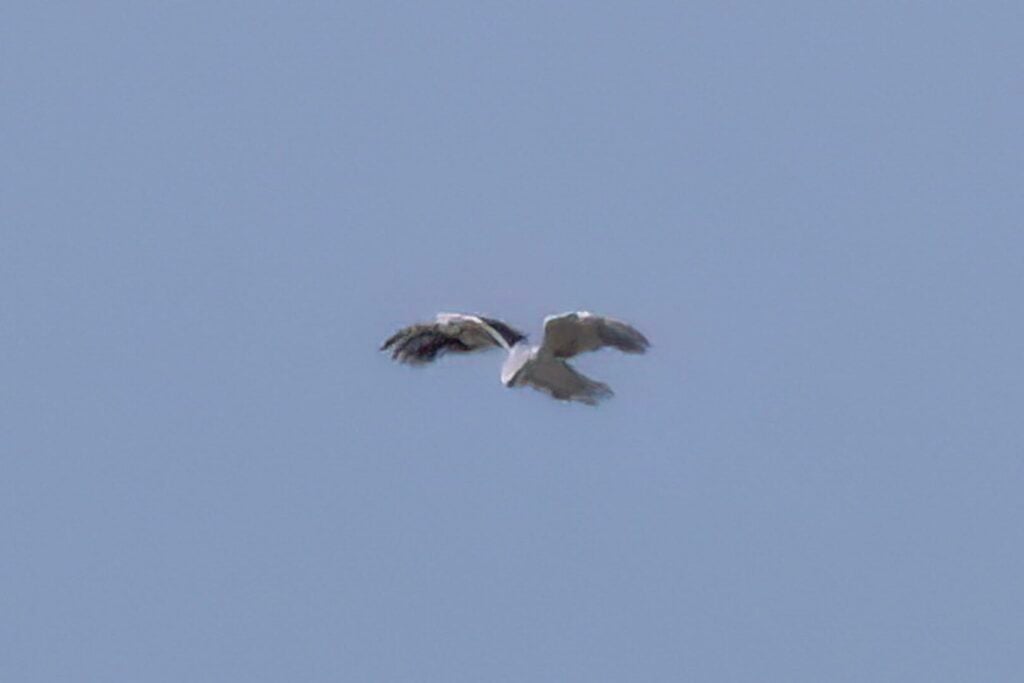
First, we headed over to Sea Palling to try to see the long-staying Black-winged Kite. It was on show as we pulled up, perched on top of a bush out on the marshes, and we quickly had the scope on it. There was quite a bit of heat haze already but the views improved when it took off and started to fly round. We watched it stopping and hovering repeatedly. At one point, a passing Marsh Harrier made a couple of half-hearted swoops towards it.
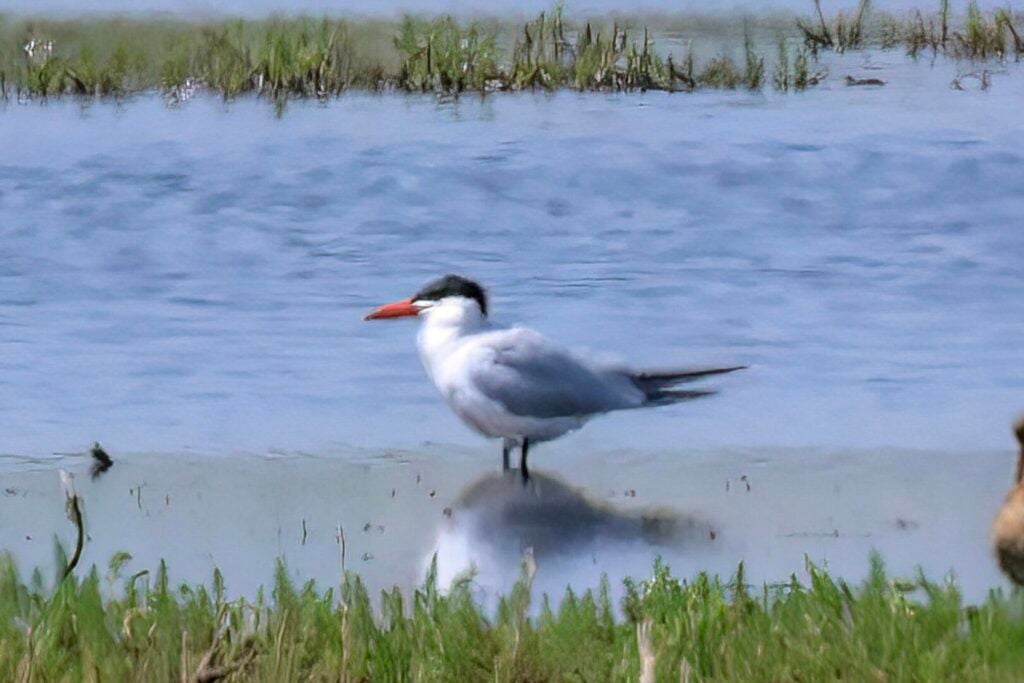
A great start, we headed on to Hickling Broad next. After checking in at the Visitor Centre, we walked down along the track towards Stubb Mill. Looking over the bank, we could see the Caspian Tern out on the second pool. There were already several people on the first platform though, so we continued on to the second.
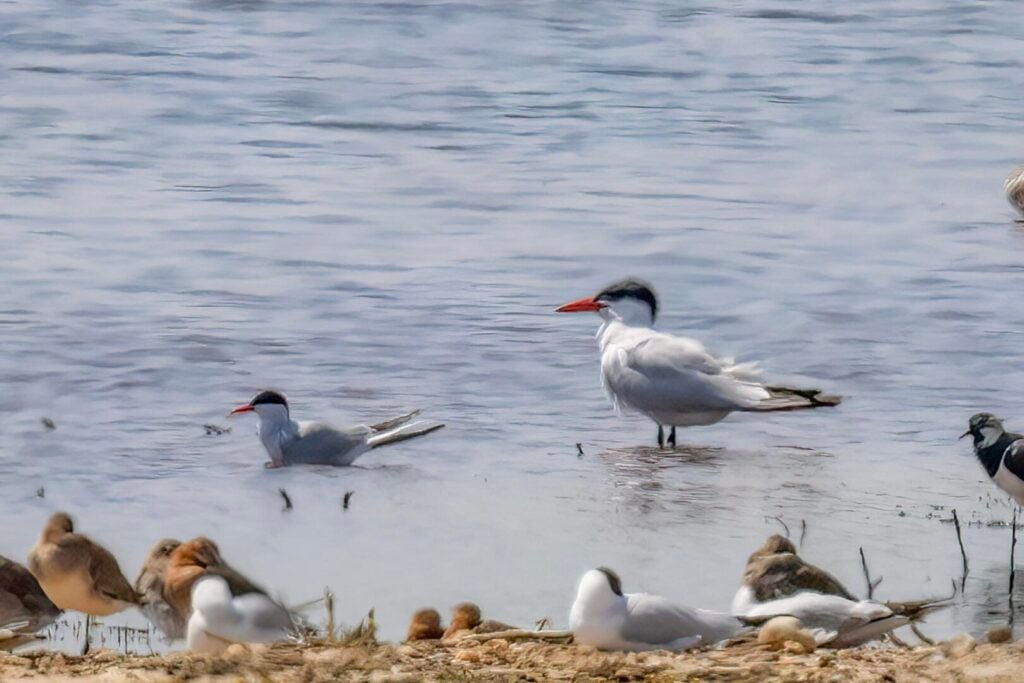
From here, we had a good view of it. The Caspian Tern was asleep at first, but woke up from time to time and flashed its large red bill. Then suddenly it took off and flew strongly away over the reeds towards the Broad. We later learnt if was seen fishing out over the Broad.
We carried on along the track. A Lesser Whitethroat was singing in the hedge and there were Reed Warblers in the ditch. A family of Greylags was feeding on the grass. From up on the bank at the far end, there were plenty of Marsh Harriers out over the reeds but no sign of any Hobbys today. Someone at the platform had told us there were a couple of Common Cranes visible from the raptor viewpoint, so we continued on.
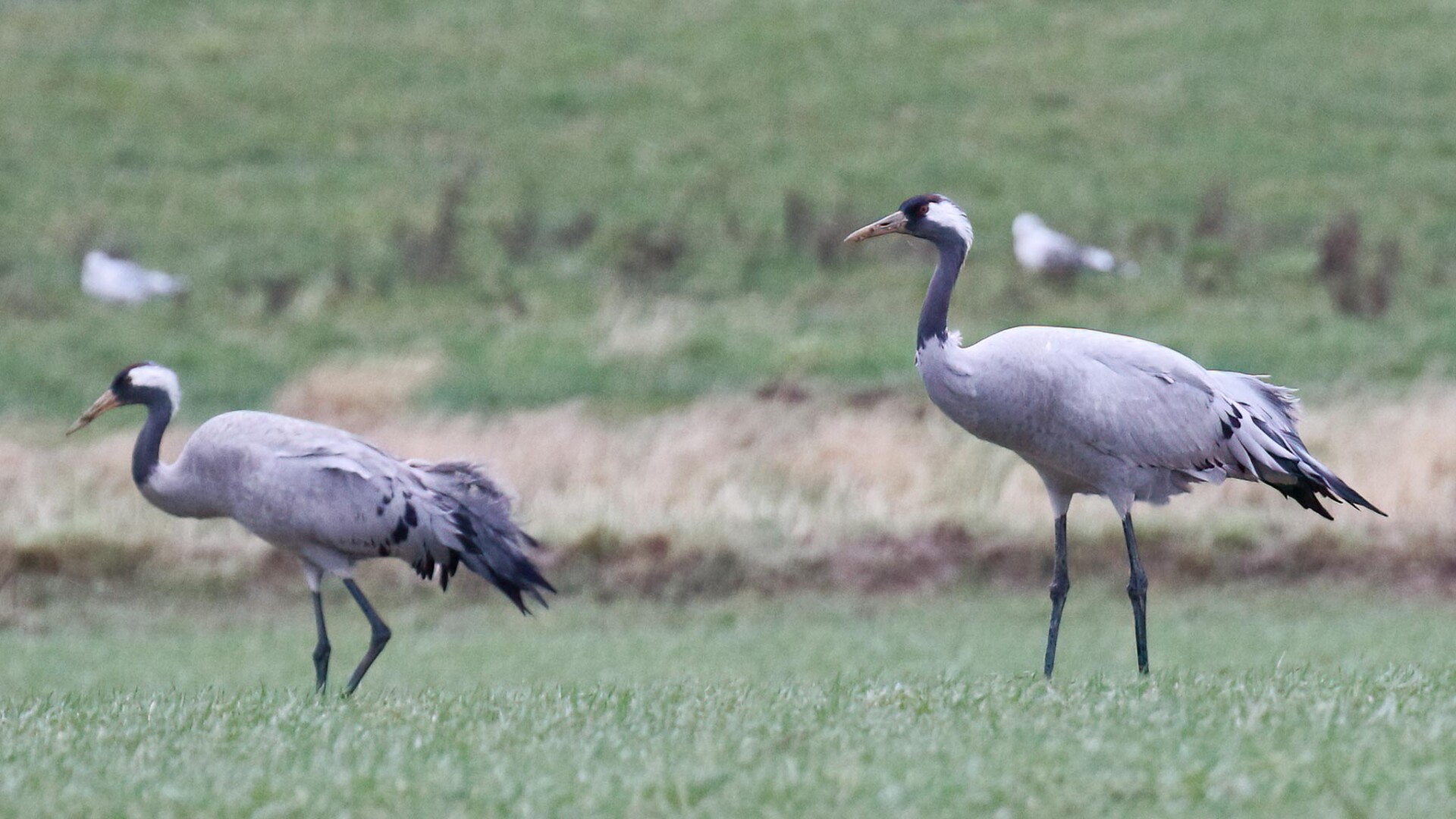
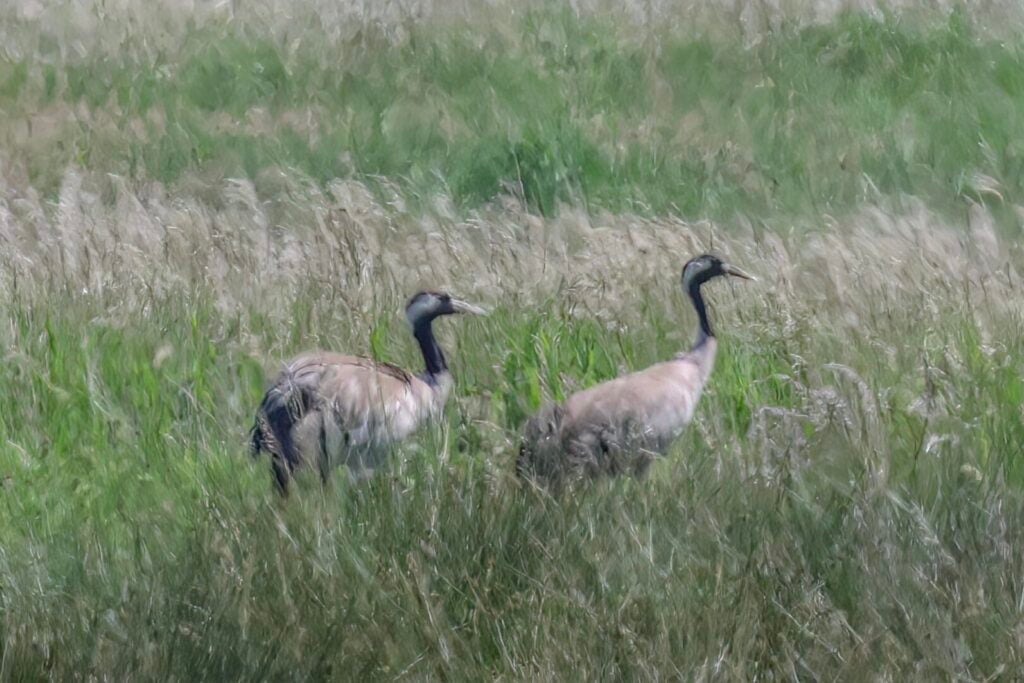
A couple of Willow Warblers were singing as we walked round past Stubb Mill. As we got up onto the viewpoint, we could see the pair of Common Cranes straight away, fairly close out in front. We got them in the scope. They were busy preening at first, occasionally looking round. After a while, the female went to sleep.
Walking back along the track, we could hear a Cuckoo calling distantly. A juvenile Stonechat landed on top of the bushes beside us. Two or three Small Tortoiseshells were nectaring on the creeping thistles. A Hobby circled over the trees across the other side of the fields.
There were a few people still around the first platform and they told us the Caspian Tern had returned. They were just leaving, so we had a chance now to climb up ourselves. More good views of the Caspian Tern. It was standing in the shallow water at first, then had a fly round before landing again.
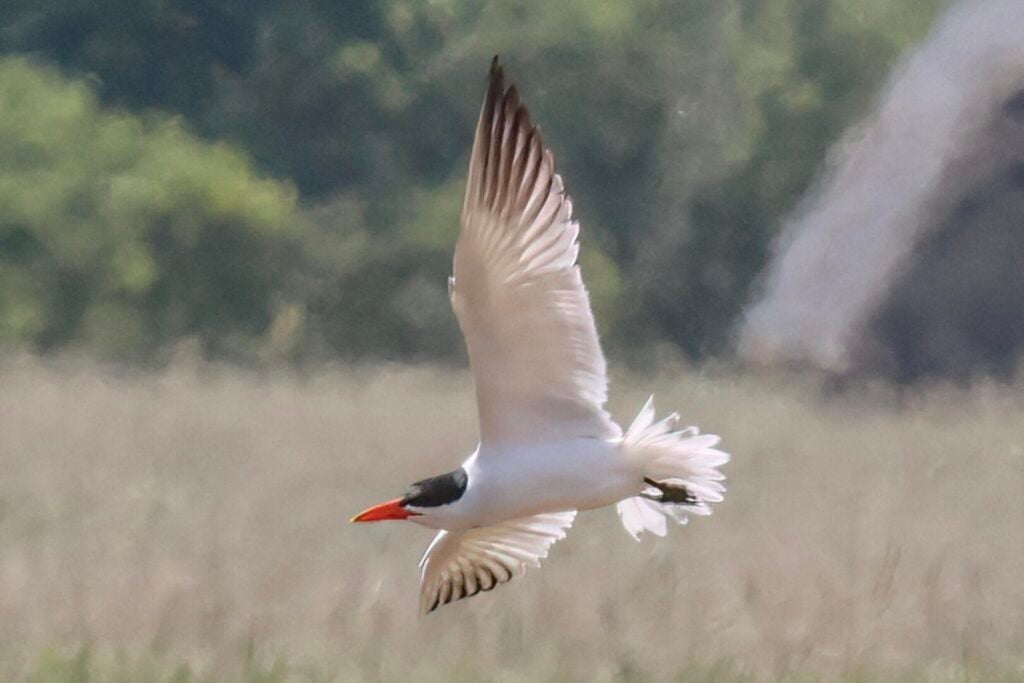
At one point, a Common Tern landed alongside it, and we could really appreciate how big the Caspian Tern was. The largest species of tern, almost as large as a Herring Gull.
There had been a Temminck’s Stint here earlier but it had not been seen for a couple of hours now. Scanning carefully round the islands, we found it on one of the sandy spits. It came out on the tip briefly, long enough for us all to get a good look at it through the scope, before walking back out of view along the rear edge. There were also a few Avocets, Black-tailed Godwits and Redshanks on here, plus a Little Ringed Plover and a Great White Egret.
We continued on back to the Whiteslea track and walked up to the viewing mound. There were several people looking for Swallowtails on the brambles at the start of the track through the wood but we couldn’t see any sign t the moment.
A couple of Great White Egrets were fishing in the channel in front of the viewing mound and several Little Egrets were on the first pool on Brendan’s Marsh. There were a few ducks loafing around on the islands, including several Shoveler and just a single Teal today, plus lots of Lapwings.
We set off to walk up towards Whiteslea Lodge and hadn’t gone more than 50 metres when we noticed a Bittern fly up from the reeds close to the track behind us. It flew off away past us and out across the reed bed – lovely long flight views before it dropped back in.
Then we heard Bearded Tits calling and looked over to see one drop into the ditch nearby. Scanning the edge, a male Bearded Tit then came up into the top of the reeds a little further long. It was our lucky day today!
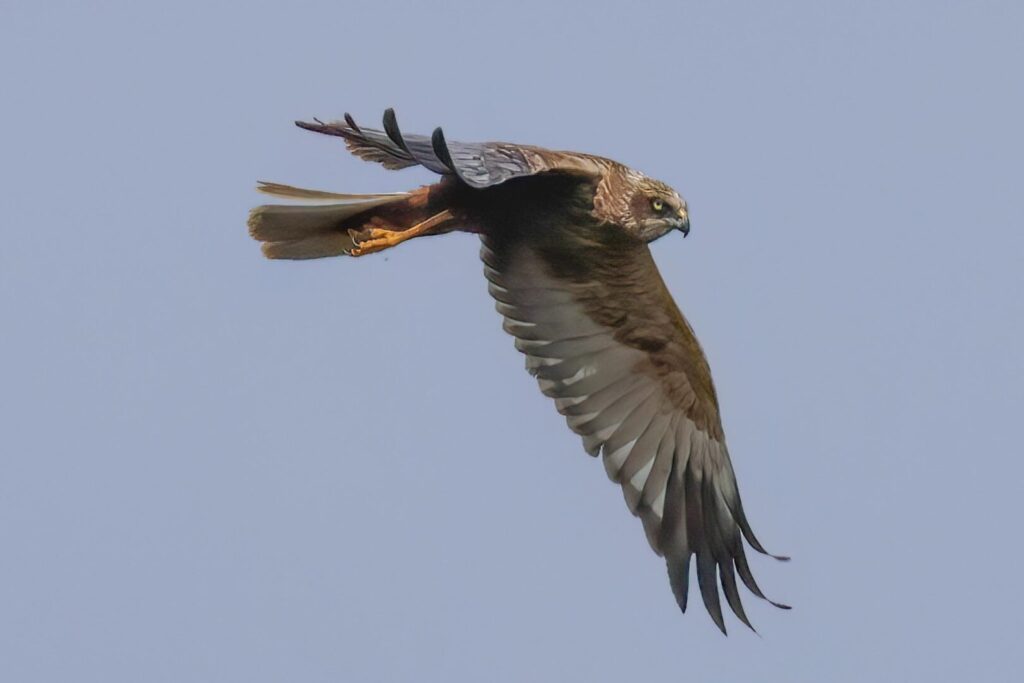
At the far end of the bank, a male Marsh Harrier flew past over the reeds. Walking down to the track, a Norfolk Hawker dragonfly hovered in front of us.
Turning onto the bank which runs down beside the Broad, we spotted a Swallowtail disappearing behind the willows further along. It seemed to have just come from the bank of brambles where the butterflies line to feed so we hurried along. Just as we got there, the Swallowtail flew back in and we had great views of it now nectaring on the bramble flowers. There was a Painted Lady on the brambles too.
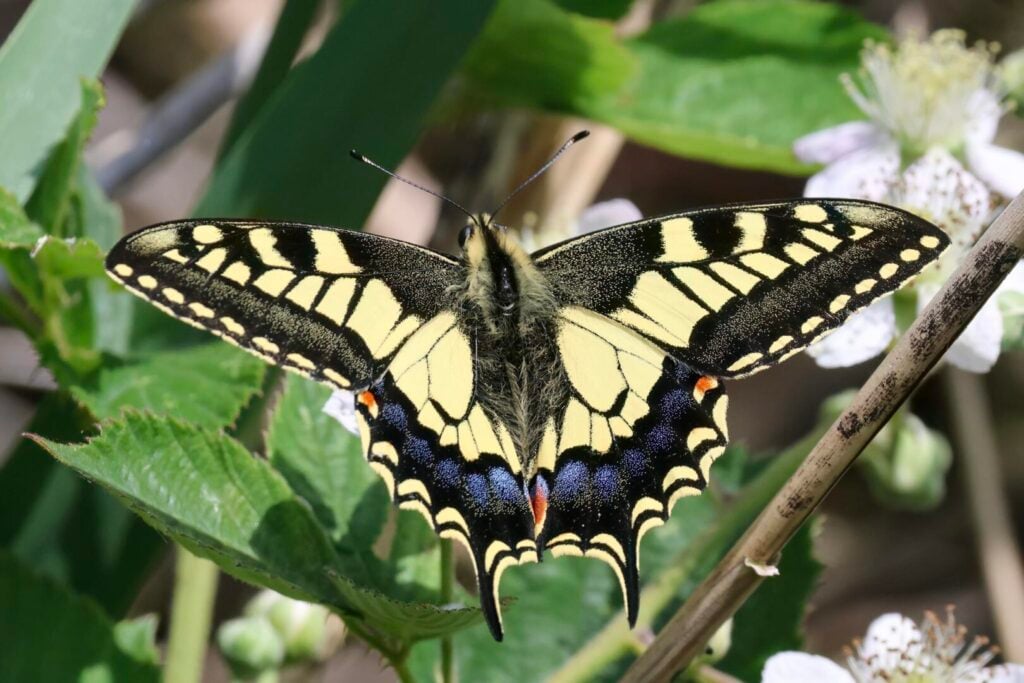
A Cetti’s Warbler shouted and flew in to the brambles below the butterflies. When the Swallowtail eventually flew off, we carried on along the bank. There were a few Willow Warblers singing in the willows and we heard a distant Grasshopper Warbler reeling out in the reedbed briefly a couple of times. A couple of Hobbys flew past.
Past the boat dock, we had a look out over the Broad from the viewing platform and then sat down for a quick break. Looking out across the water, all we could see were a couple of Mute Swans at first. Then we picked up the Caspian Tern flying round over the water. It disappeared off up into the NW corner of the Broad and then came round closer, looking like it might dive down at one point.
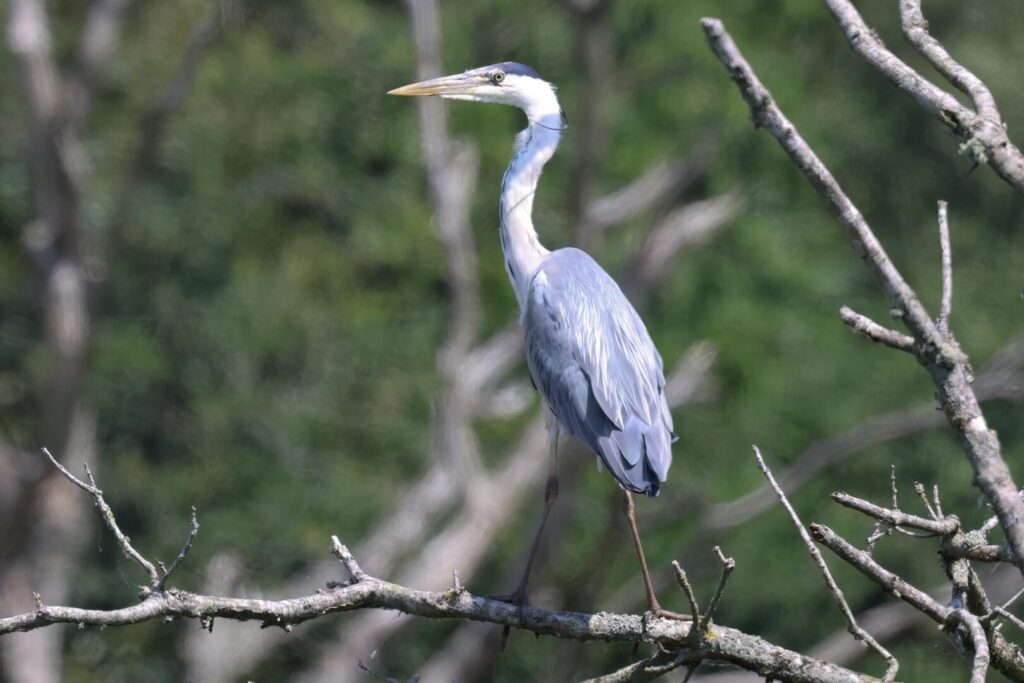
It was time for lunch now, so we made our way back along the path, round past the hides. A Black-tailed Skimmer was basking on the gravel and flew ahead of us a couple of times. A Grey Heron flew in and landed on a dead tree on the corner of the track.
After all the distractions this morning, we were later than normal back to the Visitor Centre. It was sunny and warm, sitting in the picnic area. A Chiffchaff was singing in the bare tree on one side (exactly where it had been last week). A Hobby drifted over a couple of times. We noticed a freshly emerged Ruddy Darter which flew up to bask on the trees nearby. After lunch, we sampled the local ice cream (the Norfolk gooseberry was as good as ever!).
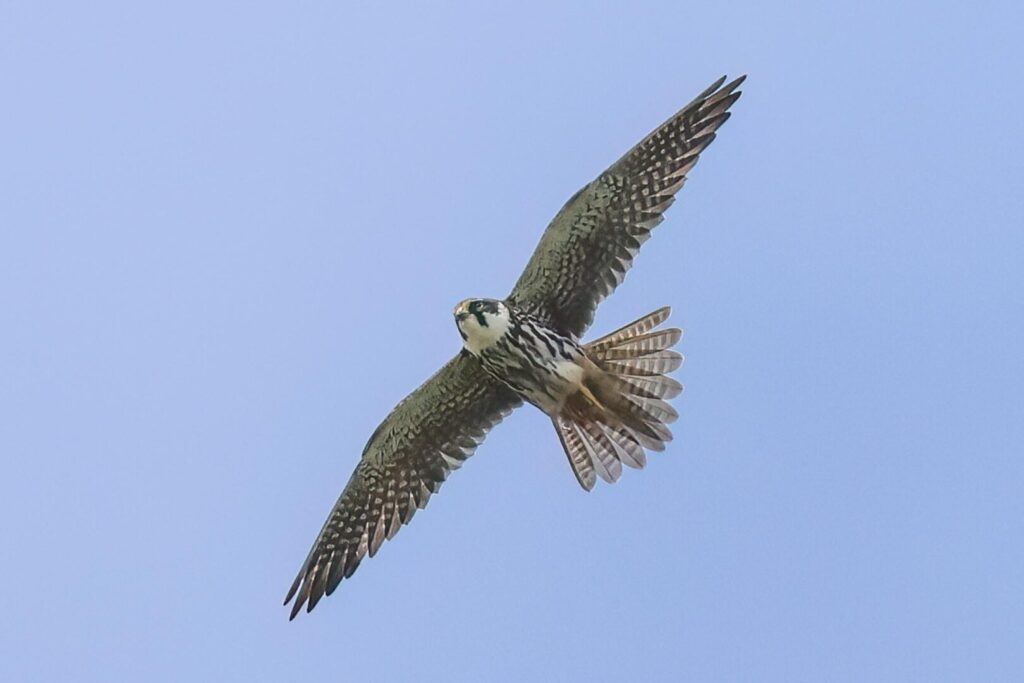
Having seen all our targets in the Broad before lunch, we decided to head up to Cromer to check in on the breeding Peregrines on our way back. When we arrived and parked in the town, we could hear the juveniles calling noisily. As we walked up to the viewpoint, we could see two or three birds chasing each other round the tower.
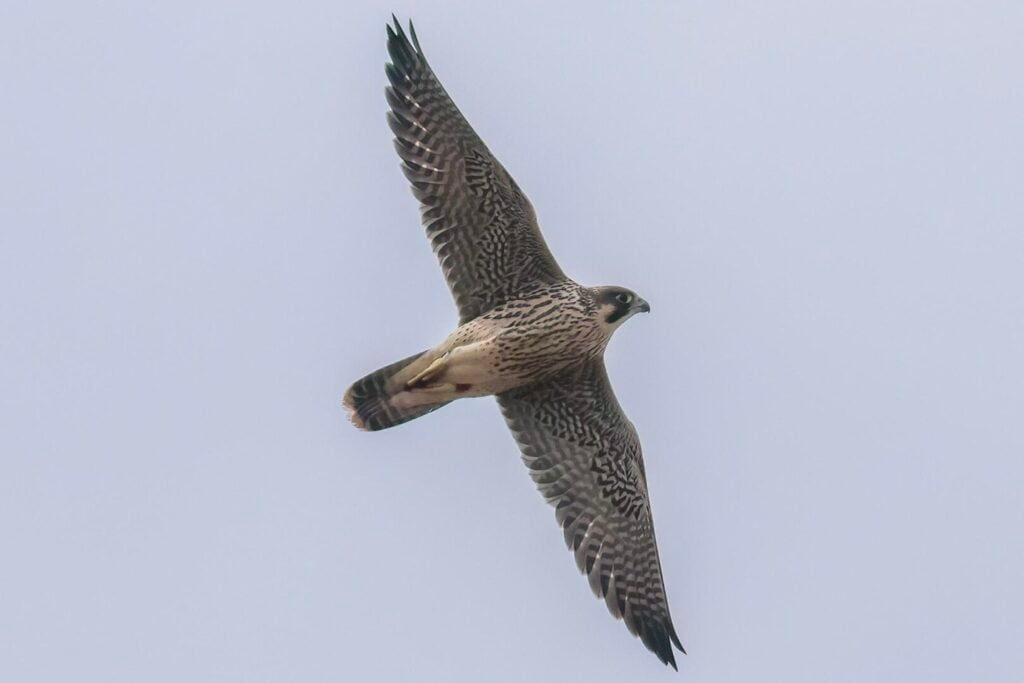
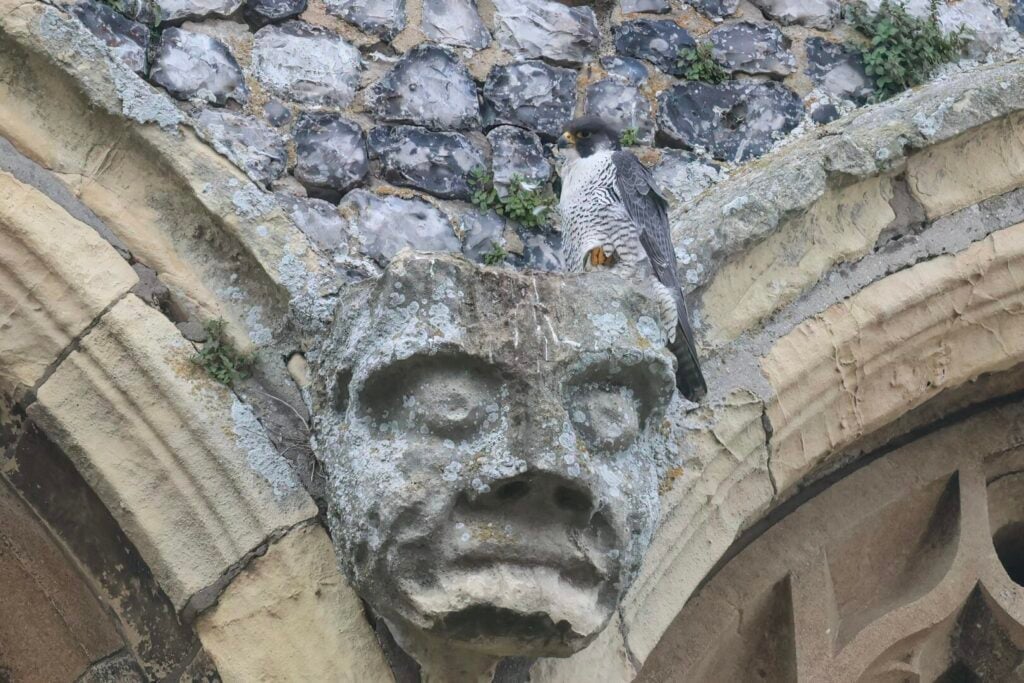
One of the juvenile Peregrines landed on the side of the tower, just below the top. Lovely views in the scope. One of the adults then landed on the gargoyle at the top of one of the main windows on the tower. We had a good look at that one too. Periodically, one or two of the juvenile Peregrines would fly out from the tower and do a quick circuit round over the churchyard. Great to watch.
A great way to end the day, watching the Peregrines. It had been a very successful day and it was time to head back to Hindolveston.