Day 1 of a 3-day Summer Tour. It was a bright and sunny start but thankfully a bit of hazy high cloud built up by mid-morning which kept a lid on temperatures. It was a very pleasant 18-20C through the middle of the day, only creeping up to 23C when the sun came out again later in the afternoon. We spent the day on the eastern side of the North Norfolk coast.
Before it got too hot, we headed up to the Heath first. As we walked out from the car park, a few Linnets were flying round. We quickly found a male Stonechat perched on the top of a dead branch but it was rather distant, so we walked round for closer look. We watched the Stonechat for a couple of minutes but there was no sign of anything following it round today. The first Common Buzzard of the day circled up.
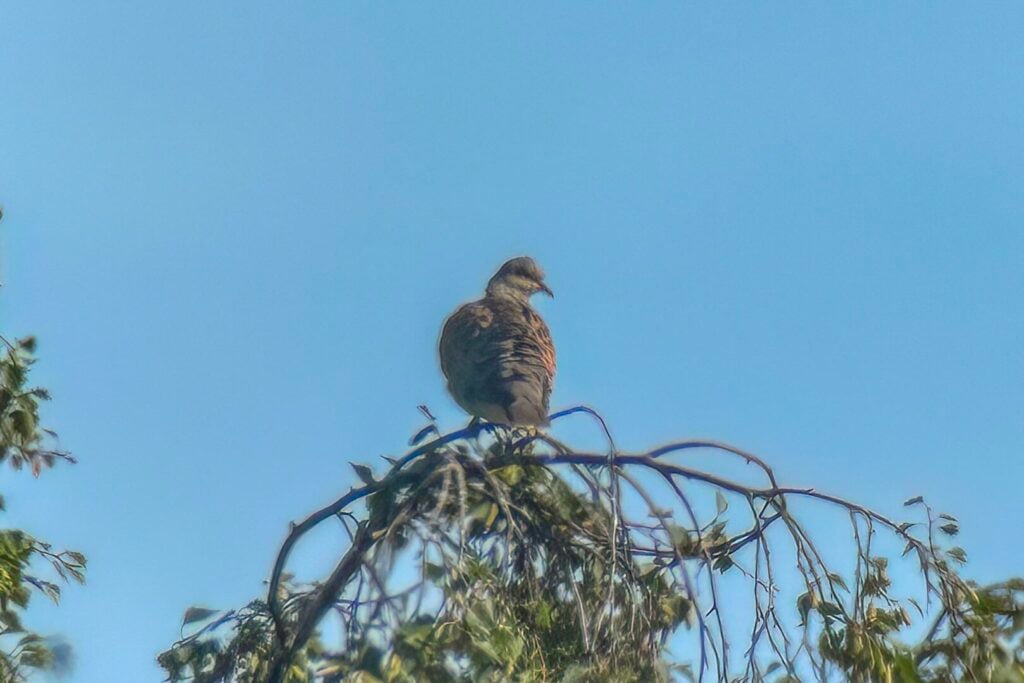
A Turtle Dove started purring. Scanning the trees, we found it perched in the top of a birch tree. It was some way off but nice views in the scope. We could see its rusty scaled upperparts.
We walked on to try a different area for Dartford Warbler. A very worn male Silver-studded Blue butterfly was fluttering around the bell heather. They seem to be coming to the end of their flight season early this year. We heard a Common Crossbill call as it flew over but didn’t see it. A Chiffchaff was singing in the birches.
Round the other side of the heath, there were more Linnets in the gorse and another male Stonechat perched up. As we walked along the path, a Dartford Warbler flew across ahead of us. We stopped and it then flew back the other way. We were looking in to the sun, so we walked on past and looked back from a discrete distance.
A Dartford Warbler then appeared up on the top of the gorse with food in its bill. It was a male and it perched in full view with food in its bill (from photos, we could see it was a Heather Knot-horn micromoth, Pempelia palumbella!). A second Dartford Warbler appeared briefly in the tree beyond. The males started singing briefly.
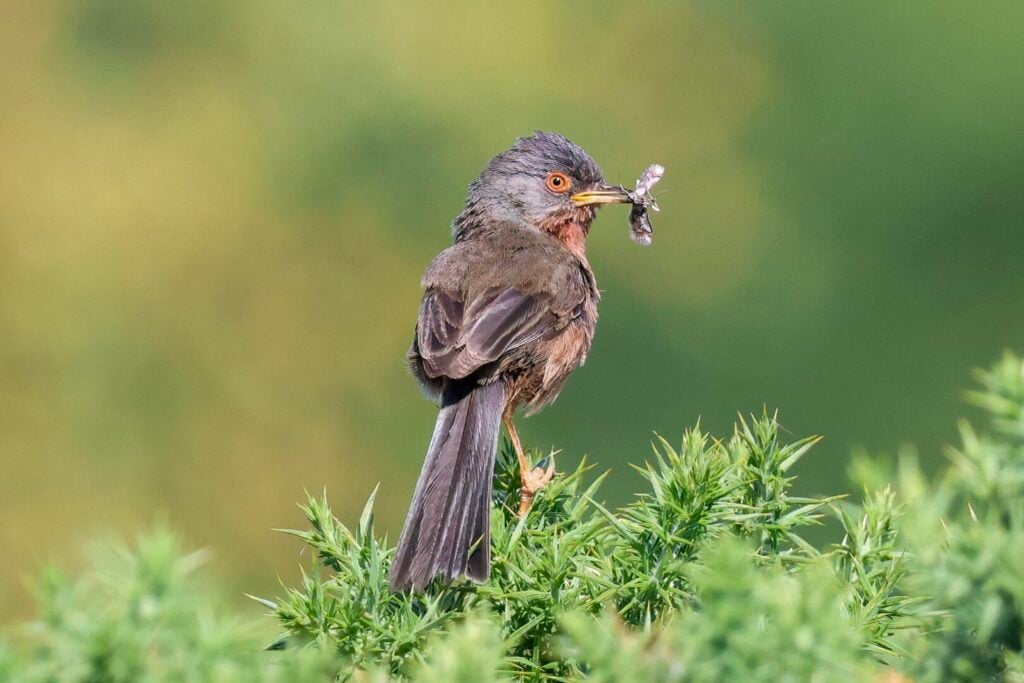
The male Dartford Warbler flew across the path again and disappeared into the gorse the other side. It came back up again, empty-billed now. Presumably it had fed its young, hidden somewhere deep in the gorse. We had more lovely views of it climbing around in the top of the bushes, before it flew off. We decided to leave it in peace.
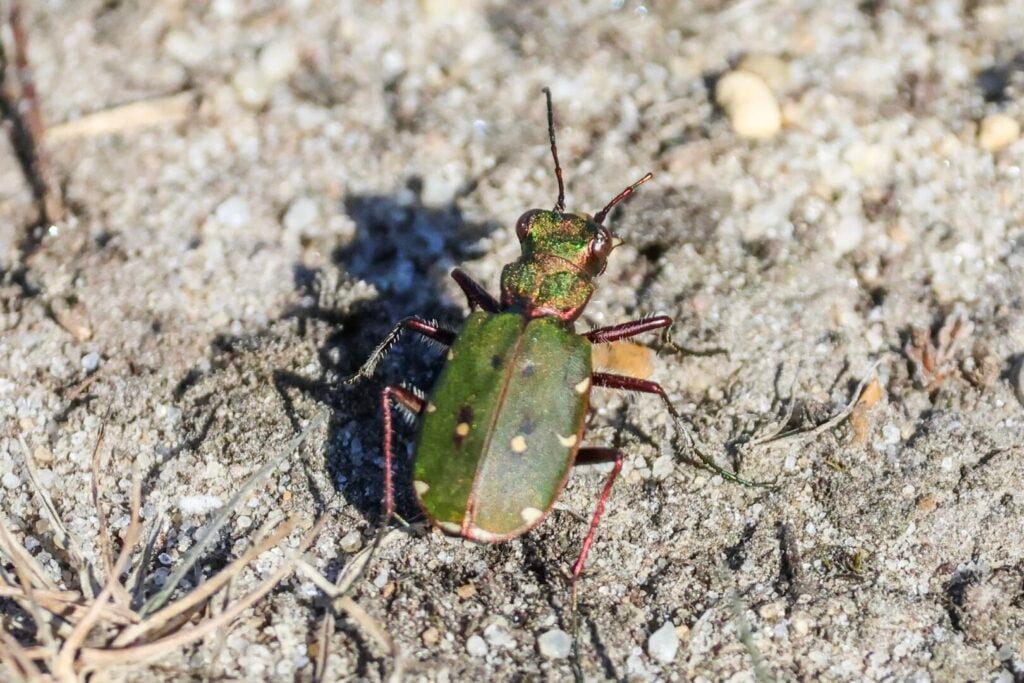
Walking back along the path, a Green Tiger Beetle landed on a bare patch of ground ahead of us. A juvenile Coal Tit was flicking around in a birch tree. A couple of Linnets were feeding on the path. We decided to have a quick walk up a different track to try for Sma but it was all quiet. A juvenile Linnet perched on the fence briefly and a Green Woodpecker yaffled off in the distance.
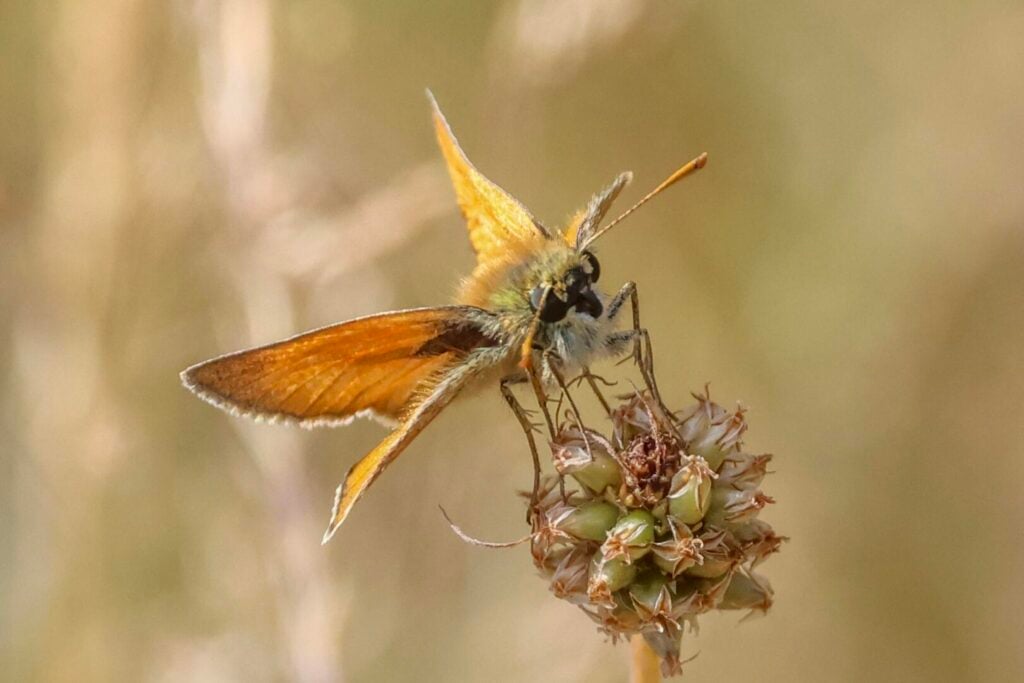
There were more butterflies out now. Gatekeepers are now on the wing, and we saw a couple of Ringlets and several Meadow Browns. Some skippers were fluttering around the ragwort and one landed long enough for us to take a quick photo from the right angle. On the image, we could see the orange undersides to the tips of its antennae. A Small Skipper.
On the way back to the car park, we heard a Yellowhammer singing (“a little bit of bread and no cheese”). We managed to find it in the top of the birches. Nice views in the scope, a bright yellow-headed male. A distant Red Kite drifted low over trees beyond and two more Common Buzzards circled up.
Back by the gate, there were lots more skippers fluttering round the Viper’s Bugloss. We managed to pick out an Essex Skipper this time, with its black antennal tips.
We drove down to the coast at Cley next and headed round to the Beach Car Park first. As we got out of the minibus, we could see lots of terns just offshore.
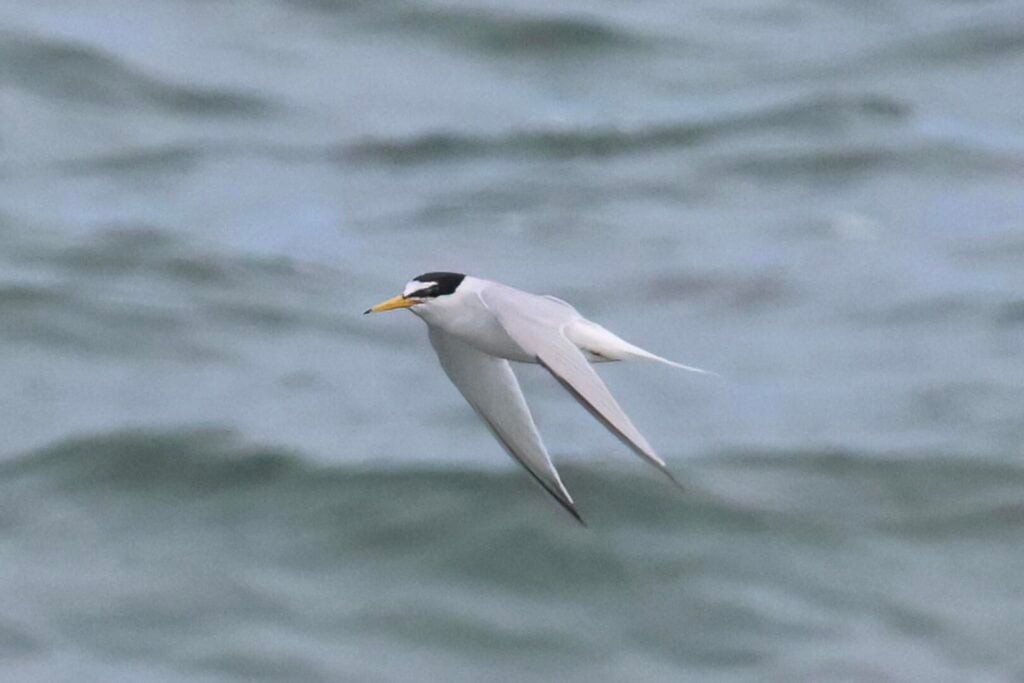
Up onto the shingle, and there was a large feeding frenzy out to sea. Lots of Herring Gulls were bobbing on the water. A mixture of Sandwich, Common and Little Terns were flying round above them, fishing. A couple of closer Little Terns flew past and one paused to plunge dive just off the beach. One of the Sandwich Terns flew past with a fish in its bill.
There had been a Curlew Sandpiper on North Scrape earlier. With a bit of cloud, we figured there might not be too much heat haze still. So we walked out along the shingle. A couple of Skylarks were singing in the Eye Field and we watched one fluttering up.
Scanning from the screen, there was a nice selection of waders. Several male Ruff were in various stages of moult. It may be summer for us but there are autumn migrants back already. They had lost their ornate ruffs and were looking rather scruffy. Three Dunlin were feeding in with the Redshanks at the front.
There were plenty of Avocets and Lapwings and several Little Ringed Plovers. A couple of Oystercatchers flew past calling. No sign of the Curlew Sandpiper though. We heard a Greenshank call from somewhere beyond the scrape and had a glimpse of something dropping down towards the main scrapes.
There were lots of gulls roosting on the main island. They were mostly Black-headed Gulls but quite a few Mediterranean Gulls in with them. They have been moving in the last week or so, presumably birds from the continent coming west post-breeding (autumn migrants again!). A single Common Gull flew in and landed with them.
A Lesser Black-backed Gull was asleep next to a Herring Gull. There was another large gull a little further over, its mantle an intermediate shade of grey. Eventually, it stood up and we could confirm it was a Yellow-legged Gull.
We walked back to the car park and drove round to the Visitor Centre. We had a break to check in, use the facilities and get a coffee for those who wanted. Then we still had enough time for a quick look from Bishop Hide before lunch. On the way out, we heard Bearded Tits calling in the reeds. Looking across, we had a quick view of two flying off.
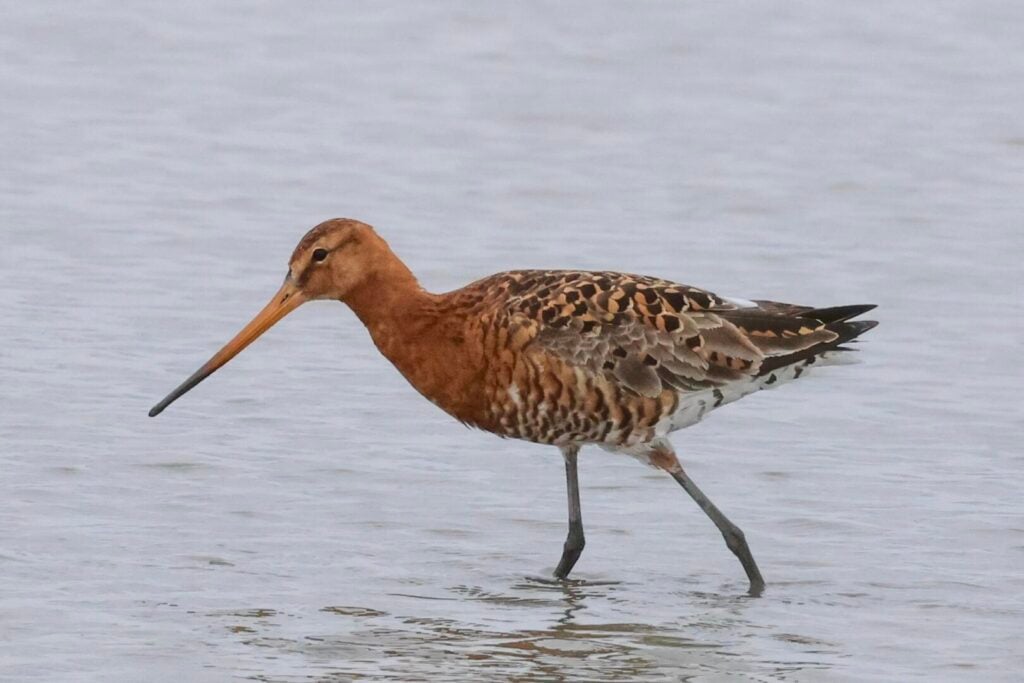
There were lots of Black-tailed Godwits on the scrape, including some very rusty adults. They are just back from Iceland (more autumn migrants!) and will probably now stop here to moult. More closer views of Lapwings and Avocets too, plus more moulting male Ruff, no two the same! A Little Ringed Plover was out on the spit and another on the nearby island. A Common Snipe appeared from the reeds out in the middle. A Curlew flew in and landed at the back, where it went to sleep with a group of Redshanks.
There were not so many ducks on here today. There had been lots of Gadwall a few days ago, but they seemed to have moved on. We did manage to find several Teal. A recurring theme, autumn migrants back already.
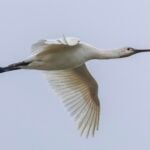
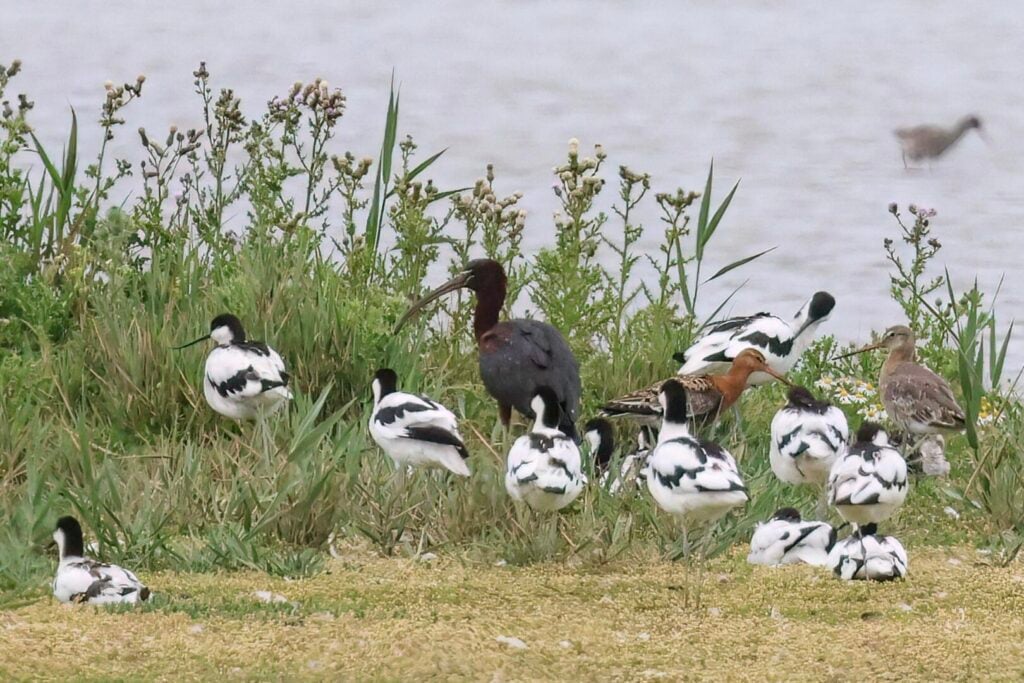
Six Spoonbills were out on the island, asleep as usual. Occasionally one would wake briefly and flash its bill. There was no sign of either of the two Glossy Ibis which had been here earlier at first. Then one flew back in and landed with the Spoonbills and Avocets on the island. The brighter, glossy adult.
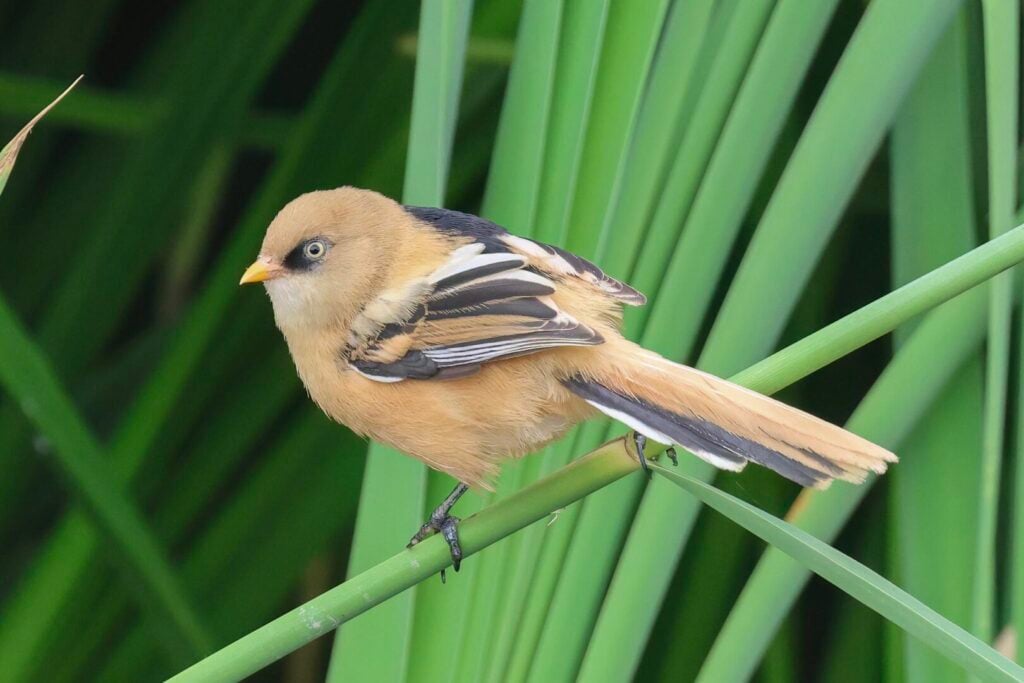
We could hear Bearded Tits calling all the time. And we caught flashes of birds flying back and forth, in and out of the vegetation on the bank to the right of the scrape. All of them seemed to be juveniles. A couple landed on the island in front of the hide briefly. Then two flew in and landed right in front of us. Great views. We watched them as they worked their way round the edge of the reeds. Good to see after there didn’t seem to be so many last summer.
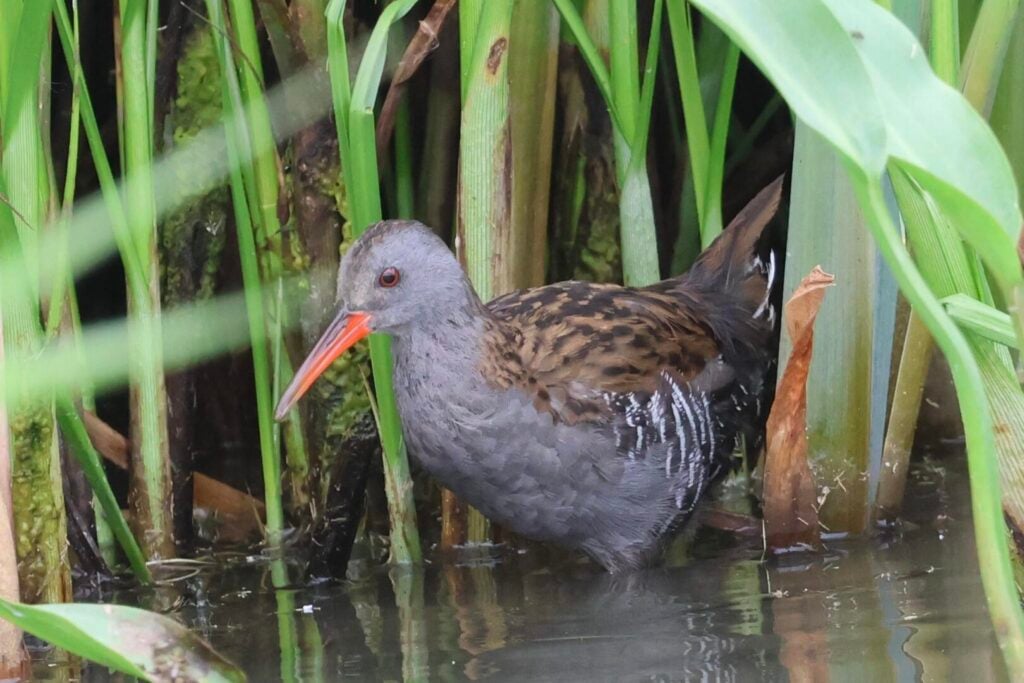
A Water Rail appeared at the bottom of reeds in front of the hide too. We watched it creeping round the edge of the pool. It kept disappearing back in, then coming out again. At one point it came right out into open. Lovely to get such good views of this normally more secretive species.
There were Sedge and Reed Warblers feeding at the base of reeds too. Several Reed Buntings flew in and out. A male Pied Wagtail dropped in on the cut bulrushes right in front of the hide. A couple of Swallows flew in and out through the hide flaps, bringing in nest material.
We had only planned on a short stop here, but more birds kept appearing. In the end, we had to tear ourselves away. We walked back to the Visitor Centre and up to the picnic area for lunch. While we were eating, a Common Whitethroat flew in and started singing from the top of bush by picnic tables. A Dunnock flew in and out too.
After lunch, we drove round to the East Bank car park. Walking up onto the bank, we stopped by Don’s Pool. More Bearded Tits were pinging in the reeds, and flying in and out. But we had been spoilt already, by the great views from Bishop Hide! Several Reed Warblers zipped in and out too, and one perched up in the top of the bulrushes. There were a couple of Norfolk Hawkers and Emperor Dragonfly. But we only managed a brief glimpse of a Little Grebe at the moment.
We carried on up. The grazing marsh is looking very dry now, but there was still water on Pope’s Pool beyond. We could see several Avocets, Lapwings and Shelducks out there, and a few Curlews on the grass in front. Our first Mute Swans of the day, too.
Further up, at the Serpentine, there were several Avocets with young. One half grown, another much younger. We found a half grown juvenile Lapwing too. Their parents were just standing around nearby, typically having very little childcare duties.
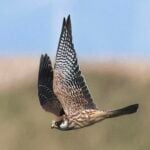
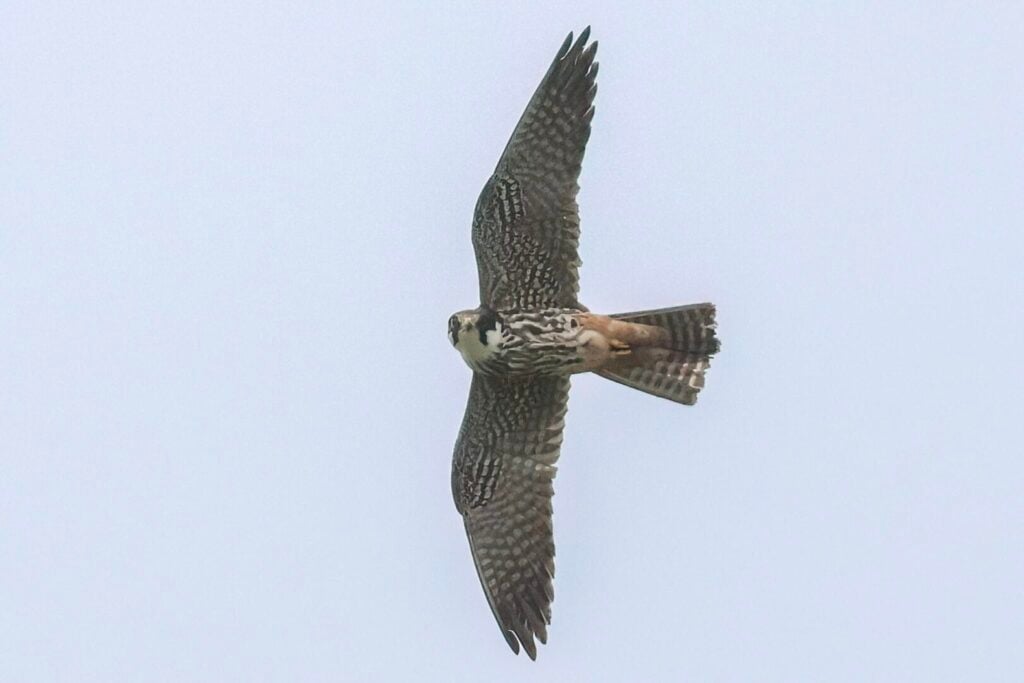
A Hobby was distantly out over the north side of the reedbed. We watched it catching insects and eating them on the wing. Having discussed how to identify a Hobby at that range, then it circled round and gradually came closer. Eventually it flew right over our heads!
On up to Arnold’s Marsh, we couldn’t see much out here today. An immature Great Black-backed Gull was in with the roosting Cormorants. There were several more Curlew and Avocets. A single Ringed Plover was out on the shingle island.
It was a surprise not to have seen a single Marsh Harrier so far. As we started to walk back, we picked up one very distantly over towards Blakeney. Then a female appeared over the back of the reedbed. While we were watching that, a male flew across closer. We watched it circle up high with the Hobby then drift over towards us. It was in wing moult, with symmetrical gaps in its wings.
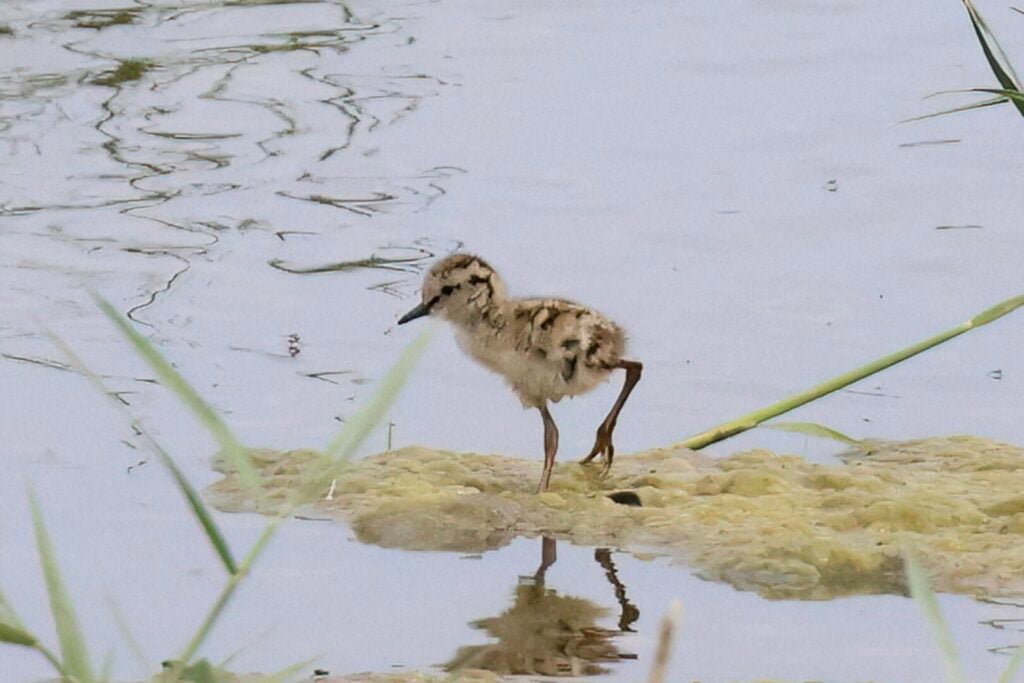
Back at the Serpentine, we stopped to watch three tiny baby Redshanks which had just appeared on the edge of the water. They have not been particularly successful breeding here in recent years so good to see. The juveniles won the prize for the cutest baby birds of the day too.
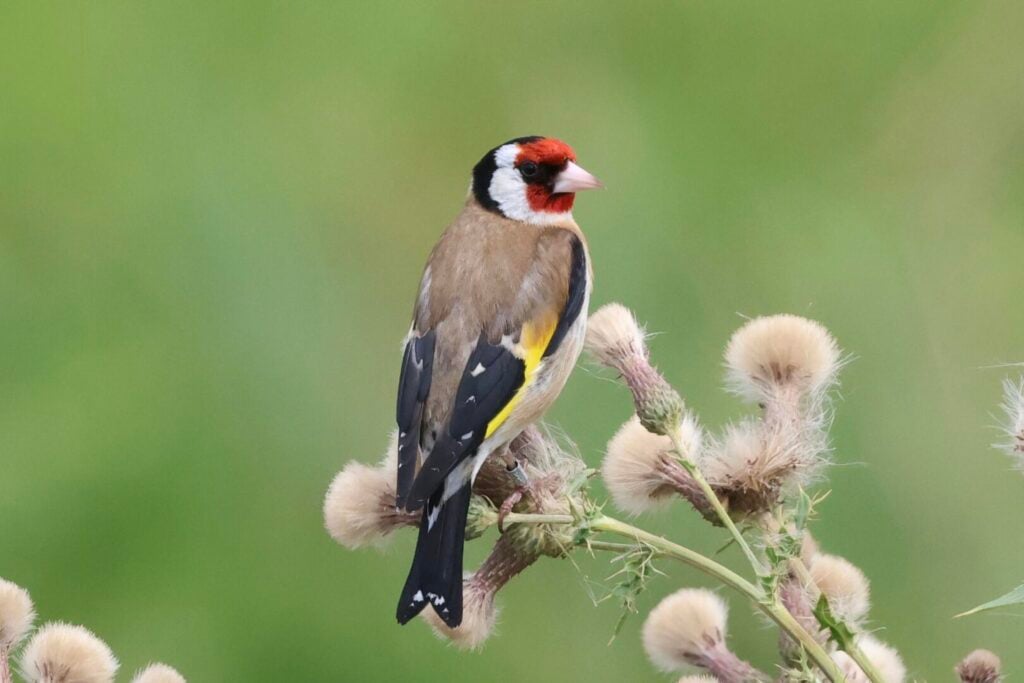
A couple of Goldfinches were feeding in the tops of the thistles on the near edge of the grazing marsh.
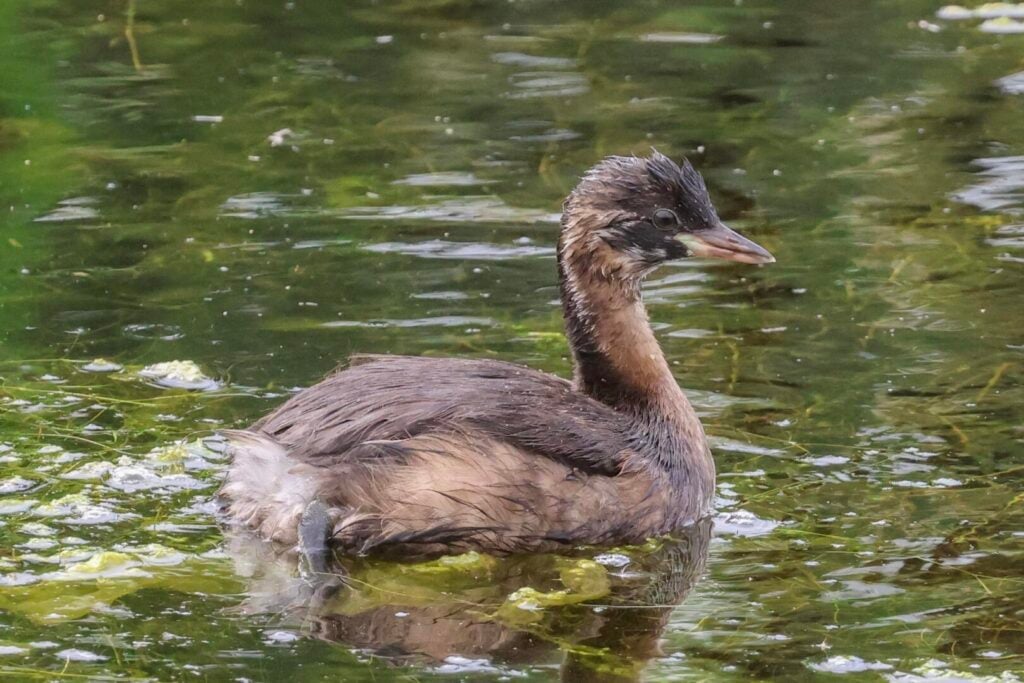
Scanning over Don’s Pool again, a Little Grebe surfaced right out in the middle now. It was one of the fully-grown and now independent first brood juveniles. One of the adults then appeared in the water weed further back.
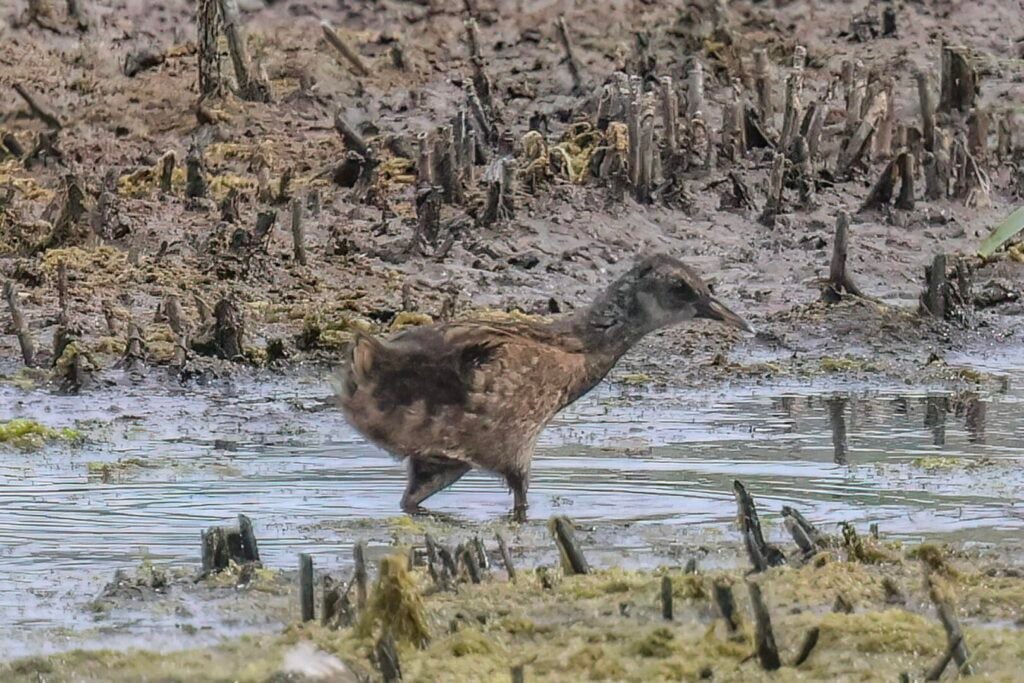
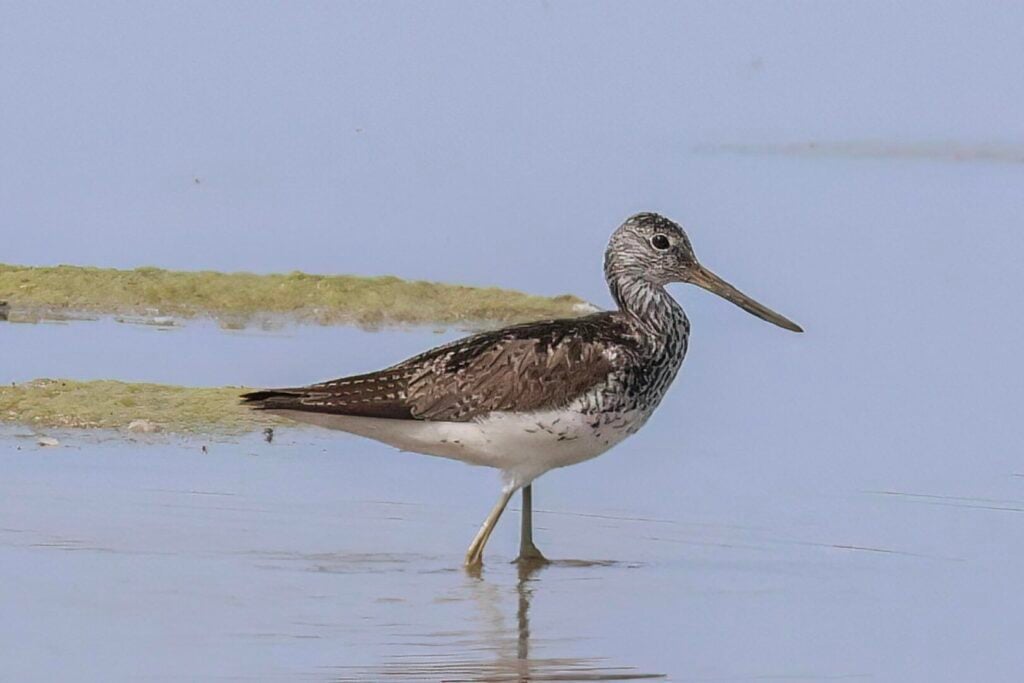
When we got back to the road, we had a quick look at Snipe’s Marsh. It is drying out quickly now, but that does mean lots of exposed mud. A half-grown juvenile Water Rail was out on the mud, another lurking on the edge of the reeds just behind. a Green Sandpiper was standing in the middle of the shallow pool further back.
There was still time for another walk. So now we drove back past the Visitor Centre and parked at the bottom of Old Woman’s Lane. Then we walked out to the central hides. Several House Martins were flying in and out of the eaves around the warden’s house.
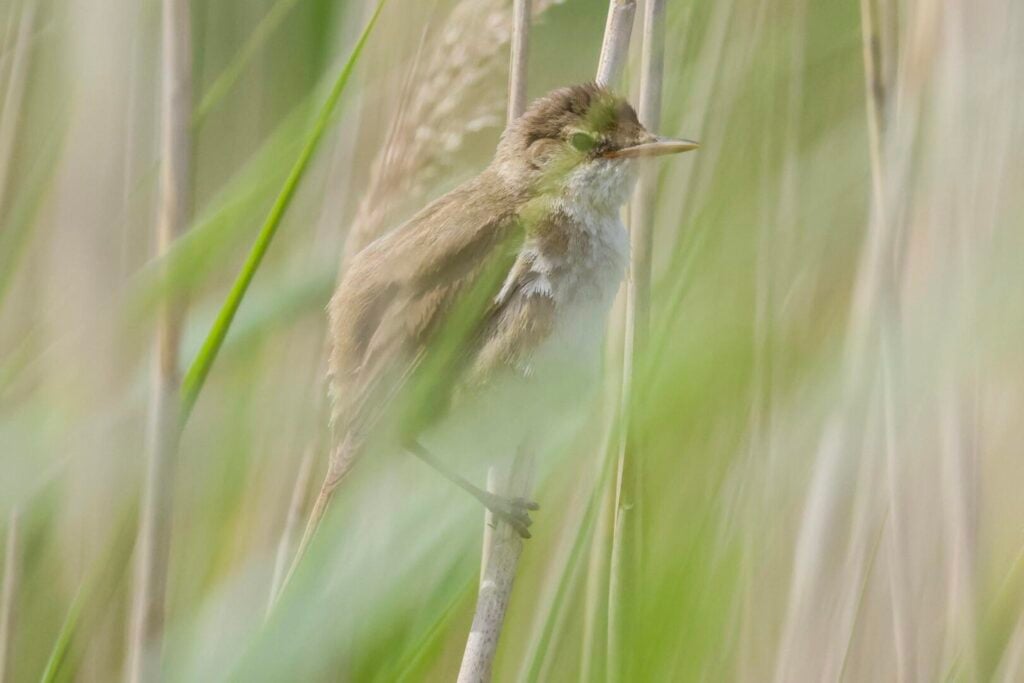
There was a huge cloud of hirundines over the reeds, and we walked under them on our way out along the boardwalk. Mainly Sand Martins and Swallows, but a couple of Swifts were in with them too. A Reed Bunting was singing and a Reed Warbler perched up in the reeds.
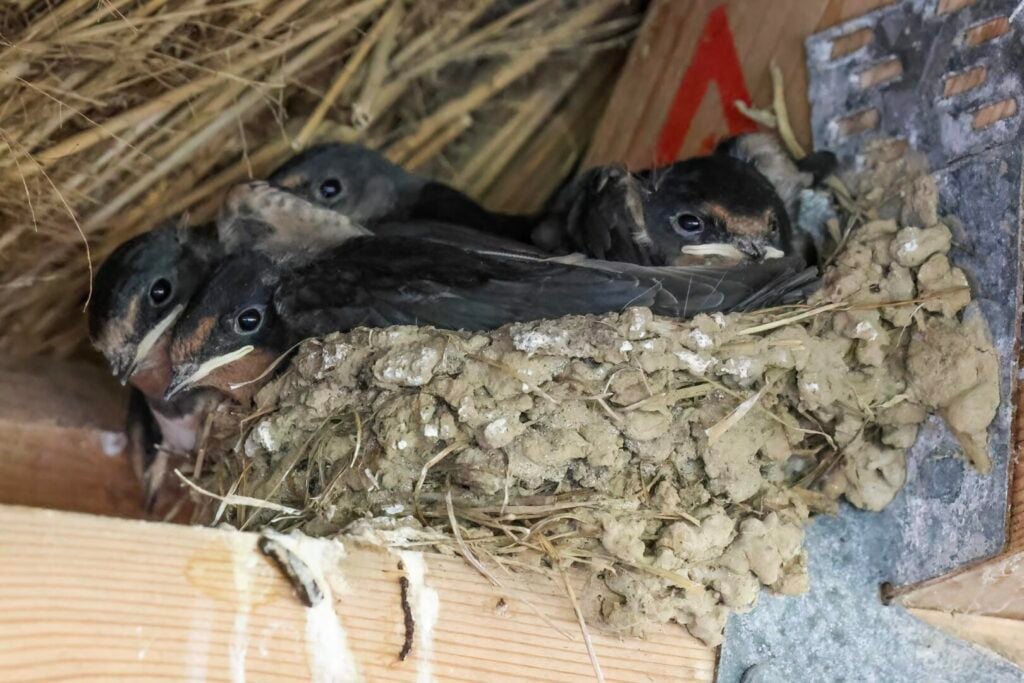
We went into Daukes’ Hide first. A pair of Moorhen with several small juveniles were in the ditch in front of the hide. Another nest of Swallows was in the roof. This time, there were young still in the nest. The parent’s were coming in and out through the open flaps to feed them. They didn’t seem to mind all the people standing nearby.
There were at least three more Green Sandpipers on here. Two at the back, another one hiding in a tuft of reeds in the water off to the left. Another Curlew dropped in, and a pair of Little Ringed Plovers was on the nearest island. We managed to pick out a single female Gadwall but no sign still of all the males which had been here a few days ago. A pair of Stock Doves landed on the nearest island.
A Greenshank appeared from behind the front edge of the scrape off to the left but quickly walked back in. Possibly the one we had heard earlier. Then it reappeared closer to us, working its way down along the edge, before running out into middle. Yet more autumn migrants back already.
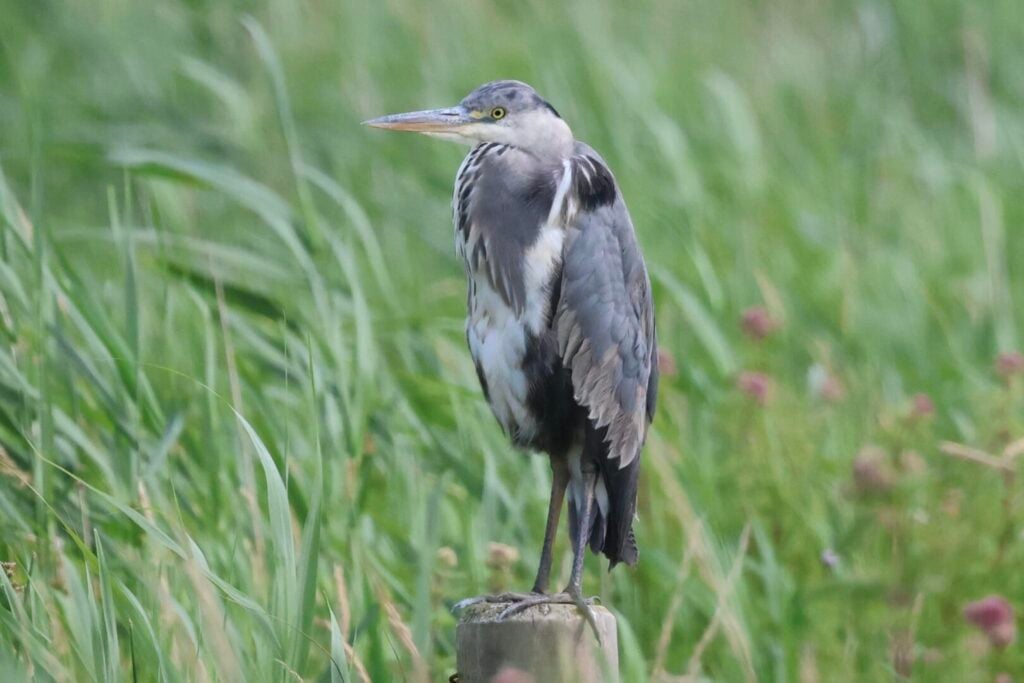
Round into Teal Hide, a Grey Heron was standing on a post out on the edge of the grazing marsh. There were several more Ruff, once again all different. A female Ruff (Reeve) appeared at one point with the males, much smaller. There were lots of Black-tailed Godwits. Mostly they were Icelandic birds, but we did manage to pick out an adult Continental limosa, which woke up briefly but then went straight back to sleep.
The Spoonbills finally started to wake up. One by one, they made their way over into the far corner to feed on the edge of the reeds. One of the Glossy Ibis flew back in, landing with last two sleeping Spoonbills. The duller immature Glossy Ibis now.
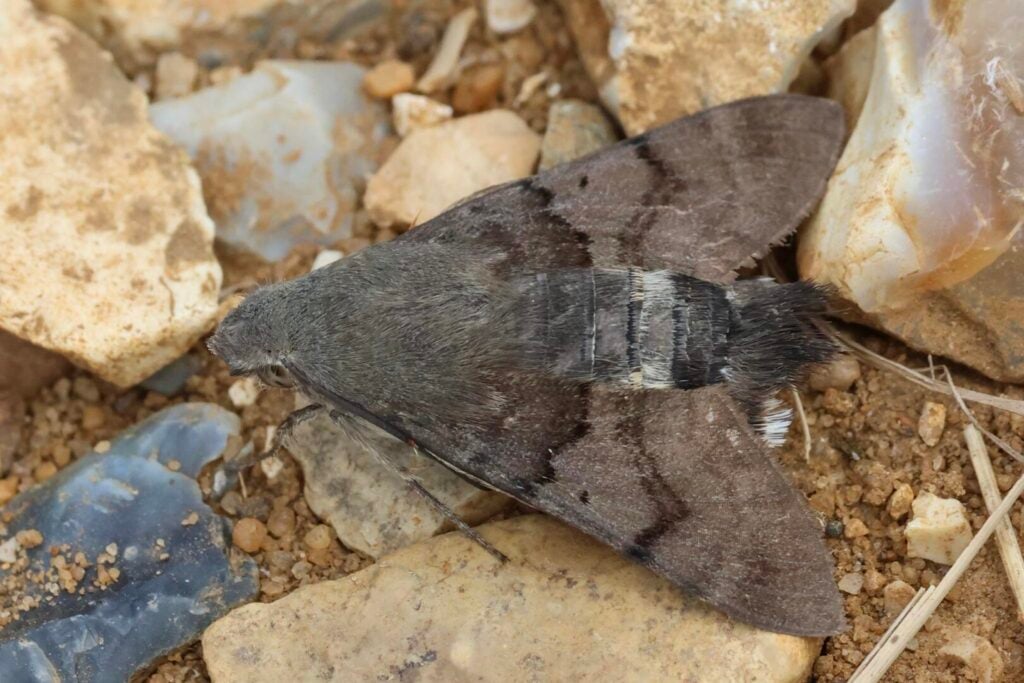
It was time to be walking back. A Meadow Pipit was singing out on Cricket Marsh. As we walked past, it flew up and parachuted back down, displaying. Back on the Skirts Path, a Hummingbird Hawkmoth landed on the gravel ahead of us. Strange to see one on the ground like this. After a short rest, it flew off.
Back at the minibus, we drove back inland to Hindolveston. Time for tea and cake. More birding to come tomorrow.