Tours / Spring Tours / Nightingales & Spring Weekend
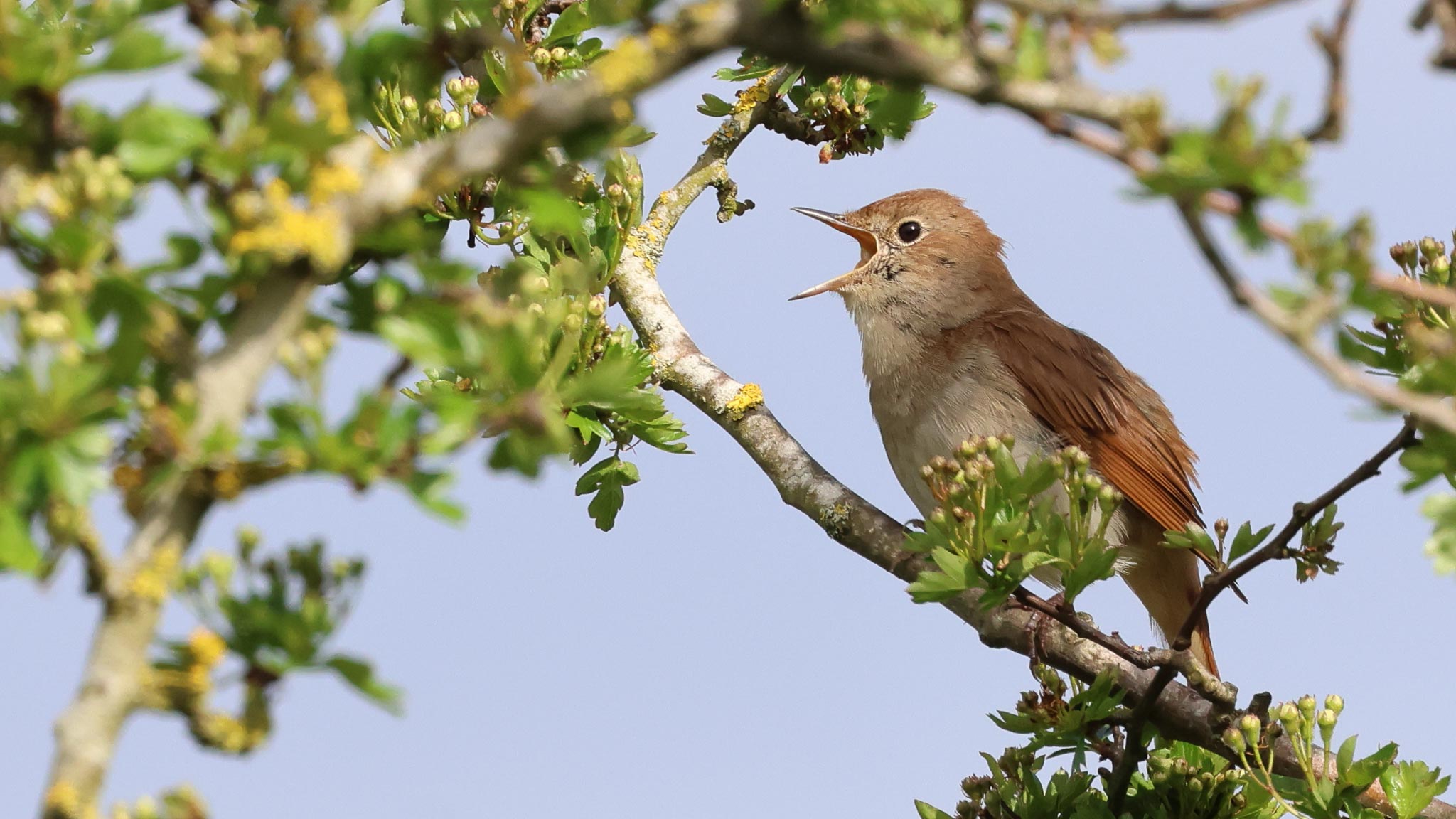
The population of Nightingales in the UK has declined substantially but we still have a reliable site at the moment where we can find good numbers of them in the spring. They start to return from their African wintering grounds in April and the end of the month and the start of May are the best times to hear them. Later in the season, once they are breeding, they will sing less but now they are in full voice. We will go out specifically to listen for them singing their beautiful song and we normally have chances to find them perched too, even if their appearance does not quite match the beauty of their song! There should be a variety of warblers singing here too, so it is not just about the Nightingales. With so many birds singing, it is a wonderful way to spend a few hours in the morning here.
By mid-morning, we will move on to Lakenheath Fen. Arable fields when the RSPB acquired the site in 1995, it is now a huge area of reedbeds. This is a good time of year to hear Bitterns booming and we stand a decent chance of seeing one in flight over the reeds too. The population of Bitterns in the UK was down to just 11 booming males in 1997, but following 30 years of conservation effort the population has recovered strongly and now Lakenheath alone has more than this number in spring. There are two or three pairs of breeding Common Cranes too, but we will need some luck to see one at this time of year.
There are other good birds to see here too. When Hobbys first return from Africa, they can gather in large numbers at suitable feeding sites like Lakenheath Fen. This should be a good time of year to see them here – in 2026, we counted at least 33 in the air together! It is also a great site for Cuckoos and there might be Garganey on the Washland too.
Before the 1920s, the Brecks was a vast area of grass heath and would have been home to a large population of Stone Curlews, as well as other species like Great Bustards and Red-backed Shrikes. The majority of the grassland was converted to forestry or ploughed for farming in the early to mid 20th century and Stone Curlew is now a very rare breeding bird in the UK, with only a little over 300 pairs left. The Brecks is the core area for them. We are spending the day on the border between the Brecks and the Fens, so we usually run in to one or two on our travels on this tour, but if we don’t see them earlier we will finish the day at the NWT reserve at Weeting Heath, one of the last remaining remnants of the original grass heath, to try to catch up with them there.
This is a particularly exciting time of year to visit Norfolk for birdwatching. Many species are passing through on migration, on their way to their breeding grounds further north. Our summer birds are returning and activity levels are high, with lots of singing and display, which means that they can be at their most visible. In the spring, many of the birds we see are also at their brightest which enhances the overall spectacle. With such a variety of birds to see, these tours appeal to all interest levels and abilities.
The first migrants start to arrive in the middle of March, but by April the pace picks up noticeably. Ring Ouzels normally appear around the turn of the month, along with Yellow Wagtails, then Whinchats, Redstarts and all the summer warblers. By the middle of April, migration is in full swing and in the right conditions, numbers of migrants moving along the coast can be spectacular.
You can expect to see around 100-120 species across the two days.
This tour is based around accommodation at White House Farm in Hindolveston, well placed to explore the north coast of Norfolk and further afield. All rooms are en suite.
You will be picked up from the guest house each morning at 8am. Transport is in our spacious 9-seat minibus and we may visit 2-3 different sites during the course of a day. There is a moderate amount of walking most days, but it is very slow paced and broken into smaller amounts, with lots of stops to look at birds. We normally finish each day around 4.30-5.00pm.
The price for the two days of Bird Tour on 24th-25th April, with full board accommodation at White House Farm for two nights (23rd-24th April, leaving on 25th), packed lunches included on the two tour days and evening meals on both nights, comes to £305/£370 per person double/single occupancy.
It is possible to tailor the number of nights’ accommodation and meals to your requirements, so please contact us for more details. If you prefer to eat out on one or all evenings, there is a wide selection of places to eat out within 10-15 minutes’ drive.
It is also possible to arrange your own accommodation and meet us in Hindolveston each morning, normally at 8.00am. The price on a tour only basis is £140 per person for the two days.
Prices are based on a minimum of four customers booked per tour. If there are fewer people booked, pricing may have to vary by negotiation or the tour may not be able to proceed as planned.
Accommodation and meals as above. All transport and guiding on the tour days to and from the guest house. If you are planning to travel here by public transport, please contact us to discuss options to get to Hindolveston.
Reserve entrance fees are not included and we may visit nature reserves such as Cley or Titchwell, so please make sure you have any membership cards for organisations like RSPB or Norfolk WT if you are members (a small charge of up to £5-7 per person is payable on entry for non-members).
You are advised to have travel insurance in case of cancellation.
If you would like to give a gift to someone who is interested in birds then a gift voucher from The Bird ID Company is an ideal present.
The vouchers can be flexible, and used against any tour or tours over the following 12 months, or can be bought for a specific tour.